Chaplin in The Great Dictator. Photo credit: Public Domain.
In partnership with Le Havrealisation.
The modern film landscape is, sometimes unfairly, oft-maligned as being increasingly political. Simply put, a common criticism of movies today is that they are “too woke.” Be it the two largest Hollywood blockbuster films of last summer – “Barbie” and “Oppenheimer” – or other contemporary international films such as “Parasite” (2020), many critically acclaimed films of the last decade have had this low-hanging criticism levied against them.
But this is simply not true. Art is inherently political, and film is an artistic medium. Films have, from the very beginning, been used as the conduit through which directors can convey their personal political messages. Nowhere can this be seen more than in Charlie Chaplin’s 1940 film “The Great Dictator.”
Chaplin’s first full talkie (sound film) tells the story of two men at opposite ends of the fictional European nation of Tomainia: its fascist dictator Adenoid Hynkel (a less-than subtle stand-in for Adolf Hitler) and a lowly unnamed Jewish barber readapting to life after World War I in the ghetto. The catch? Both men are played by Chaplin and thus look exactly the same.
Chaplin’s combination of wry humor with social commentary extends beyond the simple premise of the movie. Chaplin, whose name is synonymous with the golden age of silent-era comedies, frequently lampoons the follies of totalitarianism with his signature slapstick comedy.
Hynkel’s runtime is filled with farcical acts such as having an extended “ballet” sequence with an inflated globe or by getting in a food fight with Benzino Napaloni of Bacteria (a parody of Benito Mussolini). On the other hand, the Jewish barber’s continuous optimism and perseverance in the face of extreme adversity serves as the crux of the film’s emotional center. His friendships and relationships develop (albeit sometimes a bit too slowly) over the two hour runtime and culminate in one of the most rousing monologues in film history.
It is important, however, to remember the context in which this film was made. Writing began shortly after Hitler had recently received the Time Person of the Year award, prior to the German invasion of Poland and before the full extent of Nazi Germany’s crimes throughout the Holocaust was generally known (Chaplin himself later stated that the film would not have been made had he known).
Ultimately, “The Great Dictator” has aged surprisingly well in an era where its fundamentally anti-fascist message is, unfortunately, much-needed. Though it may poke fun at one of the darkest moments of human history, Chaplin’s appeal for humanity shines through and enshrines the final product as a testament to the power of film as both an artistic and political tool.
On saints, spinsters, and solitude in PJ Harvey’s Is This Desire? (1998)
Image credit: Polly Jean Harvey, Maria Mochnacz, Rob Crane.
Many a pensive winter night have I spent immersed in the labyrinthine vortex that is my Spotify library. And in exchange for the $0.005 that I gift my musical heroes with each song of whose I stream, I receive the very stuff that has animated my girlhood for the better part of a decade. The pythia of my adolescence is none other than the raven-haired English maestra that is Polly Jean Harvey. Her tales of vengeance, loneliness, desire, and the sacred have filled my aural cavities and inner recesses during my most impressionable years. It would seem that her musical genius was touched by the holy ghost of gnosis itself, and on no work of hers is this more evident than on her fourth full length LP, 1998’s Is This Desire?.
The album is to my mind Harvey’s most compelling. What I seek to contemplate is why. It eschews the sexual mania of her first two albums (1992’s Dry and 1993’s Rid of Me), and is not plagued by the romantic platitudes of 2000’s Stories From The City, Stories From The Sea. Ambitious yet sincere, the album is challenging enough of a listen to ward off the posers, and inviting enough to beguile the faithful. By means of deftly applied imagery and allegory, the album envelopes the listener in a gothic cosmos of storms, saints, and spinsterhood. It tells of heartbroken harlots and is illuminated throughout by the tenuous strand of hope that binds together body and soul. “It was a very very difficult, difficult to make,” said Harvey of the album in 2004, “[…] but probably my favourite record that I’ve made because it had a lot of guts.” In Desire, Harvey manages, with the magic of a mediaeval chronicler and the timelessness of a poet, to cut to the bone of hope, isolation, the sacrosanct, and the prosaic – matters of concern to all in the pursuit of meaning in this life.
Is This Desire? was a creature that took its toll on its creator. Its creation took place after Harvey’s break up with the vampiric Australian poet-cum-alt-rock-god Nick Cave, who was so shocked when she dumped him on the telephone in 1997 that he “almost dropped [his] syringe.” She began therapy while recording the album. She even got micro-bangs. Her tumultuous emotional state found a natural home in the tragic poetry and haunted soundscapes of her subsequent musical release.
The album was recorded during two marathon sessions separated temporally by almost a year. Harvey herself authored all the lyrics and produced a great part of the music, with instrumental contributions from Mick Harvey, Eric Drew Feldman, Rob Ellis, and her long-time collaborator and musical soulmate John Parish. Like most of Harvey’s albums, the album was released on Island Records and was met with critical acclaim in the alternative music press. Although the album did not mirror the commercial success of its predecessor (1995’s To Bring You My Love), Harvey was able to score her greatest charting success in the UK with the album’s lead single A Perfect Day Elise.
Regarding approach and genre, the album finds its niche within the introspective rumblings of trip-hop and industrial that emerged from the British alternative music scene in the mid to late 1990s. During this period, the British music charts were dominated by the manufactured quirk of Britpop, the sickly sweet bubblegum pop of the Spice Girls, and the American soul of the Fugees and Toni Braxton. Grunge was dead (or at least Kurt Cobain was) and alternative music, at least in Britain, succumbed to the developing undercurrents of electronic music, industrial, and trip-hop, pioneered by such acts as Massive Attack and Portishead. The dark electronic experimentation of the mid-90s alternative scene crept its way onto To Bring You My Love, giving way to the grating electronica of Down by the Water and head-nodding trip-hop of Working For The Man. The most thorough exploration of these sounds in her body of work, however, is to be found in the electric soundstorms that rage all throughout Is This Desire?.
Sonically, the album oscillates wildly between moments of aching beauty and caustic assault. Besides electronically engineered instrumentals and drum machines, Is This Desire? also honours Harvey’s rock roots through the presence of sober guitar work (electric and acoustic) on the album’s title track, The Sky Lit Up, and the ballads Angelene and The River. Forever a fan of harsh instrumentation, Harvey ensures that the electrically charged sonic onslaughts on Is This Desire? are just as abrasive as the violent guitar work on Dry and Rid of Me. The techno-brutalism of the album is explored fully on the tracks My Beautiful Leah, A Perfect Day Elise, and, particularly, Joy. Trip-hop influences are palpable on the tracks The Wind, My Beautiful Leah, and The Garden. The album’s quieter moments include the subdued Catherine, and ghostly Electric Light. Eric Drew Feldman’s piano work is a notable highlight on the album opener Angelene, The Garden, and The River.
Musical technicalities aside, the absorbing chronicles and emotion that characterise Is This Desire? are further communicated by Harvey’s lyricism, in which she explores the themes of spirituality, sainthood, prostitution, and spinsterhood. The album is deliciously gothic in its ensemble, rich in its elemental motifs of water and electricity, of nature at its most supernatural. Harvey adopts the voices and relates the histories of several key female characters – the prostitutes, Angeline and Elise, the ghostly Leah, the saint, Catherine, and the physically crippled spinster, Joy. Harvey’s lyricism draws liberally from the short stories of J. D. Salinger and Flannery O’Connor, as well as, to a lesser extent, the poetry of William Butler Yeats, and the Bible.
I’ve heard there’s joy untold
It lays open like a road in front of me
Central to the album’s grappling with the human condition, and expressed most clearly in its first track, are the questions of hope, faith, and agency in the realisation of the “joy untold” that exists in the material world. In Angelene, Harvey adopts the voice of a prostitute who states that “love for money is [her] sin,” yet holds dear the idea of real love, that some day some man will “collect her soul” and come to her. She pictures him two thousand miles away. The road to this man lays open before Angelene, yet she treadeth not. Perhaps the chimaera of joy is a beast too daunting, too elusive to hunt. Angelene lives in the hope that her love will come to her. Here, Harvey grapples with the centrality of the notion of luck in the question of human happiness. She questions whether joy belongs to a lucky few among us, or if it is something sought by the courageous, those willing to journey two thousand miles to the man who walks upon the coast. Is the myth of joy, as opposed to its materialisation, what sustains one after all?
After picturing herself as an urban earth witch with the elements at her command in The Sky Lit Up, Harvey brings to the listener’s attention one of the most important figures in the album, that of Saint Catherine of Alexandria in The Wind.
Oh mother, can’t we give
A husband to our Catherine?
Here, Harvey brings forth another salient theme of the album: spinsterhood. Catherine of Alexandria is the patron saint of unmarried girls, the dying, lacemakers, and scholars, among other things. She was martyred in the fourth century CE by the Roman emperor Maxentius, the last emperor to reside in Rome. The symbols associated with Catherine include the breaking wheel, the sword, and the bridal veil. It is worth noting here that near PJ Harvey’s birthplace of Dorset, England, there stands in Abbotsbury a 14th century chapel dedicated to St. Catherine. Harvey is said to have visited the chapel while writing Is This Desire?. In The Wind Harvey sings in little more than a whisper of Catherine’s having liked “high places,” of her dreams of “children’s voices / And torture on the wheel.” In France of old, women who were still unmarried at age 25 and older were referred to as catherinettes. Could Harvey be reflecting on her own post-breakup fears at the prospect of never being able to find the one?
Perhaps it is not Harvey’s own personal history that is important here, but the theme of spinsterhood goes hand in hand with that other salient theme in Is This Desire? – loneliness. The theme of total isolation is fleshed out in the album’s next track, My Beautiful Leah, whose “needing” subject claims to “have no one” and is plagued by nightmares. Leah, with its Nine Inch Nails-esque industrial instrumentals is perhaps one of the grimmest tracks Harvey has ever recorded. The intensity of the instrumentals and dreariness of Harvey’s vocal delivery make the song’s expression of longing and dismal disorientation ever more palpable.
Oh, my Catherine
Within while, I’d have won you
On Catherine, one of the simplest and most moving songs on the album, Harvey adopts the voice of a lover of a certain Catherine, who is haunted by her memory and jealous of her even as she lies cold in the grave. She could be speaking as the aforementioned Roman emperor Maxentius, who asked for Catherine of Alexandria’s hand in marriage before condemning her to death on the wheel. However, she could also be speaking as Heathcliff, the male hero of Emily Brontë’s Wuthering Heights. The lyrical content of the song hints directly at the unfulfilled love that existed between Heathcliff and Catherine Earnshaw, and at Heathcliff’s being haunted by Catherine’s memory long after her death (in a famous speech, he laments: You said I killed you – haunt me then! […] only do not leave me in this abyss, where I cannot find you!) The reference to Wuthering Heights also makes sense given the gothic current that runs throughout the album, with images of violent natural phenomena and chapels atop hills. The track deals with the corrosive bitterness (I damn to hell every second you breathe), the attraction and repulsion towards another that infect the soul as a result of a dream deferred, a love left unrealised.
Harvey brings the theme of spinsterhood to the fore again in Joy which makes direct reference to the disabled atheist recluse in Flannery O’Connor’s short story Good Country People. In Harvey’s song, the listener is told of how Joy, who is thirty years old, has lived a life unwed, has “never danced a step.” “No hope for Joy,” sings or, rather, howls Harvey regarding the predicament of her protagonist. Joy is trapped, physically, because of her disability, and mentally because of her lack of faith. Anguish is the most palpable emotion here. Harvey’s dramatisation here is so good that one is left with the impression that she might have a thing or two in common with Joy.
How much more can you take from me?
I’d like to take you inside my head
Harvey expands further upon the themes of relationships and isolation all throughout Is This Desire?. She explores the theme of the used woman in A Perfect Day Elise (referencing Salinger’s A Perfect Day for Bananafish) and in Electric Light. The former is a song about a man who kills himself after the woman with whom he has had a one-night-stand spurns him, and in the latter she invokes the image of a prostitute illuminated under streetlights. In No Girl So Sweet she references another Salinger short story in which a man marries a woman for her property only to leave her in the end. She sings of leaving pain in the river in The River, referencing another short story, The River, by Flannery O’Connor. Harvey touches upon the Biblical in The Garden, which is a kind of same-sex Adam and Eve (or Adam and Steve) tale of one lover’s “thinking of his sins” and there being “trouble taking place” in what transpires between them.
Hour long by hour, may we two stand
When we’re dead, between these lands
The opus comes together definitively at its conclusion, with its title track. On Is This Desire?, Harvey begins by singing along to an unaccompanied drum beat, which then swells into a beautiful tuned down guitar chord progression of F major, F minor and A flat major. Harvey’s voice, low and lovely, relates a dialogue between two characters, Joseph and Dawn, who are lovers. The two wonder if the desire that connects them is enough to transcend earthly concerns and keep them together. The dialogue between Dawn and Joseph echoes William Butler Yeats’s Anashuya and Vijaya, and Harvey quotes the poem directly in the lines that precede this paragraph. This final literary reference is perhaps the album’s most potent, as it reinforces the centrality of the album’s ultimate questions regarding love, desire, and spiritual transcendence. In Anashuya and Vijaya, Yeats tells the story of Anashuya, a priestess, and Vijaya, the man she loves. The two cannot be together, yet Anashuya is obsessively jealous of Vijaya’s love. The question that Joseph and Dawn grapple with is not just “is this desire?” but “is this desire enough?” Is desire for a person, for happiness, for fulfilment, enough to merit and yield the fruit thereof? Or, is true love, true contentment, the product of a deeper process of endogenous reflection and exogenous action?
What makes Is This Desire? PJ Harvey’s most compelling album is her courage in exploring the mortal fears – of loneliness, of hopelessness, of breakdown – that lurk in the shadows of all our lives. The outer sleeve of the album’s LP bears a photographic diptych of Harvey herself, standing beside a river, hugging herself like a child whilst staring blankly into the lens of the camera. To my way of thinking, this image communicates the gist of the album – it is Harvey at her most vulnerable. She is an amalgam of all the characters she sings of; she is Joy, Catherine, Angeline, Leah, etc. Their hopes and struggles are her own.
Harvey’s music will continue to be a mainstay in the ever-developing soundtrack of my life, accompanying me during rides on the tram, walks through the city, and evenings spent alone in my student flat, with little else but the hum of the refrigerator for company. And one day, when I eventually do procure for myself a shiny new record player, perhaps I will be able finally to sit down on the floor, cross-legged beside the speakers, and discover in the groves of her LPs the secrets that the digital remasters of her albums have not yet betrayed. For now, I am content to ponder the questions of love and loss that she confronts me with by opening the Spotify app on my phone, popping my earphones into my ears, and going about my day.
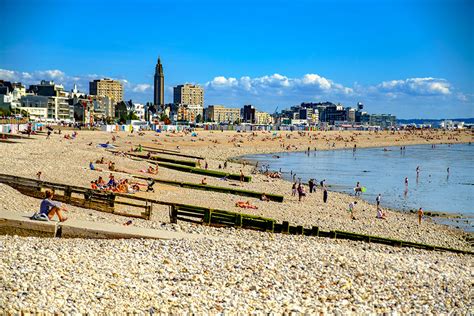
When I wake up, the sun is still hidden behind the buildings of the city, but the sky slowly turns to a pinkish hue as it lights up. It’s cold, but I’m protected from the harsh gusts of wind of the grey sea. It’s a rainy day. It feels like every Monday is a rainy day. But it won’t last, it never does here, as the wind pushes the heavy grey clouds away inland, and brings in a fresh blue sky. That’s Le Havre for you. Everyday there’s sun, every day there’s rain, but it never lasts for long. I heard in the tropics, far South, wet and dry weather alternate every six months. Here in Le Havre, rain and sun alternate every day, so the city is always wet. I like wet. I’m born to live out at sea, to have droplets of water caress my white and grey feathers, to have the marine air fill my beak. My ancestors fed on fish, but myself, I prefer feasting on a half-eaten kebab I find in a rubbish bin, or better, a full Burger King meal stolen from a group of young humans. I like staying around young adult humans, they always leave stuff behind: raw chicken breasts, kinder bueno wrappers, empty coffee cups, lots and lots of them. It’s funny how they scurry around that large blocky grey building. They arrive there every morning, and stay until the sun has set. I always follow them; they seem like funny little characters.
When I arrive at the building, around 8 o’clock, some of the humans are already there. I say humans, but they’re not all fully grown. I know some are still finding out who they really are, just like I am. I can relate to them. My seagull friends are there too. Right in time for breakfast! A few coffee cups lay at the bottom of the rubbish bin, I pick them out with my shiny yellow beak. I always need a coffee to start the day, otherwise I can’t concentrate. I want to learn more about the humans, about why a flock of so many different ones stick together in this sad coastal city. They’re like a weird family, sometimes friendly, sometimes fighting, but always together.
After breakfast, I peek around the windows on the right of the building. There, an older human is telling the others about stuff. I cannot comprehend everything; it seems jumbled up. One class is about the Silk Roads, a large route of trade and cultural exchanges, spanning half of the globe. I wish I could visit all these places that the wiser human is talking about. It seems beautiful out there in the world. Other times, it’s a different older human talking about a different thing. They talk about how groups of human’s rule over other groups of humans, and the rules around this governing. They explain why and how groups of humans interact between themselves. It’s a peculiar sight to see all these young humans learning about things from their own world. But alas, I, humble seagull, am unable to fully comprehend the complexities of human society. Who could, really?
When lunchtime arrives, I stand in front of the building and wait for a human or two to come back holding food in their hands. They rarely feed us. They don’t really like us, actually. Some say we’re scary, that we may hide secrets or govern the world. Hilarious, really, when you observe what humans do to our homes. Some don’t like us because we feed on rubbish. But we simply finish what they have left off. Some just don’t care about us. Why should they, they’ve already got so much on their minds. In any case, there’s always a sandwich or two left in the rubbish. We fight over it with my fellow seagulls, it’s food enough, but the best parts are highly convoluted. The humans watch us fight sometimes. They point at us, they laugh. But when lunch is over, they all return back in for a next round of classes. Sometimes, some leave early, their day probably finished, but most stay late at night in a strange two-levelled room. Often, the central hall is decorated, and the humans stay there, talking, and sometimes, not a sound is made in the whole building.
In the afternoon, I fly up to the green rooftop to observe the humans working in small groups. They look different up there, more attainable. Most of the time, when I peek in the rooms, there are only a handful of humans, typing on computers, shouting at each other, or repeating what another older human is telling them, in sounds that I do not comprehend. I watch as my seagull friends fight or have sex on the rooftop, and how the humans look at them, fascinated, disgusted, or laughing. How peculiar is it that I could be observing the humans observing my own species. Maybe they are like me, perplexed at the way of life of other species, wondering to what extent we resemble each other, or not. Some days I fly to the other side of the building. There, they also work in small groups often with an older human looking over them. It seems like they talk about the same topics as in the big hall, only more confused, and noisy. How strange they are, with their computers, and phones, watching a screen display. Doesn’t the life of a seagull seem more attractive? Just chilling and feeding all day, hanging out with friends. It sure seems more appealing to me than being locked up in a room in a sad grey building all day to learn seemingly useless mountains of information I have trouble seeing the usefulness of. But they are humans. Humans are weird.
Over the seasons, I’ve noticed a pattern. Every 2 cycles of seasons, half of the group of humans leave and a new flock arrives. I don’t know where they go or where they come from. From what I could gather, they all go their own way, to places far away. Some never come back, and some do, but I never see them again. One day, maybe I’ll understand, but for now, I’ll continue to wonder why a small group of humans choose to stay together for two season cycles only to split at the end. It’ll remain a mystery.
As night starts to fall, I peek through the blinds of the book-room where only a few humans remain. All concentrated on their computers, some with empty coffee cups lying next to them, face between their hands, hand on their foreheads. They seem tired. They seem overwhelmed. I’d love to help them, but how could I? I’m just a simple seagull. What do I know of human society? I do wonder if the humans themselves know, or if they are as perplexed as I am. But for now, I simply wait for the few humans dressed in black to push the young humans out at nine o’clock. I’m just a seagull, sure, but I’ve witnessed those humans work all day, climb up to the fourth floor worried or annoyed, to speak with older humans. I’ve seen them sing, dance, and act together. I’ve seen them cry and laugh, shout and whisper. I’ve gotten to know them, and one day they’ll leave, and I’ll never see them again. Never. I hope one day it’ll be my turn to see the world, to follow the humans to the ends of the Earth. Maybe that day, I’ll finally understand what human society is all about.
Maud NIEMI 3A en devenir nous partage des doux mots en anglais et en français, sous forme de poèmes, pour dire au revoir à ces deux années passées au Havre, aux rencontres, aux souvenirs et pourquoi pas au soleil.



 Le Dragon Déchaîné