
by Nayantara Maitra Chakravarty and Claude Leroy-Pinto
For the last week, posters have been appearing across the walls of Sciences Po. Who hasn’t noticed them? What are they about? The Year Rep Elections! The elections for 1A year representatives are scheduled for next Tuesday. Numerous students are running, and the themes candidates are putting forward are quite similar: cohesion, coffee machines, support, meetings to share ideas, and administrative help. We have all seen the campaigns on Instagram, and we would like to commend all candidates on their great presentations and remarkable engagement. Although we haven’t made any voting predictions, we wanted to help you make your choice, which is why we have been interviewing all the candidates.
But first of all, we need to know what a year rep’s role is, and who better to talk about it than a year rep? We asked Yasu (a 2A year rep) about his experience. He explained that the role was mainly about creating a connection between students and admin (therefore meeting the administration more than once a week), listening to diverse students, and representing the LH campus across other Sciences Po campuses.
We asked each of the candidates three questions to help you get to know them better and make a more informed decision. Enjoy reading their answers and may the best candidates win!
Responses have been edited for brevity and clarity.
Benjamin Henderson and Alexis Van Troostenburg De Bruyn

- Can you briefly introduce yourself?
Ben: My name is Ben. I’m from Chicago and I’m interested in questions of political philosophy, ethics, and environmental transition.
Alexis: My name is Alexis, from France, and I’m interested in economics, public policy, and Asia.
- What is the main goal you want to accomplish?
As year reps, we would like to bolster the role of students in administrative questions. As we have recently witnessed, members of the student body feel that their voices are not contributing to the decisions the administration makes. We would like to start by founding a deliberative body between students and the administration in order to communicate with regard to disagreements, and ultimately reach consensus, or at the very least understanding.
- Why should we vote for you and not someone else?
Since we’ve been tasked with representing ALL students, majority and minority alike, we believe strongly in separating our own positions from those of the entire student body. Unlike other candidates who might think they can speak for everyone, we want to let you speak for yourself and will help amplify your voice.
Lavinya Celly

- Can you briefly introduce yourself?
Hi, I’m Lavinya Celly, a recurring 1A student. Dubbed as the ’Strawberry Knight,’ I’m a battle-scarred soldier who is here to lead our charge in pink and glitter!
- What is the main goal you want to accomplish?
I wish for every student to feel like they’re at home here. I also want SciencesPo to become a stepping stone for everyone’s goals and dreams, not a bad memory.
- Why should we vote for you and not someone else?
I won’t make statements like ‘do not vote for them,’ because I believe there are other candidates who are also worthy of your support. However, I stand out for one key reason: I’ve fought this battle before. Having already experienced the challenges of this year, I know what lies ahead, and I’m well-prepared to handle it. I’ve established a positive rapport with the administration, which means I can effectively represent and communicate on your behalf. Lastly, many of you already know me—I’ve been here, I’ve learned, and I’m committed.
Ultimately, voting for Strawberry Knight means choosing the one who knows the road ahead and has the experience to navigate it successfully 🙂
Junsei Sone and Paul-Aurele Allegrini
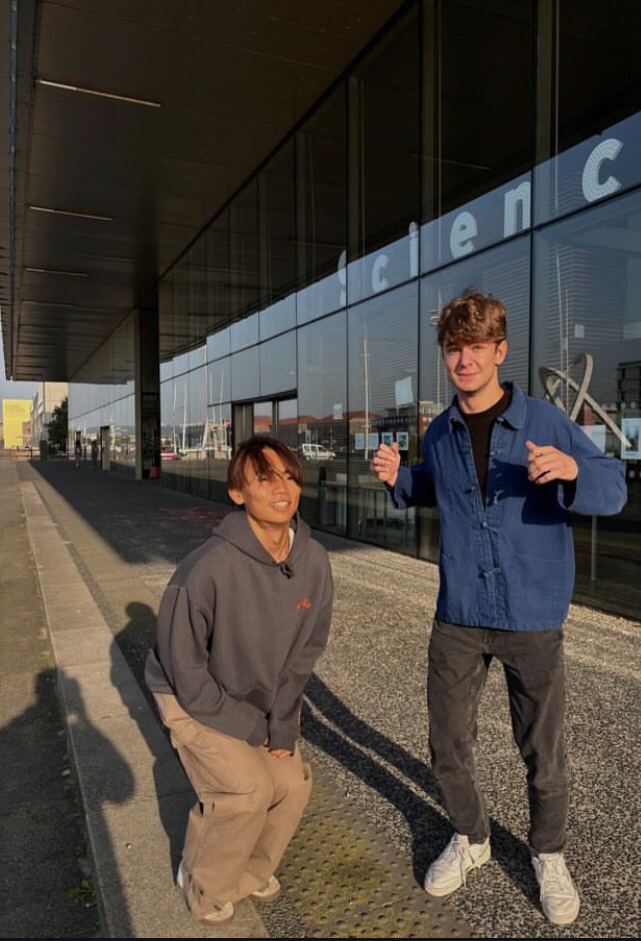
- Can you briefly introduce yourself?
Paulo: My name is Paul-Aurèle Allegrini, but you can call me Paulo. I’m from Corsica, and I am running to be your future Year Rep with Junsei. I’ve never lived outside of Corsica and was kind of disoriented the first days I arrived. So I can’t imagine how crazy it must have been for international students. I always liked to put myself in the place of others and my fellow students. Finally, I have had experience dealing with the administration, even during trouble, since I’ve been a delegate for all my high school years, and particularly when political trouble erupted in Corsica in 2022.
Junsei: My name is Junsei Sone, I come from Japan, and I’m running for year rep this year. I’ve lived not only in Japan, but I’ve also grown up in California, so I think I have a diverse upbringing. As one of the international kids, I hope to represent the diverse interests of the people as a year rep.
- What is the main goal you want to accomplish?
Paulo: My main goal as a year rep would be to truly give a platform for every student to express themselves. Whether it is online, in person, anonymous, or not, I want the students to feel like they actually have a voice. This is why I truly want to be neutral and listen to absolutely everybody and their concerns. I want to really ease the tension and confrontational atmosphere that can exist between the students and the admin. Finally, I want to be a voice and a sword against every type of behaviour that can make students feel bad/ troubled, such as any form of discrimination or bullying.
Junsei: I want to create an air for open dialogue, which is something that I thought after the SJP protests. I’m not trying to criticise them, but after their explanation session about the protests, I feel that opposite stances should also be listened to. I want to achieve an atmosphere of respect and active, open dialogue.
- Why should we vote for you and not someone else?
Paulo: Because, firstly, I would (even if the videos we post may make some of you think the opposite) take this role as seriously as possible. I do believe a year rep has duties. And as your year rep, I would respect those duties with my utmost sincerity. Being a voice for ALL students, listening to everyone, advocating for all, fighting every inconvenience (even the smallest) and discrimination, and, very importantly, being neutral, completely neutral to be able to speak and listen to everyone.
Finally, only one candidate Puts the People in Power ! So remember, vote #Paulo4thePeople and #Junsei4Justice 🗳️🐲!
Junsei: First and foremost, I think that one of my strengths is organisational tasks – going to the admin, negotiating about what we can do – I think that’s something I’m pretty good at. I’ve been doing that in high school too. I think some of my qualities are listening to people, understanding what they are thinking, and seeing things from their perspective. My qualities enable me to bridge the gap between the admin and students and also to negotiate effectively. I think that I am the most passionate about the actual work that the year rep will be doing – I’m not hinting that everyone’s trying to do this for the position or just to add it to their CV – but I actually like listening to different people even when they are in conflict and finding out what they want and what their ideas are. I also wrote in one of my proposals about better organising coursework because everything is so disorganised in my opinion.
Professors send all their deadlines and requirements for coursework by email, while we’re also getting random emails about other events happening on campus. The professors are not the only people sending emails, and in my opinion you should be able to see all the coursework that you have on a single page, because that’s usually how universities work. You have proper pages to organise it. Even with the Student Union negotiations – I am an international student paying the full 14k tuition, and I’m not eligible for any scholarships at this point. This is a problem that concerns me too, so it motivates me to make a change. With these qualities as a mediator and my passion for the work itself, I would like to present myself as the best candidate.
Charlotte Nasser-Belaud-Rotureau
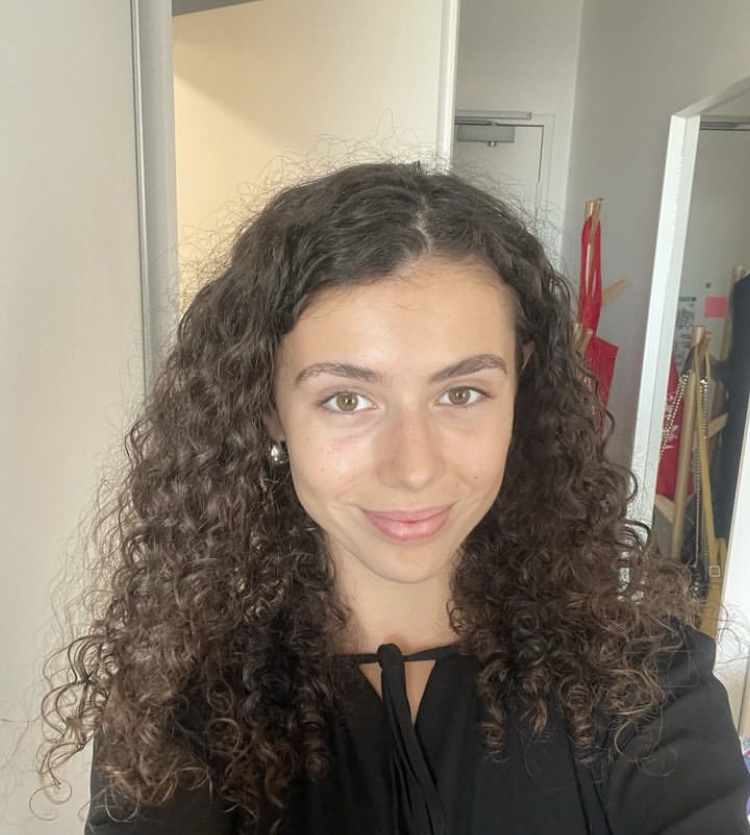
- Can you briefly introduce yourself?
My name is Charlotte, I’m from the countryside near La Rochelle in the west of France. I would describe myself as a radiant person – I’m always positive, I’m always smiling, and I always want to talk to people and make them feel comfortable. I feel like I’m a safe place, so everyone can talk to me.
- What is the main goal you want to accomplish?
I’d like to facilitate academic registrations by allowing more flexibility. I know that some of us didn’t get the choices and time slots that we wanted, so I’d like to create a chat where everyone can get the opportunity to talk to each other and change schedules. While it’s impossible to create a system that’s perfect for everyone, this will at least give those with classes from 8:00 a.m. to 7:00 p.m. a chance to find better options. A practical feature would be to include details of club schedules, allowing students to choose based on that and still participate in the activities or sports that they enjoy. Moreover, I think we need more information about the first year internship – this would help students plan ahead and find more opportunities in advance, especially for those who want to do their internship in their hometown, which can sometimes be challenging. I think that year reps should also keep students informed about the Seas and Oceans certification, as this project influences some of the choices we have to make. We need to be aware of all the opportunities available to us at Sciences Po.
It can be very overwhelming to try to participate in all the events, so I think we should make it easier for students to connect both on campus and off. Different backgrounds and nationalities can sometimes be a barrier, even though we’re quite mixed in seminars. It would be great to create interest-based groups that blend both international and French students to help strengthen our bonds. We have so much to learn from one another, so sharing cultures is an opportunity we shouldn’t miss. International students make up more than half of our cohort, but they still face issues with French administration, so as a year rep I’d like to help both international and French students navigate problems with housing, utilities, or social services.
- Why should we vote for you and not someone else?
Everyone knows that a year rep needs to be responsible, approachable, and engaged. But what sets me apart is my commitment to seeing projects through to the end. I want to give students with ideas the chance to bring them to life, and not let them get lost along the way, so I’m really determined to motivate the administration to find quick solutions, and I’ll follow up as many times as necessary to make sure we reach our goals. I may not be the most extroverted person, but I’m sure that my determination will benefit all students. My friends often describe me as a ‘quiet force’, and I think that’s pretty accurate because I always put others before myself and I will gladly make all my resources available to students. I also want to get involved in this project because I love providing support and assistance to those who need it – in high school I helped resolve conflicts between students and teachers or with the administration, so I know that my temperament and listening skills will allow me to successfully meet everyone’s needs.
Anh Nguyen

- Can you briefly introduce yourself?
I am Anh from Vietnam, and I’m in the Dual Degree with Columbia. I grew up moving around a lot around Southeast Asia and Australia, which gave me a sense of curiosity and understanding about other cultures. I am interested in journalism, human rights, and law.
- What is the main goal you want to accomplish?
I aim to foster a more inclusive community where each and everyone of us could be heard, and their concerns addressed. Our cohort happens to be a very diverse and dynamic one, which is amazing, but which could also mean not all of our voices are not equally heard. I aspire to be the approachable year rep who you could come to with your concerns and suggestions, and the action-oriented year rep who you could trust to deliver tangible adjustment in the community to best suit your need.
In terms of agenda: In terms of student life, I plan to urge for our common spaces more well-kept, more comfortable and more friendly to co-working. I further plan to—of course—better our diet on campus: less costly, healthier, more diverse, and functional food and drink options! With regards to the facility, I will push for a form to timely report issues, be it with the power sockets, dysfunctional clocks, or broken toilets. In terms of academics, I will urge for recording of lectures, because life is tough, and sometimes you just cannot make it to one of them.
- Why should we vote for you and not someone else?
I believe that I am highly approachable and compassionate—I am a safe middle ground for you to speak up, be it about your actionable suggestions or simply your random rants. I further believe that I have a capability to coordinate, as I have experience from my nationwide student organization back home, which hosted twice the number of students on our campus. I further have a strong determination to bring about tangible result, from the tiniest changes up, which I believe is much more powerful than lofty, grand, yet unachievable promises.
And for such reasons, I believe that I should be your Anhswer!
Bartholomew Loh
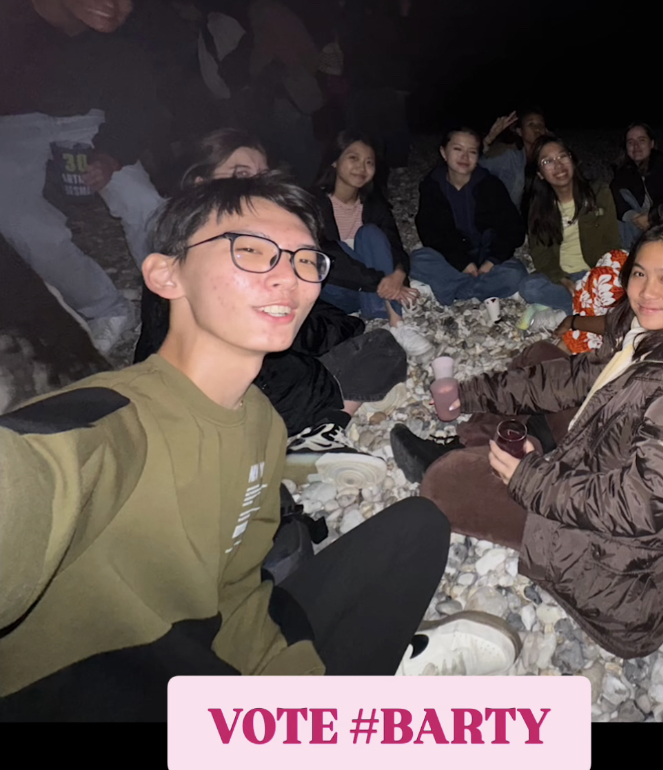
- Can you briefly introduce yourself?
My name is Bartholomew teck hou LOH, you can just call me Bart and Barthol, or Barty. I come from Malaysia, which is a very diverse country, and I love Sciences Po because it is as diverse as my country, if not more.
- What is the main goal you want to accomplish?
So first things first, I think about the vending machine. We should have a democracy system where everyone can choose, like we should do a Google form about what we want to have in the vending machine. The second thing I think about is the international students and their relation with the French students. I think what we are missing is some people willing to really talk to each other. On the French side, there’s people who are very outspoken as well as international students, and everyone is kind of friendly. We just lack those kinds of people that can bring everyone together, so if there is an international student and a French student as the year rep this year, I think it really can bring everyone together rather than just two international students.
- Why should we vote for you and not someone else?
I think it would be great having a girl and a boy, an international and a French student.
I have this experience for like all my whole life that I can do things before the deadline. I always submit things before the deadline. I have the experience in my school, so in my high school I do in my student association, and I have been a club president, so I do have the skills to organise things. I basically think I have the right skills for this job!
Paul Colas and DC

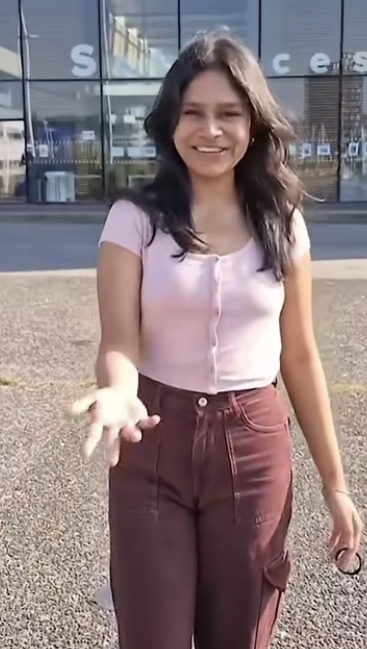
- Can you briefly introduce yourself?
DC: My name is Debashmi. I go by DC over here because no one can pronounce my name properly. I’m an international student from India. I love cats, dumplings, and adventure sports. I’m still trying to figure out how to settle in and call Le Havre and its weather home.
Paul: I’m Paul. I’m from southwest France, like far from here. (I say chocolatine. Don’t get fooled by people that tell you otherwise they are wrong.) So, well, I have never done representation through high school or middle school, which I don’t think is a problem because I have done representation before; I’ve been a scout for 10 years, 11 now. As a scout, I’ve done representations of my units at a territorial and national level.
- What is the main goal you want to accomplish?
DC and Paul: We have so many issues on the campus; we’re sitting right now in front of the vending machines, in which there is nothing except a bag of Skittles and a can of Coke. And as a campus that has the second largest hypermarket, Carrefour’s CEO on its board, that’s really concerning. I think the BDE is getting new vending machines. So that’s not why we’re running. We just wanted to highlight the fact that there aren’t going to be enough options, like not even a sandwich. Also about the vending machines, we understand that it is obviously not our job to do something to replace it and everything. But our job is to make the student heard, like make their voice go to the admin. So that, like, what we can do about it is we heard that the students want more diversity, want more health, want more healthy snacks, and everything intervention machines. And that is something we can do. Like that is a message we can bring to the admin. We cannot guarantee you that we will be; [we can try].
We want to work on an academic level, regarding peer support groups in terms of just having a better student community, like for the PI readings, where everyone’s struggling collectively. That’s why we want to have support groups in place, like with regards to academics or emotional support. It’s not on the Wednesday evening when everybody has a club that people are going to work on the PI readings.
Also, the clubs have started, and we often don’t know where they are, and when they are, they’re just all over the place. And we all find it important to have extracurricular participation; that’s a topic on which we would like to work.
One more point we just wanted to highlight was especially the access to the events that happen on the main Sciences Po campus. When guest speakers come to Le Havre, we often don’t have access to the conferences, or they are scheduled when we have classes. So if you are not free, you’re sort of excluded from it. On the main campus, they have truly good events, and we’re not always aware of it because we don’t receive emails every time.
So maybe like a board like Moodle where you have all the Sciences Po Paris events, even doing like a video or sharing in order for you all to have access to the events.
We’re still under the Sciences Po banner, all campuses should be aware of what is happening. If we can’t use the advantages that come with being a Sciences Po student, like listening to world leaders and attending their conferences, it’s pretty useless, right?
- Why should we vote for you and not someone else?
DC : Paul and I chose each other because I feel we were very diverse people. We identify as different genders. We come from very different places. He comes from the south of France, and I come from India. He’s from a Francophone country, and I’m from an Anglophone country. So when it comes to representing everyone on campus, I think we make a really good fit because we’re one of the most diverse duos running in practically every [way].
Minbi Roux and Elena Friess

- Can you briefly introduce yourself?
Elena: My name is Elena. I’m in the dual degree with HKU at Sciences Po Le Havre. I’m running for a year rep because I want to represent the promotion in front of the admin and to build projects for the whole class, and I would be glad to be elected with Minbi.
Minbi: I’m Minbi I’m in the normal degree with Sciences Po. I’m French and Korean, and I would like to present myself for year rep in order to like every other year rep to represent students but also to kind of make a better cooperation with the admin rather than having the impression of having two opposite blocks, like just to make life easier here as a student.
- What is the main goal you want to accomplish?
Elena: I think we wrote it in our Instagram post that our main goal was to be attentive and reliable for people, to listen to their needs, problems, and projects, and to carry their voice to the admin. So that’s why we are not only proposing projects and ideas but also showing that we are the ears that they need if you want to.
Our goal is not only to transmit projects of people to the admin but also just to help them personally because we know that as French students we already know that administration in France is quite difficult, so I don’t imagine how it can be like for international students, so just even as a person, if we can help them, rather than just being a year rep. Help them as a friend, as a co-student. So if we would remember like one project, would it be like helping more like international students get used to the French way of functioning and French administration? I think we should build cohesion between all students. Rather than having a division between French and international students, just to make a pause.
How would you create this unity? Like, how would you manage to reassemble?
I think first it will be like we said to be 24/7 reachable and attentive for international and French students. We’re available in person also with our Instagram account, for which we also made an email address so that you can write to us, and it could be totally private with us. You don’t need to go to see us, and to show that you go to see us, it’s more like you can write to us, and it will be private and confidential.
- Why should we vote for you and not someone else?
Minbi: I think you can talk about us as a duo, but as for me, for example, I have been a member of the city council of my hometown for at least two years during high school, so it’s not the first time for me to like to talk in front of an administration and to convey concerns or like to just put in place some projects that are important for us.
I think I might be suitable for this post because I just won’t be afraid of administration because that’s something I’m used to.
Elena: I know I like these functions. I was class representative for the last seven years and also represented in different reunions like administration councils or international section councils in Strasbourg, and I could represent the students and the students of my high school, and I liked just the functions to represent them, and I know I can deal with all the work it came with. If there is any problem with the admin about protests, for example, I think we would have to stay neutral about it and even if we have some ideologies or ideas about it we would have to be neutral and it won’t be a problem for us to stay neutral about it.
I don’t know if people know about it, but I’ll take an example. In the 80s or 90s, one of the directors of Sciences Po thought about canceling or suppressing scholarships for some of the students. At the time, students back in the day decided to protest against this measure, and at the end, the decision of the director was cancelled.
So with this example, I think that’s one of the stakes. One of the main goals of being a Sciences Po student is to represent our ideas and to make people know about them. I think what matters the most is to represent our values. The most important thing for Sciences Po students is to represent their own values because we’re in Sciences Po; we’re in a social science school, so it’s one of the goals of our institution, I guess.
What matters the most is to represent our values, but at the same time, I think we have to differentiate the values and the way to express them. The separation between being a Sciences Po student and being the representative of Sciences Po students is in all. We will be able to differentiate what they want and the way they want to show it to the world. We would understand it, but we would have to stay neutral to make it possible.
Sara Cipriani
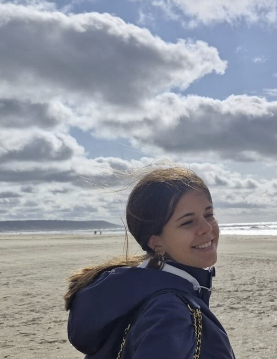
- Can you briefly introduce yourself?
My name is Sara Cipriani, I’m 18 years old, I’m French and Italian, and I come from the south of France. I wanted to come to Le Havre because I studied Chinese for 7 years and wanted to explore that culture deeper and this language that I am really passionate about. I am really interested in the link that Europe has with Asia in general, that’s why I chose this campus.
- What is the main goal you want to accomplish?
I want to make this campus a safe place for everyone, to make everyone able to speak their minds and be listened to because this is a really big problem in Sciences Po and I really want to make sure that the admin can hear us and so be sure that the campus becomes a safe place for everyone since there’s a zero tolerance policy against any violence for any reason.
I’ll install weekly or monthly meetings in order to host events in the amphi so everyone will be able to tell me what they’d like to change and what they want to improve on campus. I also want to create an anonymous chat box about issues people don’t want to talk about in public, and I also wish to be really accessible for everyone to reach out to me because in university it’s hard to always know who you’re supposed to talk to depending on the issues you are facing. That is why I want to be a link between the students and the admin.
- Why should we vote for you and not someone else?
I think you should vote for me because I am great at representing others, already have experience for representing people and to bring others voices at higher level
like when I was in the south of France I was in the youth parliament of my region so that helped me to listen to my fellow friends and to be able to make their voices heard and respected.
Camille Platon and Paul Ramperez

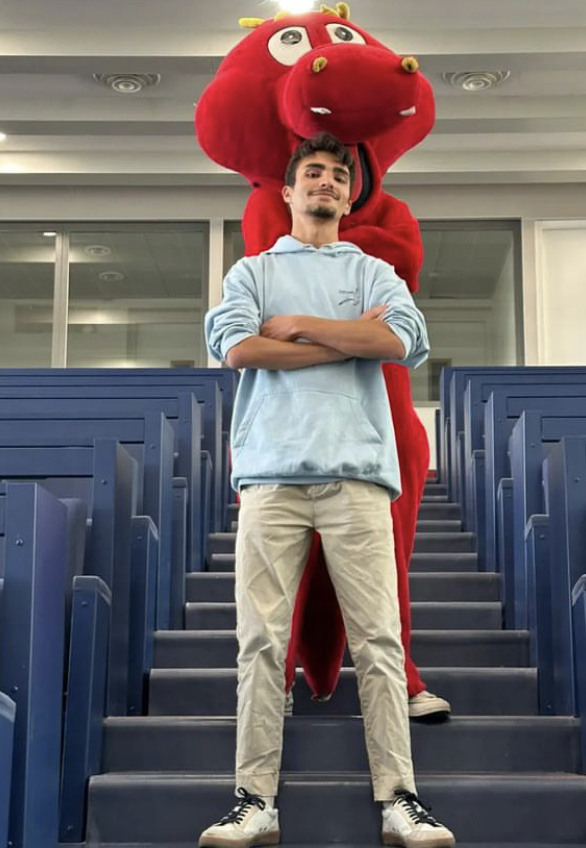
- Could you please introduce yourself?
Camille: My name is Camille Platon, and I come from the south of France. I can speak English, French, and a bit of German, and I’m currently learning Mandarin. I’m also half French and half Vietnamese, so I have a double culture, and I would say that I’m mainly influenced by my Asian family who come from Vietnam and Laos.
Paul: I’m Paul Amperez, I also come from South France. My main hobbies are playing guitar and meeting new people. I’m pretty sociable, and I like to engage myself with others in general.
- If we should remember only one thing about your program and the main ideas you want to fight for, what would it be?
Camille: I think it would be to make sure that there’s no gap between the international and the French students, because as we are the most international campus of all the Sciences Po campus, it’s really important that we all stick together, and that our cohort is connected, and I don’t want any person to feel left out and to have problems of integration. I want you to see me as someone with whom you can talk with no pressure and no judgment.
Paul : We have pretty much the same ideas, I really want to focus on integration, and notably because the diversity of this campus is certainly the thing that I prefer, so I would like to create solidarity and mostly cultural exchange between the people.
And about concrete measures, I will insist on communication through an Instagram page, where we will post all the news about the administrative stuff, but also where people will contact us about integration, cultural exchange, and all the issues they could encounter, problematics, and notably through an anonymous chat.
- Why should we vote for you and not for other candidates?
Camille: Because I would say that I have really great communication skills that I got with my personal experiences. I worked since four years in an sailing club, so I have encountered a lot of different people, from the elderly to children, so I don’t have any problem with communication, and I’m also not afraid of conflict, so I will not hesitate to speak to the face when there’s an issue that needs to be solved, and I will be ready to defend the ideas and the point of view of the students in front of the admin.
Paul : I’m really involved in all the things I do, and I think I’m social and empathic, so I will be there to understand people and to really find a solution for every issue there.
And there — you’ve seen it for yourselves, readers. This year we have a whopping 15 candidates running for year rep – we’re spoilt for choice! With so many appealing options, choose wisely, Mushus!





 Le Dragon Déchaîné