Le Studio: un retour au devant de la scène

par Manon Patouillet
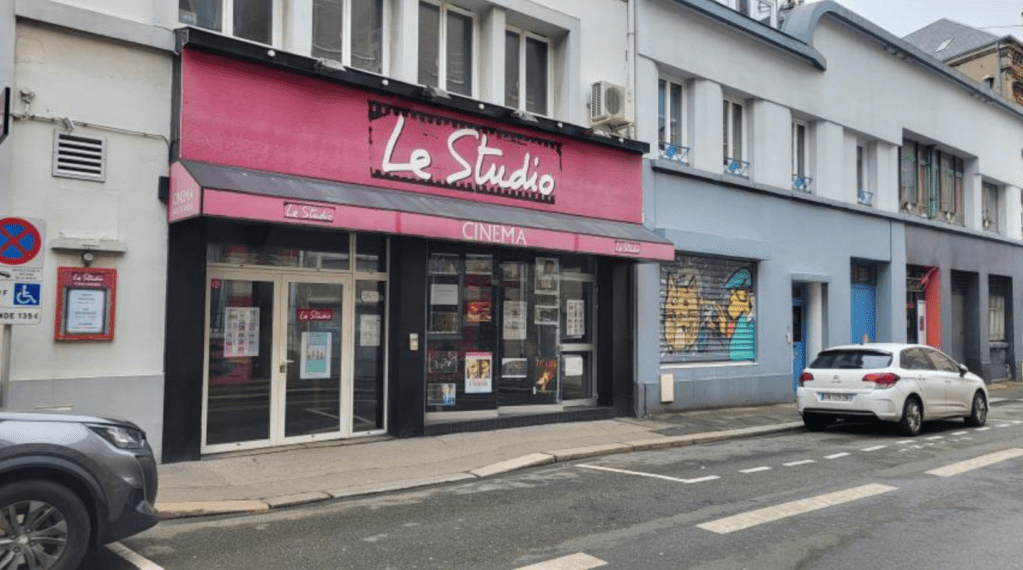
Source : Paris Normandie

Nombreux, sans doute sont les étudiants du campus du Havre de Sciences Po, qui, au détour d’un scroll sur Instagram un soir de printemps 2024, sont tombés sur une pétition intitulée“Sauvegardons le Studio que nous aimons !”. Destinée à la sauvegarde du cinéma Le Studio au Havre, celle-ci a été initiée par un alumnus du campus, Elias Cantone.1 Partagée par la suite, par quelques-uns de nos camarades, la monosalle, qui traversait une période de crise à ce moment-là, était grandement soutenue par les « Mushus ». Alors que des rumeurs de tensions au sein de la gouvernance, menant à une possible fermeture du cinéma se propagent, l’été arrive et les « sciencespistes » fuient Le Havre pendant plusieurs mois. Au retour des vacances, la résolution quant à l’affaire concernant le Studio reste tout aussi floue. 

La monosalle, située au 3 rue du Général Sarrail, a vu le jour en 1999 sous l’impulsion du réalisateur Christian Zarifian. Composée d’une salle de 84 places, sa petite taille n’a pas empêché le créateur du Studio d’afficher de grandes ambitions. Zarifian souhaite que la monosalle devienne un “lieu de mémoire”2, au Havre, alliant classiques et films moins connus. Vingt cinq ans plus tard, l’objectif reste le même selon le programmateur David Lheureux, qui continue à “présenter le cinéma dans toute sa diversité”. Au fil des années, le Studio entretient également de nombreux partenariats avec d’autres organisations havraises, tels que les Ancres noires, ou Du grain à démoudre, et organise des événements pour enfants.3 

Cependant, selon les reportages de Paris Normandie, début 2023, une querelle éclate au sein de la direction du cinéma. Deux camps s’opposent, se revendiquant chacun comme le bureau légitime : d’un côté, les « anciens », composé de Patrick Gravé, président du Studio depuis 20 ans, André Fouché, le trésorier, ainsi que David Lheureux présenté précédemment ; de l’autre, la veuve et la fille du défunt créateur du Studio. Alors que la famille Zarifian organise une assemblée générale pour élire un nouveau bureau, le groupe présidé par Pierre Gravé porte plainte contre celle-ci. Cette plainte sera alors le début d’une longue bataille judiciaire, aboutissant aujourd’hui à la nomination d’une mandataire provisoire.4 

Ce conflit a semé le trouble au sein de l’équipe, déchirée par des perceptions et des ambitions différentes pour le cinéma. Pour David Lheureux, cet épisode a été rude, frustré que son travail qu’il exerce depuis 22 ans, soit remis en questions par des membres inactifs jusqu’alors.5 La situation a même mené jusqu’à mettre en péril certains partenariats précieux que le cinéma entretenait depuis longtemps. Alors que la banque bloque certains comptes, plusieurs salariés envisagent même de remettre leur démission.6 

Bien que le calme semble être revenu au 3 rue Général Sérail, la situation demeure incertaine. L’affaire est-elle complètement résolue ? Quelles sont les répercussions du conflit aujourd’hui ? Une série de questions nous viennent à l’esprit. Pourtant, interrogés sur ce sujet, David Lheureux et l’administratrice provisoire Cécile Dur ne souhaitent pas en parler. Il ne fait aucun doute que cette affaire marque une période difficile pour le cinéma, même s’il est encore trop tôt pour en tirer des conclusions. Ce havre de partage et de rencontre autour des films était devenu un terrain de querelles. Peut-être que des contraintes légales les empêchent d’aborder le sujet, ou bien cherchent-ils simplement à éviter que ce conflit, aux issues encore incertaines, ne vienne perturber la rentrée tant attendue du cinéma. 

En effet, David Lheureux ne cache pas son désir d’aller de l’avant, et se concentrer sur la réouverture et les projets à venir. Le Studio reprend une activité inchangée, avec son incontournable programmation mensuelle. En septembre, la monosalle a proposé une sélection de films variée à ses adhérents, que ce soit le classique du cinéma argentin Que la bête meure de Roman Vinoly Barretto, ou la Nouvelle Vague avec Les deux anglaises et le continent de François Truffaut. 

En parallèle, tout au long de l’année, le fil conducteur du Studio sera le cinéma asiatique contemporain. Comme tous les ans, le cinéma choisit un « cycle » de septembre à juin sur un thème défini, présenté depuis 2002 par Youri Deschamps, rédacteur en chef de la revue « Eclipses ». Au programme, des films tels que Tel père tel fils du réalisateur japonais Hirokazu Kore-eda, mais encore A touch of sin de Jia Zhang-ke, pourront ravir les spectateurs. 

L’objectif encore une fois est de faire découvrir au public havrais des cinéastes peu vus en France. Interrogé sur les raisons pour lesquelles il avait choisi ce thème, David Lheureux répond : « Je m’étais fait la réflexion (…) que dans le cinéma français actuel on est beaucoup dans le verbe, on est beaucoup dans la parole mais pas beaucoup dans l’image ». Au contraire, le cinéma asiatique contemporain est certes peu bavard, mais fort au visionnage. « Le but de ce cycle là est aussi de remettre en l’honneur le cinéma comme un art visuel ». Pour David Lheureux, ceci est « l’essence » même du cinéma. 

Ainsi, gâtés  par une programmation de telle qualité, les Havrais n’auront d’autres choix que de se rendre au Studio pour savourer ses films. Or, le cinéma d’art et d’essai a besoin de la fidélité de son public, qui doit privilégier l’expérience immersive en salle plutôt que le confort d’un film Netflix à domicile. Car une fois disparus, ces lieux de culture ne renaissent jamais. 
Le Studio: Onwards and Upwards

An interview with David Lheureux

By Rita Zeefal

All photos credited to the author.

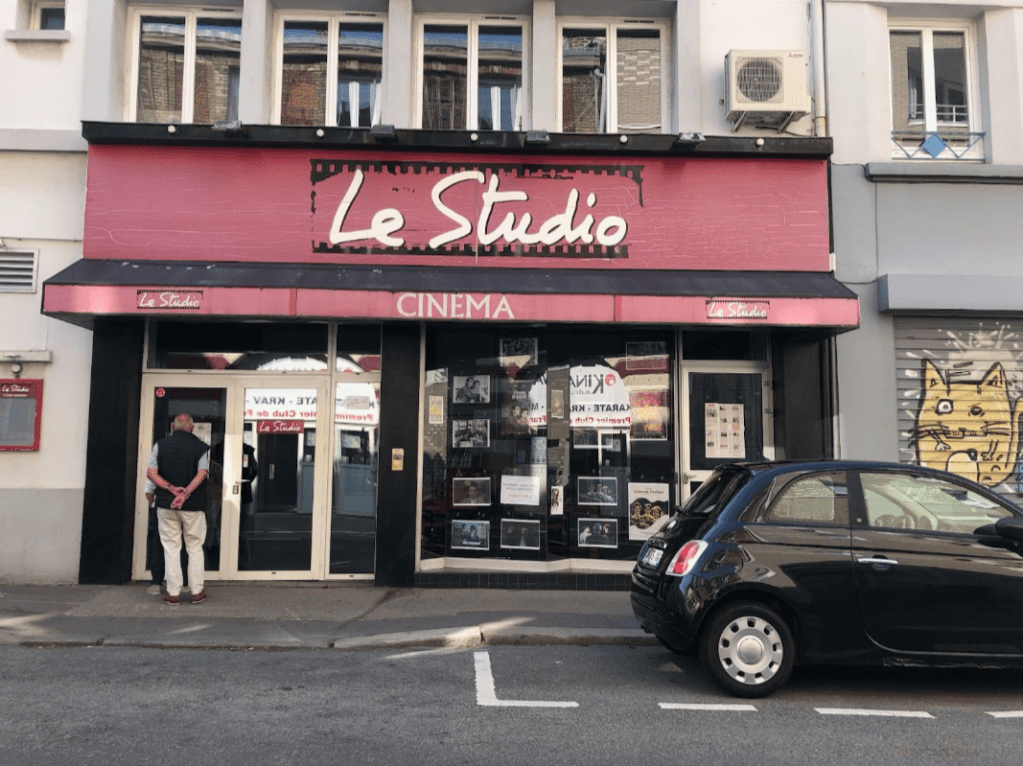
Above: a street view of Le Studio

While the beloved cinema d’art et d’essai’s future seemed precarious at the beginning of this year, it has managed an impressive rebound.

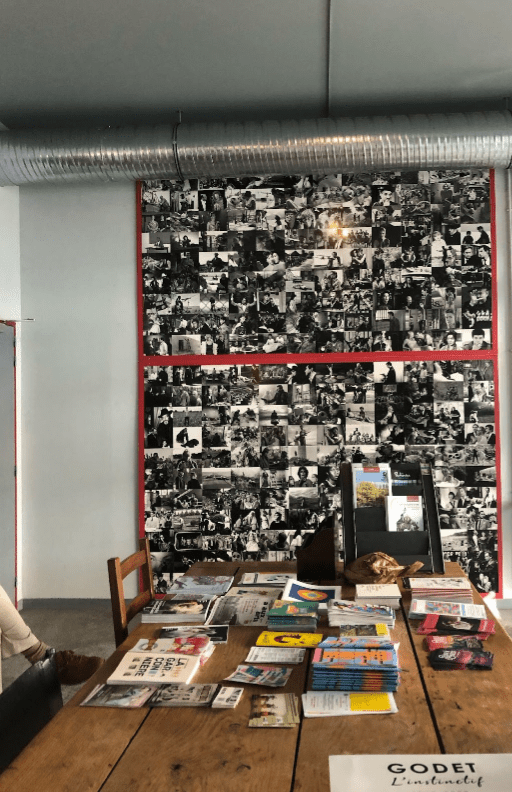
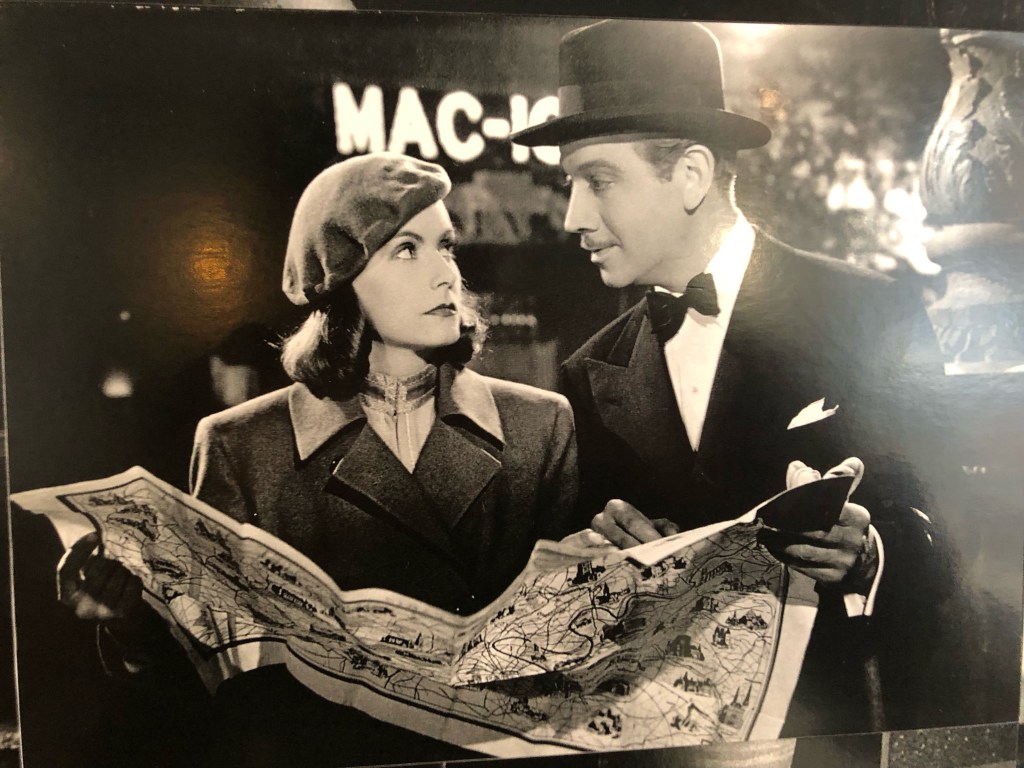
“Could you wait ten minutes until the screening is over?” says David Lheureux as we enter the foyer of Le Studio, Le Havre’s best and most beloved cinema d’art et d’essai. We sit down as David prepares to usher in an elderly couple to see Alfred Hitchcock’s The Lady Vanishes (1938). The foyer at Le Studio is immediately beguiling for an institution of its kind: the walls are papered with the printed cards that the enterprise gives to anyone who comes to a screening – with a still from the showcased film on one side and a description and history of the film on the other. One corner boasts a repository of such cards from screenings long past – which anyone can take free of charge. A large table occupies the centre of the room, on which are strewn pamphlets, brochures, and booklets on all things art and cinema at Le Studio and in the city of Le Havre. 

Above: a view of the interior of Le Studio’s lobby.

Fellow Le Dragon Déchaîné reporter Manon Patouillet and I begin our interview with David. His sharp, quizzical expression and steady blue eyes remain fixed on us. 

RZ: Could you tell us a bit about the establishment of Le Studio? Who initiated the project and what was its initial objective?

DL: Well, Le Studio was established in 1999 by Christian Zarifian, a filmmaker, who wanted to establish cinema heritage – the aim was to be able to showcase cinema – the grandes classiques and the history of cinema, but also world cinema and what was not shown on television.

MP: And what is your role at the cinema? How many people work here?

DL: There are about six people who work here – for my part, I play a role in the curation of films, and I oversee the screenings, making sure that we have the rights to show certain films…

RZ: And for how long have you worked here?

DL: I’ve worked here since 2002.

RZ: Wow, so it’s been quite a while [all laugh].

MP: Could you tell us a bit about the legal issues Le Studio was facing earlier this year? We know that a petition was started by an old Sciences Po student from our campus to mobilise support for the cinema.

DL: Indeed, erm, a petition was started by a student from your campus, however we were still able to operate during that time.

RZ: But what was the trouble exactly? 

At this point David’s answers become vague, and he shifts the focus to the role that a Sciences Po student, Elias Cantone, played in bringing attention to the conflict and mobilising local support for the institution to remain open.

From our point of view, the story is this: on the 6th of April, a petition created to ‘save’ Le Studio was shared with the students of Sciences Po’s Le Havre campus. “Sauvegarder Le Studio que nous aimons!” was its cry. The institution’s future looked precarious as two administrative factions fought over control of the cinema monosalle. A resolution of the conflict seemed elusive and the cinema appeared to be at risk of closing for good.

According to reporting done by Paris Normandie on the matter, two parties were at loggerheads over the question of control of Le Studio. One was led by the widow and daughter of the institution’s founder Christian Zarifian, and another led by individuals who have been administering the cinema since its conception, including president Patrick Gravé and treasurer André Fouché. By the time the story was reported on, the conflict had been raging for well over a year. By April 2024, a judicial tribunal was in the process of naming a provisory administrator while the two conflicting parties worked on finding a resolution internally. Once  Le Studio reopened its doors on the 28th of August, Cécile Dür, an administrative official of the Association Les Films Seine Océan, had been named the provisory overseer of its affairs. The cinema reopened its doors to the public after a summer sabbatical on the 28th of August with a screening of Kozaburo Yoshimua’s Night River (1956). 

For now all seems to be well. The optimism expressed by David for the cinema’s coming year is palpable. David proceeds to tell us of the curation of films at Le Studio, its choice to show what is dubbed ‘world cinema’. He casually includes  his matured reflections on the value of such cinema in an artistic sense.

DL: We run a programme that we curate based on a theme, and our programmes run for the entire year, that is to say, from September to June. As you can see we are showcasing a lot of  contemporary Asian cinema. We have Youri Deschamps who comes to present a film every month. We curate a programme for each month of the year. We try to show films by directors with a rather strong sense of aestheticism. Directors that are less known. Youri Deschamps has been doing presentations since 2002, so that’s 22 years. People come here to make discoveries, to see things that they aren’t able to see elsewhere.

MP: And why have you chosen to showcase Asian cinema in particular?

DL: Contemporary Asian cinema? Well… because of the amount of reflection that French films tend to have, we are really caught up with the spoken word, with language… I personally find that it’s sometimes a bit too literary, whereas with Asian cinema there is a sense of the aesthetic that doesn’t come second. It makes for a cinema that is –  bolder,  and harkens back to the true sense of cinema.

To many of us who are regulars at Le Studio, the cinema is more than just a patrimoine institution. The cinema is a portal to worlds far removed by space and time from anything many of us will ever get to know in our lifetimes. And for this fact alone, if not for any other, when we walk out of the inky black darkness of the screening room, we emerge as different people. The cinema is just as much a part of our education in this city as are our weekly seminars and 3-hour lectures. Our only hope is that this experience will be shared by many future generations of students in the city of Le Havre.

Above: an example of the printouts that are handed to every individual who pays to see a film at Le Studio. This film still shows Greta Garbo with John Gilbert.

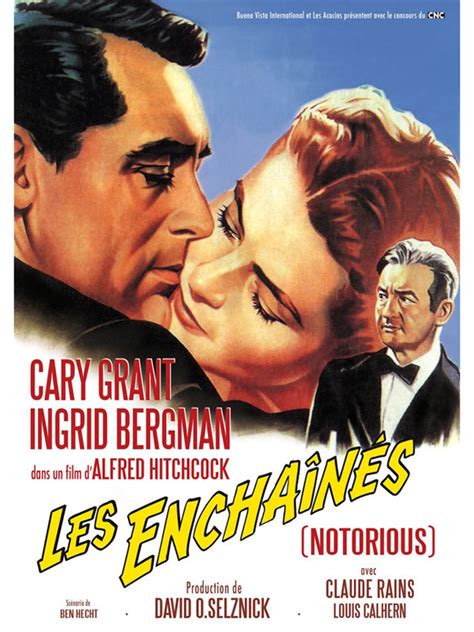
Les Enchaînés (1960)- Alfred Hitchcock

L’insoupçonnable vertu de la vulnérabilité

Synopsis

Afin d’aider à traduire les nazis en justice, l’agent du gouvernement américain T.R. Devlin (Cary Grant) recrute Alicia Huberman (Ingrid Bergman), la fille d’un criminel de guerre allemand condamné pour espionnage.

Continue reading “Les Enchaînés (1960)- Alfred Hitchcock”