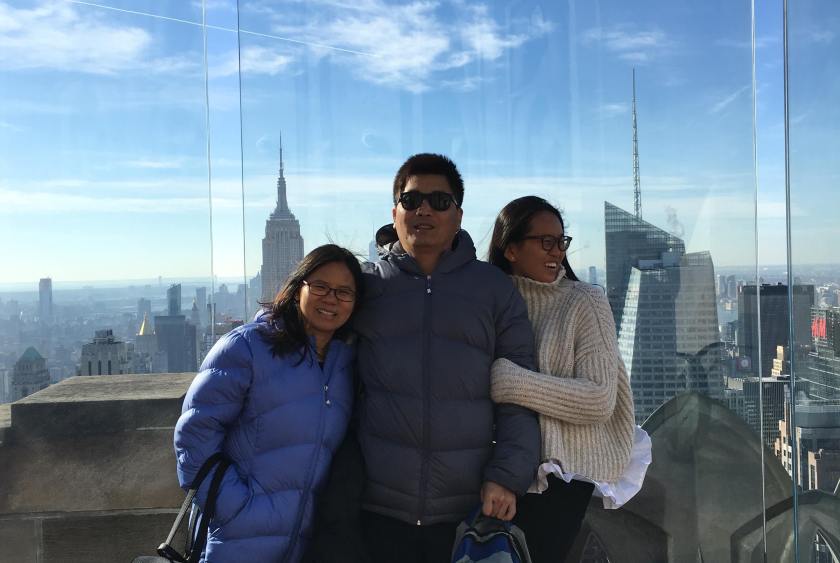
To my parents

Since moving away from my family for university, and beginning an exciting new chapter of my life, I find myself feeling much more nostalgic than I had expected.

As a teenager, I was always rebellious against my parents’ stereotypical, overwhelming Asian control. Looking back, I was an overly confident and self-assured kid, I always thought what I wanted was right, and got easily frustrated when I thought my parents didn’t understand Australian culture and tried to impress traditional Chinese values on me. I found every rule or expression of their anxiety irritating and excessive, which spurred my impatience to move away for university so I wouldn’t have to constantly answer to them.

The freedom that came with independence was an eternally enticing prospect. The reality of what I feel being so far from my parents is not nearly what I expected. I have often surprised myself, stumbling across a thought of them, and feeling homesick.

Being in a new country has made me reflect more on the sacrifices and achievements of my parents. I am filled with incredible pride for my parents; the first of their families to go to university, coming from rural China, with relatively poor upbringings, who have managed to create a life for my brother and I where we have always felt comfortable, and for them to support me whilst I live abroad. They moved away from their family and friends to live in country where they didn’t understand the language and culture, where they are part of a social minority. This change to create a better life for me uprooted everything they knew and were comfortable with.

Now, knowing what it is like to live in a country where I barely speak the language, I can begin to grasp the extent of such a change and recognise their sacrifice; although the word falls short. It doesn’t speak of my dad’s over-qualification for a mundane job, and his inability to be promoted because of his English. It doesn’t acknowledge my mum’s obsession with her garden patch, so that she can grow and taste the unique vegetables of her home country. It doesn’t account for the decision they have to make between buying plane tickets back home to see my grandparents, or to send them the money so they can have a better quality of life. It doesn’t address the distance and hurt that was created between us when I was in high school and clung onto Australian cultural ideals that ultimately repressed my Chinese heritage.

Joyce’s mom’s garden patch

All of my privilege and the the resulting happiness is owed to my parents’ sheer hard work, and the sacrifices they have made. Everything they have done has been for me to have a better life than they did. And yet this is not an exceptional tale. Every first generation immigrant has a comparable account of forgoing what they knew for a chance at a better life. I am acutely aware of this now, and regret not acknowledging it earlier and showing my appreciation to my parents. Being a difficult, impatient teen and naïvely taking their efforts for granted has elicited a guilt that now manifests itself here, as an attempt to substantialise my gratitude.

So, to my parents, thank you for always guiding me towards what was best for me, even if I did not always believe it. Thank you for working so hard for the life you have given me. Thank you for your selflessness. Thank you for teaching me how to love, simply; what a glorious lesson to learn. Grateful is not a sufficient word. It does not cover the rush of affection I have when I think about my opportunities, knowing I owe them to my parents. It does not account for me pleading with my brother to be kind to them, and my patience in explaining to him why he should tell them he loves them. It cannot acknowledge my determination and drive for success, so they don’t have to doubt whether their sacrifices and hard work paid off. It does not speak of the promise I have made to myself, to do anything for them at absolutely any inconvenience to myself, for they know more of sacrifice than I ever could.

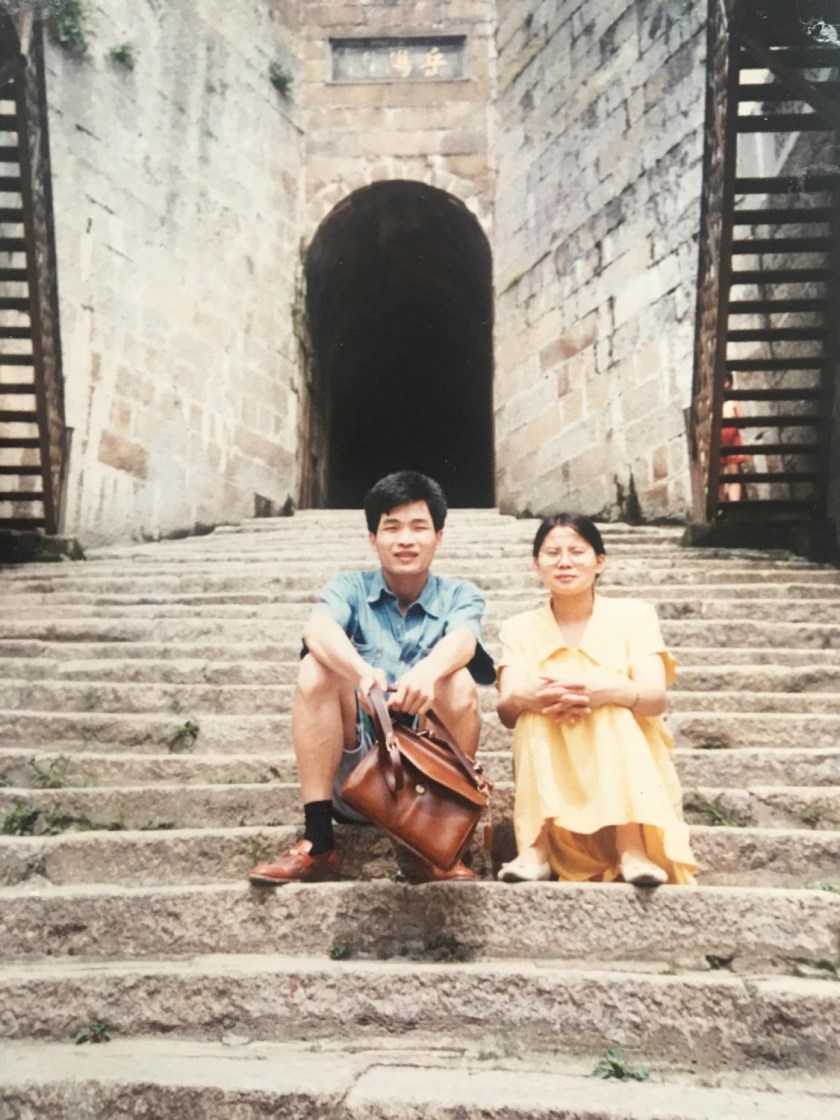
Joyce’s parents when they were young

Joyce Fang is a first-year student at the campus du Havre. She’s from Adelaide, Australia, of Chinese origin. You can find her knocking back beers at Wallaby’s, or furiously studying in the library. She also features in the first episode of the podcast “Wine Society“. She wrote this letter to her parents while taking a break from midterm revisions.

Edited by Pailey Wang and Philippe Bédos

A Call for Transparency

An open letter concerning Sciences Po’s administration and recent reforms, by Zhenlin Ouyang.

Zhenlin Ouyang is a second-year student at Sciences Po, Campus du Havre. He majors in Politics and Government. He is orginally from China, but lived in Canada before coming to Le Havre.

I have confidence Sciences Po, as an institution firmly rooted in and representative of democratic principles, will be receptive to criticism from its student body. Therefore, I write this letter to bring forth two major issues:

1. The lack of transparency about administrative regulations and the reform;

2. The treatment of students who are currently repeating either year of their studies;

I – The lack of transparency

Throughout our time at Sciences Po, the information we have been given has been incredibly inconsistent. In some cases, we have been given no information at all. A key example of this is the contradictory information we were given about the reform.

During the designated information session we had regarding our choice of major, we were told that:

  • our major during the third year abroad would not have to correspond to our major at Sciences Po;
  • that we would be free to pursue an intensive language program regardless of our second year major

However, during this semester, we were told the exact opposite, and the following announcements were made:

  • Our current major has to be pursued during 3A
  • Our current major also determines what universities we can apply to; as some universities do not offer certain majors
  • The intensive language program is not open to anyone anymore.

There are many questions that spring to mind:

  • Where do these inconsistencies come from?
  • Why was this reform not more thoroughly organized before being presented to the student body?
  • Why was there no procedure of consultation with the students regarding this reform?
  • And most importantly: Why were all applicants who would be subject to the reform not informed about it before applying?

Moreover, we were registered for Digital Workshop seminars (on September 14 – 15) without prior notice. However, in my opinion, we should have the ability to choose the seminars we want to sign up for.

II – The Treatment of redoublants

It is hard for students to study at such a demanding university. Enrolling for an extra year is, thereby, doubly difficult. Especially without the proper assistance.

Last summer, when I discovered I had to do an extra year, the administration and I scheduled a Skype conference to discuss my situation. In addition to a half-an-hour delay, I was only allocated five minutes of time to pose my questions. During that brief meeting, I expressed my concerns and asked two questions:

  • Would I have to re-do the group project? (Before the reform, students were required to implement a group project during the first year)
  • Would I be able to validate the internship I did during the summer of 2017?

I was told that I didn’t have to do another team project and that I would be able to validate my internship if all the relevant documents were provided.

Then, to my surprise, when I went to the administration to validate my internship during the last semester, I was given an entirely different response. They first told me that they had to check with their colleagues in Paris and, finally, that I wouldn’t be able to validate it. I was confused by their reasoning: I wrote my engagement letter about the promotion of gender equality and my internship was correspondingly conducted at an NGO promoting rights for gender minorities.

I was fed the same story when I asked them about the independent engagement. As the administration has completely ignored my repeated attempts to give my perspective, and as one of my fellow student is in the exact same situation, I would like to ask the following questions on our behalf:

  • If the reform had been set forth with clear instructions, why do we still rely on Paris for clarifications?
  • Why do I have to re-do my internship and the Independent Project? Our administration misled me by giving me contradictory instructions for half of the year (thus giving me less time than other students to find an internship). Why was I obligated to re-do this when the internship I did the year before could have been counted?
  • For students who passed conditionally: why do we still have no information on how to retake classes despite the fact that the first semester is coming to a close?

III: Our Demands

The aforementioned examples are just the tip of the iceberg, but they reflect the lack of transparency within our institution. Beyond these examples, there are several contradictory regulations (such as the absence policy) and our plans are often disturbed by the fluctuating rules passed down from the administration. We were left in the dark as to why the reform was put forth so quickly, and why the regulations were made to be so ambiguous.

When even the administration does not know what they are doing, imagine how we students feel; without sufficient and transparent information, it is difficult for students to incorporate the reform into our personal academic program.

Hence, I present this set of demands on the behalf of students of Sciences Po, who I hope will join me in this call. We hereby demand that:

  • A general assembly be held to explain why regulations about 3A have been reversed without consulting students
  • A responsive mechanism be implemented by the school to collect the students’ opinions and recommendations on the reform, and that these be taken into account
  • A unifying standard should be established to prevent any future rapid change of rules and regulations;
  • An ad hoc procedure should be negotiated for les redoublants.

We want a full account of why the school thinks it is acceptable to change rules without going through transparent and inclusive procedures, and we want to see commitments to end such practices.

Revised for clarity by the editorial team of LDD.

The opinions expressed by the author do not necessarily represent the editorial position of Le Dragon Déchaîné.

What’s On Le Havre: September

Welcome to the first edition of What’s On LH for the new academic year. This monthly guide brought to you by the Bureau des Arts includes our top picks for art, music and culture au Havre.

EXHIBIT !

Well worth the trip up the hill, the Tetris has a multi-medium exhibition on landscapes which is about to finish. Catch it before it’s gone! More.

WHERE: Le Tetris

WHEN: Until the 2nd

HOW MUCH: free

Né(e)s de l’écume et des rêves

Also finishing up soon is the temporary exhibition at MuMa. The eclectic collection revolving around the ocean is an interesting complement to the permanent exhibits, which are well worth visiting for newcomers. More.

WHERE: MuMa

WHEN: Until the 9th

HOW MUCH: free (for students)

Le Volcan: Open Door

Le Havre’s iconic theatre designed by Oscar Niemeyer will open its doors for two days to mark the beginning of the new season. A worthwhile behind the scenes look at an amazing building, and a thriving artistic hub. More.

WHERE: Le Volcan

WHEN: 15th and 16th

Ouest Park Festival

Le Havre’s very own summer music festival is nearly upon us, and with a great international lineup with names such as: Boys Noize, Romeo Elvis, The Brian Jonestown Massacre and Therapie Taxi, and many more. This isn’t one to miss! More.

WHERE: Fort de Tourneville

WHEN: 21 – 23rd

HOW MUCH: €26 per day (students), free on the last day.

There are a lot of public art installations as part of Un Été au Havre. Take a visit to the beach, or up the hill to the Jardins Suspendus to catch a few before they’re gone.

Some of our favourites are:

UP#3

Unmissable and instantly iconic, our favourite abstract monument is back for another year. It can’t be missed on the centre of the beach. More.

À l’origine

Just a stone’s throw away you will find an impressive six metre sculpture by Fabien Mérelle. A man carrying the symbolically immense burden of an elephant on his back. More.

Jusqu’au Bout du monde

All the way at the end of beach at the Bout du monde, you will find another larger than life work by Fabien Mérelle, of a father and daughter looking out into the unknown. More.

Futuro House

A rare retro-futuristic house has descended on Le Havre, an interesting piece of architectural history worth visiting in the Jardins Suspendus before it’s gone. More.

Most of the public art will stay until the 23rd.

Hôtel de Ville du Havre, symbole de la reconstruction

Where better to hold an exhibition about the Hôtel de Ville du Havre than the Hôtel de Ville du Havre. A worthwhile history lesson about the symbolism of the building in the post-war reconstruction of the city. More.

WHERE: Hôtel de Ville

WHEN: Until the 23rd

Les Passagers du Son (2)

While you’re at the Hôtel de Ville, take yourself on an immersive auditory experience and discover the building through this spatial art installation. More.

WHERE: Hôtel de Ville

WHEN: Until the 23rd

Vélo Tour

Take a bike trip all around the city, as well as through some of Le Havre’s notable building. A great opportunity to discover the city and all for a good cause! More.

WHERE: All over LH! (starting at the Jardin Fluvial)

WHEN: The 30th

HOW MUCH: €15

Pailey Wang is an Australian second year student at Sciences Po Paris Campus du Havre, and one of the editors-in-chief at Le Dragon. He majors in Politics and Government, and is also the incumbent Public Relations Officer of the Bureau des Arts.

The New Dragon’s Summer Reads

Get to know your editors and what they’ve been reading this summer

photo by Marcus Cheah (@marcuscheah)

As the autumn semester approaches, and summer draws to a close, many students from the Le Havre campus are indulging themselves in some holiday reading. Perhaps you have made a start on the Sciences Po summer reading list, perhaps you have been reading to own tastes, or perhaps not at all. Regardless, the four new editors at Le Dragon Déchaîné thought it would be an opportune moment to introduce ourselves, and tell you what we’ve been reading this summer.

Leesa Ko

An American second year student and one of the new editors- in- chief for the radio section, Leesa joined LDD last year after writing a short piece on her solo travels and producing a music podcast with one of last year’s editors and infamous party animals, Pierre Bucaille. Between her perhaps excessive load of extracurriculars, Leesa can probably be found on campus asking too many questions, laughing obnoxiously, or caressing her new tattoo whom she’s affectionately named Noelia. She’s been reading…

Pachinko by Min Jin Lee

“History has failed us, but no matter.”

The opening line of Pachinko reflects the devastating impact and raw honesty of the novel, a multigenerational story of a Korean family during and after the 35-year forced Japanese occupation of the peninsula. The story follows the Baek family as they incessentally fight to overcome in a time and place where the odds were in favor of achieving anything but.

For me, Pachinko brought me closer to my roots as I gained a keener awareness and empathy of the unimaginable hardships that my own family was forced to confront during the occupation, as well as the ongoing challenges they continue to face as a result of this period. Nonetheless, this book discusses universal themes such as family, identity and discrimination, within a historical context that is underrepresented in English-language literature.

Author Min Jin Lee skillfully strikes a balance between crafting a calculated account of a winding historical saga while avoiding the often drawn out descriptions common to such writings, and creating a humanising intimacy in the development of such vivid and complex characters. Perhaps some of this can be attributed to her having spent 30 years on the book, but it’s evident that Lee has achieved a literary feat with her literary triumph, Pachinko, which was a 2017 finalist for the National Book Award for fiction.

Philippe Andreas Bédos

Philippe is from Oslo, Norway and one of the new editors-in-chief for radio at Le Dragon. He majors in Politics & Government and is studying Chinese. He is also the P.R. Manager of the Bureau Des Élèves and an avid sportsman, part of the campus football, rugby and karate clubs. He enjoys listening to bossa nova music and quoting philosophers he has actually never read. You will often hear him using directly translated Norwegian expressions such as: “Goodbye on the bathroom, you old chocolate!” , or “I had my beard in the mailbox”. He’s been reading…

Au Revoir Là-Haut (The Great Swindle) by Pierre Lemaitre

The fate of two French soldiers, Édouard Péricourt and Albert Maillard, is decided in the final moments of World War I, as their ranking officer, Henri D’Aulnay Pradelle launches a daring offensive to ensure his social ascension once the fighting ends. After saving Albert’s life, Édouard is in turn saved by Albert. When Édouard later wakes up in the hospital, he discovers his jaw has been torn off by a shell blast.

The sad and beautiful story of Maillard and Péricourt’s friendship is a true adventure through post-war French society. Rich with humour, it centers on a plan to fool the whole country into buying fake monuments to the dead and fleeing as well as the scandal of Pradelle’s mix-up of thousands of entombed soldiers.

Pierre Lemaître draws you 100 years back in time to a society that has since profoundly changed, yet the characters and their aspirations are uncannily familiar. The story is bitter yet compelling and filled with historical detail.

The novel explores the strong social codification and stratification of the time, via investigations of Édouard’s family’s relations; focusing notably on the complex relationship with his father, who realises all too late he truly loved his son, a particularly endearing character. As he realizes what has become of his once delicate face, Edouard convinces Albert to provide him with a new identity and hides his disfigurement by making beautiful and oniric masks of all kinds, filled with color and imagination. He meets his misfortune with irony and flamboyance.

The book won Lemaître the 2013 edition of the Prix Goncourt.

You can also find the movie adaptation in theatres now. (93 % on Rotten Tomatoes / 7,6/10 on IMDb)

Maya Shenoy

Maya is an American second year student and is one of the new editors-in-chief for the print section at Le Dragon. She majors in Political Humanities and is also co-captain of LBGTQ club and Quizbowl. You will most likely catch her off campus, in the Bibliothèque Niemeyer or Columbus Café, laughing at her own jokes as subtly as possible. She’s been reading…

The Boys in the Boat by Daniel James Brown

This book had been sitting on my shelf since I half-started it at sixteen. After having been recommended to me by a dear teacher from high school, I had left it untouched. My teacher had called the story, centered on the fraternity and perseverance of the American coxed-eight rowing team (largely from rural Washington State) in the 1936 Berlin Olympics, nothing short of “life-changing.”

With some time on my hands (and the promise of transformational content), I was able to dive back into the book over May and June. The book found me at an opportune moment – uninspired and seeking purpose. I found myself instantly taken by the story of protagonist Joe Rantz, his turbulent childhood and mandated independence (after having been told to fend for himself by a complicated stepmother), and his unshaking determination to the sport, bettering his life, family, and his wife, Joyce. The camaraderie with the diverse group of men in the boat, whilst it had been the advertised selling point, was for me only the second most compelling part of the story.

While Brown paints an intimate portrait of the team he, curiously, weaves in quotes by the famed shellmaker George Yeoman Pocock (who fashioned their boat on his campus workshop). Initially, the reflections of Pocock that open every chapter seemed superfluous to the story (though no less interesting). But it was these reflections, on character, on teamwork, and on grit that stuck with me the most. Brown elegantly and subtly shows us, with the near-spiritual reflections of Pocock then embodied by the actions of this boat of men, the importance of a strong network – a strong team – and sheer determination in sport and life.

The language is clear and concise, Brown does not delve into meta-analysis to feign significance. Instead, the grandness of the sheer facts and the poignancy of Pocock’s thoughts propel the book (more accurately, the story or events) into a Chariots of Fire-caliber tale of extraordinary people, courage, and drive.

Pailey Wang

Pailey is an Australian second year student, and is one of the new editors-in-chief for print at Le Dragon. He majors in Politics and Government, and is also the incumbent Public Relations Officer of the Bureau des Arts. You will often find him wandering the halls of campus, looking for someone to go to Resto-U with. He’s been reading…

Fifty Years of Constitutional Evolution in France: The 2008 Amendments and Beyond by Martin Rogoff

Some students seem to adjust to the rhythm of undergraduate studies better than others; finding a sensible balance between university work and leisure, which among other things, includes the type of wide and explorative reading one should indulge themselves in during these still formative years. I seemingly was not one of those students, the only image the words ‘work / life balance’ conjure up for me is the ability to make it to the lecture hall. So, when my delightful co-editors decided on an ‘exciting’ book review for our first piece of the new semester, my reaction was somewhat muted. In spite of this, I am not one to let down the team, so here-in you will find my review of the first thirteen pages of ‘Fifty Years of Constitutional Evolution in France: The 2008 Amendments and Beyond’ by Martin A. Rogoff, the shortest of the readings that I will have to do reasonably soon anyway for my constitutional law lecture.

It is approaching twenty minutes since I started reading, and I haven’t made it through the one-page abstract. I feel like Professor Rogoff is trying to explain a nuanced and important concept, which I have thus far completely failed to comprehend. His picture, attached to his page on the Maine University of Law directory, has not helped me. His gaze penetrates me with seething disappointment.

Reaching the beginning of the introduction on the second page, I find myself thoroughly impressed by the extent of the footnoting, three quarters of the page at least. I breeze through the three lines of body on said page, and I feel as though I am making great strides.

The third page reads as easily as the second, the extensive footnoting has helped me once again. Though it slightly worries me when my mate prof. Rogoff tells me to ‘see’, among other things, a ‘short collection of essays’; my gut tells me that the word ‘short’ is being used liberally. I much prefer Rogoff’s footnotes which, correctly, assume my general ignorance of modern French history and chime in little helpful tidbits. Wishing I knew more about Algeria, I suddenly make the dire realisation that I have only made it to page 5. My initial delight at the length of the footnotes was misplaced, our good friend Rogoff is jamming more and more background information in, and I feel decieved by the smaller type.

Many thoughts went through my mind over the next few pages, few were about constitutional law. They mostly revolved around Charles de Gaulle and all the things I would rather be doing. After considerable effort, and altogether too much time, I did eventually finish. Highlights: I feel like I increased the flow of blood to my brain for the first time in a while. Low points: See Rogoff, M. (2011). Fifty Years of Constitutional Evolution in France: The 2008 Amendments and Beyond. SSRN Electronic Journal, pp.1-13.

http://undefined

« Andromaque, je pense à vous… »

Pierre-Narcisse Guérin, 1813, Andromaque et Pyrrhus

« Andromaque, je pense à vous » c’est ainsi que Baudelaire commence à entonner sa déploration d’un Paris qui n’est plus (Le Cygne, Les Fleurs du mal, 1857). « Ce petit fleuve, Pauvre et triste miroir où jadis resplendit / L’immense majesté de vos douleurs de veuve, / Ce Simoïs menteur qui par vos pleurs grandit, / A fécondé soudain ma mémoire fertile. » Le rythme est funèbre, le ton nostalgique, le poète se place sous l’invocation de la Troyenne qui vit en une nuit disparaitre sa famille et sa cité. La veuve d’Hector, symbole séculaire de constance et de fidélité m’apparait aujourd’hui surtout comme l’archétype de la femme en exil, de celle qu’on a forcé à quitter le sol natal et qui ne trouve que dangers et périls dans un séjour étranger. Dans les textes grecs, on exalte souvent la figure de l’exilée, de celle qu’on enlève, de la captive qui suit le vainqueur sous d’autres cieux, de celle qu’un péril pousse à chercher le salut dans la fuite. Sans compagnons à leur côté, elles définissent en creux par le manque, l’absence et le chagrin.

L’idée de cette analyse m’a été soufflée lors d’une représentation récente d’Andromaquede Racine à laquelle j’ai assisté. Jamais auparavant l’acuité de la situation de cette femme éponyme ne m’avait semblé aussi flagrante. On ne parlera pas de modernité, on ne fera pas d’anachronisme, on dira simplement que rien ne change vraiment sous le soleil et que les tragiques grecs rendaient déjà compte du malheur millénaire que vivent encore aujourd’hui tant de femmes, par fait de guerre, de violence, de préjugés sociaux, étatiques ou religieux. Chacun et chacune saura entendre le lieu, le pays, où ces destins mythiques s’accomplissent encore de nos jours même si les protagonistes actuelles restent souvent sans visage et anonyme. Andromaque est avant tout une prise de guerre, elle échoit en butin à Pyrrhus, fils d’Achille qui devrait la haïr puisque la prise d’Ilion, selon la prophétie, ne pouvait s’accomplir qu’au prix du trépas de son père. Il doit la garder asservie mais voilà qu’il s’en éprend et Racine lui donne un argument déterminant pour faire sa cour, en gardant en vie Astyanax. Le jeune prince a pourtant été tué, précipité du haut des remparts de la ville par Néoptolème, si on en croit la tradition homérique et la version d’Euripide. Sur la scène classique du XVIIème siècle, il devient un enjeu de pouvoir et la victime d’un chantage amoureux.

Chez Racine, donc, Pyrrhus convoite sa prisonnière et, pour l’obliger au marriage, il fait garder son fils en otage. Qu’Andromaque l’épouse et il préservera la vie du dernier dardanien, dût-il pour cela encourir le courroux d’Oreste puis la vindicte des Grecs coalisés contre le sang d’Hector. La tragédie, composée par Racine en 1667 se résume facilement : Oreste aime Hermione, qui aime Pyrrhus, qui aime Andromaque, qui aime Hector, défunt, et qui cherche à protéger son fils Astyanax… Ce n’est plus un dilemme tragique, c’est une longue torture, un harcèlement sans fin : Accepter l’hymen honni puis se suicider semble la seule échappatoire. (Racine, Andromaque, Acte II, scène I)

PYRRHUS.

« Eh bien, madame, eh bien, il faut vous obéir :

Il faut vous oublier, ou plutôt vous haïr.


Oui, mes vœux ont trop loin poussé leur violence


Pour ne plus s’arrêter que dans l’indifférence ;


Songez-y bien : il faut désormais que mon cœur,


S’il n’aime avec transport, haïsse avec fureur.


Je n’épargnerai rien dans ma juste colère :


Le fils me répondra des mépris de la mère ;


La Grèce le demande ; et je ne prétends pas


Mettre toujours ma gloire à sauver des ingrats.

ANDROMAQUE.

Hélas, il mourra donc ! Il n’a pour sa défense

Que les pleurs de sa mère, et que son innocence…


Et peut-être après tout, en l’état où je suis,


Sa mort avancera la fin de mes ennuis.


Je prolongeais pour lui ma vie et ma misère ;


Mais enfin sur ses pas j’irai revoir son père.


Ainsi, tous trois, seigneur, par vos soins réunis,


Nous vous…

PYRRHUS.

Allez, madame, allez voir votre fils.

Peut-être, en le voyant, votre amour plus timide


Ne prendra pas toujours sa colère pour guide.


Pour savoir nos destins j’irai vous retrouver :


Madame, en l’embrassant, songez à le sauver. »

Andromaque, HécubeetLes Troyennesd’Euripide, composées respectivement en 424 et en 415, donnaient déjà le ton : la princesse Polyxène fut immolée sur le tombeau d’Achille, Cassandre, fille de Priam et désirée par Apollon, fut violée par Ajax, fils d’Oïlée, après avoir été arrachée à la protection du Palladium, contrainte ensuite à suivre Agamemnon, tuée enfin sur ordre de Clytemnestre (Homère, Odyssée, Chant XI). Eschyle avait décrit Cassandre affolée par ses pouvoirs divinatoires, Euripide la montrait tremblante et comme anéantie devant l’épouvantable engrenage qui la conduisait à la mort. Sénèque lui faisait décrire l’horreur de la chute de Troie, le carnage qui suivit et les maux sans fin qu’elle souffrait deux fois puisqu’elle les anticipait sans pouvoir les éviter.

Dans l’incipit des Troyennes, Neptune s’apprête donc à quitter la ville de Priam qu’il protégea longtemps, il introduit l’action avant de s’adresser à Athéna, protectrice des Achéens victorieux :

« Le Scamandre retentit des lamentations des captives à qui le sort vient d’assigner un maître. Les unes sont échues aux Arcadiens, les autres aux Thessaliens, d’autres aux fils de Thésée, rois d’Athènes. Celles des Troyennes qui n’ont pas été tirées au sort sont dans cette tente, réservées aux chefs de l’armée ; la fille de Tyndare, Hélène, est avec elles, et c’est avec justice qu’on la compte parmi les captives. Là, s’offre à tous les regards l’infortunée Hécube ; prosternée à l’entrée de la tente, elle verse des larmes abondantes sur la perte de tout ce qui lui fut cher. Sa fille Polyxène vient d’être immolée sur le tombeau d’Achille, à l’insu de sa mère ; Priam n’est plus, ses enfants ne sont plus; et celle dont Apollon respecta la virginité, Cassandre, qu’inspire l’esprit prophétique, Agamemnon, au mépris du dieu et par une violence impie, la contraint de s’unir à lui par une alliance clandestine. »

La tragédie desTroyennes s’insère dans une trilogie, la pièce s’ouvre sur un rappel de la prise d’Ilion avant que chaque captive soit fixée sur son sort. Chacune devra en effet suivre un maître. Cassandre accompagnera Agamemnon à Mycènes, Andromaque sera remise à Néoptolème et la reine Hécube donnée à Ulysse, son plus farouche ennemi. Comme les servantes à Ithaque, pendues sur ordre d’Ulysse, les Troyennes n’ont aucune défense, aucun droit. Vae Victis. Leurs chants se succèdent, égrenant le destin croisé de ces femmes contraintes à l’exil, soumises aux volontés des vainqueurs.

Hécube ira encore en Thrace venger son dernier fils que Priam croyait avoir confié à la protection d’un roi ami. Le traitre Polymnestor, fourbe et cupide, tua l’enfant pour conserver les trésors qu’on lui avait remis avec sa garde. Entre les deux premiers épisodes des Troyennesqui scellent le sort de Cassandre avec celui d’Andromaque et les adieux finals d’Hécube, une longue joute oppose également Ménélas à Hélène, la belle Hélène, le casus belliféminin du conflit, que son époux entend mettre à mort dès qu’ils auront regagné Sparte. Victime, elle l’est aussi, si on se souvient du rapt qui la conduisit avec Pâris en Troade, jouet à la fois de la Discorde en colère et du jugement de trois déesses vaniteuses. Dans La guerre de Troie n’aura pas lieu,en 1935, Giraudoux campe une Hélène languide et changeante, aguicheuse mais sans volonté claire, tour à tour artificieuse et naïve, une femme dont l’essencese résume à sa seule beauté et dont l’existencedépend du regard et des exigences des hommes.

S’il demeure un sentiment de tragique devant la fatalité qui s’acharne sur les personnages féminins des Troyennes, on se rend vite compte que la guerre reste avant tout une chose sordide et vile. Dégrisés après la fureur des batailles, les héros masculins font pour une fois piètres figures. Les plaintes pathétiques des trois femmes et de celles qui composent le chœur, en écho, suscitent la pitié et la compassion. Il ne reste plus rien de grand ni de courageux à accomplir sur les décombres de Troie. Ni la piété due aux Dieux, ni le respect pour l’âge et pour la majesté déchue n’ont droit de cité Les Troyennes n’ont survécu que pour devenir proie, elles ont porté le deuil de leurs pères, de leurs frères, de leurs époux, de leurs fils avant de devenir les esclaves des Achéens. Il ne demeure vraiment rien de glorieux dans la pièce d’Euripide mais la catharsisaristotélicienne fonctionne parfaitement : la terreur et la pitié saisissent le lecteur, foudroient le spectateur. Il faut donc partir, sans rien, sans autre bagage que des souvenirs, avec l’icône d’un époux adoré comme Andromaque ou avec les cendres d’un fils comme Hécube qui devient la sépulture vivante de son fils Hector.

D’autres femmes fuient encore et toujours. Les filles de Danaos refusent un mariage imposé avec leurs cousins et cherchent refuge en Grèce. Les Suppliantesd’Eschyle, vers 466, nous les montrent éperdues arrivant en Argos, ne pouvant se résoudre à épouser leurs prétendants imposés. Poursuivies par leurs fiancés, les fils d’Egyptos, elles chantent la douleur de quitter le sol de Lybie, d’être démunies et sans soutien aucun en pays étranger. Le roi Pelasge les accueille avec bienveillance. Il entend même leur supplique mais la guerre gronde aux frontières alors que se referme le premier volet de la trilogie dont ils nous manquent les deux suivants. La menace imminente rend leur asile fragile, leur situation précaire. La suite des pérégrinations des Danaïdes est connue : Contraintes aux noces, elles accompliront dans la nuit qui les suivra le meurtre de leurs époux et seront condamnée pour l’éternité à remplir d’eau un récipient sans fond.

Revenons à Troie, avec une pointe d’humour… Le seul être qui, finalement, comprendra Andromaque, se nomme Léopold, (Marcel, Aymé, Uranus1948), Léopold le simplet, Léopold le cabaretier, un grand ami de la dive bouteille, qui s’éprend d’Andromaque rien qu’en écoutant l’instituteur faire cours sur Racine, dans son café, car l’école a été détruite par les bombardements de la Seconde Guerre Mondiale. Parmi les décombres d’une sempiternelle guerre, le cafetier ému improvise des alexandrins en comptant les pieds sur ses doigts, des vers boiteux mais si émouvants, pour sauver la veuve d’Hector et le rejeton d’Ilion. Léopold est incapable de la laisser subir un sort qu’il juge épouvantable. Andromaque s’extasie, fort prosaïquement mais visiblement soulagée d’avoir trouvé enfin un allié.

LEOPOLD :

« Passez-moi Astyanax, on va filer en douce – Attendons pas d’avoir les poulets à nos trousses.

ANDROMAQUE :

Mon Dieu, c’est-il possible. Enfin voilà un homme ! Voulez-vous du vin blanc ou voulez-vous du rhum ?

LEOPOLD:

Du blanc !

ANDROMAQUE:

C’est du blanc que buvait mon Hector pour monter au front.


Il n’avait pas tort.

The Dinner Party est une installation artistique de Judy Chicago qu’on peut voir dans l’aile appelée Elizabeth A. Sackler center for Feminist Art du Brooklyn Museum de New York. La structure en forme de table de banquet triangulaire fut élaborée de façon collective entre 1974 et 1979. Cette œuvre a été autant décriée qu’encensée mais elle possède l’immense mérite de proposer une lecture épique des destins de centaines de figures féminines historiques ou mythiques. Elles sont au nombre de 1038, référencées directement ou symboliquement. Hélène et Hécube y figurent. Juste revanche ? On pourrait légitimement ajouter Andromaque, si affligée, si forte aussi.

Sophie Rochefort-Guillouet is a history professor at Sciences Po Paris Campus du Havre.