The Sama Dilaut: Nomads of the Seas

By Gemma Tabet

Today, the Sama Dilaut or Sea Nomads, remain one of the world’s last ethnic communities living solely on water. For centuries they have made their livelihood amongst the seas of Maritime Southeast Asia, travelling between the coasts and islands of Malaysia, Indonesia, and the Philippines (Lenhart, 1995). They rely on sea-based activities, such as fishing and trade, and live on their boats (called lepa) or on stilt houses above water (Borneo History, 2017). The Sama Dilaut even developed unique skills that allowed them over the centuries to live in harmony with their aquatic environment. For example, they developed physical advantages such as a 50% increase in spleen size, allowing them to stay underwater for 10 minutes at a time at depths of 70 metres (Sieber, 2023). But modern times have brought harsh challenges, from over-tourism to climate change, that threaten the Sama Dilaut’s centuries-old way of life. 

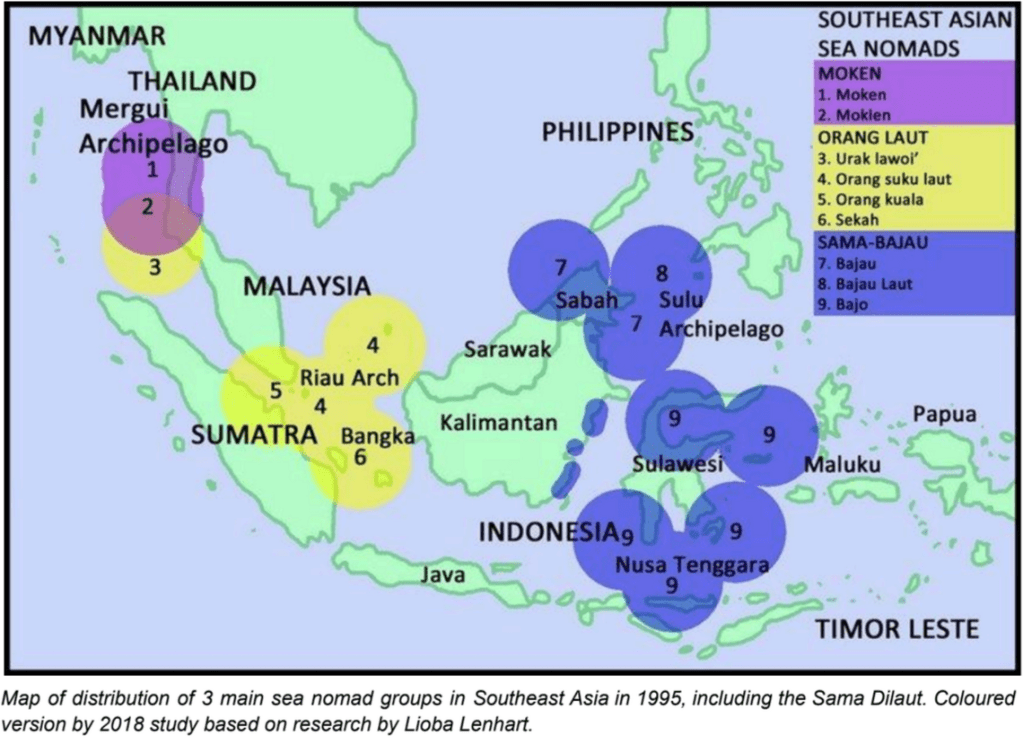
The Sama Dilaut peoples are part of a larger ethnolinguistic group known as Sama, which consists of two other categories: the land-based Sama Dileya/Dea and coastal Sama Lipid/Bihing (Maglana, 2016). Commonly, these populations fall under the category “Sama-Bajau”, but many groups self-designate themselves using toponyms based on place of origin (Maglana, 2016), such as Sama Sitangkai (Sama of Sitangkai Island). Further distinguishing this community is the presence of 10 major languages and a variety of religious systems (Maglana, 2016). The Sama Dilaut, unlike their land-based counterparts, are less influenced by Islam (the main religion in the region today), due to the remaining impacts of ancestral beliefs based on animism (Saat, 2003). The exact land origins of the Sama Dilaut remain still unclear, but first references can be traced back to 840 CE in the Darangen (Borneo History, 2017), an epic oral poem by the Maranao (an Islamic cultural-linguistic group in the Philippines), which mentions a love story between a Sama Dilaut princess and Maranao prince. Since then, the Sama Dilaut have settled in the waters surrounding Sabah, the Sulu Archipelago, Sulawesi, Maluku, and Nusa Tengarra (Lenhart, 1995), leading to a unique cultural identity tied to the seas.

Yet today, this historic culture and community face modern challenges linked to political marginalisation, discrimination (Moreno, 2023), and environmental degradation (Musawah, 2024), that threaten to erase centuries of traditional knowledge and practices. 

The marginalisation of the Sama Dilaut can be traced back to European colonial rule, which led to the establishment of maritime borders that disrupted the Sama Dilaut´s way of life (Sieber, 2023). For example, trade networks for the procurement and exportation of turtle shells, sea cucumbers, and general fishing existing since 1000 BCE (Jeon, 2019) were no longer viable, greatly affecting one of the main sources of income for the community. The Sama Dilaut have only further lost access to their traditional fishing sites, exacerbating their economic vulnerability and contributing to rising levels of poverty (Moreno, 2023). Particularly, the modern ´stateless status´ of the Sama Dilaut has increased levels of alienation and marginalisation by limiting their legal privileges (Moreno, 2023). Due to unclear legislation distinguishing asylum seekers, irregular migrants, and undocumented or stateless individuals, Sama Dilaut are not often granted citizenship (Sieber, 2023). For example, in the Philippines the Indigenous People´s Act (Act No. 8371) covers only peoples from ancestral lands and not oceanic waters. This reflects the wider political realities the community is subjected to, leading to direct lack of access to essential services, such as education, formal employment, and healthcare (Sieber, 2023).

Beyond a lack of legal recognition and policies for ensuring the economic and political protection of this vulnerable ethnic minority, the Sama Dilaut face centuries old discrimination that has eroded their culture and traditional knowledge (Moreno, 2023). The Sama Dilaut in the Sulu Archipelago are still today victims of historic cultural prejudice (Saat, 2023) originating from dominant land-based groups (like the Tausūg, a Muslim ethnic group in the Philippines and Malaysia). These groups viewed boat dwelling and un-Islamic animism practices as inferior and uncivilised, earning the Sama Dilaut a low social status (Saat, 2003). For example, the Tausūg people have a derogatory name for the Sama Dilaut that translates to “spat out” (Nimmo, 1968). This history of discrimination still ripples into the modern world, leading to the cultural assimilation of the Sama Dilaut, who more and more migrate to land, abandoning their sea-faring way of life (Sieber, 2023). A rising number of Sama Dilaut have converted to Islam over the years (Maglana, 2016), a key example of cultural conformation due to social pressure. The preservation of the Sama Dilaut´s unique customs has severely declined, impacting their traditional languages, religions, and practises. 

Moreover, the nomadic ways of the Sama Dilaut have further been challenged by overfishing and climate change (Musawah, 2024). Due to their economic difficulties, many Sama Dilaut have small and underdeveloped boats and fishing tools (Jeon, 2019, pg. 50), already placing them at a disadvantage when competing with modern fishing corporations. Climate change has only exacerbated the situation, leading to ocean acidification that causes fish migration, forcing various Sama Dilaut to settle on land as they lose access to their primary source of livelihood (Musawah, 2024). There, they may turn to seaweed farming, but because of exploitation by intermediaries, the Sama Dilaut fail to earn enough income (Musawah, 2024). In their struggle against poverty, some Sama Dilaut introduce chemicals and fertilisers into their farming, harming sea life and their own connection to the ocean (Musawah, 2024). The Sama Dilaut are placed further at risk due to extreme weather changes caused by global warming, such as rising sea levels and typhoons (Moreno, 2023). 

In conclusion, it is evident that the Sama Dilaut face a variety of challenges that threaten to erode and erase their nomadic cultures and lives. From political marginalisation and discrimination rooted in the past, to modern perils caused by climate change, the Sama Dilaut are socially, politically, and economically vulnerable. These indigenous peoples have centuries old knowledge of currents, marine ecosystems, star charts, and wind patterns (Maglana, 2016, pg. 78) that could be critically important for better understanding the impacts of and solutions to climate change. A variety of organisations have worked over the years to ensure the political and socio-economic protection of the Sama Dilaut. For example, Rosalyn Diwala´s Indigenous Children’s Learning Centers aim to organise education courses led by native teachers for Sama Dilaut children. On a larger scale, in February 2024, during the World Conference on Statelessness, an understanding was made between the Philippines, Malaysia, and Indonesia to address the Sama Dilaut situation. More concentrated efforts and policies to deal with the specific plights faced by this community are needed urgently, in order to ensure the preservation of not only a unique culture, but to also ensure the protection of a critically vulnerable ethnic community. 

Disclaimer: As a student, I don’t have the full capacity nor time to delve into the complexities of each ethnic community. My intention is to create a space dedicated to introducing readers to different minorities and their plights, to raise awareness and to encourage further readings into such topics.
Cabinet Wilders I: An Inward Looking Netherlands?

By Rita Zeefal

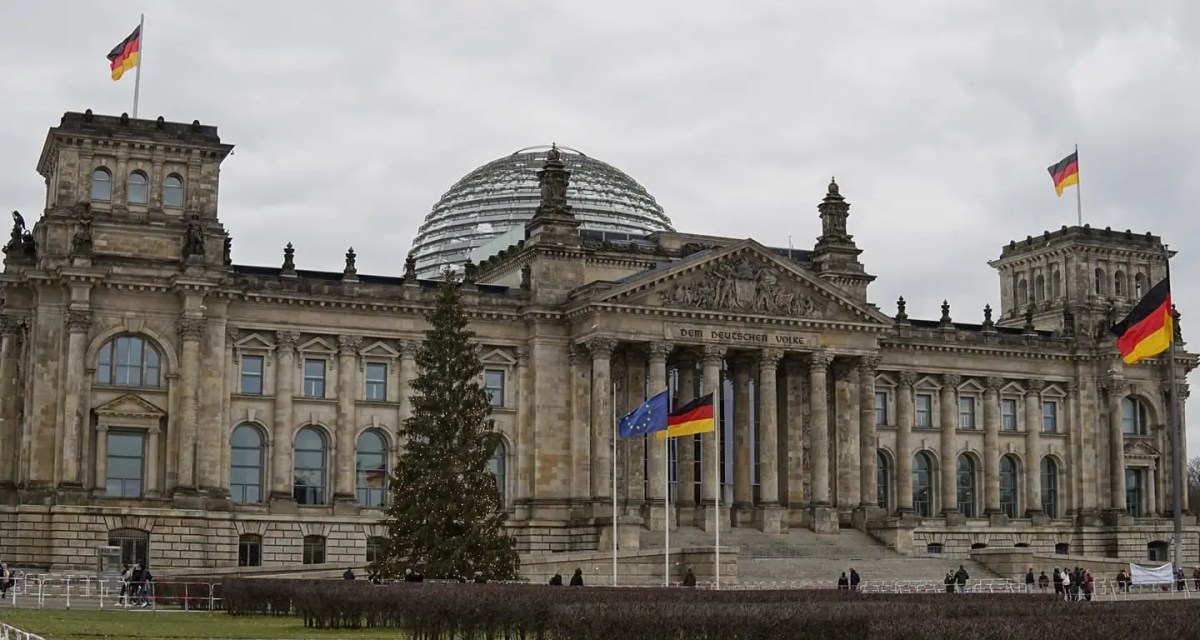
Something is brewing in the Hague. The 17th of September marked the beginning of the Dutch parliamentary calendar and, for the first time since the Second World War, a hard-right government assumed the seat of the executive. Geert Wilders, a long-time vindicator of the European populist right, is in prime position to shape the next few years of Dutch interior and foreign policy. Wilders’ Party for Freedom (PVV) controls the key ministries needed to advance its agenda of “putting the Dutch first again” and intends, among other things, to opt out of European Union (EU) asylum treaties and make it harder for non-citizens in the Netherlands to acquire housing, citizenship, and welfare assistance, among other things. 

Wilders’ government, headed by the unaffiliated former civil servant Dick Schoof, is already in the process of passing an Emergency Asylum Act that will allow the government to pass asylum laws without the approval of parliament. While some of these moves might just be pure politicking, there is real unease about what the incoming Dutch government might mean for business, relations with Brussels, and rule of law in the country.

The far right in the Netherlands has never been as successful as it has over the past fifteen years. Much of this can be attributed to Geert Wilders’ political credibility: unlike the leaders of previous far right and fascist parties in the Netherlands (like Hans Janmaat of the now defunct Dutch Centre Party), Wilders has been a career politician for the greater part of thirty years. A self-described “right-wing liberal,” Wilders cut his teeth in the centre-right People’s Party for Freedom and Democracy (VVD), and was at one point tipped to become its leader before losing out to Mark Rutte in the mid 2000s. Unlike right-wing populists in Poland or Italy, Wilders is sufficiently supportive of LGBTQ+ and reproductive rights, which he sees as being at the heart of Dutch tolerance culture. Unlike Marine Le Pen’s Rassemblement National or Austria’s Freedom Party, Wilders and his party have no Nazi history to shirk or political credibility to prove – they simply had to wait for the right moment to be embraced by a disaffected electorate. And such a moment came in the form of the November 2023 general election in the Netherlands, which was preceded by the VVD’s Dilan Yesilgöz’s removing a longstanding cordon sanitaire that had been levelled against the PVV for the greater part of the 2010s. Yesilgöz stated plainly before the election that her party would be open to forming a government with Wilders’ PVV

The PVV seems to be a party that seeks to turn the Netherlands in on itself. Its 2023  election manifesto blames the country’s longstanding housing crisis on asylum seekers, who constitute the vast minority of people who migrate to the Netherlands annually. Unlike the far right in countries like France and Italy who tend to clean up their image and mollify their message the closer they get to power, the PVV has stood firmly behind some of its most hard-line policies in recent times. The party’s prior-mentioned election manifesto advocated for the development of “denaturalisation” processes so as to make possible the deportation of recently naturalised citizens deemed “undesirable.” The new government seeks to make Dutch the primary language of higher education in the Netherlands to ward off international students. The repercussions of such political positions and the policies that they would help create over the next few years could resound sharply in the worlds of commerce, academia, and labour for years to come.

Indeed, policies that are set to hinder international flows of human capital are already ruffling the feathers of those at the helm of the Netherlands’ most valuable companies. In March of this year, the outgoing Minister of Economic Affairs Micky Adriaansens met with former CEO of ASML Peter Wennink to address the company’s plans to move its operations out of the Netherlands should migratory regulations in the country become too strict. ASML is Europe’s most valuable tech company, and it currently has a workforce of over 40 000 employees comprising over 143 nationalities. Being home to cutting edge firms and having a vibrant economy are realities that every country aims to maintain; however, the rise of the populist right in the Netherlands has put the country’s government between a rock and a hard place. De-internationalising the Netherlands and making it harder for workers from the rest of the world to gain access to living requirements could pose a dire threat to the friendly business environment the country has prided itself on for so long.

A brief look at history shows that the Netherlands’ openness to the outside world has been a cornerstone of its success for centuries. According to scholars like the University of Amsterdam’s Geert Janssen, the United Provinces, which later became the Dutch Republic, became a magnet for the religiously persecuted of Europe in the wake of the Reformation and the Spanish Inquisition. Sephardic and Ashkenazi Jews, Flemish Protestants, English Puritans, and French Huguenots migrated in the hundreds of thousands, to such an extent that over the course of the 17th century, 40 to 60 percent of the population of major Dutch cities like Amsterdam and Leiden was made up of foreign-born inhabitants. In more recent times, the Netherlands has been at the forefront of European integration and still engages with the world beyond its metropolitan shores. It was a founding member of the European Coal and Steel Community and is bound by international law. It still administers overseas territories. The Netherlands has, for the greater part of its history, never been a country to shut itself off from the world. 

The populist right in the country positions itself as the chief protector of core Dutch values and traditions like social liberalism and Zwarte Piet (a Dutch Christmas blackface tradition), from the supposed evils of Islam and woke-brainwashing. But are not the rule of law, international collaboration, compromise, and pragmatism just as, if not more, central to the country’s identity and success over the centuries?

The new Dutch government’s ability to execute its mandate remains to be proved. For now, politicking seems to be at the top of the ministerial agenda. On the 18th of September, Marjolein Faber, the Netherlands’ Minister for Asylum and Migration, informed the European Commission of her government’s wish to opt out of the EU’s new Migration and Asylum pact, to which the Netherlands is already a signatory. What might not be readily apparent to the casual reader of this story is that this was a move with almost no chance of initiating real change in the Netherlands’ relationship with Brussels. The clumsily written letter itself acknowledges that an opt out for the Netherlands would only be possible in the event of treaty amendment, and amendment of EU treaties after they have been approved and have come into effect happens exceedingly rarely, if at all. Furthermore, Faber ought to have sent the letter to the Council of the European UnionEuropean Council – not the European Commission. This proves to be the first in a series of gaffes that seem  on course to typify the far-right’s first stab at governing the Netherlands.

On the whole, the rise of the populist right in the Netherlands serves as another theatre of shallow politicking addressed to a weary electorate. But if the country wants to retain its status as a magnet for talent, a hub of innovation, and a place where business thrives, it might have to come up with solutions that go beyond what Wilders and his ministers are putting on the table. 

G2+1= pizza!

HD organizes conference with Dean Stéphanie Balme to discuss the role of Europe in Taiwan Strait Sovereignty issue

“In Le Havre, I feel like home”. With this kind remark, Stéphanie Balme began her speech to an Amphi crowded with students who listened attentively, a slice of pizza in their hands, as though “they were in a movie”, as the speaker said.

Continue reading “G2+1= pizza!”

On Engaging the Taliban: In Conversation with Robert Kluijver (Part 2/2)

This article is the second in a series of dialogue with Robert Kluijver (link to Part 1: https://ledragondechaine.com/2021/10/28/on-engaging-the-taliban-in-conversation-with-robert-kluijver-part-1-2/), Professor of Political Science at Sciences Po. A research analyst of conflict and post-conflict situations, Kluijver spent more than a decade in Afghanistan, and has conducted extensive field work in Somalia, Yemen, Syria, Iraq, Pakistan’s tribal territories and Tajikistan. He is currently working on his PhD at Sciences Po on failed state building in Somalia.

The interview, conducted by Samaya Anjum, Lead Editor of Le Dragon Déchaîné, is in response to his policy paper published on 1 September, titled “On Engaging the Taliban”.


Continue reading “On Engaging the Taliban: In Conversation with Robert Kluijver (Part 2/2)”