
Even after COVID-19, experts believe that social distancing and other safety measures may become the norm. Their rather alarming speculation is that these measures may become more necessary than precautionary. Continue reading “What Next?”
Category: Student Politics
L’autre effet du coronavirus: le racisme anti-asiatique s’amplifie en France
« Coronavirus! Ching chong! »
C’est ce que j’ai entendu après m’être raclé la gorge. Il faisait encore assez froid en ce début du mois de mars, et je me souviens que le premier cas de coronavirus venait d’être détecté dans le département de la Seine-Maritime. J’étais en train de rentrer chez moi après une soirée, marchant sur le pont entre Les Docks et la gare du Havre. Derrière moi, quatre garçons, âgés d’environ 11 ou 12 ans, répétaient ces mots. Il faisait sombre, et je ne voyais personne d’autre qu’eux. Continue reading “L’autre effet du coronavirus: le racisme anti-asiatique s’amplifie en France”
On the eve of U.S. elections: Responsible politics as a tool for addressing today’s climate cris
By Natasha Raseta and Joaquín Gosálvez Castillo
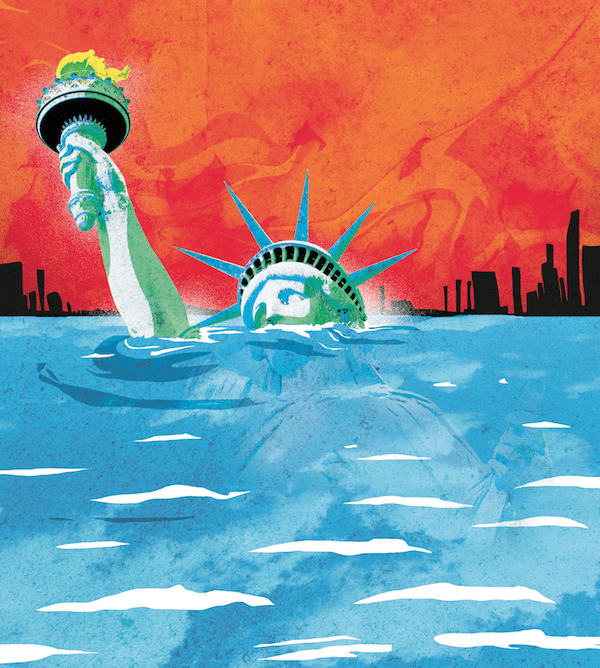
Natasha Raseta is a Masters of Landscape Architecture student at University of Toronto’s Daniels Faculty of Architecture, and Joaquín Gosálvez Castillo is a Political and Social Sciences student at Sciences Po Paris Campus du Havre. They are participating in the Hart House Global Commons, an international dialogue initiative that supports student connection and engagement on global issues related to climate change facing youth.
A quick glance at the official U.S. White House website portrays a wholesome Trump Administration that has made significant, ‘never-seen-before progress’ on important national issues of today. They have focused their accomplishments on reversing unemployment rates in the United States, reclaiming “more than 400,000 manufacturing jobs” since his election in 2016. This list of accomplishments boasts the fact that they “withdrew” from ”the job-killing Paris Climate Accord”, and canceled the “so-called Clean Power Plan”. Their choice of words says a lot about their political stance on today’s climate crisis, and leaves us wondering not only why environmental efforts have not been sufficient enough, but why be so quick to deliberately oppose environmental opportunities of our future at all? After a year of climate news and strikes, let us better understand the issues in the way of more meaningful political responsibility. If we analyze the current balance sheet of environmental policy decisions made by the Trump Administration, we can reflect on more effective solutions that could increase job creation, boost the economy, and tackle the urgent threat of today’s climate crisis.
It comes not as a surprise that the current U.S. Administration carries an attitude of unjustified and uninformed denial of climate change, which has manifested through a history of concerning political decision-making. Investigation of regulatory capture in regards to Trump’s Environmental Protection Agency (EPA) looked into agendas covered by political appointments, rhetoric, executive orders, and restructured science advisory boards, which favours economy and job creation over mitigating the effects of climate change. One of the first important issues of today’s climate crisis involves supporting ecosystem biodiversity. The Trump Administration’s environmental record has shown a different course of action. Many laws protecting the environment that were intended to start as an energy transition initiative have been repealed. Notable examples include: the withdrawal of Paris Agreement; the dismantling of the Clean Power Plan—aiming to reduce carbon emissions by 32% by 2030; and the deconstruction of the EPA—a key piece of legislation protecting important ecological and natural land. Trump also removed climate change from national security priorities in 2017, allowing massive logging on public land a few weeks afterwards.
There are contradictions on what the Trump Administration says they are trying to achieve versus what opportunities are actually available, which leads us to question his credibility. In July 2019, Trump mentioned that his Administration found the perfect balance between economic growth and environmental protection. However, our research reveals that they have been negligent in taking environmental protection efforts into account. An article on the Trump Administration and the Environment offers advice for dealing with reductions in evidence-based policy, the constant oppression and irrelevance of scientists in environmental policy decision-making, endangering funding cuts, environmental monitoring and protection. The main take-away is that “scientific evidence does not change when the administration changes”, that “cutting funding is certain to leave uncertainties unaddressed”, and that “it would be inappropriate and potentially disastrous to pause action on mitigation” efforts in regards to environmental quality policies.
This complicated situation opens the way towards the reflection of more appropriate solutions to balancing sufficient environmental policy as well as economic and job security. If the Trump Administration were willing to invest all the energy they have used to oppose environmental policy into the creation and implementation of a circular economy, they would achieve both economic growth, stable job opportunities, and ensure the safety and wellbeing of population health. An article on the future of sustainability explains further that “when we think differently about materials, there is an economic benefit there. If you can make things from your waste stream, that’s a wonderful economic gain”. Not to mention the multitude of jobs that could be created within this process of upcycling—“in which products are made, used, and then remade and reused”. In this case, a single material source can easily be turned into new products after the life cycle of the original product. There is also emphasis placed on the creation of local jobs, which speaks more appropriately to the U.S. Administration’s accomplishments mentioned above. Re-ratifying the Paris Agreement would allow for further measures to be taken to comply with these opportunities.
The U.S. plays a key role in the deciding factors of other influential countries, and can set a more constructive example for being able to make progress on all level of the climate crisis. There is an obligation for all of us who defend politics as a fundamental means of resolving and fighting the ecological crisis. While today’s citizens are increasingly aware of their role in favour of ecology and will respond accordingly, there is also a heightened responsibility for politicians and legislators to take this lead and unite and vocalize efforts for effective protection of the finite resources available on Earth.
Qu’est-ce que je dois faire ?
By Joaquín Gosálvez Castillo

Joaquín Gosálvez Castillo est un étudiant dans sa première année à SciencesPo. Il nous fait part de sa réflexion sur les défis environnementaux et les actions que nous pourrions et devrions prendre face à une crise écologique toujours plus alarmante.
« Vous allez connaître la fin du pétrole », cet énoncé court, clair, percutant m’a énormément impacté lorsque je l’ai entendu en cours de Science Fiction. Pourtant je le savais déjà, mais très souvent on préfère oublier, cacher dans un tiroir secret ce que la conscience ne peut pas supporter par simple instinct de survie…
L’année 2019 semblait avoir laissé derrière elle les terribles feux de l’Amazonie qui ont ravagé l’équivalent de 906 000 stades de football. L’année 2020 ne commence pas mieux : les incendies en Australie persistent, la surface brûlée est plus de 18 fois supérieure à celle ayant connu le même sort en Amazonie, tout cela sans parler des 6 500 bâtiments brûlés et des 28 personnes mortes… À ce stade, le lecteur pourra penser qu’il s’agit d’un autre article ennuyant sur l’environnement qui ne cherche qu’à faire la morale. Cet article est plutôt une invitation à la réflexion sur notre action tenant compte de l’état des lieux de la vie dans notre planète, des solutions efficaces qui peuvent être menées et de la question de la responsabilité et de la volonté de résoudre cette crise écologique, tant au niveau individuel que collectif.
Abordons tout d’abord le diagnostic. En effet, il n’est pas bon! Si la simple observation et le constat empirique de l’accroissement des catastrophes naturelles sont déjà effrayants, alors le fait que la pollution soit la sixième cause de mortalité dans le monde et que l’OMS affirme que 9 personnes sur 10 respirent un air pollué, devraient nous faire paniquer. D’ailleurs, un million d’espèces animales et végétales sont menacées de disparition à cause du réchauffement climatique comme le démontre une étude dirigée par le scientifique Chris Tomas et publiée dans la revue Nature, cela entraînerait de même de graves conséquences comme une pénurie aggravée des ressources alimentaires sachant que les animaux pollinisateurs sont fondamentaux dans le processus de production d’aliments. C’est justement de cette raréfaction de ressources provoquée par l’action humaine, profondément corrélée avec notre économie, notre mode de production et le dérèglement climatique, qui est avant tout un vecteur de crises pour les êtres humains. Il s’agit donc d’un problème principal qui remettra directement en question la survie de l’espèce humaine et de nos modes de vie actuels, ainsi qu’il mettra sur la table la définition de la politique comme la gestion sociale de la précarité. Pour comprendre l’ampleur de ce dernier défi croissant, il suffit de signaler ce que les études actuelles sont en train de démontrer : tandis que nous atteindrons prochainement un pic de population d’environ dix milliards de personnes, les ressources fossiles et nucléaire sont vouées à leur épuisement aant la fin du XXIème siècle, à l’exception du charbon. De même, des métaux comme l’or, l’argent et le zinc disparaîtront avant 2050, tout comme les matériaux utilisés dans la production actuelle des énergies renouvelables tels l’indium pour les éoliennes ou le plomb et l’antimoine pour les batteries de voitures électriques. Il faut également tenir compte du fait que la production d’énergie renouvelable nécessite d’infrastructures qui sont construites grâce aux énergies fossiles. En effet, la transition énergétique ne s’est jamais faite puisque la consommation d’énergie croît tout comme le recours aux énergies fossiles qui représentent 80% des énergies produites mondialement.
Ces problèmes complexes et menaçants font appel à des solutions efficaces tant au niveau collectif qu’au niveau individuel. Je ne peux que modestement proposer au lecteur d’analyser avec lui quelques idées qui incitent à l’action concrète. Tout d’abord, il est essentiel de parler de l’agriculture relocalisée qui est une excellente mesure tant pour les agriculteurs locaux qui travaillent dans des conditions sociales dignes que pour la prospérité du corps et de la planète. En effet, j’ai pu vérifier lorsque je faisais mon TPE sur la production écologique de papaye à Malaga que la consommation de produits agricoles locaux peut être mille fois moins polluante que la consommation de produits importés – notamment ceux qui proviennent du Canada après la signature du CETA – mais qu’il est de même crucial que le choix de cultiver certaines espèces végétales respecte les conditions de terrain et de météorologie locales. Ainsi, en tant que citoyen responsable et consciencieux, acheter des produits aux AMAP du Havre est une attitude à encourager. D’autre part, la plantation massive d’arbres peut permettre de stocker l’excès de dioxyde de carbone atmosphérique dans les forêts, mais cette solution ne peut être que temporaire car la mort des arbres provoque une libération de carbone qui, par oxydation, repasse à l’atmosphère sous forme de CO2. Ceci étant dit, il est indispensable, en tant que bon citoyen, de promouvoir cette solution qui, bien que temporaire, est nécessaire, notamment par l’utilisation du moteur de recherche Ecosia: une démarche plutôt simple. De même, manifester pour le climat, s’engager dans des projets écologiques, adopter des modes de vie plus respectueux de l’environnement sont des actes indispensables si l’on veut véritablement résoudre la situation de crise écologique et existentielle à laquelle nous faisons face.
En ce qui concerne les solutions que peuvent apporter les Etats, il y a un répertoire de propositions chiffrées disponible sur le site Project Drawdown, parmi lesquelles la construction d’éoliennes s’avère une solution efficace du point de vue environnemental, en plus d’être très rentable avec un rapport de 1 à 6 entre dépenses et bénéfices sur le long-terme. Parmis les solutions proposées, on retrouve la réduction du gaspillage alimentaire, l’éducation des filles dans le monde ou encore l’interdiction mondiale de l’utilisation du HFC dans les appareils réfrigérants selon un amendement du Protocole de Montréal, par exemple. La piézoélectricité, bien qu’en phase expérimentale, est une autre idée innovante qui pourrait permettre la récupération d’énergie à partir du contact et de la pression de nos pieds lorsque nous marchons ainsi que des voitures. Les Etats devront aussi investir massivement pour mettre en place l’économie de l’avenir. Sachant que la décroissance ne peut qu’être une phase transitoire entre notre modèle économique actuel et un autre que beaucoup nomment déjà l’économie circulaire, basée sur le triptyque: réduire, recycler, réutiliser. Des prémices de ce nouveau modèle sont déjà visibles dans l’Union Européenne mais aussi dans certains pays asiatiques à l’instar de la Chine, notamment avec la loi de 2008 sur la promotion de l’économie circulaire. Ici en Normandie, nous avons un bon exemple d’une des idées phare de l’économie circulaire qu’est la méthanisation, et qui, dans notre cas, permet de récupérer de l’énergie électrique et thermique à partir de dizaines de milliers de tonnes de déchets organiques, qui sont ainsi revalorisées.
Enfin, au-delà des défis immenses et des solutions souhaitables, une question émerge. C’est celle de notre volonté et de notre responsabilité. Peut-on qualifier un gouvernement de responsable alors que certaines mesures en faveur de l’environnement coexistent avec le refus de fermer des centrales de charbon ou avec le maintien de certains perturbateurs endocriniens extrêmement nocifs pour notre santé ? C’est de cette hypocrisie dont nous devons réfléchir nous-mêmes dans un souci de cohérence. Si la vie sur Terre est une priorité ou un devoir pour nous, alors nos actes doivent démontrer la responsabilité écologique qu’est la nôtre et que nous ressentons, c’est-à-dire que nos actions concrètes doivent être respectueuses et engagées vis-à-vis de l’environnement, le cas contraire cela signifierait que nous n’avons pas de véritable volonté de préserver la vie sur notre planète. La vie est-elle suffisamment importante pour nous pour que nos actions et notre volonté soient en compatibilité avec elle ?
Does Study Rhyme with Money?
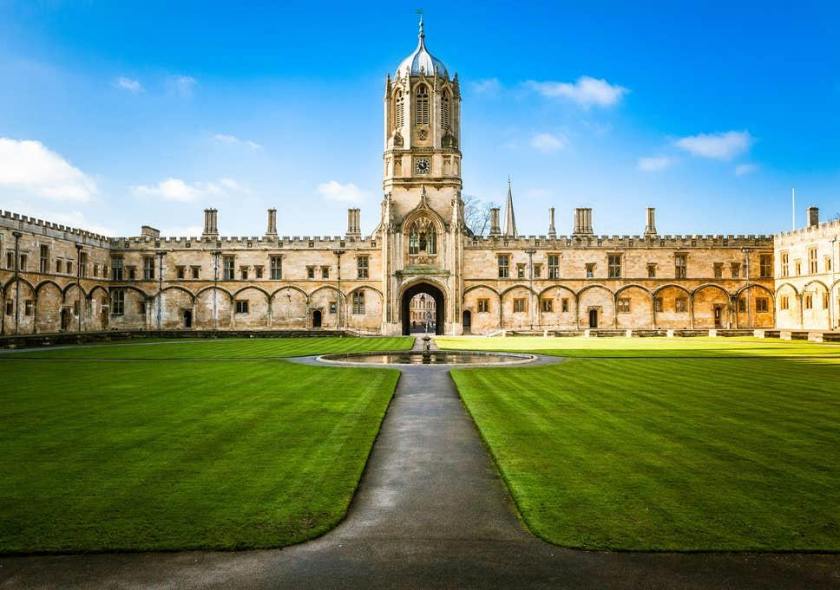
Higher education. University. Prestige. Ambition. Future security.
How did we feel when applying to university?
We were told that going to university was the only way to succeed. Depending on where and by whom we were raised, our ideas on university may vary, but our thought process was probably similar if we find ourselves enrolled in a higher education institution. Go to university. Go to a good one. Guarantee yourself a future. This viewpoint is very much a reality of our generation which results in a new emphasis on the university applications and university choices which occupy great part of our minds as we approach the end of high school. Prestigious universities and higher education institutions know our thought process very well. Regardless of your background, there is a high chance you’ve heard of some prestigious worldwide universities, whether it was on social media or tv shows. You may have thought “I will go there”, “that is my dream” or just rejected the idea as a far off possibility that would never materialize. Or anything in between. Yet your reactions would have been part of understanding a broader, bigger question of who gets into these dreamy universities.
As you may have understood by now, this article is about elitism in universities, especially prestigious universities, and how it feeds in a cycle of inequality that reduces social mobility and reinforces socio-economic inequalities. It is a complex topic to explore, and so many arguments and counterarguments to be made. And to make sense of it, I will start with why I am writing about this.
Sciences Po – the French Harvard?
I decided to write this article after seeing on campus students from the UNI student syndicate petition against the removal of the written exam in the French admission process to Sciences Po. As an international student, I know little on the topic. As a matter of fact, I was unaware that French students had a different and more elaborate procedure from international students. So the fact that Frederic Mion, the Sciences Po Paris director, had decided to drastically change the program for admission of French students at Sciences Po came as a surprise to me.
For reference, so far the French admission procedure was made up of three phases, including three written exams and the changes recently proposed would remove the three written exams and put more emphasis on the student dossier and the grades received in school to compensate for such absence.
The primary reason for the changes is the need for Sciences Po, along with all French universities, to be integrated into the Parcoursup system of French university admission, that requires a change in timing and structure compared to what Sciences Po currently follows. The second reason Sciences Po is inclusivity. In the past, the written exam had been strongly criticized because it had led to the creation of a business for exam preparation that favoured students from higher-income families that could afford it. Thus, the removal of the exam would mean a fairer admission procedure. The students from the UNI syndicate have their reservations about this new policy because of the importance that the student dossier would have on the admission decision. The organization claims that not even Sciences Po would be able to discern the differences and imbalances in different schools in France and the weight put into extracurriculars would mark a discriminant on different backgrounds and accessibility to non-academic activities. Thus, UNI students suggest that the written exam should remain in place, but that Sciences Po itself should offer a preparatory, free platform to study for them. Realistically, that may be an unaffordable expense. But it highlights a great imbalance in the French system of opportunities both within academia and not for people of different incomes.For instance, OECD’s latest research proves that France’s education system is greatly unequal when it comes to local differences. Living in one neighborhood compared to another, based on economic factors, is reflected in exam results and learning skills the students develop, leaving the poorest disadvantaged. Economic inequality is also palpable in the choice and availability of extracurriculars that would look great on a CV: playing an instrument or being part of a sports team have a price that some households simply cannot afford.
Sciences Po is one of the most important institutions in France, a symbol of the political elite and a milestone for anyone who wants to pursue a political career in France. As a matter of fact, most of the French presidents and prime ministers in French history have attended. So if the admission procedure is unbalanced and favours a socio-economic reality that is not representative of France as a whole this possibly leads to a cycle of political elites that, just like the university where they were formed, is incapable of putting different social classes on the spectrum of needs in France.
Oxbridge – Ancient Institutions and Discriminatory Past (or present?)
The history of Oxbridge with discrimination is ancient and not a hidden one. Oxford and Cambridge are England’s oldest universities, representing excellence alongside competitiveness and ambition in the UK and the world. The university count as alumni some of the most brilliant scientists, and famous writers, among others, and all of them tend to have one feature in common: they are white males.
The two universities didn’t even grant degrees to women until the 20th century and the first black student to have graduated from Oxford is reported to have gotten his degree in the 1870s.
So, it is no doubt that the two universities have a history of sexism and racism, that in modern days can still be seen in the elitist admission procedure. For instance, in the years between 2015 to 2017, one-quarter of Oxford colleges did not admit a single black student. And Cambridge is not better: between 2012 and 2016 at least one college did not accept a single black student.
This is linked to university elitism because of the deep imbalances present among social classes and ethnicities in Britain still today, and in the rest of Europe. The topic of racism and how it affects class problems will not be covered in this article but is definitely something to think of when looking at elitism in the Western world. Elitism is predominantly white. We must acknowledge it to be better.
To dig a bit deeper in the elitist admission procedure of the two most loved British university one must look at the differences in admission percentages in public and private school students, starting with Eton, school that send 60 to 100 students to Oxbridge each year out of 260 approximately in a graduating class, while the percentage of admission for Oxbridge is usually around 16%.
This is just an example, but it shows a pattern: private schools have the resources that public schools do not have to hire a teacher who studied at Oxbridge, or have preparatory classes for interviews and applications.
This disproportionality feeds into an unhealthy cycle. Oxford and Cambridge are the richest universities in the UK, the ones with the highest amount of resources. They admit an overwhelming majority of students who come from expensive private schools, who most likely have families supporting them financially and end up becoming some of Britain’s high paid elite in the future, thus creating a circle of money that once more, gives power to the rich. In these factors, it is easy to compare Sciences Po and Oxbridge. They are both shaping elites, both deciding the future of their countries, but doing so in a way that favours those who are already in power.
Ivy Leagues – Scandals and Facts
The United States was recently hit by a great scandal: the American College Admission University Scandal, which revealed that some parents were literally paying for their kids to get into good universities. The fees to do so were not lower than $15,000 and went as high as $6.5 million, proving that in this complicated scheme of fraud, money can literally buy admission in college.
The scheme itself is proves how easily it is to cheat into a system that was thought to be impenetrable, and on which many kids rely on their hopes of being admitted to Ivy Leagues or generally prestigious universities in the USA. More interestingly, however, this scandal proved that a backdoor into university admission does exist, and it seems to be legal.
According to many of the parents convicted in the College Admission Scandal itself, they were not aware of doing something illegal. They were led to believe that the money went as a donation to a specific university, making their action legal.
As a matter of fact, it is well documented that it is common for the 1% of the world, to make huge donations to Ivy Leagues right before their children start the application process: an encouragement to make the admission office review their case more carefully and possibly confirming less to the general procedure. An example is Jared Kushner, Trump’s son in law, admitted to Harvard after his father made a 2.5 million dollar donation to the school.
Deans of universities have preference lists with candidates who are children of alumni who have given large donations to the universities, just before their kids applied. In a way, the reality of this strategy in itself is an admission scandal.
Yet, this is not the only problematic part of the application.
Although being deemed holistic, the admission to university, especially high ranking ones like Ivy Leagues, highly rely on one factor: SATs.
To generalize, there are two types of people in this world: those who think SATs are fair and those who think they aren’t. I am going to start discussing the latter idea.
SATs have a history of racism and classism. It has to do with the way they are formulated and appeal and relate to a middle-class, white audience. It has to do with the history of institutionalized racism in America, for which black students are on average more likely to find themselves in schools that offer less support, or neighbourhoods that are less funded and that overall send a message that “their education is worth less”. But once more, it has to do with money.
The SAT and standardized test preparation industry is huge. For preparatory classes, students can pay over 2000 dollars, demonstrating the clear links between wealth and having a good SAT score, which overall links back to the likeability of going into a prestigious university.
Nonetheless, some say that by removing SATs, like some universities have been doing in recent years, discrimination and elitism will prevail even more. By removing the SATs, students from private schools and more funds, or those who were able to show participation in very expensive extracurriculars, will prevail over someone with great academic strength and interest, yet less opportunities. In short, just like it appeared in the French discussion around Sciences Po written exam, without SATs the only way to discriminate between admissions is by looking at official academic records and extracurricular activities, facts that can discriminatory based on where you live, what school you attend and the means and times you can dedicate to these factors, rather than working, or helping your parents in their day to day life.
In short, university admission to Ivy Leagues is problematic, because it highly relies on money, family legacies and being of the upper-middle class.
When I first started talking about writing this article, one of the responses I got was “but is elitism that bad?”
It is often claimed that it is so that university can maintain their prestige.
But I believe there is a need to redefine prestige, and what it means and implies. I have given you the example of three elites, three countries. In all three, students that come out of these institutions, Sciences Po, Oxbridge, Ivy Leagues, will likely become the new political, social, cultural and economic elites of the western world and, thanks to globalization, beyond that. Surely, that is the reason why so many people are willing to pay so much to see their children attend these institutions: to know they will have a clear, strong voice in their future. Surely, that is why many students without the same means dream of the same. But if out of the two categories, those who dream and those whose parents facilitate the admission, one is overwhelmingly more likely to be accepted into the pool of elite universities, then prestige will always look the same to us. It will always look white and upper-middleclass.
I think this is why I am writing this article. I am white and middle class. In my life, I dreamt of applying to prestigious universities and now I am a student of Sciences Po. This may be due to my luck to get a scholarship to go to a great high school that offered me great opportunities (UWC Atlantic College). Still, it is undeniably also because of my privilege and the way the system is broken, at least partially, to get people like me into universities like this. And this is not to say that people like me didn’t earn it, but rather that, in a world full of potential and amazing people, there are often similar people who get the opportunity to show their potential to the fullest. And exceptions may be increasing, but not by enough.
If it is not people from the inside who talk about it and try to create a fairer application process, in university and in many other things in life, than who will?
And I guess it makes sense that some people don’t want to change. I can’t impose my opinion on you, but I hope to have been able to portray the facts as they appear evident to me: elitism exists and favours a minority that is already in power, condemning us to a cycle of elite that will progressively alienate people from different classes, countries and racial backgrounds and perpetuate injustice, discrimination and ultimately, hate.
 Le Dragon Déchaîné
