L’appel de l’océan | Starry Waters

Un poème de Clémence des Déserts et sa traduction par Paramveer Gupta | A poem by Clémence des Déserts and its twin poem by Paramveer Gupta

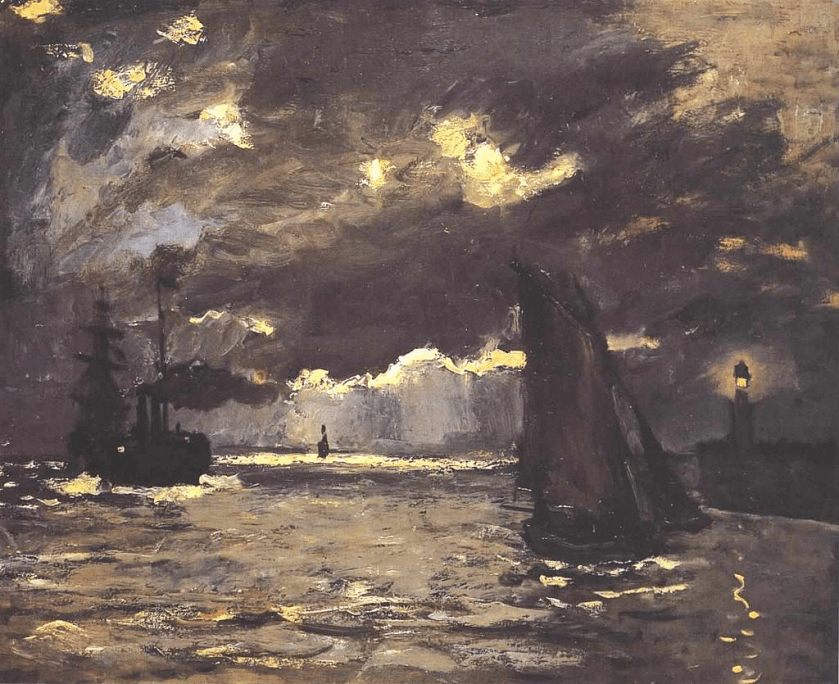
“Marine, navigation au clair de lune”, Claude Monet, 1864

L’appel de l’océan

La plage endormie luit

D’une douce noirceur


Rayonnant dans la nuit


De splendides couleurs.

Assise sur un rocher

De granit et de fer


Je contemple à mes pieds


L’assourdissante mer.

Et ni l’onde bleutée,

Ni le ciel orageux,


Ni le phare agressé


Par les flots tumultueux,

Ni même ce frais vent

Qui chante de très longs


Et séduisants chants


Ne me retiendront.

Mes ailes vont s’ouvrir.

Je vois le soleil poindre,

Au loin comme pour dire:

«Vole, viens me rejoindre.»

Starry Waters

The beach reflects the darkness

Off the soft sand


Basking in the starry night


The colours of the delight

Sititing on the beach

I hear at my feet


The roaring sea


Calling something


Deep inside of me

The starry night

The sleepy cries

The hollow plights

The darkening lights

Nor the windy hollows

And the ricketing wallows

Shall keep my dreams shallow

I see the sun rise

And look into the sky

To see with my eyes

A prophecy for me to fly

Year Rep Review

Don’t know who to vote for yet? LDD has got you covered!

Following three days of fierce campaigning, the Year Representative race comes to a close. Through dinners and debates, each candidate expressed why they would make the perfect Year Rep. So, as the elections draw near, the candidates answered some of our questions to summarize their pitch :

CONNECTION

As a Year Representative, you will have to engage with the entire Sciences Po community as to represent the interest of the group. How will you make sure to expand outreach?

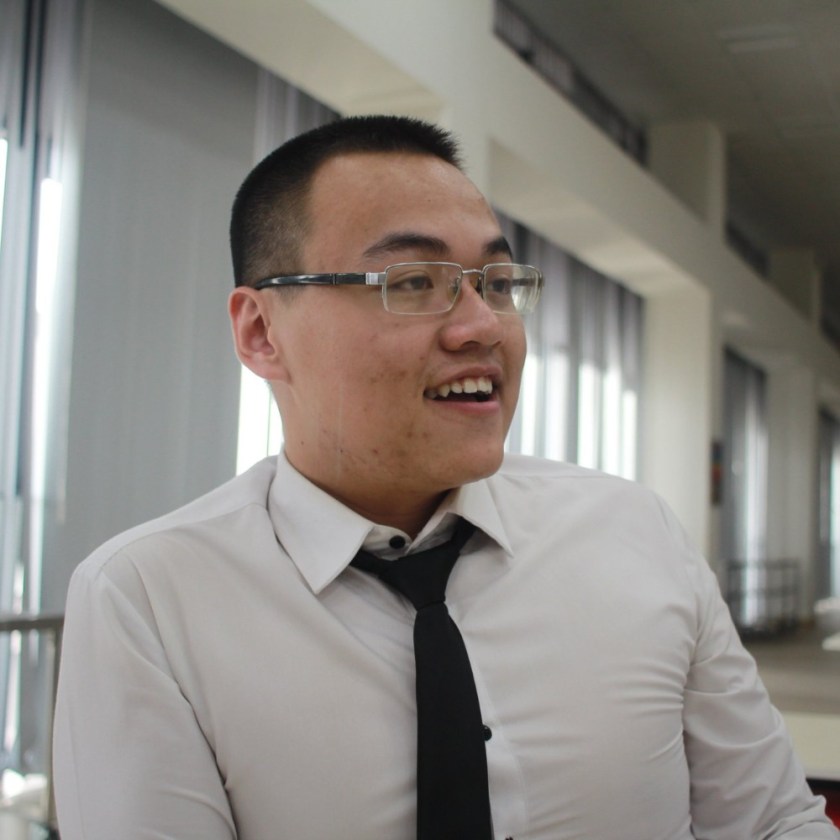
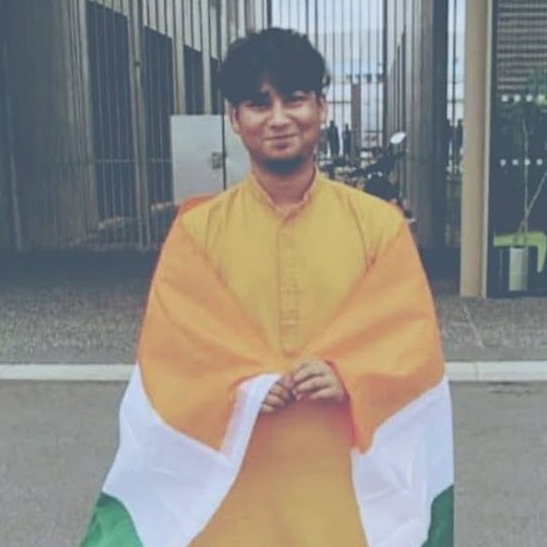
All four candidates agree on two things : openness and availability. Indeed, Tô Minh Sơn summarized his methodology in three words : “Communication. Talk. Observe.”. Vijey Ganesh elaborated on his view by stating that “[he is] also someone who tries to talk to everyone and [he would] like to keep [his] ears open for any issue”. This view is closely shared by Suvayan Sen Gupta who states that “ [he] would try to speak to everyone possible (…) [he] will be available at all free times on campus to address people’s questions or problems”. Léonie Lhommelais suggests “communication through social media and email”. She also wishes to have “a white board in the hall with the events and the news of the campus” as a way to keep the student body informed.

Moreover, both Suvayan Sen Gupta and Vijey Ganesh evoke the idea of organising more general assemblies to close the gap between the student body and the administration. As Vijey Ganesh put it, he wishes to hold “a general assembly each month along with the administration to address key policy and administrative issues”. Tô Minh Sơn hopes to achieve the same objective “from simple conversation over coffee to formal gatherings and polls”.

IDEAS FOR CHANGE

If you are elected, what kind of change do you hope to make?

On this issue, all candidates hold their own position. “[I want to make] small differences that go a long way to enhance life on campus” stresses Vijey Ganesh. Léonie Lhommelais and Suvayan Sen Gupta agree : they wish to increasing communication between the administration and the student body. In contrast, Tô Minh Sơn hopes to simply “remain at most a representation of [the student body’s] interest” instead of having a specific program. He asks : “what change do you want?”.

What is the biggest challenge you believe you will face during your mandate as Year Representative? How do you plan on resolving this issue?

In answering this question, Tô Minh Sơn reminds us that there are “big limitations to the position of Year Representative (…) [he or her] is just a policy adviser to the administration”. He wishes to overcome these limitations by “[being] the most comprehensive and pragmatic policy adviser as possible to the administration”. He also hopes to “obtain statistical data specifically for this campus”. On the other hand, Léonie Lhommelais claims her biggest challenge to be in line with the leading clause of her program : “an improvement of communication with the administration on many matters to reach changes, whether it is concerning the Civic Learning Program, the 3A […] steady meetings with the administration, among others, will improve the situation” she states. Vijey Ganesh agrees with this view. He believes he will encounter the most difficulty “with the 3A program and [the] easy access for the students with the administration”. Finally, Suvayan Sen Gupta states “the biggest challenge that I will face is to ensure that everyone on campus is happy and doesn’t face any trouble”. He would like to attempt that “through increased communication [and] sharing of problems”.

MOTIVATION

What makes you different from other candidates ?

Tô Minh Sơn – If you take my personality apart, you might be able to find a part of me that can resonate with a certain demographic. It’s mostly because I’ve lived a relatively diverse life, and so my world-understanding is quite integrated and… kinda weird collectively, but also not weird at the same time, individually.

Vijey Ganesh – I love the people I’m surrounded by and would like to make their lives a little bit easier

Suvayan Sen Gupta – What makes me different from other candidates is that I have skill to comprehend and understand and I can easily think on my feet that helps me tackle day to day problems. I am not afraid of failure as I believe we learn our greatest lessons from it. Also my campaign isn’t about what I can achieve from the start it’s been about what we together can achieve so I believe that sets me apart from the rest. Listen to your heart and do what’s right vote for Suvayan and we can make things right.

Léonie Lhommelais – I tried to make my program as realistic as possible, with projects that have a real chance to be achieved. Constantly adding learning material on the shared Drive is one of the easiest to do, but it will already help many. A program based on the feedback that all the students I talked to have given me. What is also important is that it is not fixed: I will always be all ears for whatever needs to be addressed.

If you had one sentence to pitch your campaign, what would you say?

Tô Minh Sơn – Why not?

Suvayan Sen Gupta – The boy with a smile shall go an extra mile

Léonie Lhommelais – Your year. Make your vote matter!

Vijey Ganesh – Small changes which leads to big results

Taking everything into account, cast your votes today from 13:20 to 23:59 for your future Year Representative!

Edited by Leesa Ko and Maya Shenoy

To my parents

Since moving away from my family for university, and beginning an exciting new chapter of my life, I find myself feeling much more nostalgic than I had expected.

As a teenager, I was always rebellious against my parents’ stereotypical, overwhelming Asian control. Looking back, I was an overly confident and self-assured kid, I always thought what I wanted was right, and got easily frustrated when I thought my parents didn’t understand Australian culture and tried to impress traditional Chinese values on me. I found every rule or expression of their anxiety irritating and excessive, which spurred my impatience to move away for university so I wouldn’t have to constantly answer to them.

The freedom that came with independence was an eternally enticing prospect. The reality of what I feel being so far from my parents is not nearly what I expected. I have often surprised myself, stumbling across a thought of them, and feeling homesick.

Being in a new country has made me reflect more on the sacrifices and achievements of my parents. I am filled with incredible pride for my parents; the first of their families to go to university, coming from rural China, with relatively poor upbringings, who have managed to create a life for my brother and I where we have always felt comfortable, and for them to support me whilst I live abroad. They moved away from their family and friends to live in country where they didn’t understand the language and culture, where they are part of a social minority. This change to create a better life for me uprooted everything they knew and were comfortable with.

Now, knowing what it is like to live in a country where I barely speak the language, I can begin to grasp the extent of such a change and recognise their sacrifice; although the word falls short. It doesn’t speak of my dad’s over-qualification for a mundane job, and his inability to be promoted because of his English. It doesn’t acknowledge my mum’s obsession with her garden patch, so that she can grow and taste the unique vegetables of her home country. It doesn’t account for the decision they have to make between buying plane tickets back home to see my grandparents, or to send them the money so they can have a better quality of life. It doesn’t address the distance and hurt that was created between us when I was in high school and clung onto Australian cultural ideals that ultimately repressed my Chinese heritage.

Joyce’s mom’s garden patch

All of my privilege and the the resulting happiness is owed to my parents’ sheer hard work, and the sacrifices they have made. Everything they have done has been for me to have a better life than they did. And yet this is not an exceptional tale. Every first generation immigrant has a comparable account of forgoing what they knew for a chance at a better life. I am acutely aware of this now, and regret not acknowledging it earlier and showing my appreciation to my parents. Being a difficult, impatient teen and naïvely taking their efforts for granted has elicited a guilt that now manifests itself here, as an attempt to substantialise my gratitude.

So, to my parents, thank you for always guiding me towards what was best for me, even if I did not always believe it. Thank you for working so hard for the life you have given me. Thank you for your selflessness. Thank you for teaching me how to love, simply; what a glorious lesson to learn. Grateful is not a sufficient word. It does not cover the rush of affection I have when I think about my opportunities, knowing I owe them to my parents. It does not account for me pleading with my brother to be kind to them, and my patience in explaining to him why he should tell them he loves them. It cannot acknowledge my determination and drive for success, so they don’t have to doubt whether their sacrifices and hard work paid off. It does not speak of the promise I have made to myself, to do anything for them at absolutely any inconvenience to myself, for they know more of sacrifice than I ever could.

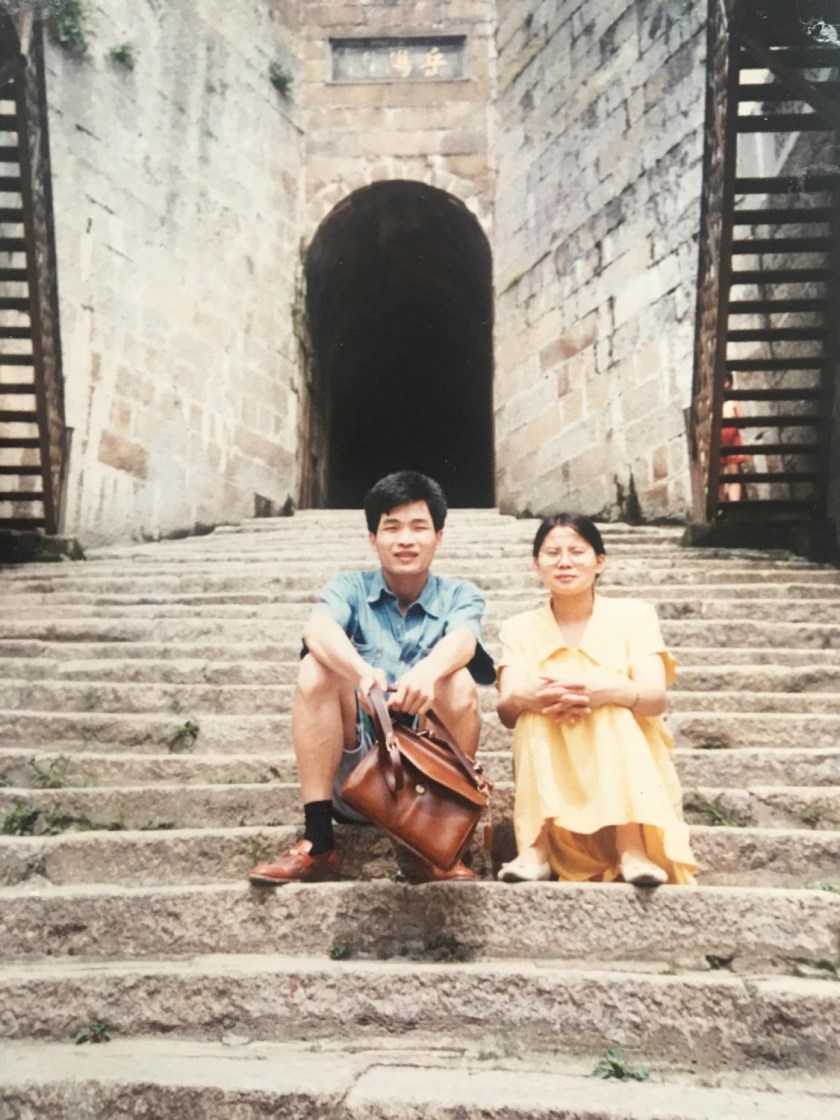
Joyce’s parents when they were young

Joyce Fang is a first-year student at the campus du Havre. She’s from Adelaide, Australia, of Chinese origin. You can find her knocking back beers at Wallaby’s, or furiously studying in the library. She also features in the first episode of the podcast “Wine Society“. She wrote this letter to her parents while taking a break from midterm revisions.

Edited by Pailey Wang and Philippe Bédos

A Call for Transparency

An open letter concerning Sciences Po’s administration and recent reforms, by Zhenlin Ouyang.

Zhenlin Ouyang is a second-year student at Sciences Po, Campus du Havre. He majors in Politics and Government. He is orginally from China, but lived in Canada before coming to Le Havre.

I have confidence Sciences Po, as an institution firmly rooted in and representative of democratic principles, will be receptive to criticism from its student body. Therefore, I write this letter to bring forth two major issues:

1. The lack of transparency about administrative regulations and the reform;

2. The treatment of students who are currently repeating either year of their studies;

I – The lack of transparency

Throughout our time at Sciences Po, the information we have been given has been incredibly inconsistent. In some cases, we have been given no information at all. A key example of this is the contradictory information we were given about the reform.

During the designated information session we had regarding our choice of major, we were told that:

  • our major during the third year abroad would not have to correspond to our major at Sciences Po;
  • that we would be free to pursue an intensive language program regardless of our second year major

However, during this semester, we were told the exact opposite, and the following announcements were made:

  • Our current major has to be pursued during 3A
  • Our current major also determines what universities we can apply to; as some universities do not offer certain majors
  • The intensive language program is not open to anyone anymore.

There are many questions that spring to mind:

  • Where do these inconsistencies come from?
  • Why was this reform not more thoroughly organized before being presented to the student body?
  • Why was there no procedure of consultation with the students regarding this reform?
  • And most importantly: Why were all applicants who would be subject to the reform not informed about it before applying?

Moreover, we were registered for Digital Workshop seminars (on September 14 – 15) without prior notice. However, in my opinion, we should have the ability to choose the seminars we want to sign up for.

II – The Treatment of redoublants

It is hard for students to study at such a demanding university. Enrolling for an extra year is, thereby, doubly difficult. Especially without the proper assistance.

Last summer, when I discovered I had to do an extra year, the administration and I scheduled a Skype conference to discuss my situation. In addition to a half-an-hour delay, I was only allocated five minutes of time to pose my questions. During that brief meeting, I expressed my concerns and asked two questions:

  • Would I have to re-do the group project? (Before the reform, students were required to implement a group project during the first year)
  • Would I be able to validate the internship I did during the summer of 2017?

I was told that I didn’t have to do another team project and that I would be able to validate my internship if all the relevant documents were provided.

Then, to my surprise, when I went to the administration to validate my internship during the last semester, I was given an entirely different response. They first told me that they had to check with their colleagues in Paris and, finally, that I wouldn’t be able to validate it. I was confused by their reasoning: I wrote my engagement letter about the promotion of gender equality and my internship was correspondingly conducted at an NGO promoting rights for gender minorities.

I was fed the same story when I asked them about the independent engagement. As the administration has completely ignored my repeated attempts to give my perspective, and as one of my fellow student is in the exact same situation, I would like to ask the following questions on our behalf:

  • If the reform had been set forth with clear instructions, why do we still rely on Paris for clarifications?
  • Why do I have to re-do my internship and the Independent Project? Our administration misled me by giving me contradictory instructions for half of the year (thus giving me less time than other students to find an internship). Why was I obligated to re-do this when the internship I did the year before could have been counted?
  • For students who passed conditionally: why do we still have no information on how to retake classes despite the fact that the first semester is coming to a close?

III: Our Demands

The aforementioned examples are just the tip of the iceberg, but they reflect the lack of transparency within our institution. Beyond these examples, there are several contradictory regulations (such as the absence policy) and our plans are often disturbed by the fluctuating rules passed down from the administration. We were left in the dark as to why the reform was put forth so quickly, and why the regulations were made to be so ambiguous.

When even the administration does not know what they are doing, imagine how we students feel; without sufficient and transparent information, it is difficult for students to incorporate the reform into our personal academic program.

Hence, I present this set of demands on the behalf of students of Sciences Po, who I hope will join me in this call. We hereby demand that:

  • A general assembly be held to explain why regulations about 3A have been reversed without consulting students
  • A responsive mechanism be implemented by the school to collect the students’ opinions and recommendations on the reform, and that these be taken into account
  • A unifying standard should be established to prevent any future rapid change of rules and regulations;
  • An ad hoc procedure should be negotiated for les redoublants.

We want a full account of why the school thinks it is acceptable to change rules without going through transparent and inclusive procedures, and we want to see commitments to end such practices.

Revised for clarity by the editorial team of LDD.

The opinions expressed by the author do not necessarily represent the editorial position of Le Dragon Déchaîné.

What’s On Le Havre: September

Welcome to the first edition of What’s On LH for the new academic year. This monthly guide brought to you by the Bureau des Arts includes our top picks for art, music and culture au Havre.

EXHIBIT !

Well worth the trip up the hill, the Tetris has a multi-medium exhibition on landscapes which is about to finish. Catch it before it’s gone! More.

WHERE: Le Tetris

WHEN: Until the 2nd

HOW MUCH: free

Né(e)s de l’écume et des rêves

Also finishing up soon is the temporary exhibition at MuMa. The eclectic collection revolving around the ocean is an interesting complement to the permanent exhibits, which are well worth visiting for newcomers. More.

WHERE: MuMa

WHEN: Until the 9th

HOW MUCH: free (for students)

Le Volcan: Open Door

Le Havre’s iconic theatre designed by Oscar Niemeyer will open its doors for two days to mark the beginning of the new season. A worthwhile behind the scenes look at an amazing building, and a thriving artistic hub. More.

WHERE: Le Volcan

WHEN: 15th and 16th

Ouest Park Festival

Le Havre’s very own summer music festival is nearly upon us, and with a great international lineup with names such as: Boys Noize, Romeo Elvis, The Brian Jonestown Massacre and Therapie Taxi, and many more. This isn’t one to miss! More.

WHERE: Fort de Tourneville

WHEN: 21 – 23rd

HOW MUCH: €26 per day (students), free on the last day.

There are a lot of public art installations as part of Un Été au Havre. Take a visit to the beach, or up the hill to the Jardins Suspendus to catch a few before they’re gone.

Some of our favourites are:

UP#3

Unmissable and instantly iconic, our favourite abstract monument is back for another year. It can’t be missed on the centre of the beach. More.

À l’origine

Just a stone’s throw away you will find an impressive six metre sculpture by Fabien Mérelle. A man carrying the symbolically immense burden of an elephant on his back. More.

Jusqu’au Bout du monde

All the way at the end of beach at the Bout du monde, you will find another larger than life work by Fabien Mérelle, of a father and daughter looking out into the unknown. More.

Futuro House

A rare retro-futuristic house has descended on Le Havre, an interesting piece of architectural history worth visiting in the Jardins Suspendus before it’s gone. More.

Most of the public art will stay until the 23rd.

Hôtel de Ville du Havre, symbole de la reconstruction

Where better to hold an exhibition about the Hôtel de Ville du Havre than the Hôtel de Ville du Havre. A worthwhile history lesson about the symbolism of the building in the post-war reconstruction of the city. More.

WHERE: Hôtel de Ville

WHEN: Until the 23rd

Les Passagers du Son (2)

While you’re at the Hôtel de Ville, take yourself on an immersive auditory experience and discover the building through this spatial art installation. More.

WHERE: Hôtel de Ville

WHEN: Until the 23rd

Vélo Tour

Take a bike trip all around the city, as well as through some of Le Havre’s notable building. A great opportunity to discover the city and all for a good cause! More.

WHERE: All over LH! (starting at the Jardin Fluvial)

WHEN: The 30th

HOW MUCH: €15

Pailey Wang is an Australian second year student at Sciences Po Paris Campus du Havre, and one of the editors-in-chief at Le Dragon. He majors in Politics and Government, and is also the incumbent Public Relations Officer of the Bureau des Arts.