
Franzcesca Chiara DE LA CRUZ, Maalavika HAREESH, Thomas LANDERRETCHE, Sylvain SAINTE-MARIE
Image Credits: Thomas FUNKLEDER

Above: students gathered in the main hall outside of the Grand Amphitheatre on Sciences Po’s Le Havre Campus
Not your typical year-opening ceremony, now is it? All across the different campuses of Sciences Po, the Rentrée Solennelle is a symbolic occasion for the academic year to officially begin – and an opportunity for the institution to flaunt its specialities. For the Le Havre campus, this took place on Thursday the 12th of September. Traditional outfits and suits filled the hallway that day, ready for “Meet the Paris Admin” – a two-hour Q&A format session with Paris’s Dean and Head of Student Life along with Mr. Hauchecorne. Students raised their concerns, as the presence of the central administrative body is rare on regional campuses. It was presented as a time for open dialogue.
In the beginning, all looked to be in order. The day started off with the welcoming of different personnel; among those present were marine officers, departmental and regional officials and civil security representatives. This was followed by an afternoon of speeches from the admin and different officials, as well as an inaugural lesson from Dr. Champaka Rajagopal. The session came to an end with artistic performances by the BDA.
Our campus director, Michaël Hauchecorne, delivered his speech in the Grand Amphi in front of guests, before leaving the floor to Dean Jeanne Lazarus. Suddenly, after a few minutes of her speaking, she was interrupted by a 2A student standing up from the assembly and reading a statement from the Students for Justice in Palestine (SJP) LH group. A strained silence descended on the assembly as everyone listened to the impassioned reproaches of the students from SJP. The dean made the attempt to resume her speech after this initial outburst, but soon it was made clear that the student protesters would interrupt her every time. It is recorded that, in total, the dean’s speech was cut off four times after each attempt to resume her address. Each speech made by students in the audience received warm rounds of applause from students in attendance, though not unanimously. Cheers and silence, applause and indifference, eagerness and frustration played against one another throughout the room. Some stood and applauded the intervention, others left. In the spirit of this medley of varied and contrasting reactions from the assembly, the officials’ “apolitical” departure from the amphitheatre was drowned by most students’ cheers, much to the discontent of the admin and the guests. As the fourth claim was read out, Mr. Hauchecorne called on everyone to leave the amphitheatre, before engaging in heated discussion with the students involved in the disruption.
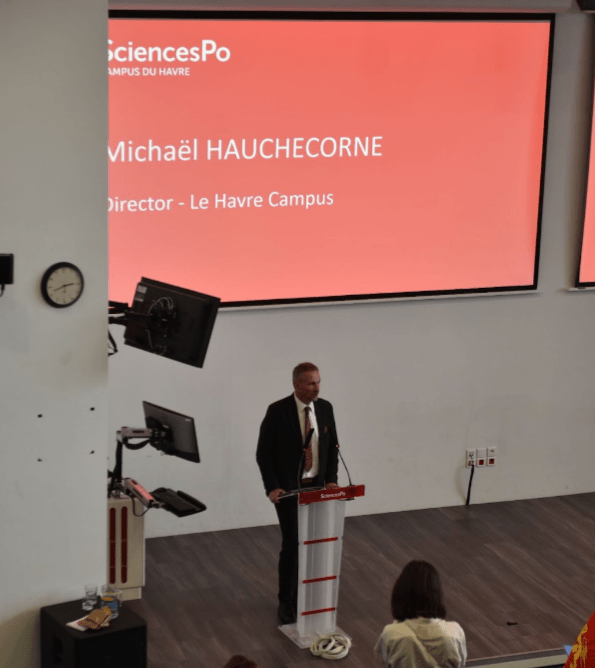
Above: Campus Director Michaël Hauchecorne addressing the assembly at the Rentrée Solennelle welcome ceremony
This clash of interests ultimately cut the Rentrée Solennelle short. After a few dozen minutes of students filling the campus halls in a trance of confusion, intrigue and excitement, the event was set back into motion with the inaugural lecture made by Dr. Champaka Rajagopal on urban development in a liberalised India. The 2A and 1A sessions were separated, however. To end that day, only the Thaï dance from Nicky (2A) was performed in the hallway. Notable enough was the absence of the majority of guests and the whole of Paris’ administration after the initial interruption in the Grand Amphitheatre took place.
What to do, what to say after such an unconventional start to the year? A week after the event and the protest actions that characterised it, Students for Justice in Palestine (SJP) LH convened an independent meeting, attended by both second and first-year students to explain the organisation’s objectives and to answer potential questions. Here, second year students such as Lino Battin, Samy Sefouni, and Angèle Doray explained to the first year students the history, intentions and protest mechanisms of SJP.
A representative from SJP clarified that their recent actions were aimed at capturing the attention of the administration and other key stakeholders, rather than disrupting the event itself. This latest protest follows previous efforts by SJP, including fundraisers, petitions with over 2,000 signatures, and multiple blockades on campus to raise awareness for their cause.
During the meeting, SJP addressed concerns about their recent protest, including a lack of communication with first-year students and accusations of anti-Semitism, which they firmly denied. They clarified that their protest targeted individuals they view as supporting a “genocidal state,” not any specific ethnic or religious group. The group also distanced itself from pro-Palestinian graffiti that led to a campus event cancellation.
Looking ahead, SJP plans to expand its media outreach through social media and connections with media houses such as Libération, all while continuing its advocacy for Palestinian justice. They maintained that the tone of future actions will depend on developments in Gaza and any potential disciplinary actions from the university administration.
Meanwhile, the campus administration has expressed its chagrin at the disruption caused by protesters affiliated with SJP, believing the Rentrée Solennelle to be neither “the time nor the place for a constructive discussion.” This and more was stated in an email addressed to the first year cohort soon after the event. Director Hauchecorne’s email, sent alongside a letter from Jeanne Lazarus herself, describes the interruption as “not acceptable,” emphasising the negative impact such disruption could have on partnerships. Lazarus emphasised the need for open dialogue and declared a desire to work with students.
“I assure you of my availability for all forms of dialogue, my openness to all questions, and my willingness to listen and pay attention” – Jeanne Lazarus, in a letter addressed to all first year students of the Le Havre campus.
Despite the campus administration having stated its willingness to listen to students, SJP still has lingering doubts regarding the admin’s ability to cooperate. It is worth noting that no mention of the SJP protest, across any social media platform, was included in posts by Sciences Po about Le Havre’s Rentrée Solennelle. However, Hauchecorne gave his remarks on the matter in an interview with the newspaper Paris Normandie, condemning the protests last year as polarising while assuring that platforms for discourse would be implemented this year, such as conferences and mediation workshops.
Preventing an entire class from taking an exam, preventing students from accessing a conference… These are not normal behaviours in an institution like ours, and we condemn extreme polarisations.
– Hauchecorne, in an interview with Paris Normandie.
Regarding students’ opinion on the matter, it seems that sentiments are divided. We attempted to quantify students’ opinions with scales (a 1 to 10 measurement system) and the results were often found in the extremes. For instance, when we asked if they agreed with the intervention by SJP, 60.3% of students voted in extreme cases (either voting 1, 2, or 9 and 10) with 26.4% disagreeing in the extremes and 33.9% agreeing in the extremes. Nevertheless, many students found common ground when it came to certain aspects of the event. For instance, 83.1% of people agreed that the cultural aspect of the event made it better and 52.9% of people also, overall, enjoyed the Rentrée Solennelle. However, it is important to note that only 54 people sent in their opinions on our anonymous Google forms, meaning that there may be a silent majority who genuinely feels indifferent towards the intervention and the Rentrée Solennelle.
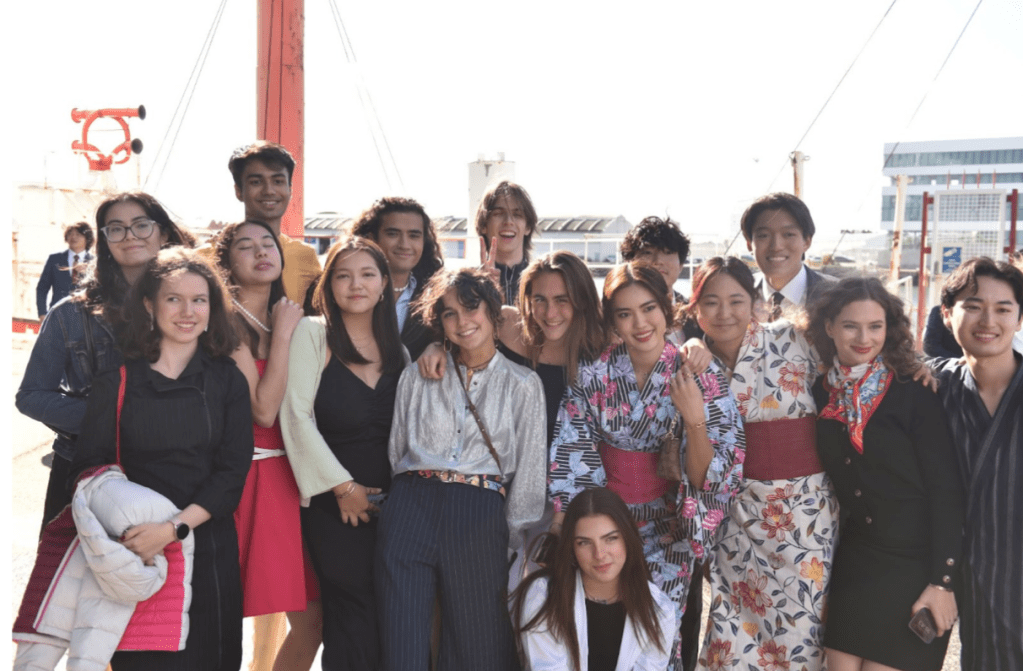
Above: a group photo of students taken outside of the main building of the Le Havre campus
While there have been mixed reactions towards the event, some students revealed in interviews that the SJP meeting helped them understand the motivations behind the protest, and were glad it was held despite not agreeing with all the points discussed. Others felt that the meeting only strengthened their support for the cause and that the new school director won’t improve administrative response to these situations – this leaves students unsure about the future of political expression on campus. However, those interviewed feel that students studying politics should not be blamed for trying to change the world, and believe that more Sciences Po students are taking action on an important issue.
But Sciences Pistes of Le Havre, resilient to the tensions that had boiled over earlier in the day, chose not to let the occasion pass them by. Indeed, the cancellation of the highly anticipated prom picture, taken traditionally during the Rentrée Solennelle, did little to lessen their energy and enthusiasm. For as the long (and fortunately sunny) day drew to a close, many gathered gladly outside campus, to have a chat with classmates old and new and to take photographs in fancy dress. Nothing could diminish the buzz of excitement of a fresh school year that hung in the air on that fateful September afternoon.
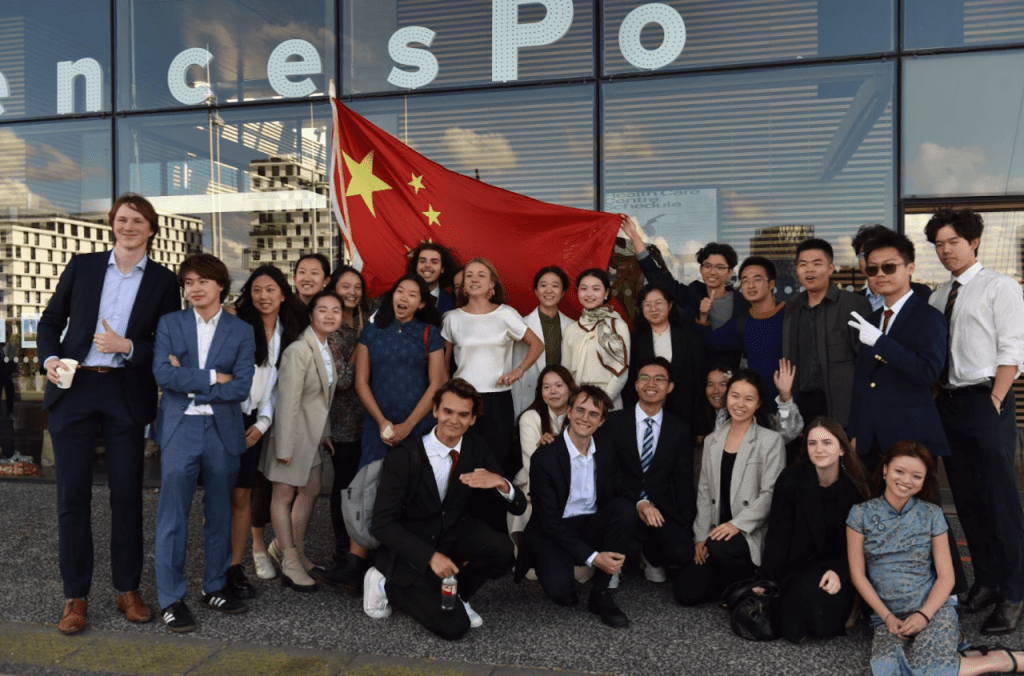
Above: a group photo of students taken outside of the main building of the Le Havre campus
 Le Dragon Déchaîné