
Claude Leroy-Pinto
All images credited to the author unless otherwise stated.
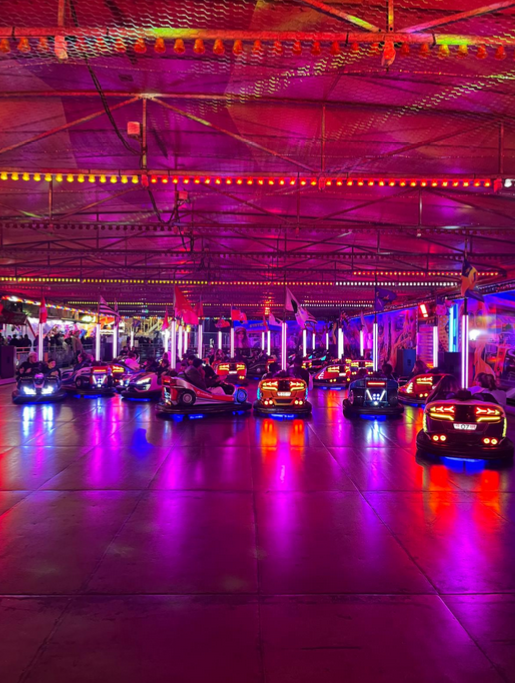
It has been almost a month since the school year began, and by now, you have likely gotten past your first impressions of Le Havre and uncovered some of its hidden charm. You’ve probably already hit the tourist hotspots: the MuMa, the Église Saint-Joseph, Perret’s Show Apartment, the famous “Volcano” (spoiler alert: no lava), and who knows, maybe you found some fun nightclubs and bars. If not, if you think that finding exciting nightlife in Le Havre happens when pigs fly, just when you thought you had seen it all, here is a little surprise: the St. Michel Festival Fair is in full swing starting September 21!
Since last Saturday, the area behind the University, near Le Havre station, has been buzzing with life. Rides are spinning, music is playing, and the traditional “fête foraine” (funfair) is open daily until October 13, from 2 PM to 11 PM, with extended hours on Fridays and Saturdays.
Now a quick dive into the festival’s history. This funfair actually aligns with Le Havre’s Heritage Weekend—what better time to learn about the city’s rich past? The origins of this event can be traced back to a charter from King François I in 1535, which established two free trade fairs in Le Havre. Although these early fairs were more like bustling outdoor markets, they laid the groundwork for the exciting festival we know today.
In 1792, plans for a proper Saint-Michel fairground were developed in Ingouville, near Le Havre. By the following year, the fair was set up in the courtyard of the former Penitents’ convent. Throughout the 19th century, improvements in transportation brought visitors from all over Normandy to this annual event, featuring stalls selling everything from jewelry to toys. Alongside the merchants, entertainers such as acrobats, circus performers, and theater troupes dazzled the crowds.
If some of you don’t have a similar carnival tradition in your home country, you need to know that it is a very special world. It is a very closed circle and traditionally a know-how that has been passed down from generation to generation. The fairground profession is particularly difficult, as they are highly dependent on tourism and weather conditions and don’t work on a regular schedule. The fairground workers I spoke to talked about the financial difficulties they were facing. Indeed, they have to take on accountants without whom they cannot manage, as well as looking after their own attractions.
At the fair, you will find a bit of everything, from cotton candy vendors to haunted houses (make sure to have some brave friends to lead the way!) and even rides that launch you 70 meters into the air, spinning your head in all directions (be careful, we have seen shoes flying). But don’t worry, even if all this sounds really frightening, nothing here comes close to Stephen King’s Joyland.
With midterms approaching, you are likely swamped with studying, but don’t forget to unwind! What better way to take a break than a visit to the fair, hopping on some thrilling rides, and taking your mind off exams?
Pro tip: apparently you can benefit from some reduced prices on rides and attractions on October 2 and 12. Don’t miss out!
 Le Dragon Déchaîné