
Stolpersteine: Reminders history between cobblestones

by Hannah Schepers

Every day, on my way home from Campus, I walk past a set of special stones in the pavement. Shining metallically between the cobblestones, these so-called Stolpersteine, stumbling blocks in German, carry the names of people who were persecuted and terrorised under the Nazi regime. Since 1992, these blocks have been placed in front of the houses in which victims have last lived freely. This commemoration project first started in Germany, but today 116.000 Stolpersteine can be found across 31 European countries, including France and our city, Le Havre. 

Le Havre under the Nazi Regime

German troops entered the city in June 1940, after a whole month of bombings had destroyed large parts of the industrial area of the city. Le Havre was part of the zone occupée which includes the whole northern half of France and stretches south along to western coast until the Spanish border. 

The Germans established their own administrative system and soon put in place laws against Jews, such as forcing them to wear the yellow star and confiscating Jewish-owned apartments and businesses. To escape these anti-Semitic laws as well as the deportation to concentration camps, that systematically started in 1942, many Jewish people tried to leave Le Havre in direction of Paris, but these attempts were often unsuccessful. 

In Le Havre, there are three documented roundups of Jewish citizens, communists as well as other groups persecuted by the Nazis. These were often conducted in reaction to attacks and sabotage against the occupation, in order to intimidate the population and to demonstrate power. Despite being planned and ordered by the German forces, the roundups were executed by French policemen and later even ordered by French officials. 

Jewish population in Le Havre 

Le Havre was home to a small Jewish population, estimated to be around 320 people. This community was very heterogeneous in terms of social status and origin: some were French, some had come from Northern Africa, and some had come from Eastern Europe to escape pogroms in the late 19th century. Some people were working in trade, while some in more educated jobs like doctors and lawyers. 

The four Stolpersteine I walk past every day are located on the Cours de la République, near Rond Point; they carry the names of Anna Fuchs and her three daughters Marie, Simone and Madeleine. According to the Biographical dictionary of victims of Nazism in Normandy by the University of Caen and research done by high school students in Le Havre, Anna Fuchs was born in Russia around 1887 before coming to Le Havre. She was working in trade, which matches the location of their last place of living, since the area around Rond Point was where many merchants had their stores. Her daughters were born in France between 1912 and 1915. 

When deportations started in Le Havre in 1942, the family at first was able to hide at their neighbours’ place, but was then arrested and held in the city‘s prison. They were then further deported to other camps in Rouen and later Drancy. In 1943, the family was deported a last time to the concentration camp Sobibor, which is located in the east of Poland. There, all four women were murdered in 1943. 

Anna Fuchs‘s sister, Beila Fourmann, had also migrated to France, at first to Paris then Le Havre with her husband. Like her sister, she was working in trade, in a boutique called “Au Louvre Havrais”, which was later confiscated by the Nazis. Beila Fourmann was arrested in 1942, and deported to Auschwitz II in Poland, where she was murdered in 1943. 

The Stolpersteine are not only reminders of history but also carry each person‘s individual story with them. The next time you are out in the city, be it Le Havre or anywhere else, make sure to check the ground you are walking on, for you might find a piece of history between the cobblestones.
Hurricane Melissa: unearthing entrenched colonialism

by Celine Sarraf

Natural disasters may appear to be purely natural events, but their paths often trace the contours of empire. Storms and earthquakes rarely strike with equal consequence, their devastation follows the geography of historical exploitation. This is to say that in former colonies, exposure to extreme weather is not simply environmental — it is structural. Hurricanes that devastate the Caribbean or floods that submerge South Asian regions work to expose the inherited vulnerabilities of colonial rule. The legacies of imperial economies determine a myriad of local structures, from where houses stand to who can afford sturdy infrastructure. 

Colonialism is often perceived as synonymous with the invasion and settling of a foreign people. In New Zealand, British settlers implanted a new society on Maori land with relative ecological stability, while Haiti, a planter colony designed to fuel France’s wealth through sugar and coffee, faced deep ecological ruin. This distinction, between settlement and extraction, is crucial for the understanding of recent natural disaster in Jamaica. 

When Hurricane Melissa ravaged the island last November, the destruction was vast. Gurney’s Mount Baptist Church, which stood as a symbol of resistance during the 19th-century rebellions, faced destruction. Its collapse, beyond physical loss, demonstrated unwavering structural weakness and inability to withstand weather conditions despite its powerful history. 

Britain’s rule in Jamaica was not centred on permanent settlement but on resource exploitation, specifically of sugarcane. Hence, infrastructure here was never meant to serve social development, but was engineered to extract and export profit while leaving the island exposed. Roads led from plantations to ports, not between inland communities—flooding wealth strictly outwards. This demonstrates the deeper ecological dimension of colonial rule: with efficient wealth production taking priority, colonisers reshaped landscapes without regard for the climatic knowledge accumulated by local populations. 

Before European conquest, Jamaica’s inhabitants had developed a form of harmony with their environment. Their settlements rarely clustered the coast, where tropical storms provided clear risk. Agricultural cycles reflected close observation of the weather as harvests and planting would be shifted and adjusted according to storm seasons. British planners inverted these well-serving strategies. They presented coastal development as an indicator of modernity, populating coastal areas and building warehouses and plantations directly in zones of highest hurricane risk. 

Jamaica gained its independence from the United Kingdom in 1962, a moment that did not erase the structural inheritance of vulnerability. As historian Robert Parkinson effectively said, “invasion is a structure, not an event.” Economic dependence and infrastructural weakness persist as ongoing forms of incomplete decolonisation. One manifestation of this is disaster colonialism, which can be defined as the exploitation of crises by powerful entities, under the guise of aid or reconstruction. Loans are extended to finance rebuilding, but the steep interest rates or policy conditions mean that the same nations whose carbon emissions fuel more extreme weather conditions profit through Jamaica’s indebtedness. 

Each new disaster deepens a vicious cycle. Already weak infrastructure fails; the state borrows to rebuild; repayment limits effective public investment; and soon enough another storm strikes. External interventions operate by framing disasters as singular events that justify “emergency” action, which can mask continued imposition and control, subtly a continuation of imperialism through disaster management. 

So, the Jamaican prime minister’s remark before Hurricane Melissa, “there is no infrastructure in the region that can withstand a Category 5,” speaks volumes. The infrastructural weakness is not accidental but inherited, the colonial objective of extraction produced systems suited for export, not endurance. Then even today, reconstruction projects in the region rely on global supply chains and financial institutions whose hierarchies mirror imperial structures. 

Ultimately, environmental hazards alone do not create disasters. The escalation of an earthquake or hurricane to a large-scale catastrophe is determined not just by the scale of the event itself, but by the unequal histories and the compounding of structures dominated by colonialism. To understand climate vulnerability then, one must consider not only meteorological patterns but imperial ones. 

Unification with Romania: Moldova’s shortcut to the EU?

by David Cretu

As Moldova’s EU integration remains a distant prospect, its president, Maia Sandu was recently said to be in favour of a unification with its larger neighbour, Romania. Through her statement, Sandu reignited a profound debate in the two countries, which can be traced back to the 20th century.

            Historically, the region of Bessarabia, encompassing most of modern-day Moldova, was part of the Kingdom of Romania until 1940, when the region was annexed by the USSR under the June 26 ultimatum. Nowadays, Moldova remains a Romanian-speaking nation, while the two states maintain a shared cultural heritage. Nonetheless, after the dissolution of the Soviet Union, calls for reunification emerged, invoking this historical and cultural connection.

            But how plausible does this scenario seem to be, 35 years after Moldova’s independence? Very unlikely, according to experts. An overwhelming majority of experts argue that if reunification was an easy process, it would have happened years ago. Indeed, significant barriers preventing it from occurring remain.

            First, the Transnistrian situation; a separatist Moldovan region, remains unresolved. After declaring its secession in 1992, this Russian-speaking region started functioning as a de facto state, with its own currency and government, under Moscow’s support. One sign of Russian involvement is the 1,000 soldiers stationed in the region, who represent the main obstacle to reintegration within Moldova, according to Chișinău.

Moreover, the current legal framework in both countries does not allow for unification. Their constitutions present obstacles in this direction, as Romania’s constitution doesn’t allow for regional autonomy to the same extent as Moldova. Furthermore, implications such as the modification of national borders, require referenda to be held in both countries. Moldova recently modified its constitution to enhance its European vision. A weak majority of 50.38% voting ‘yes’ suggests that a majority in the case of a referendum on the Romanian matter is very unlikely. One key element is Russian interference, through both old generations, still deeply marked by Soviet mentality and opinions; as well as modern tactics, involving corruption or cyberattacks. Finally, in the European Union itself, many member states are reluctant to accept the rapid integration of a hazardous region in the organisation, invoking regional stability and security.

Nonetheless, if reunification seems so unlikely, it is because public opinion does not support it in the first place. According to recent polls in Moldova, the support rates are around 37%, while about 54% of Moldovans declared to be against it. Many pro-Russian politicians, such as Igor Dodon, in response to Sandu’s declaration, accused her of treason.

However, even if this political movement is minoritarian in Moldova, it seems to be majoritarian in Romania, where about 60% of Romanians would support unification with Moldova in a referendum. The political circle shares the same position, as Romanian Prime Minister Ilie Bolojan also declared to vote in favour if a referendum were to be held. Another key factor is the Romanian nationalist groups: George Simion’s party, the Alliance for the Union of Romanians (AUR), who reached the second round of the last presidential elections, is publicly in favour of this reunification.

            In this context, reunification appears less as a realistic shortcut to the European Union, and more as a long-term political possibility that, despite current challenges, could emerge over time, deeply shaped by history, identity and geopolitics. Moldova’s future will not depend on merging borders, but on achieving the reformation of its institutions.

Malampaya: Fueling Development or Deepening Dependence?

by Margherita Greco

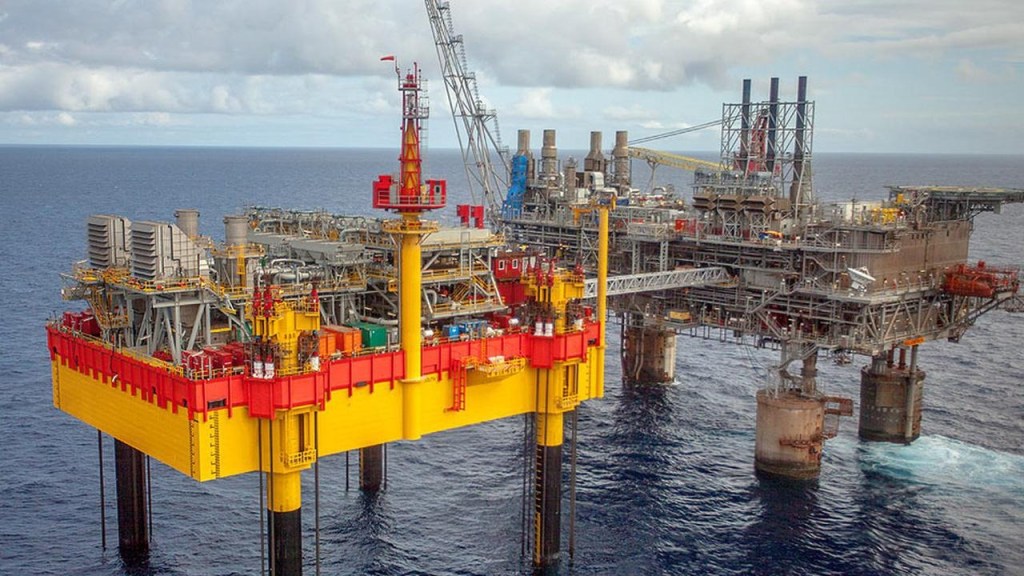
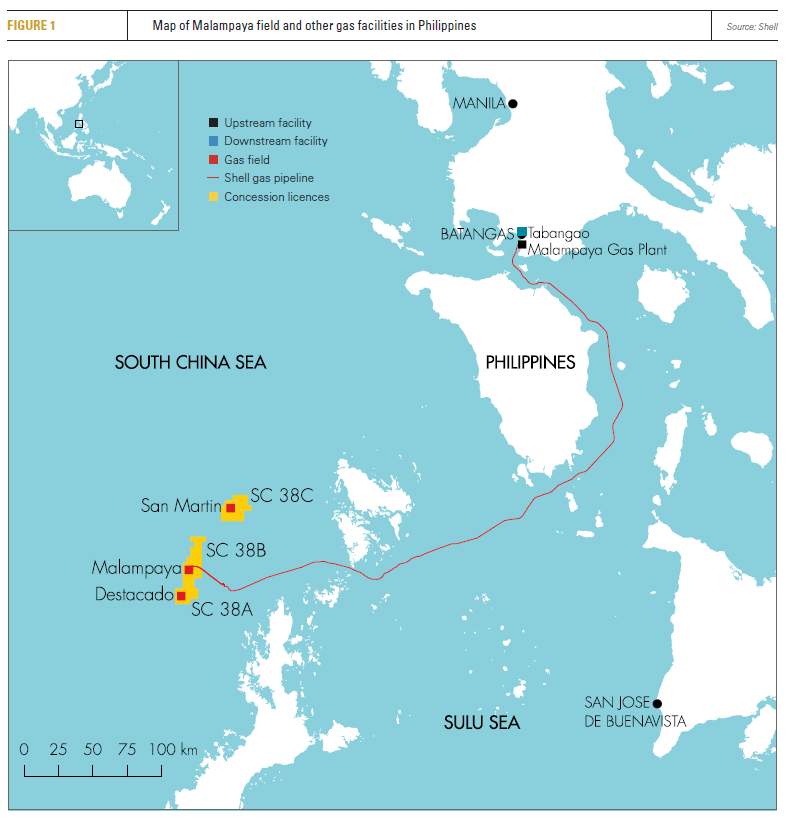
Off the western coast of Palawan, beneath the contested waters of the West Philippine Sea, lies one of the Philippines’ most vital energy assets: the Malampaya gas field. Since production began in 2001, it has powered up to 20% of the electricity demand in Luzon, the country’s largest and most populous island. Yet Malampaya is more than an energy source: it has become a flashpoint for debates over economic sovereignty, governance integrity, and the nation’s energy future.

Discovered in the early 1990s, Malampaya was developed to reduce dependence on imported oil. Volatile global fuel prices had long destabilized electricity costs and exposed the economy to external shocks. So, the Filipino government idealized a project that converted the majority of Batangas power plants from oil to natural gas. It would deliver cheaper, cleaner, and more reliable energy—a major industrial milestone that strengthened energy security.

The economic returns were substantial. Over two decades, the field generated more than $12 billion (approximately ₱693 billion) in government revenue through royalties, taxes, and service contracts. Under Presidential Decree 910 in 1976, these funds, “the Malampaya Fund,” were earmarked for energy development and national programs. For a developing country with chronic fiscal constraints, this represented a rare and unique opportunity to convert natural resource wealth into infrastructure and long-term growth.

But governance failures undermined that promise. In 2013, the Supreme Court ruled that presidential use of Malampaya funds for non-energy projects was unconstitutional. A 2017 Commission on Audit report uncovered widespread procedural violations in disbursements totaling tens of billions of pesos. The most notorious scandal involved ₱900 million in typhoon relief funds diverted to fraudulent NGOs linked to pork-barrel operator Janet Lim Napoles. These controversies expose the “resource curse”, occurring when countries rich in natural resources struggle to translate wealth into equitable development due to weak institutions and corruption.

If on a national level this gas field helped the country’s economic development, at the local level, Malampaya’s impact has been uneven. Palawan communities benefited from jobs and infrastructure, yet many residents remain dependent on fishing and tourism, conducting a vulnerable lifestyle to environmental disruption. Offshore gas extraction carries ecological risks: leaks, seabed disturbance and biodiversity loss. While the project maintains a strong safety record, industrial activity in ecologically sensitive waters underscores the tension between economic growth and environmental protection.

Energy inequality further complicates the legacy. Despite powering much of Luzon, millions of Filipinos, especially the rural regions’ inhabitants, still face high electricity costs and unreliable access. The benefits have flowed overwhelmingly to urban and industrial centers, deepening regional disparities. So we should really reflect on this system and question ourselves with a daunting inquiry: who truly benefits from national energy megaprojects?

Today, Malampaya faces decline. Output from its primary reservoir has been dropping, with depletion long projected within this decade. To compensate, the Philippines has increasingly turned to liquefied natural gas (LNG) imports. While LNG stabilizes supply short-term, it reintroduces the vulnerabilities Malampaya was meant to solve: exposure to volatile global prices, dependence on foreign suppliers, and costly infrastructure investments.

In January 2026, the government announced the discovery of 98 billion cubic feet of gas in the nearby Malampaya East-1 field—the first major find in over a decade. The reserve could power millions of households and extend operational life. Yet it highlights deeper vulnerability: new reserves provide temporary relief, not structural energy security.

The web gets even more tangled when considering regional tensions. Malampaya lies near contested South China Sea waters, where territorial tensions intersect with energy exploration. Resource management here ties energy security directly to national sovereignty, embodying a “weapon” for the Filipino government as the control over natural resources always hides deeper implications, going beyond mere technical oversight. Corporate control of Malampaya has been no less troubled. Indeed, when Udenna Corporation purchased Chevron’s 45 percent stake in 2019, the transaction immediately raised questions about technical capability and financial resilience. Subsequent graft allegations confirmed what critics feared: the deal reeked of political favoritism over competence. It was a stark reminder that in the Philippines, even strategic energy infrastructure is vulnerable to the logic of patronage and corruption.

As Malampaya declines, the Philippines faces a broader reckoning. Continued reliance on fossil fuels risks delaying investment in renewables like solar, wind and geothermal power. Given the country’s acute vulnerability to climate change, critics argue that Malampaya revenues should have been deployed more aggressively to finance the transition to sustainable energy systems.

Ultimately, just like every other pivotal element for a country’s growth, Malampaya embodies a series of paradoxes: it strengthens energy independence while exposing governance fragility; it generates vast public revenues while revealing corruption risks; it powers economic growth while reinforcing inequality and environmental tension.

The field’s legacy will be measured not by the gas extracted beneath the seabed, but by how effectively the Philippines used the opportunity it created. Natural resources alone don’t assure development, but they can drive it. Only with transparency, institutional integrity, and long-term planning, natural resources can transform this given opportunity into a measurable beneficiary advantage, otherwise they can deepen dependence and increase socio-economic tensions within the country.

As Malampaya approaches the twilight of its productive life, the nation stands at a crossroads: repeat the cycle of resource-driven vulnerability, or transform its lessons into a foundation for energy resilience, sustainability and equitable growth.

The Malampaya offshore gas platform, West Philippine Sea. Source: NS Energy Business.

Map of Malampaya field and other gas facilities in the Philippines. Source: Shell


Sources: 

Reuters. (2019, October 25). Philippines’ Udenna buys Chevron stake in Malampaya gas project. Reuters.

Philippine Daily Inquirer. (2014, October 12). COA flags misuse of Malampaya funds. Philippine Daily

Department of Energy. (n.d.). Malampaya deep water gas-to-power project. Government of the Philippines. https://www.doe.gov.ph

Supreme Court of the Philippines. (2013). Araullo v. Aquino III: Decision on the use of Malampaya funds. https://sc.judiciary.gov.ph 

National Gas Society of India. (2019, September 18). Philippines: Udenna says it is buying Chevron’s stake in Malampaya gas project. https://ngsindia.org/news/philippines-udenna-says-it-is-buying-chevrons-stake-in-malampaya-gas-project/

Commission on Audit. (2017). Audit report on the Malampaya fund disbursements. Government of the Philippines. https://www.coa.gov.ph 

The Rise of the Middle Powers 

by Mithil Goyal

For most of the last century, global politics was framed around the great powers; the United States and Soviet Union during the cold war and later the unipolar dominance of the US after 1991. More recently, the focus has shifted towards the great power rivalry between the US and China. But outside this rivalry, there are numerous countries which are quietly reshaping the global system like Indonesia, Brazil, Turkey, India, South Korea and so on. They aren’t hegemons and don’t dominate militarily, but they matter a lot in the global sphere of politics. Today, they are more active, more assertive and more influential than ever. On one hand, we have superpowers like the United States and China with global military power, whereas on the other hand, we have smaller states with limited influence.  Middle powers exist in the centre of both of them — too big to be ignored but not big enough to dominate. Middle powers don’t act as a unified bloc and they are not always pulling in the same direction. They have something else like diplomatic flexibility, regional credibility and strong stakes in a functioning global order. Countries like Norway, Brazil, Indonesia or Mexico don’t throw their weight militarily but they show up, they negotiate, build coalitions and use soft power to shape how multilateralism works in a fragmented world. At the 2024 World Economic Forum in Davos, Indonesian diplomat Dino Pati Djali captured this perfectly by saying, “In the 21st century, the world order will be shaped not by the great powers or major powers, but by the proliferation of middle powers”. There are new alignments between middle powers across the global south and global north including partnerships like Australia and India or South Africa or Brazil. These alignments are not driven by ideology or bloc politics but by shared interests. Turkey is emerging as a very influential middle power. Under President Aragon, Turkey has become one of the most assertive members in the geopolitical sphere. It’s a NATO member but also a buyer of the Russian weapon system. It has maintained relations with both Russia and Ukraine and has troops in Syria, ties to militias in Libya and ambitions in the South Caucasus. It has also brokered the Black sea grain deal, one of the most successful pieces of wartime diplomacy in Ukraine. 

We can also take India as an example which has deep relations with the United Nations through the Quad and tech co-operation but it also maintains strong military and economic ties with Russia even after the invasion with Ukraine. India has been a historic leader in the global south by being the member of the Non-Aligned Movement and a key player in the BRICS bloc. Its foreign policy combines a kind of strategic autonomy that resists binary choices.  This kind of hedging makes middle powers unpredictable as they are not locked in alliances as the great powers expect them to be, and this complicates diplomacy. India isn’t putting all its diplomatic capital into America or China — it is diversifying its partnership to maximise returns or minimise risks. This exactly makes middle powers so flexible and powerful.  In International Relations, strategic autonomy refers to the state’s ability to define and pursue its national interests without being overly constrained by agendas of more powerful actors. Today, this autonomy is less about neutrality and more about maneuvering, especially in the global system that increasingly is being pulled in the opposite directions by US and China’s rivalry.

Sources – 

https://www.visionofhumanity.org/middle-powers-reshape-global-order-in-post-superpower- a/