La bourse de Tokyo tremble : des répliques à prévoir ? 

par Sylvain Sainte-Marie
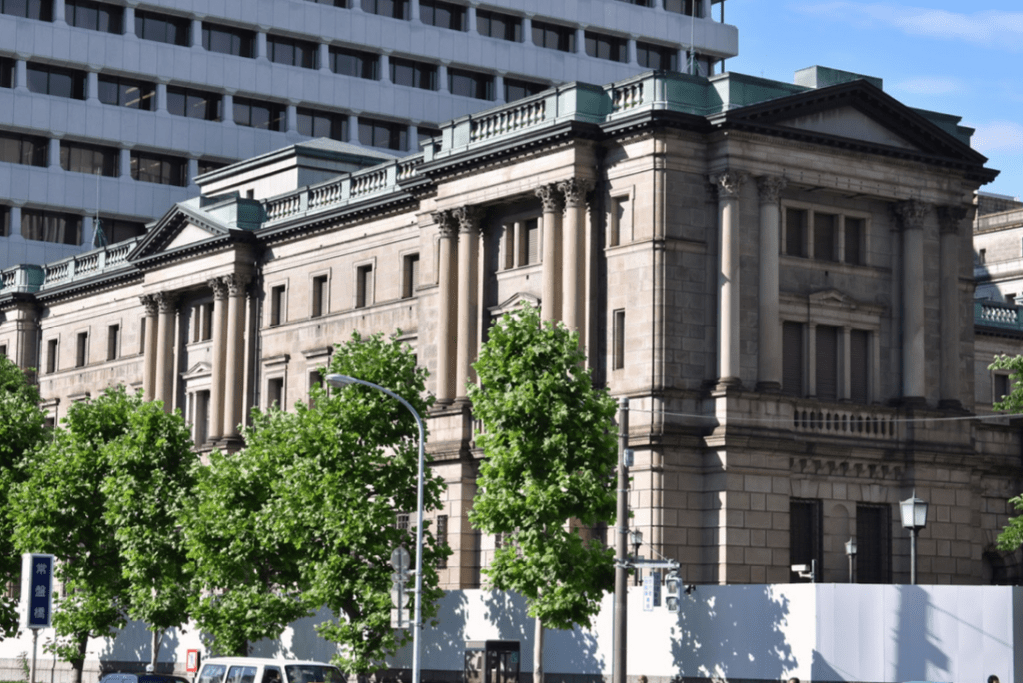
La Banque du Japon. Photo: SATOKO KAWASAKI via japantimes.co.jp

Jeudi 8 août 2024 au large de Kyushu, un séisme de magnitude 7,1 fait trembler l’archipel nippon. Si les dégâts sont minimes ce jour-là, l’agence météorologique japonaise alerte que la probabilité d’un mégaséisme est plus élevée que la normale suite à cette secousse. Pendant 1 semaine, les habitants restent en état d’alerte avant que l’alerte soit finalement levée le 15 août. 

Or le sol japonais n’est pas le seul à avoir tremblé cet été. En effet, le 5 août à la Bourse de Tokyo, le Nikkei 225 enregistre une baisse de 12,4% en une journée, du jamais vu depuis l’éclatement de la « bulle japonaise » dans les années 80. Le lendemain, l’indice se relève de 10 points mais le monde de la finance, lui, retient son souffle encore quelque temps, inquiet des potentiels effets en chaîne. Si ce mini-krach boursier n’a pas engendré de crise financière plus large, alors même que la bourse de Tokyo est parmi les cinq plus grandes places boursières du monde, il est néanmoins important de comprendre les causes de cet évènement et ce qu’il nous apprend sur l’état de la finance et de l’économie japonaise. 

L’événement 

La chute du 5 août fait suite à une hausse des taux de la Banque centrale japonaise (BoJ) le 31 juillet élevant le taux directeur au niveau de 0,25% . C’est la deuxième depuis le début de l’année que le Japon ait connu depuis les années 1990 avec une politique de taux très faibles voir négatifs. La BoJ cherche par cette action à enrayer la dépréciation du yen par rapport au dollar, car une monnaie plus forte permettrait des importations à prix plus faibles. Les importations d’énergie japonaises sont notamment libellées en dollar et l’économie du pays repose lourdement sur celles-ci. Or, un renforcement de la monnaie japonaise signifie aussi des exportations moins bon marché et donc une baisse de compétitivité pour les entreprises nippones (un bien produit à coût fixe en yen voit son prix augmenter hors du Japon si le yen vaut plus de monnaie étrangère qu’avant). 

Toutefois, une si faible hausse des taux ne suffit pas à expliquer la panique qu’a connue la bourse de Tokyo. En effet, un autre facteur a joué dans le même temps un rôle peut-être encore plus important. Début août ont été publiés aux Etats-Unis des indicateurs économiques plutôt mauvais. Le jeudi 1er août, Wall Street a enregistré de mauvais résultats, le Dow Jones a baissé de 1,21% et le Nasdaq a reculé de 2,3%, laissant douter des perspectives d’investissement dans les firmes américaines. De plus, le taux de chômage continue à augmenter ces derniers mois, passant de 4,1% de la population active en juin à 4,3% en juillet alors qu’on constate simultanément un net recul de la création d’emplois. De ce fait, certains craignent une récession puisque l’économie américaine ne devrait pas atteindre les niveaux de croissance espérés. Si cette mauvaise santé de la première économie mondiale est à grandement relativiser, ces chiffres laissent toutefois poindre la possible baisse des taux d’intérêt de la Federal reserve (Fed). De fait, la Banque centrale européenne l’a déjà fait et le mandat de la Fed prévoit la lutte contre le chômage, appelant à un relâchement du robinet financier. 

Or cette double conjoncture modifie un équilibre fondamental des marchés financiers. Historiquement, les économies japonaise et américaine sont très liées. Comme le montrent les chercheurs Fei Han et Niklas J. Westelius dans un article publié en 2019, les activités de « carry trade » jouent un rôle majeur dans les appréciations du yen. C’est précisément ces échanges qui se sont retournés le 5 août. Le carry trade consiste à profiter de l’effet de levier provoqué par la différence entre deux devises. Dans le cas Japonais, des investisseurs s’endettent à faible taux en yen puis placent cet argent dans des actifs américains à fort rendement. Or quand les taux japonais augmentent et que les taux américains semblent être sur la baisse, l’activité devient moins intéressante et les investisseurs craignent peut-être même un renversement. Les nouvelles informations ont donc incité certains acteurs à rapatrier une partie de leur fonds au Japon: le yen est en effet une monnaie refuge. Cela participe à l’appréciation de la monnaie nationale, d’autant que les taux bas de la BoJ ne permettent pas d’enrayer ce processus comme le démontrent Han et Westelius. Finalement, une monnaie plus forte dégrade les perspectives de profits des firmes exportatrices, nombreuses dans le Nikkei 225. Tokyo electron a par exemple vu sa cotation en bourse baisser de 18% au moment du mini-krach. 

Aujourd’hui l’événement ne semble pas avoir fait tant de vague, alors n’était-ce qu’une tempête dans le verre d’eau de la finance qui n’aura finalement pas mouillé le reste de l’économie ? Dans l’immédiat en effet il y a fort à parier que peu de choses changeront, mais cet évènement est toutefois révélateur de plusieurs tendances. 

Les perspectives du carry trade  

Après le mini-krach, de nombreux acteurs ont imputé l’ampleur de celui-ci à l’utilisation d’algorithmes pour réaliser les transactions de carry trade. Comme nous l’avons expliqué, le fonctionnement de cette activité repose sur peu de facteurs et l’automatisation des transactions ainsi que la réactivité des algorithmes aux moindres variations ont pu amplifier l’effet de réaction en chaîne. 

Par ailleurs, le carry trade au Japon a beaucoup changé ces dernières années, passant des mains d’acteurs institutionnels comme l’Etat ou les banques, à celles d’acteurs privés, envieux de profiter de l’importante épargne japonaise. L’intensité de ces opérations étant très complexe à mesurer, il est difficile de la prévoir à long terme. Si il est évident qu’elle va diminuer dans les prochains mois, on ne sait pas quel impact elle aura dans un futur plus lointain.

Ce qui s’annonce pour l’économie mondiale 

Une chose est sûre, la secousse japonaise n’a pas entraîné de réactions majeures des autres marchés financiers. Le CAC 40 a certes vu une légère baisse mais toute réaction en chaîne a été évitée. Toutefois, il ne faudrait pas sous-estimer l’importance du Japon dans le système financier mondial. Premier créditeur mondial et premier détenteur de dette américaine, le pays comptait fin 2023 10,6 trillions d’actifs étrangers. Or, pour renforcer sa monnaie, le Japon s’est mis à vendre une partie d’entre eux. En retour, l’augmentation de l’offre d’actifs d’entreprises américaines par exemple limite les capacités d’investissement de ces dernières (l’offre d’actifs augmente alors que la demande reste plus ou moins la même donc la valeur baisse). De plus, si d’autres évènements comme celui-ci viennent à se reproduire, les investisseurs japonais seront surement encore forcés de vendre des actifs (effet de monnaie refuge). L’importance du carry trade jouera évidemment un rôle dans les répercussions futures des ventes d’actifs par le Japon. Cette histoire entamera peut-être un nouveau chapitre alors que la Fed a annoncé baisser ses taux ce mercredi 18 septembre. Les taux restés élevés de la banque centrale des Etats-Unis sont ainsi passé d’une fourchette comprise entre 5,25% et 5,5% à une fourchette de 4,75% à 5%. Alors que les événements de cet été ont mis encore une fois en évidence la grande dépendance des économies asiatiques aux politiques économiques américaines, le Japon pourra-t-il se sortir du marasme dans lequel il se trouve plongé depuis les années 90 ? 

Le piège de la politique monétaire japonaise

Cet événement a fondamentalement rappelé la spécificité de la politique ultra-laxiste de la BoJ. Il y a fort à parier que si le taux directeur s’était trouvé à un niveau plus élevé avant la hausse, les chiffres enregistrés le 5 août auraient été moins impressionnants. Il faut rappeler que depuis l’éclatement de la bulle japonaise et dans l’espoir de relancer l’activité, la BoJ a beaucoup innové en termes de politiques monétaires non conventionnelles. Elle fut la première à pratiquer des taux aussi faibles, voire négatifs et mener des politiques de « quantitative easing ». La banque centrale a ainsi racheté pendant 20 ans des obligations de l’Etat nippon auprès des institutions de dépôt. Si celles-ci possédaient 40% de la dette japonaise en 2013, ce chiffre est inférieur à 10% aujourd’hui.

Mais cette modernité pour l’époque a toutefois bloqué la banque centrale du pays. En effet, des rachats aussi agressifs ont conduit à un assoupissement du domaine privé comme le pointe The Economist dans son numéro du 31 août. Or, aujourd’hui la BoJ a besoin que ce secteur reprenne vie pour pouvoir enfin sortir de cette politique ultra-laxiste. Toutefois, l’ancienneté de certaines obligations empêchent leur rachat par le privé (duration risk) si bien que seul un cinquième de ce que possède la BoJ est susceptible d’être racheté. Une autre possibilité est de freiner les rachats, ce qui conduirait à une hausse des rendements perçus et attirerait ainsi les investisseurs. 

Néanmoins, l’article de The Economist souligne la complexité de mener une quelconque politique. En effet, une action rapide de la BoJ dans le sens d’une revitalisation du secteur privé causerait une hausse des rendements, ce qui signifie en retour un alourdissement des dettes de l’Etat. Toutefois, si elles sont immenses, elles ont été contractées à une époque de taux bas. Or une hausse même minime, dans ce cas, entraînerait un alourdissement significatif du coût du remboursement de la dette. Ce poids sur le budget se fera ressentir dans les politiques de l’Etat et l’économie réelle, avec des conséquences violentes sur le contribuable japonais. Un véritable cauchemar politique serait à prévoir. A l’opposé, une action lente est un problème dans la mesure où la banque centrale se retrouve pieds et poings liés encore longtemps pour lutter contre les chocs. Chocs qui, comme on l’a vu, peuvent arriver à tout moment. Dans ce contexte, Tamura Naoki, membre du conseil d’administration de la BoJ, a indiqué le 13 septembre que la banque centrale devrait à court terme relever par étape son taux d’intérêt à au moins 1 % environ, afin d’assurer la stabilité des prix.
Cabinet Wilders I: An Inward Looking Netherlands?

By Rita Zeefal

Something is brewing in the Hague. The 17th of September marked the beginning of the Dutch parliamentary calendar and, for the first time since the Second World War, a hard-right government assumed the seat of the executive. Geert Wilders, a long-time vindicator of the European populist right, is in prime position to shape the next few years of Dutch interior and foreign policy. Wilders’ Party for Freedom (PVV) controls the key ministries needed to advance its agenda of “putting the Dutch first again” and intends, among other things, to opt out of European Union (EU) asylum treaties and make it harder for non-citizens in the Netherlands to acquire housing, citizenship, and welfare assistance, among other things. 

Wilders’ government, headed by the unaffiliated former civil servant Dick Schoof, is already in the process of passing an Emergency Asylum Act that will allow the government to pass asylum laws without the approval of parliament. While some of these moves might just be pure politicking, there is real unease about what the incoming Dutch government might mean for business, relations with Brussels, and rule of law in the country.

The far right in the Netherlands has never been as successful as it has over the past fifteen years. Much of this can be attributed to Geert Wilders’ political credibility: unlike the leaders of previous far right and fascist parties in the Netherlands (like Hans Janmaat of the now defunct Dutch Centre Party), Wilders has been a career politician for the greater part of thirty years. A self-described “right-wing liberal,” Wilders cut his teeth in the centre-right People’s Party for Freedom and Democracy (VVD), and was at one point tipped to become its leader before losing out to Mark Rutte in the mid 2000s. Unlike right-wing populists in Poland or Italy, Wilders is sufficiently supportive of LGBTQ+ and reproductive rights, which he sees as being at the heart of Dutch tolerance culture. Unlike Marine Le Pen’s Rassemblement National or Austria’s Freedom Party, Wilders and his party have no Nazi history to shirk or political credibility to prove – they simply had to wait for the right moment to be embraced by a disaffected electorate. And such a moment came in the form of the November 2023 general election in the Netherlands, which was preceded by the VVD’s Dilan Yesilgöz’s removing a longstanding cordon sanitaire that had been levelled against the PVV for the greater part of the 2010s. Yesilgöz stated plainly before the election that her party would be open to forming a government with Wilders’ PVV

The PVV seems to be a party that seeks to turn the Netherlands in on itself. Its 2023  election manifesto blames the country’s longstanding housing crisis on asylum seekers, who constitute the vast minority of people who migrate to the Netherlands annually. Unlike the far right in countries like France and Italy who tend to clean up their image and mollify their message the closer they get to power, the PVV has stood firmly behind some of its most hard-line policies in recent times. The party’s prior-mentioned election manifesto advocated for the development of “denaturalisation” processes so as to make possible the deportation of recently naturalised citizens deemed “undesirable.” The new government seeks to make Dutch the primary language of higher education in the Netherlands to ward off international students. The repercussions of such political positions and the policies that they would help create over the next few years could resound sharply in the worlds of commerce, academia, and labour for years to come.

Indeed, policies that are set to hinder international flows of human capital are already ruffling the feathers of those at the helm of the Netherlands’ most valuable companies. In March of this year, the outgoing Minister of Economic Affairs Micky Adriaansens met with former CEO of ASML Peter Wennink to address the company’s plans to move its operations out of the Netherlands should migratory regulations in the country become too strict. ASML is Europe’s most valuable tech company, and it currently has a workforce of over 40 000 employees comprising over 143 nationalities. Being home to cutting edge firms and having a vibrant economy are realities that every country aims to maintain; however, the rise of the populist right in the Netherlands has put the country’s government between a rock and a hard place. De-internationalising the Netherlands and making it harder for workers from the rest of the world to gain access to living requirements could pose a dire threat to the friendly business environment the country has prided itself on for so long.

A brief look at history shows that the Netherlands’ openness to the outside world has been a cornerstone of its success for centuries. According to scholars like the University of Amsterdam’s Geert Janssen, the United Provinces, which later became the Dutch Republic, became a magnet for the religiously persecuted of Europe in the wake of the Reformation and the Spanish Inquisition. Sephardic and Ashkenazi Jews, Flemish Protestants, English Puritans, and French Huguenots migrated in the hundreds of thousands, to such an extent that over the course of the 17th century, 40 to 60 percent of the population of major Dutch cities like Amsterdam and Leiden was made up of foreign-born inhabitants. In more recent times, the Netherlands has been at the forefront of European integration and still engages with the world beyond its metropolitan shores. It was a founding member of the European Coal and Steel Community and is bound by international law. It still administers overseas territories. The Netherlands has, for the greater part of its history, never been a country to shut itself off from the world. 

The populist right in the country positions itself as the chief protector of core Dutch values and traditions like social liberalism and Zwarte Piet (a Dutch Christmas blackface tradition), from the supposed evils of Islam and woke-brainwashing. But are not the rule of law, international collaboration, compromise, and pragmatism just as, if not more, central to the country’s identity and success over the centuries?

The new Dutch government’s ability to execute its mandate remains to be proved. For now, politicking seems to be at the top of the ministerial agenda. On the 18th of September, Marjolein Faber, the Netherlands’ Minister for Asylum and Migration, informed the European Commission of her government’s wish to opt out of the EU’s new Migration and Asylum pact, to which the Netherlands is already a signatory. What might not be readily apparent to the casual reader of this story is that this was a move with almost no chance of initiating real change in the Netherlands’ relationship with Brussels. The clumsily written letter itself acknowledges that an opt out for the Netherlands would only be possible in the event of treaty amendment, and amendment of EU treaties after they have been approved and have come into effect happens exceedingly rarely, if at all. Furthermore, Faber ought to have sent the letter to the Council of the European UnionEuropean Council – not the European Commission. This proves to be the first in a series of gaffes that seem  on course to typify the far-right’s first stab at governing the Netherlands.

On the whole, the rise of the populist right in the Netherlands serves as another theatre of shallow politicking addressed to a weary electorate. But if the country wants to retain its status as a magnet for talent, a hub of innovation, and a place where business thrives, it might have to come up with solutions that go beyond what Wilders and his ministers are putting on the table. 

Sexual Violence and Hamas: An Analysis

Sexual violence in all its forms is always a very sensitive topic for obvious reasons. Nevertheless, as critically minded people, we must not shy away from examining even the most gruesome details presented to us by various outlets, such as news media, social media, and our governments. All of this to say, this article does not seek to claim the absence of any sexual violence during the events of October 7th, rather, in this first part, it seeks to examine how and why our media landscapes and governments nearly unanimously accept the notion of mass sexual violence (msv) perpetrated by Hamas on October 7th. In a second part it will also provide some academic and historical perspective on the matter of wartime sexual violence, in Palestine and in general.

To start this analysis, let us look at the “how”: the various sources for the allegations of msv. I base my analysis on several news articles, as there are limited sources for the allegations, and they are repeated by the large number of reports written on the subject. The different sources can be grouped into multiple categories: Israeli state sources, ZAKA, and civilian witnesses. 

If you don’t trust the government, who do you trust?

In 1988, Edward S. Herman and Noam Chomsky published their now famous book, Manufacturing Consent. In it, they set forth what they call the “propaganda model”, describing among other things, how mass media is very much dependent on government sources for their reporting, consequently often adopting them uncritically. This phenomenon is very much on display in this situation, as all major news reports, be it The New York Times, The New Yorker, BBC, AP, etc., rely on some part of the Israeli state apparatus for their reporting. To uncritically relay claims about a conflict, provided by any party directly involved in said conflict is not serious journalistic practice and represents a clear conflict of interest, violating the journalistic code of ethics. Besides these concerns of principle, the Israeli state has a long record of releasing misinformation, from misrepresentations of reality to outright fabrications. In October 2023, the office of Prime Minister Benjamin Netanyahu repeated the widely circulated claim of Hamas decapitating 40 babies in Kfar Aza. This claim has been thoroughly debunked since, and even the IDF refused to confirm it. On October 13th, 2023, the IDF bombed a civilian aid convoy travelling on a designated safe route to deliver aid material. The Israeli military strongly denied this and instead accused Hamas of spreading “manipulative fake information”, however independent analysis confirmed the attack to be executed by airstrike, the capacity for which is exclusive to Israel. On May 11th 2022, the Palestinian-American journalist Shireen Abu Akleh was shot and killed by an Israeli sniper, while being unarmed and clearly marked as press. Naftali Bennett, then prime minister, and the military blamed her death on Palestinians, however once again several independent investigations confirmed her to have been killed by an Israeli sniper, this was further confirmed by an independent UN investigation. These are only a few instances of state misinformation in the history of Israeli occupation, but they illustrate why statements by any facet of the Israeli state cannot be taken at face value and must be regarded with utmost scepticism.

Let us now consider how the major news stories about msv on the 7th of October have treated Israeli state sources. A BBC report titled “Israel Gaza: Hamas raped and mutilated women on 7 October, BBC hears”, relies heavily on Israeli state sources, it interviews a minister, a police chief, a police spokesman, an IDF captain, an IDF soldier, and a member of Israel’s cybercrime unit. The article does not once acknowledge this, it does not question the bias of these interviewees, and most importantly it does at no point ask them to provide proof for their claims. It is of note that the minister interviewed by BBC, May Golan, called herself a “proud racist”, she has said that she wants “Jewish purity”, and that this means the expulsion of Palestinians and of African refugees, whom she calls psychopaths, infectious carriers of AIDS, and murderers. Yaakov Shabtai, the police chief interviewed in the article has called for Palestinian citizens of Israel who identify with Gazans to be put on buses and sent there. He has also stated that any Palestinian protesting Israeli atrocities within Gaza would face repercussions. Again, this is not mentioned, these people are presented as credible sources.

An AP article titled “New signs emerge of ‘widespread’ sexual crimes by Hamas, as Netanyahu alleges global indifference”, also takes the Israeli state by its word. It shares the words of the Israeli war cabinet, it again uncritically cites Yaakov Shabtai, and it interviews an IDF paramedic, an IDF reservist, and an IDF colonel. Once more, the article quotes all these naturally biased sources as if they did not have a vested interest in distorting the facts to their benefit.

A New York Times article titled “How Hamas Weaponized Sexual Violence on Oct. 7” follows the same pattern. Without any pushback, it publishes the words of Israeli police in several different instances, those of an anonymous IDF paramedic, an IDF soldier, and of Israeli government officials. This is made even more shocking by the fact that it was written by a Pulitzer winning reporter.

Finally, a New Yorker article titled “How Hamas Used Sexual Violence on October 7th”, again cites Israeli police, and relies heavily on the aforementioned BBC article. When reading any article about msv on October 7th, it is inevitable to find some regurgitation of official Israeli statements, or uncritical reprintings of interviews with agents of the Israeli state. This constitutes a first problem with the reporting on the events on October 7th, Israeli government statements are being accepted as fact, and Israeli officials are never required to provide concrete and verifiable proof for their statements. In conclusion, it must be acknowledged that the word of the Israeli state is worth nothing on its own, as it has a vested interest in the conflict.

Zaka

Yehuda Meshi Zahav, born in 1959, spent his youth as member of “Keshet”, an ultra-orthodox terrorist organisation which fought against “autopsies and archaeological digs in gravesites”. In the 1990s, he founded ZAKA, which describes itself as “Israel’s dominant non-governmental rescue and recovery organization (…) with sole responsibility in Israel for dealing with incidents of unnatural death”. Meshi-Zahav led this organisation until three years ago, when he attempted suicide after it was revealed he had raped and assaulted dozens of people, many of them children and teenagers, he consequently fell into a coma and died in 2022. It is this organisation which has been responsible for much of the civilian first response to the events of October 7th, and many first-hand testimonies about msv come from members of ZAKA. As was the case with Israeli state (mis)information, ZAKA testimonies are also included in reporting by The New York Times, The New Yorker, CNN, BBC, The Guardian, etc. 

How is this problematic then if all these are first-hand testimonies? Firstly, ZAKA personnel are not trained or qualified to make judgements on their findings (they do not have medical training), their function merely is to recover human remains and to bury them according to strict Jewish religious law. Mondoweiss reports that ZAKA members do not for example include the time and place of the recovery of corpses or body parts, and that they refuse to show journalists evidence for their claims, making them impossible to verify. 

Secondly, the organisation has a vested financial and ideological interest in atrocities being discovered. The organisation largely relies on donations, and being able to report on rapes and beheaded babies makes donors more receptive, no matter how little evidence for any claim is offered. Benjamin Netanyahu told ZAKA teams: “We need to buy time, which we also buy by turning to world leaders and to public opinion. You have an important role in influencing public opinion…[ZAKA testimonies] give us the maneuvering room.” Indeed, the supposedly Non-Governmental Organisation ZAKA, collaborates with Israel’s Foreign Ministry and its Hasbara Headquarters, Hasbara being “a form of propaganda aimed at an international audience, primarily, but not exclusively, in western countries. It is meant to influence the conversation in a way that positively portrays Israeli political moves and policies, including actions undertaken by Israel in the past. Often, Hasbara efforts includes a negative portrayal of the Arabs and especially of Palestinians.”

Thirdly, ZAKA has an endless record of providing false statements, which is well resumed in this Mondoweiss article. Some notable examples include “bodies of twenty children with severed heads”, “piles of burned children”, and “pregnant woman’s stomach ripped open, and her fetus stabbed”. All of these claims have been debunked by Israeli newspaper Haaretz. Additionally, some select members of ZAKA were chosen to deliver a media campaign for international media and the UN, among them Simcha Greiniman who is an illegal settler, Yossi Landau, and Haim Otmezgin. All three have spread misinformation about the conflict, Greiniman for example, claimed to have found two burnt bodies of children aged 5-6, and 3-4 years old. Leaving aside the fact that he changed his testimony several times, there is no record of children of that age residing in the Kibbutz where they were claimed to have been found. Landau, the source of false claims such as dozens of beheaded babies, also provides numerous unverifiable numbers. According to him, 80% of bodies showed signs of torture, 70% of bodies were shot in the back, Greiniman also claims that 85% of women arriving at the morgue, did so naked. None of these claims are substantiated by anything other than their words. A senior ZAKA official called Haim Otmezgin testified in front of the Knesset on the 30th of November 2023, which was widely publicised by Israeli media. Like his colleagues, he repeated false claims of beheaded babies, and claimed to possess photos proving the occurrence of sexual violence by Hamas on October 7th but failed to produce any evidence of them.  

Despite all these obvious malpractices, it is hard to find a news report on msv during October 7th without some ZAKA testimony. Fictitious tales such as the ones of Greiniman, Landau, and Otmezgin are printed despite having been thoroughly debunked, and their baseless claims are repeated by world leaders. Because ZAKA refuses to provide proof for its claims, is not trained to collect proof, is a part of Israel’s propaganda apparatus, and has been caught lying many times, makes it an inadmissible journalistic resource.

First-hand witnesses

First-hand witnesses are often the most reliable and trustworthy source of information in situations where no record of a crime exists (no camera footage for example). In the case of Israel however, even those waters get muddied, as those witnesses get used and manipulated by different actors. To start it should be made clear that Israeli eyewitnesses have been caught fabricating stories before, even about sexual violence from Palestinians, so this is not a new phenomenon. If we leave aside the ZAKA witnesses, we are left with several witnesses who were present as bystanders during October 7th. It is impossible to analyse every single witness statement in this article, so I will look at those reported in news articles, as those must be the most credible. In the New York Times article mentioned previously, several witnesses are interviewed: Sapir, Yura Karol, Raz Cohen, Shoam Gueta, and Waka. An analysis of their statements reveals critical gaps and other problems with their stories. 

Sapir, a woman who chose to remain anonymous, claims to have seen gunmen rape and kill at least five women at the Nova music festival. She then goes on to very graphic description of the rapes and murders, during which she mentions seeing “terrorists” carrying at least three severed heads of women. The problem with this statement is that there are no reports of beheadings from the festival. Why would Sapir lie about this, and what tells us the rest of her story is not a lie too? Yura Karol, a friend of Sapir’s who was hiding with her, does not corroborate her claims of at least five women raped and killed, he also does not deliver a graphic description of their rape and murder.

Raz Cohen, the next witness, is described as someone who “had worked recently in the Democratic Republic of Congo training Congolese soldiers”. He describes seeing five men gangraping a woman, and then killing her. This is not the first time he has told that story, in fact at this point he has told it seven times already, to a variety of news outlets. Strangely however, his story changes notably in-between retellings. On October 9th, he is interviewed by i24News, and tells his story in detail, but explicitly says he “chose not to look”, contradicting his further statements of having seen the rape. In another interview published on October 9th, he makes no mention of sexual violence of any kind. In an interview with Radio Canada, he again makes no reference to rape or other kinds of sexual violence. He mentions women in an interview with an Israeli newspaper, but again he makes no explicit mention of rape, he certainly does not talk of gangrape and subsequent murder. On October 10th, in a PBS Newshour interview, he says he saw “terrorists” rape many women, kill them, and then rape their corpses. On October 11th, in an ABC interview, he says he saw “terrorists” rape and kill many women, but no mention of necrophilia here. On December 19th, the Israeli foreign ministry posted an interview with him, in which he describes five people circling a woman, one rapes her, she stops moving and he continues to rape her. On December 28th, the New York Times publishes their article, in which he makes no mention of necrophilia. On January 4th, during a CNN interview, he describes five “civilians from Gaza” raping a woman, knifing her to death, and continuing to rape her.

His statements are very much inconsistent, why not mention the horrific rape from the beginning, was there necrophilia involved or not, who committed the rape, civilians or terrorists, the list goes on. A former member of the Maglan Unit, an IDF special ops force responsible for the Qana massacre in 1996, Cohen has called for Gaza to be turned into a parking lot, thus it is safe to say his testimony does not hold much weight. As if this was not enough, Shoam Gueta, a friend of Cohen’s who was hiding with him does not corroborate his claims of a gangrape, he does not even explicitly mention rape, he simply describes the men stabbing and killing a woman with knifes. As mentioned above, this article was written by a Pulitzer winner, and published in one of the most read newspapers in the world, yet it is full of journalistic malpractice and shoddy reporting. 

There are many more instances of witness manipulation, data misrepresentation, etc., and outlets such as Mondoweiss or Electronic Intifada do a great job at exposing them. Having now analysed the “hows” of msv reporting: reliance on state sources, ZAKA testimonies, and questionable witness statements, among others, we must now look at the “whys”. To circle back to “Manufacturing Consent”, Herman and Chomsky show clearly how media plays a role in shaping public opinion in favour of state policy. There is much precedent for this, such as when American media covered the Iraq war, giving disproportionate attention to pro-war voices, despite an overwhelming majority of the public being against it. The coverage of the events of October 7th falls in the same category, they give much weight to unproven extreme claims, which make it easier for Israel to justify its crimes against humanities. To see whether an article is to be taken seriously, one should consider the following: does it rely on Israeli state sources, does it uncritically report ZAKA testimonies, and how reliable are the witness statements it presents. Again, this is not to say it is impossible rape occurred on October 7th, it is to say there is no forensic evidence, no rape victims speaking out, and no independent investigation into the events, thus we cannot draw conclusions on the topic, as is being done currently. 

In the next part of my analysis, I will look at historical context and take a more theoretical approach to this subject, in order to gain a more holistic perspective on this complex topic.

Read more: Sexual Violence and Hamas: An Analysis

By Lino Battin

Zionism is antisemitism

“It has been said by many Christians that Christianity died at Auschwitz, Treblinka, and Sobidor. I fear – God forbid – that my Judaism may be dying at Nablus, Dheisheh, Betein or El Khalil.” -Daniel Boyarin-

Antisemitism is the prejudice against or hatred of Jews. To this definition, the Southern Poverty Law Centre adds that antisemitism seeks to racialize the Jewish people, to ascribe certain characteristics to it as a whole. Zionism is a nationalist political ideology in favour of the creation of a Jewish state, Israel. It is now in support of that state’s continued existence. 

An important aspect of Zionism is that the United Nations and many other organisations consider Israel to be engaged in settler colonialism, the practice of “carving out” a new homeland in a previously inhabited land, thereby creating what genocide scholar Patrick Wolfe calls: “a logic of elimination”. What he means by this is the need to develop a moral and practical justification for the removal of the native population, paving the way for “ethnic cleansing, genocide, and other tools of ethnocide.” Criticism of Israel and Zionism in general is thus not antisemitic whatsoever, disavowing the actions of a state does not take aim at an entire religious group, and it would certainly be antisemitic to conflate the two.

The origins of Zionism

The vision of a Jewish state in Palestine predates the 20th and even the 19th century. Indeed, in 1799, during his Egyptian campaign, Napoleon Bonaparte proposed Palestine as an independent Jewish state. While this project never came into fruition as Napoleon was defeated and returned to France, it was the first time Palestine was proposed to be a Jewish homeland. After this, around a century passed before the first Zionist Congress was held. As part of it, the first Zionist organisation was founded, with the objective of creating a Jewish state in Palestine. In 1917, as an Ottoman defeat in World War I seemed inevitable, and the Middle East had been secretly partitioned between France and the United Kingdom, then British Foreign Secretary Arthur Balfour issued the now infamous “Balfour Declaration”, promising British support to the Zionist endeavour. Lloyd George, British Prime Minister from 1916 to 1922 was also a strong supporter of the Zionist cause, and a friend to both Theodor Herzl, the father of political Zionism, and Chaim Weizmann, the first President of Israel. Another fervent Zionist was Winston Churchill, in whose view, Zionism provided Jews “a national idea of a commanding character”.

An apparent paradox, both Arthur Balfour and Churchill were staunch antisemites. In 1905 when he was Prime Minister, Balfour called for the rejection of Jewish refugees fleeing pogroms in the Russian Empire, claiming Jewish immigration to bring “undoubted evils”. Churchill’s antisemitism was even more pronounced, as he claimed Jews to engage in a “worldwide conspiracy for the overthrow of civilisation” in 1920. Furthermore, it was Churchill, not the Nazis who started the antisemitic conspiracy theory of “Judeo-Bolshevism”, claiming communism to be a global Jewish plot to take over the world. Lloyd George was not so explicitly antisemitic, nevertheless he was the first of many who saw Jews as an instrument to be used to further Western interests, more on this later.

This apparent contradiction begs the question of why these fundamentally antisemitic politicians would support a Jewish state in Palestine. For Balfour, the Zionist project was a convenient answer to the “Jewish Question”, the debate in the ostensibly liberal countries of Europe dealing with the status of Jews as a minority within society. Youssef Munayyer phrases it nicely: “instead of insisting that societies accept all citizens as equals, regardless of racial or religious background, the Zionist movement offered a different answer: separation.” For Churchill, the “international Jew” was plotting to overthrow the West in line with his “Judeo-Bolshevist” conspiracy theory, and Israel would, as beforementioned, provide a national idea, which would in his opinion stop him from trying to overthrow civilisation. Lloyd George took a more pragmatic approach, avoiding the blatant antisemitism of Balfour and Churchill. In his 1939 memoir, he talks about the “war value of the Jews of the dispersal”, referring to the German mobilisation of Jews in Poland against the Russian empire during World War I. George goes on to explain that it was this “war value of the Jews” which led him to develop an interest in Weizmann. His statement is reminiscent of Joe Biden, who proclaimed in 1986 that “were there not an Israel, the USA would have to invent an Israel to protect her interest in the region”.

We thus observe three of the most instrumental people to the Zionist effort to be motivated not by a noble effort to provide a safe haven for Jews, but by a will to rid England of Jewish people, by a strange vision of the Jew as harbinger of destruction and chaos (and a consequent need to get rid of him), and by an impetus to use Jewish people, in this case as a colonial outpost in the Middle East. In its initial phase, Zionism was opposed by both liberal and orthodox Jewish organisations in Europe, who feared that “Jewish nationalism might endanger integration into non-Jewish society and give new momentum to anti-Semitism”. Karl Kraus, a renowned Austrian Jewish journalist and writer, said in 1898: “The militant Zionists in particular succeeded in convincing Christians who had previously had no taste for anti-semitism of the sanctity of the idea of separation”.

Israel, land of the (white) Jews

According to the Israeli Basic Law passed in 2018, “The State of Israel is the national home of the Jewish people, in which it fulfills its natural, cultural, religious, and historical right to self-determination”. The United Nations say that self-determination must involve “the rights of all peoples to pursue freely their economic, social and cultural development without outside interference”. These statements are hard to reconcile with the current status quo in Israel. There exists not only apartheid between Arabs and non-Arabs, but also a de facto racial hierarchy within the non-Arab, Jewish population of Israel.

The most flagrant example of this are the “Beta Israel”, Ethiopian Jews who were airlifted to Israel from Ethiopia after the massive operations “Moses” and “Solomon”. Around 160’000 of them live in Israel, the biggest population in the world. Hanan Chehata writes about the hatred they face in their daily lives: they are massively discriminated against in nearly all aspects of life, such as housing, employment, education, the army, and even in the practice of their religion. According to a study, 53 percent of employers preferred not to employ “Falashas” (a derogatory term for Ethiopian Jews), and 70 percent of them tended not to promote them. Out of 4’500 Ethiopians who graduate with degrees, only around 15 percent find work in their field of study. Additionally, some areas have policies of not selling housing to non-white Jewish people. “Anyone can come, but not Ethiopians”, says the owner of a building in Ashkelon. There have also been multiple instances of the country’s chief Rabbis calling black people the N-word and monkeys (imagine the pope screaming the N-word from his Vatican balcony), Benjamin Netanyahu also referred to black African immigrants as “much worse” than “severe attacks by Sinai terrorists”. White Israelis have murdered black refugees and even babies, without facing imprisonment. Finally, in a fashion typical for colonialism all over the world (Puerto Rico, Greenland, etc.), Israel forcibly sterilised Ethiopian Jewish women, a policy generally aimed at keeping specific communities from growing.

This certainly is not the only instance of Israel harming Jewish people of colour. In the 1950s, up to 5,000 Yemenite Jewish babies disappeared from their hospital beds, their mothers were told they had died, or were not informed at all, according to the lowest estimates, one in eight Yemeni Jewish babies in Israel disappeared. Soon after it was alleged that the babies were kidnapped by the Israeli state and put up for adoption or just sold to childless European Jews. Israel always denied any involvement in this matter, until 2016, when cabinet minister Tzachi Hanegbi, the senior official in charge of reviewing archival material on the matter, admitted that Yemenite babies were indeed taken from their families. In 2021, a report from the Israeli health ministry detailed its involvement in the disappearance, admitting it had helped put the babies up for adoption. Since then, the ministry has tried to prevent the public release of its report. A Knesset Committee has also admitted that medical experiments have been performed on Yemenite children, some of whom died of their consequences. In some cases, their hearts were harvested and given to American doctors who were doing research on heart disease in Yemen.

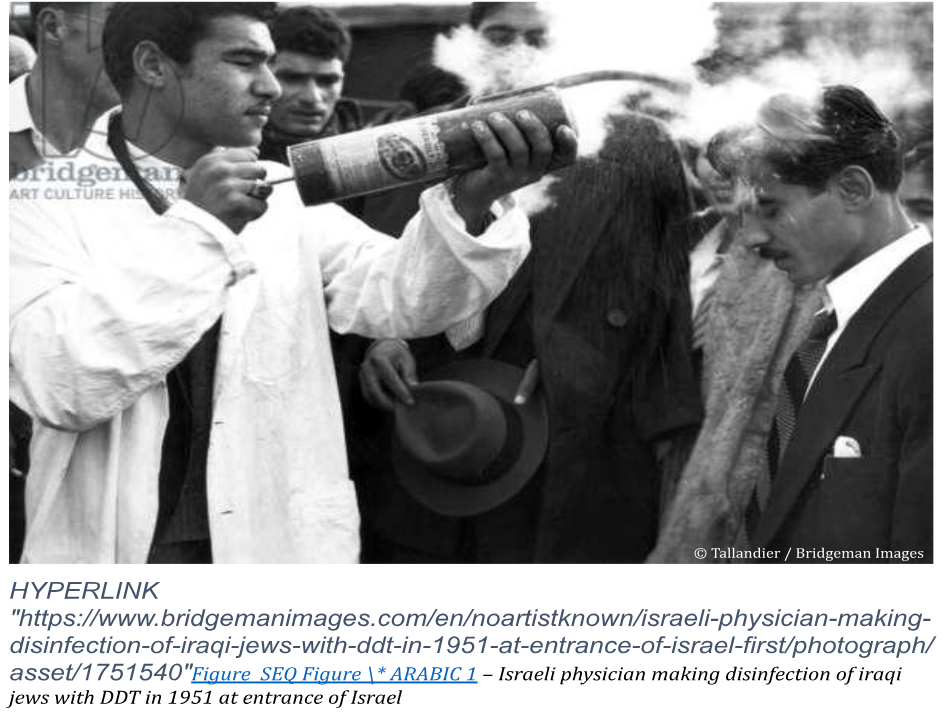
Another example of many, is the way Iraqi Jews came to Israel. Around 110,000 Jews moved from Iraq to Israel shortly after its creation, motivated by antisemitic attacks in their home countries and a promise of a better life in the new Jewish state. According to prominent Israeli-British historian Avi Shlaim, Mossad, Israel’s spy agency, carried out several attacks against Jews in Iraq, involving bombings among other things. Thus, Israel played a major part in destroying the millennia-old Jewish communities of middle eastern countries such as Iraq.

So, we can certainly say that Israel is not a country for all Jews, rather it is a place for white, European Jews. Who better to exemplify this than one of the most influent white European Jewish intellectuals of the last century, Hannah Arendt. A Jerusalem Post article details Arendt’s visit to Israel: “Describing Israel, Arendt noted that the country had at its top German judges of whom she approved as the “best of German Jewry.” Below them were prosecuting attorneys, one of whom, a Galician Jew, was “still European,” she noted. “Everything is organized by the Israeli police force which gives me the creeps. It speaks only Hebrew and looks Arabic. Some downright brutes among them. They obey any order. Outside the courthouse doors the oriental mob, as if one were in Istanbul or some other half-Asiatic country.” Israel as a colonial entity cannot and does not want to rid itself of white supremacy, people of colour will never be safe there, even if they are Jewish.

They may be antisemitic, but at least they are with us…

A third and equally relevant part of Zionist antisemitism is the movement’s alliance and cooperation with far right and antisemitic organisations ever since the movement’s inception. Even before Israel gained independence, it worked together with none other than Nazi Germany. The Haavara Agreement was a treaty between the Zionist movement in Palestine and the NSDAP, facilitating the migration of German Jews from Germany to Palestine. This was financed by the sale of the property of German Jews, the proceeds of which paid for essential (German-produced) goods. At this time, Nazi Germany was being boycotted by Jewish organisations, businesses, and other groups all over the world, posing a potential threat to the still fragile fascist state, yet the Zionists ignored this boycott and cooperated with it regardless, boosting the German economy.

In the present day, Israeli Zionists have again found strange bedfellows. Their partners and allies include leaders such as Matteo Salvini, Viktor Orbán, and Mateusz Morawiecki. Former Italian interior minister Salvini is very straightforward about his affinity for CasaPound, a neo-fascist political organisation, whose members he has openly worked with. Orbán, the Prime Minister of Hungary, has publicly called Miklós Horthy, the country’s World War II leader, a “great statesman”. The Horthy government was a member of the Axis Powers and enacted antisemitic legislature leading to the deportation of around 440,000 Jews. Israel's Netanyahu criticised for wooing Hungary's far-right prime minister  Orbán | The Independent | The Independent

Morawiecki, the Polish Prime Minister actively tried to illegalise the claim that Polish people and officials collaborated in the Holocaust, a form of Holocaust revisionism: “Those who say that Poland may be responsible for the crimes of World War II deserve jail terms”. These are only a few examples of the dubious relations Israel maintains with antisemites around the world, there are too many instances to list here. This reaching out has not come without consequences. The American far-right has picked up on the amicable tone set forth by Israel and capitalises on it. Prominent American neo-Nazi and self-proclaimed “White Nationalist” Richard Spencer has called himself a “White Zionist” and has given Israel as an example of an “ethnostate” he would like to see implemented in the USA. Stephen Bannon, the former White House chief strategist under Donald Trump, who ran the far-right media-outlet Breitbart News, known for its white supremacist and conspiratorial positions and who complained about Jews in his daughter’s school,  and Sebastian Gorka, a media host on the far right network Newsmax and a former Trump White House official, who is a proud supporter of the Vitézi Rend, a fascist Hungarian organisation, both consider themselves proud Zionists. 

Instead of using their considerable power to act against threats on Jewish lives all over the world, Israel actively endangers them, by working with and promoting, far-right, fascist, and ethnonationalist forces. It would seem that promoting nationalism and short-term political gain is more important to Israel than to protect Jewish lives around the world.

Conclusion

The notion that Israel is a safe haven for all Jews can safely be discarded after considering all the above. While it would be absurd to claim Israel to be antisemitic in the way Nazi Germany was antisemitic, it nevertheless cannot be denied that Zionism has deeply antisemitic roots, and only ever gained the indispensable support of European powers because they saw Zionism as a way to eject their Jewish populations. Furthermore, there is no doubt that systems exist within the country that exclude and discriminate against a large number of Jews, and the Israeli state openly and proudly works together with antisemites (who are not so unlike Nazi Germany) internationally.  A more logical and historically consistent perspective would be that Israel is a settler colony following a long European tradition. As such it is necessarily obsessed with creating a settler in-group, most often a racial one. In Israel’s case that is not white people, as was the case in Canada, Australia, etc., but the Jewish people. Not all Jewish people though, as we have seen. Just as South Africa had the Population Registration Act, Israel has the Law of Return. In both cases, “racial experts” decided who got to be part of the in-group, i.e. who got to be White, or Jewish. In Israel it is the orthodox Rabbis (yes, the notoriously racist ones), who decide singlehandedly who gets to be Jewish and who does not.  Thus, Jewishness is cynically used to police Israeli society, the aforementioned Ethiopian Jews for example are sometimes outright refused to be Jewish.

This issue is now more relevant as ever, as dissent to Israel’s genocide in Gaza is growing in the Jewish Diaspora all around the world, and Israeli media is calling for their exclusion from the Jewish community at large. A state committing the worst crimes possible cannot possibly claim to represent a large and heterogenous group of people without generalising them, ascribing certain characteristics to them as a whole and therefore racializing them. This, next to the obvious hatred brought against non-white Jews, is what makes Israel and Zionism antisemitic.

Read more: Zionism is antisemitism

By Lino BATTIN

The Less Heard Stories of Feminism

F for Foreign : “Feminism from A to Z

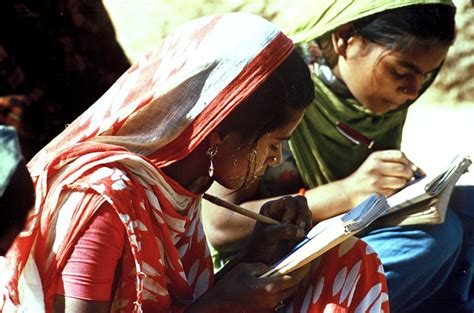
About 200 years ago, a young woman sat in the secrecy of her own home, learning how to read and write from her husband. Due to this brave act of defiance carried out in the clandestinity of her home, millions of girls in India now have the opportunity to be educated freely. The Indian women’s rights movement is indebted to Savitribai Phule, and despite the great lengths it still has to cover, its journey until here has been made possible due to her dauntless spirit.

Continue reading “The Less Heard Stories of Feminism”