The Decline of Democracy in Korea: Judicialization of Politics

On November 2nd, the Democratic Party of Korea, the nation’s largest opposition group, held a massive protest at Gwanghwamun Square. They accused the current conservative administration of fueling a “crisis of democracy,” labeling it a “dictatorship.” However, this scene is not new: four years ago, in the same location, the People’s Power Party made the same accusation against the Democrat administration. Despite regime changes between left and right, the blame game continues, revealing that the decline of Korea’s democracy is not tied to any single party.

To know if democracy is truly in crisis, one must first define democracy. Contemporary constitutional doctrine distinguishes democracy from autocracy based on the autonomy of producing legal norms. In an autocracy, laws are imposed by an external sovereign, often a tyrant or oligarchy. In a democracy, however, the people are the sovereign with the autonomy to establish the constitution and laws through elections or direct participation. The executive and judicial branches derive power from this constitution and remain circumscribed by it. When these institutions impose laws on the people, sovereignty shifts away from them. Hence, democracy falters not from the rule of any particular party but when external institutions rob the autonomy of producing laws from the people.

In light of these elements, if either the Democratic or Conservative party in Korea seeks to safeguard democracy, they must denunciate the judicialization of politics. Over the past two decades, courts have increasingly been called upon to address public policy questions and social conflicts—such as capital relocation, adultery law, deployment to Iraq, the death penalty, the national security law, euthanasia, abortion, and conscientious objection. Initially, expanding the scope of the court’s role was aimed at ensuring individual rights and the legislation’s compatibility with the Constitution, preventing abuses of power seen under past authoritarian regimes. Yet, the danger emerged as judges began dictating what the law should look like rather than reviewing its adherence to the Constitution.

As stated by Montesquieu, judges must be no more than “the mouth that pronounces the words of the law.” This was challenged in 2012 when Justice Kim Neung-Hwan stated he felt he was “building a new state” when ruling that the 1965 treaty did not bar Korean citizens from filing a lawsuit against Japanese companies for wartime reparations. However, the role of judges is not to “build” or create something new. It is to interpret and apply the law or treaty as written,  referring to the original text and intent of its makers. Judges are not tasked with pursuing societal change or progress—that is not their mandate. They are the executors of the law, not social justice activists.

The essence of Justice Kim’s ruling does not lie in whether Korean citizens have the right to file a lawsuit against Japanese firms regarding reparation. His ruling demonstrated how the court applied domestic legal principles—principles without claim-preclusive effect in the international society—to a diplomatic matter involving complex inter-state interests. Interpreting an international treaty, which requires non-legal means like inter-state negotiations, should fall to the politically accountable executive branch. The judiciary, lacking such accountability, should have refrained from reviewing cases within the political realm. Justice Kim’s decision deviated from this principle of judicial restraint, initiating the long-standing diplomatic dispute between South Korea and Japan.

However, the problem extends beyond political questions and into social issues, with abortion being a prominent example. In 2019, the Constitutional Court ruled the abortion ban as violating the right to self-determination, overturning the 2012 ruling that upheld the ban as serving the public interest by protecting fetal life. The problem is not which ruling was correct; it is that a case raising fundamental questions about human life and existence was decided by judges who neither represent the nation nor have the authority to create answers outside the law. The Constitution does not clarify whether Article 10’s guarantee of human dignity encompasses protecting potential life or the extent of society’s obligation to it. Therefore, such questions should not have been decided by judges who do not have the legitimacy to define what life or human existence means for Korean society.

Moreover, the threat to democracy is evident when the court silences public debate on social issues, stopping individuals who could otherwise persuade one another and influence their elected representatives for changes. A system where fourteen unelected judges create and impose norms beyond the scope of the law on questions meant for the people to answer is clearly not a democracy. Allowing a small, unrepresentative group of privileged elites—mostly educated at Seoul National University, with only three women members—to make social changes that lack the representation of the people aligns more with an oligarchy. Accordingly, democracy fractures as the judiciary encroaches on the people’s role as the sovereign, stripping them of their autonomy to produce laws.

Ironically, both Democrats and Conservatives hold responsibility for this threat to democracy, even as they accuse each other of causing it. Fearing backlash from key support groups like Christians, they avoided debates like abortion and euthanasia, delegating the decisional power to the court. In doing so, Parliament has shrunk its autonomy, willingly surrendering its constituent power to the judiciary. These politicians claim to defend democracy yet actively contribute to its decline by avoiding their duty. They have protected neither democracy nor national sovereignty. It is time for the Korean people to see through their empty rhetoric and reclaim the power that belongs rightfully to them.

Why we are racist

by Lino Battin

I don’t know that anyone who has seen the images would not have strong feelings about what has happened, much less those who have relatives who have died and been killed, and I know people and have talked with people. So, I appreciate that, but I also do know that for many people who care about this issue, they also care about bringing down the price of groceries.” – Kamala Harris

When 235 years ago the French Declaration of the Rights of Man and of the Citizen was proclaimed, it brought with it a promise of egalitarianism and universalism, “men are born and remain equal and free in rights”. To anyone even slightly interested in our history this should raise a big question. How could it be possible, that while professing its love for “liberté, égalité, fraternité,” France and its fellow European imperial powers enslaved, massacred, and exterminated the better part of our planet? Of course, it does not help that its authors were all fervent racists who thought of dark skin as a subhuman trait, but let us take a broader look at the historical context surrounding the advent of colonialism, transatlantic slavery, and racism.

Racism as a posteriori justification for economic submission

No matter how much one pretends to look beyond complexion, or to “not see colour”, race still plays an inevitable role all around the world, seeping into all aspects of social life. Despite this, we rarely take a step back to consider the category of race, what it means and how it came to be.

Firstly, it is necessary to understand the basic notion that race is a social construct, fabricated by a specific group of human beings. This is not a value judgement, after all there exists a number of very valuable social constructs, rather it refutes the idea of race being something biological and immutable.

In this video, which I strongly recommend, the history of the invention of race and racism is laid out. Before the invention of racism, say somewhere in the 1500s, a European person would identify along religious, national, or regional lines, no one would have thought of themselves as white or any other racial term. The first racism, or proto racism came from the Muslim world, which through its sub-Saharan expansions encountered what we today call black people. At this point, slavery was not a new practice and had persisted for countless centuries, it was however predicated along religious lines, meaning that Muslims could only enslave non-Muslim people, Christians could only enslave non-Christian people, and so on. The north African Muslims thus took large amounts of non-Muslim black slaves, which they then exported throughout the Muslim world, from the Iberian Peninsula to the border of China. These sub-Saharan slaves were considered inferior even to other slaves, seen as a distinct group and worth less. It is of great importance to note that contrary to European, Christian racism, this was very much a niche perspective and not socially accepted. Muslim scholars and jurors throughout the Muslim world argued for the equality of all Muslims regardless of skin colour, and never were any race-specific laws passed.

Things happened differently in Europe. In the Iberian Peninsula, in areas free of Muslim rule, the Christian kings passed “blood purity laws”, targeting the Jewish and Muslim populations, discriminating against them legally, barring them from essentially every part of society. Once the Reconquista was completed and Christians ruled over the entire peninsula, the blood laws were also expanded across the entire region. The Iberian Muslims now living under Christian rule, along with the Iberian Jews were now facing systematic discrimination and were suspected, even after conversion, of trying to betray and destroy their Christian rulers. These laws also applied to converts’ descendants, setting an important precedent of hereditary oppression. These laws, horrible as they were, still were not racist and targeted religious identities. This would change with the colonisation of the Americas, and the subsequent imports of African slaves into the colonies.

The Spaniards started enslaving people as soon as they set foot on American soil. As mentioned before, according to Spanish law, only non-Christians could be enslaved, and according to Spanish jurisprudence, indigenous American people could not simply be enslaved as they had never come into contact with Christ and his people. Therefore, at least officially, the Europeans were obliged to give the indigenous people a chance to convert to Christianity. In practice however, this was not really applied: an example of a loophole to this doctrine was the reading of a Spanish document, detailing the necessary steps to conversion, to a group of Amerindians, who of course did not understand Spanish. This was then considered good enough to enslave them, but still not on racial grounds, rather on national and religious ones. When Spain started importing African Slaves into the American colonies, those “progressive” Spaniards calling for improved indigenous rights, had none of that compassion for the slaves. Yet there still was no legal basis for their enslavement, and as Spanish reformer Bartolomé de las Casas pointed out, Africans in the Americas were enslaved illegally.  This was a problem for Spanish authorities, as they required the labour of the slaves in the colonies, and so they found refuge in the bible. Indeed, to justify the enslavement of black people regardless of their religion, the Curse of Ham was invoked. According to some Christian, Jewish, and Muslim interpretations, Ham was the father of the Africans. In the Old Testament, Noah cursed Ham’s descendants to be slaves, which were considered by the Spaniards to be all Africans. Consequently, the very powerful Spanish catholic authorities in the Americas successfully pressured the Suprema (the council of Spanish catholic kingdoms) to include the category of blackness in the blood-purity laws, thus making black people legally discriminated against because of their physical appearance rather than because of their religion.

Now that blackness was well defined in law, it spread to other colonies, essentially becoming the legal norm in Europe. Whiteness, however, was yet to be defined – that task was to be left to the British.

In the late 16th to early 17th centuries, when the United Kingdom started colonising the Americas and importing African slaves, it lacked a powerful religious institution like the Spanish church or the equivalent of “blood purity laws”, leaving individual colonies to make their own laws concerning race and slavery. Barbados for example drafted laws legalising the lifelong enslavement of “negroes and Indians”, further cementing slave-ness as a “non-European” trait. In the British Caribbean colonies, there were both slaves and indentured servants, of whom most were Europeans, who either concluded voluntary contracts, or were sent to the colonies as punishment (there were for example considerable amounts of Irish rebels). While both were treated brutally, the servants’ oppression was bound by a contract which came to an end, their children would not be born indentured labourers, and they enjoyed rights and protections which the slaves did not. Despite this difference in status, the two groups realised they had common interests in fighting the British ruling class, and thus on many occasions combined forces to fight the British together. This of course greatly worried the British, who saw the united front of European indentured servants and African slaves as a genuine threat to their fabricated racial hierarchy, and to their colonial system more broadly.

To avoid cooperation between the two, colonial authorities introduced a law in Barbados in 1661 dividing labouring classes into Christians and Negroes, rather than indentured servants and slaves. Indentured servants saw their conditions improve massively, from hugely reduced punishments for disobedience, enormous increases in fines for killing servants, to rewarding servants with their freedom should they manage to catch a runaway slave. In short, the servants were integrated into an in group, while the slaves were clearly defined as the out group. This drove an enormous wedge in between the two groups. Following the introduction of this law in Barbados, other colonies such as Jamaica followed suit. The rising popularity of such laws posed a legal issue to the United Kingdom, as jurisprudence stated that baptism would enfranchise a slave, and that slavery was thus dependent on non-Christian status. To resolve this issue, more laws were passed, such as the 1681 Servant Act. This legislation replaced “Christian”, with “White” and thereby, for the first time in history, created the dichotomy between black or negro slaves, and white free men. Following this law, black slaves were denied suing for freedom on a religious basis and many colonies quickly followed suit in implementing such laws. The notion of racial whiteness spread across the Americas and shaped social relations as we know them today. For much more information and further reading I again recommend this video.

The status quo today

A few things have of course changed since the epoch of the Spanish inquisition and transatlantic slave trade. No longer is the world directly administered by a handful of European nations, yet the unequal relationship between the formerly colonising powers, i.e. the first world, and the formerly colonised countries i.e. the third world, is anything but a thing of the past. While the sun now indeed sets on the British empire, international inequalities have persisted and even worsened in recent decades. While neoliberal ideologues will claim this to be a bug rather than a feature of capitalism, I argue this to be false, and global inequality to be very much an intentional and necessary part of the capitalist system. There have been many theories of the unequal relationship between countries, from Lenin’s theory of imperialism to dependency theory and the theory of unequal exchange.

In this article I will be focussing principally on the theory of unequal exchange as formulated by Arghiri Emmanuel, since it addresses most aptly our current state of affairs in my opinion. While it would go beyond the scope of this text to explain in depth Emmanuel’s theories, I will provide a simplification. His basic idea is that one hour of labour in an underdeveloped nation is exchanged for less than an hour of labour in a developed nation, in other words, labour is being drained from the underdeveloped to the developed world. Due to neoliberal policies, capital is highly mobile around the world, whereas labour is relatively immobile, workers cannot simply move around to find wherever suits them best. Because of capital’s relatively high mobility, it will flow to places with higher rates of profit, until profit rates equalise in the competitive market. Wages however will not equalise, due to labour’s relative immobility. The cost of labour (or wages) is systematically lower in the third world, due to the structural adjustment programs imposed by the International Monetary Fund, or comprador regimes, crushing labour movements in service of their first world handlers. The third-world’s workers’ time is thus valued lower than that of the first world worker, whose wage is secure thanks to solid trade union structures and state support, making them almost a separate class, a “labour aristocracy” as Lenin would have said. If you are interested in the mathematics and the modelling of this theory, I recommend this video as a nice introduction.

I focus on this theory in particular because, in the last few years, very interesting empirical research has been conducted on the subject of value transfers, made possible thanks to large trade-databases and new digital tools. These studies’ findings are quite incredible – I will present them here. In 2018, Andrea Ricci found that value transfers from underdeveloped to developed countries rose from $704 billion (or 3.1% of world GDP) in 1990, to $3,924 billion (or 4.5% of world GDP) in 2019. In contrast, the respective amounts of total development assistance for those respective years were $59.3 billion and $165.8 billion (2018). During the 2010s, these value transfers contributed around 8% of GDP in first-world countries, while costing “value-donors”, namely south-east Asian and African countries, as much as 20% of their GDP. Another recent study focused on measuring flows of labour in the world economy. It finds that in 2021 alone, the global north appropriated 826 billion hours of labour, corresponding to €16.9 trillion in northern prices. Furthermore, it puts numbers on the labour relations between the global north and south: for work of equal skill, southern wages are 87-95% lower than in the north, meaning a software engineer based in India will make around 90% less than his German or American counterpart, doing the same work, sometimes even for the same company. Finally, while global south workers contribute 90% of the world’s labour, they receive only 21% of global income.

I bring up these facts because they are crucial to understanding how unsustainable and impossible to universalise our development model is, as it necessitates the appropriation of labour from the vast majority of humanity.

The continuing dehumanisation of the third world

We have now established that our current way of living is and has been for the last centuries, based on the appropriation of unimaginable amounts of wealth from the third world, or the global south. The hierarchisation of humanity into lower races was a necessary part of justifying this merciless bondage for economic extraction by the white race. Now we can look at how this phenomenon persists.

A racialised person today is no longer bound to be enslaved due to their phenotype, or due to their ancestors being slaves. Racism, however, is as alive today as it was over the last centuries, sometimes more subtly, but nevertheless carrying with itself its characteristic brutality. The “civilised world” enables and funds campaigns of ethnic cleansing and extermination in Palestine, the Democratic Republic of Congo, Sudan, West Papua, and more. Not only that, but even inside of the core these scourges persist. In my native Austria, 76 percent of black people face racial discrimination, and indeed racist abuse is increasing across the European Union. It is important to recognise that these two facts are connected, this hatred is after all manufactured by the same actors committing and or benefitting from the aforementioned atrocities. Racism is not persistent in our societies because of some immutable trait of ours, but because it is taught anew to every generation, by those who sit on top of the social hierarchy: the owners of newspapers, TV-channels, politicians, religious leaders, etc. To quote from anthropologist Carole Nagengast: “This justifies first symbolic and then too often physical violence against [subordinates]. And that requires the implicit agreement and cooperation of ordinary nice people who have been inoculated with evil, who learn to take myths at face value, and who do not question the projects of the state in defence of a social order that requires hierarchy. Only when general consensus has been created can ordinary people (read the dominant group) actively participate in human rights abuses, explicitly support them, or turn their faces and pretend not to know even when confronted with incontrovertible evidence of them.”

Besides this system of indoctrination, there is the unfortunate fact that first world citizens, be they capitalists or not, benefit from the plunder of the global South. The much-famed Scandinavian welfare states, the British National Health Service, or Switzerland’s lauded public infrastructure would never have been possible without this unequal exchange between north and south. We must ask the unfortunate question of whether the radical change necessary to stop unequal exchange can come from the first world, or if the convenience of cheap goods as put forward by Kamala Harris, and relative safety and stability is enough to appease the people of the first world and let them watch as the majority of humanity is underdeveloped, pillaged, and killed.

Conclusion

The gist of this article is thus: regardless of political orientation (albeit with very few exceptions), relevant first world political forces still do not consider third world people worthy of consideration. Rather they are seen as things to be pitied at best, an unfortunate but inevitable fact of life and a wild “jungle” to be controlled, as the EU’s top diplomat Josep Borell puts it. They are hardly recognised as individuals, but are rather seen as faceless and mindless collectives, somehow intrinsically different to us. This is not because of evil individual leaders or populism, but because it is necessary for us to dehumanise those we destroy and exploit. The unfortunate truth is that it would hurt the bottom line of pretty much every big company if first world consumers felt genuine empathy at the plight of the majority of humanity. Therefore, capital does all it can, through politics, art, religion, etc. to keep us indifferent at best and hateful at worst. Its success is palpable and is exemplified by how mainstream forms of racism such as islamophobia are.

We must centre the third world in our analysis and consider the world from its perspective; it does after all represent the vast majority of us humans. We must reckon with such uncomfortable questions as whether international class solidarity can exist as long as some peoples benefit from the exploitation of others. And, most importantly, we, the first world, must realise that we are not the priority in world affairs.
Le Havre students will finally be able to make their voices heard before the central administration of Sciences Po Paris !

Union Etudiante Sciences Po Le Havre 

During the October elections, the Union Étudiante won 49% of votes, a landslide by any metric.  We thank you for your mobilisation and your trust! This victory gives us the chance to have two Le Havre students elected to the Conseil de la Vie Étudiante et de la Formation (CVEF) : Lino Battin this year and Lisa Debaud next year. But what exactly is the CVEF? The Union Étudiante will explain the stakes and how we plan to ensure that these seats benefit the entire campus.

The CVEF is the council where students are the best represented proportionally : 8 students out of 18 seats (the rest of the seats are allocated to professors, teachers, researchers, and staff representatives). This council “determines the conditions under which users exercise their political and union freedoms and cultural activities“, a key role given the authoritarian practices of the administration in recent months. The direct interest for our campus is that the CVEF is also the body which “oversees and coordinates student life in regional campuses.”

Practically speaking, the CVEF votes on the academic framework, student life regulations, and maintains the link with student associations. It is truly the council most connected to what happens on our campus; for example, the amount of subsidies for Le Havre associations are voted on there. It is also the place where we will express our demands to have more teachers and a wider range of courses on regional campuses.

It’s true that this council isn’t very powerful within the organisational structure of Sciences Po:  it has no decision-making authority and is only consulted for major decisions that affect students. Most of the power is held by the Conseil de l’Institut and especially by the Conseil d’Administration of the FNSP (the private part of the institution). The latter consists of only two students, while “ten founding members” who are very disconnected from the interests of Sciences Po and its students—such as the directors of Carrefour and CMA-CGM—co-opt each other year after year. Through this system, power is convoluted, turning the school into a business by increasing tuition fees while neglecting social justice and a quality, free, and emancipating education. 

Despite this blatant lack of democracy, we will do our best through the seats we won at the elections to make the voices of Le Havre students heard. This is why  we will organise meetings before the CVEF councils, where we will present the agenda of the CVEF council to help everyone understand what is being decided far away in Paris. This meeting will provide for students on our campus an opportunity to discuss our key points for the council in defence of our campus and to hear any suggestions or requests you may want to address to Paris, including positions to adopt, arguments, or any other concerns.

We hope to see many of you at these meetings, where everyone is welcome !

Belgrade’s Balancing Act

by Fyodor Dmitrenko

Andrej Isakovic/AFP via Getty Images, Politico.eu

On my recent visit to Serbia in July of 2024, on the way from the airport to the centre of Belgrade alongside the stark Genex tower, I witnessed an interesting display. The highway to the centre was lined with small Serbian tricolour flags but also a stranger sight – that of a line of equally numerous blue flags with yellow stars. 

While seeing EU flags in Paris or Bucharest wouldn’t be that strange, their presence in Belgrade mere blocks from the location of the Yugoslav Ministry of Defence Building damaged in the NATO bombings of 1999 seemed bizarre, especially considering many Serbs still feel lukewarm at best towards EU member states like Germany, France, and Italy who participated in the air campaign against them – a sentiment illustrated clearly by the fact that EU accession is still seen more negatively in Serbia than in their Western Balkan neighbours according to IRI, with 44% of poll respondents stating they would vote in favour of joining, compared to 89% in Kosovo and 92% in Albania more than 2 decades after the event. So, what was going on? 

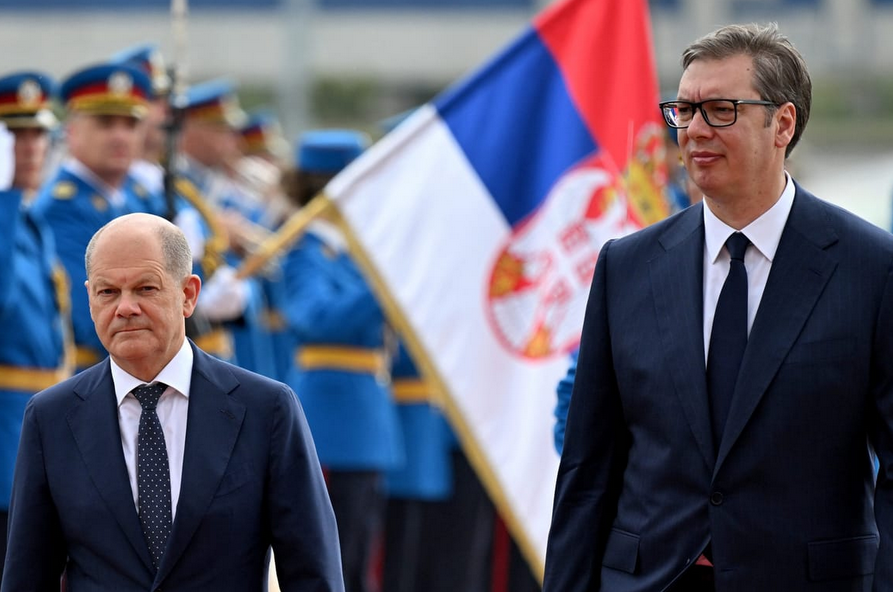
Unbeknownst to me, the flags had been put up for an interesting ‘trade summit’ on July 19th between German chancellor Olaf Scholz and Serbian President Aleksandar Vučić which led to the re-opening of the Jadar valley lithium mine project in Western Serbia by British-Australian mining and refining firm Rio Tinto. According to Reuters, this project could fulfill up to 90% of Europe’s current lithium needs, a material used in the manufacturing of lithium-ion batteries and thus critical to the Union’s aim of achieving net zero emissions by 2050. This also falls in line with other major EU objectives such as the current endeavour at securing more secure raw material procurement from partners – due to mistrust of Chinese suppliers and volatile supply chains owed to waning European influence in African nations like Niger – and playing catch-up to China and the US in high tech industries such as the manufacturing of electric vehicles. 

I found the reopening of the mine project especially interesting given that less than 2 years ago, Serbia had shut down the project after mass protests over environmental concerns. The complete U-turn in policy has unsurprisingly raised eyebrows yet also revealed an increasing trend in Serbian politics – a desire to mend ties with the EU. 

Despite the aforementioned mistrust towards the EU from the Serbian population (one further supported by a similar 2024 poll by Balkan Barometer), Vučić seems increasingly interested in developing ties, in large part due to the economic payoffs that these could yield. 

The most prominent manifestations of this interest are Serbia’s repeated attempts to join the Union itself, with its first formal request being submitted on the 22nd of December 2009. The EU granted Serbia official candidate status in 2012 following recommendations from both the European Commission and Council to do so. A further step towards closer integration has come in the form of the recently ratified Stabilisation and Association Agreement (SAA) establishing a framework to bring the country into closer political and economic relations with the bloc. 

The main drivers for this shift in policy appear to be the economic incentives offered by both membership of and outside forms of economic cooperation with the EU. For example, the EU has invested heavily in Serbia as part of official multilateral aid initiatives like the Instrument for Pre-Accession Assistance II (IPA II) – a financial policy tool used to support countries aspiring to join the union, with 1.5 billion Euros in grants being made available to the country between 2012 and 2022 according to the Delegation of the EU to Serbia, and significant private sector support for Serbia’s economy with the EU being Serbia’s largest trade partner with $4bn (13.2%) worth of its exports going to Germany alone in 2022 according to OECD data. Furthermore, without Serbia’s being a member of the Union, travel for Serbian nationals in the EU was made visa free from December 2009, with Serbia returning the favour shortly thereafter, making cross border exchanges significantly easier and thereby supporting labour migration and creating a system of remittances that have supported EU soft power in Serbia.

Another example of more symbolic political engagement with the EU has been Serbia’s toeing of the EU foreign policy line vis-à-vis the Russian war in Ukraine, a feat notable given Serbia’s initial support of the Russian annexation of Crimea in 2014. Serbia furthermore voted to suspend Russian membership of the UN human rights council in April 2022, a move which shows a general trend of Serbia’s distancing itself from Russia in favour of closer ties with the EU.

And yet cosying up to the EU doesn’t mean Serbia has abandoned ties with its traditional partners – if anything it has intensified them. This is especially true for relations with the People’s Republic of China (PRC). The root of the recent relationship stems from the 1990s when China supported SFR Yugoslavia which would later become Serbia against the NATO bombing campaign because, as Peking University and University of California San Diego graduate Dr. Suizheng Zhao points out, it saw the NATO-backed secession of Kosovo as a dangerous precedent that could inspire armed separatism in the provinces of Tibet and Xinjiang as well. The stance of China was further intensified by the destruction of the PRC embassy in Belgrade which killed 3 Chinese nationals, and injured a further 20 others. 

Since then the two have cemented their relationship through political efforts including the affirmation of a strategic partnership in 2009, which was subsequently upgraded to a ‘comprehensive strategic partnership’ in 2016. This relationship and its origins were showcased recently by Chairman Xi’s visit to Belgrade in May of 2024 to commemorate the anniversary of the aforementioned NATO bombings that he said China will “never forget.”

More importantly however, China has invested heavily into economic cooperation in an official capacity with over US$10.3 billion in bilateral aid being provided between 2009 and 2021 within the China-CEEC (Central and Eastern European Countries) program alone – a whopping 70% of all spending within that initiative, and Serbia being the first country to sign a free Trade Agreement with China in October 2023, with 90% of products traded between the two parties being exempted from tariffs, 60% of which would be exempted as soon as the agreement came into effect on July 1st 2024. 

In a more unofficial, private sector capacity, Chinese firms have also invested an estimated 5.6 billion euros into the country’s economy in the last decade according to an article by Forbes Serbia published in May 2024. The latter point is especially important given that according to the same report over 1,500 companies currently operating in Serbia are majority owned by Chinese stakeholders, with Chinese entrepreneurs being involved in numerous operations including mining (‘Zijin mining’ in Bor), heavy industry (‘Hesteel’ steel making plant in Smederevo) and automotive parts (Minth factories in Šabac and Loznica). 

This is all excludes the significant foreign direct investment in Serbian infrastructure including but not limited to sections of the A2 Miloš Veliki Highway linking Belgrade with the south of the country built by publicly owned Chinese construction giants like Shandong Hi-Speed Group and China Communications Construction Company (CCCC). Cumulatively these investments (both public and private) make China the single largest investor in Serbia according to China briefing, rendering it unsurprising that the two are such cordial partners. 

Interestingly, however, Serbia has not yet cut ties with its longtime ally Russia despite statements supporting Ukraine in 2023. While bilateral relations are less manifest in recent years than those with China and the EU (at least in economic terms), the two nations still share relatively cordial relations.

Perhaps the most significant reason for this enduring bond stems from a long history of shared interests and support, with the Russian empire being a firm supporter of Slavic and Orthodox nationalist movements in the Balkans against the Ottoman empire as early as the formation of Serbia and other Balkan nations under the 1878 treaty of Berlin. 

This support would be expanded in 1914 with Russia entering WW1 in defence of Serbia against Austrian aggression, a fact that Serbs have not forgotten with Czar Nicolas being revered in Serbia as a canonised saint. Monuments distilling the centrality of Russo-Serbian relations in Serbia’s national imagination are plentiful, especially in Belgrade, in which there lie the Church of Saint Sava and a bronze statue of the Czar unveiled in November 2014, less than 100 m away from Novi Dvor, the seat of the Serbian President) in the centre of Belgrade.

While there was a partial break in relations between the two during the cold war due to SFR Yugoslavia wishing to exert greater independence from its larger communist ally following major disagreements between Tito and Stalin in 1948, relations would improve following de-Stalinisation yet remain tepid as Yugoslavia pursued a policy of non-alignment in the cold war, staying out of Soviet organisations like the Warsaw Pact and maintaining relations with Soviet rivals like the USA.

Despite this, the modern Russo-Serbian relationship would be restored and cemented due to the collective hardship endured by the simultaneous collapse of both states in the 1990s, and the NATO bombing campaign against Serbia which Russian President Boris Yeltsin called “open aggression,” according to an article by the BBC. This contributed to the development of strong bilateral relations – a trend that Vučić has worked hard to maintain despite his increasing EU alignment.

However the current relationship between Serbia and Russia rests not only on historical, but also economic and military considerations. Russia still comprises an approximate 3.95% of Serbian exports and 7.18% of imports in 2022, with crude petroleum being Serbia’s primary import from Russia, aiding in the diversification of Serbian energy sources and thus reducing its reliance on coal and hydropower. Moreover, the Serbian Armed forces use primarily former Yugoslav and Soviet military equipment and still purchase numerous weapon systems from Russian manufacturers due to their perceived reliability and similarity to weapons already in service. In this vein, Russia has also gifted Serbia several vehicles including 30 modernised T72 tank variants, 30 upgraded BRDM-2 reconnaissance vehicles and 6 MIG 29 fighter jets to facilitate military cooperation, further underscoring Russia’s vested interest in maintaining strong bilateral relations with Serbia through their combined military ties.

Given all of this information, why the idiosyncrasy? More specifically, why is Serbia trying to have a foot in all camps, a strategy which seems at odds with its strategic interests? The simplest explanation to this seems to be that Vučić is increasingly trying to leverage Serbia’s historical connections and geographical position at the centre of the Western Balkans to make Serbia a ‘middle power’ – a sort of geopolitical conduit and client state between the EU, Russian, and Chinese blocs while asserting Serbia’s independence and deriving certain benefits, such as diversified sources of investment. 

Whether this will continue to work in the future is debatable, given the increasing polarisation of the world order into geostrategic blocs like those of the EU and China and its allies, each with their own (possibly competing) supranational structures. One day Serbia may be forced to choose a side, but for now it seems set to continue the balancing act, walking a tightrope between the national interests of Russia, China, and the EU. After all, why should a nation limit itself to one partner, when it can have its cake and eat it too?

The Sama Dilaut: Nomads of the Seas

By Gemma Tabet

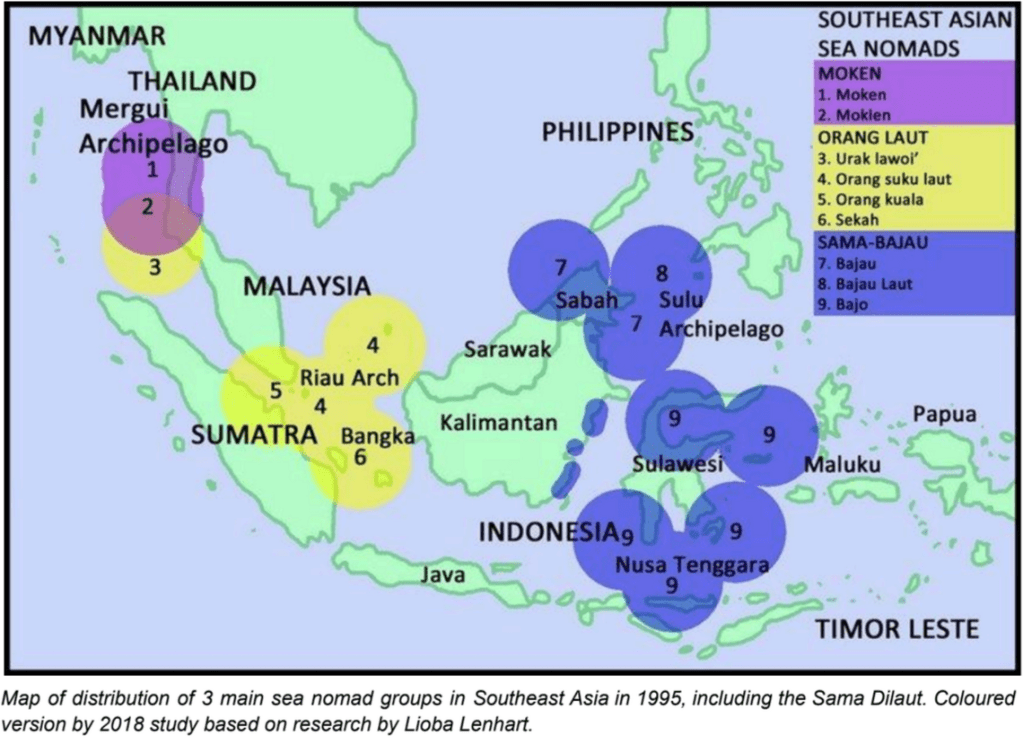
Today, the Sama Dilaut or Sea Nomads, remain one of the world’s last ethnic communities living solely on water. For centuries they have made their livelihood amongst the seas of Maritime Southeast Asia, travelling between the coasts and islands of Malaysia, Indonesia, and the Philippines (Lenhart, 1995). They rely on sea-based activities, such as fishing and trade, and live on their boats (called lepa) or on stilt houses above water (Borneo History, 2017). The Sama Dilaut even developed unique skills that allowed them over the centuries to live in harmony with their aquatic environment. For example, they developed physical advantages such as a 50% increase in spleen size, allowing them to stay underwater for 10 minutes at a time at depths of 70 metres (Sieber, 2023). But modern times have brought harsh challenges, from over-tourism to climate change, that threaten the Sama Dilaut’s centuries-old way of life. 

The Sama Dilaut peoples are part of a larger ethnolinguistic group known as Sama, which consists of two other categories: the land-based Sama Dileya/Dea and coastal Sama Lipid/Bihing (Maglana, 2016). Commonly, these populations fall under the category “Sama-Bajau”, but many groups self-designate themselves using toponyms based on place of origin (Maglana, 2016), such as Sama Sitangkai (Sama of Sitangkai Island). Further distinguishing this community is the presence of 10 major languages and a variety of religious systems (Maglana, 2016). The Sama Dilaut, unlike their land-based counterparts, are less influenced by Islam (the main religion in the region today), due to the remaining impacts of ancestral beliefs based on animism (Saat, 2003). The exact land origins of the Sama Dilaut remain still unclear, but first references can be traced back to 840 CE in the Darangen (Borneo History, 2017), an epic oral poem by the Maranao (an Islamic cultural-linguistic group in the Philippines), which mentions a love story between a Sama Dilaut princess and Maranao prince. Since then, the Sama Dilaut have settled in the waters surrounding Sabah, the Sulu Archipelago, Sulawesi, Maluku, and Nusa Tengarra (Lenhart, 1995), leading to a unique cultural identity tied to the seas.

Yet today, this historic culture and community face modern challenges linked to political marginalisation, discrimination (Moreno, 2023), and environmental degradation (Musawah, 2024), that threaten to erase centuries of traditional knowledge and practices. 

The marginalisation of the Sama Dilaut can be traced back to European colonial rule, which led to the establishment of maritime borders that disrupted the Sama Dilaut´s way of life (Sieber, 2023). For example, trade networks for the procurement and exportation of turtle shells, sea cucumbers, and general fishing existing since 1000 BCE (Jeon, 2019) were no longer viable, greatly affecting one of the main sources of income for the community. The Sama Dilaut have only further lost access to their traditional fishing sites, exacerbating their economic vulnerability and contributing to rising levels of poverty (Moreno, 2023). Particularly, the modern ´stateless status´ of the Sama Dilaut has increased levels of alienation and marginalisation by limiting their legal privileges (Moreno, 2023). Due to unclear legislation distinguishing asylum seekers, irregular migrants, and undocumented or stateless individuals, Sama Dilaut are not often granted citizenship (Sieber, 2023). For example, in the Philippines the Indigenous People´s Act (Act No. 8371) covers only peoples from ancestral lands and not oceanic waters. This reflects the wider political realities the community is subjected to, leading to direct lack of access to essential services, such as education, formal employment, and healthcare (Sieber, 2023).

Beyond a lack of legal recognition and policies for ensuring the economic and political protection of this vulnerable ethnic minority, the Sama Dilaut face centuries old discrimination that has eroded their culture and traditional knowledge (Moreno, 2023). The Sama Dilaut in the Sulu Archipelago are still today victims of historic cultural prejudice (Saat, 2023) originating from dominant land-based groups (like the Tausūg, a Muslim ethnic group in the Philippines and Malaysia). These groups viewed boat dwelling and un-Islamic animism practices as inferior and uncivilised, earning the Sama Dilaut a low social status (Saat, 2003). For example, the Tausūg people have a derogatory name for the Sama Dilaut that translates to “spat out” (Nimmo, 1968). This history of discrimination still ripples into the modern world, leading to the cultural assimilation of the Sama Dilaut, who more and more migrate to land, abandoning their sea-faring way of life (Sieber, 2023). A rising number of Sama Dilaut have converted to Islam over the years (Maglana, 2016), a key example of cultural conformation due to social pressure. The preservation of the Sama Dilaut´s unique customs has severely declined, impacting their traditional languages, religions, and practises. 

Moreover, the nomadic ways of the Sama Dilaut have further been challenged by overfishing and climate change (Musawah, 2024). Due to their economic difficulties, many Sama Dilaut have small and underdeveloped boats and fishing tools (Jeon, 2019, pg. 50), already placing them at a disadvantage when competing with modern fishing corporations. Climate change has only exacerbated the situation, leading to ocean acidification that causes fish migration, forcing various Sama Dilaut to settle on land as they lose access to their primary source of livelihood (Musawah, 2024). There, they may turn to seaweed farming, but because of exploitation by intermediaries, the Sama Dilaut fail to earn enough income (Musawah, 2024). In their struggle against poverty, some Sama Dilaut introduce chemicals and fertilisers into their farming, harming sea life and their own connection to the ocean (Musawah, 2024). The Sama Dilaut are placed further at risk due to extreme weather changes caused by global warming, such as rising sea levels and typhoons (Moreno, 2023). 

In conclusion, it is evident that the Sama Dilaut face a variety of challenges that threaten to erode and erase their nomadic cultures and lives. From political marginalisation and discrimination rooted in the past, to modern perils caused by climate change, the Sama Dilaut are socially, politically, and economically vulnerable. These indigenous peoples have centuries old knowledge of currents, marine ecosystems, star charts, and wind patterns (Maglana, 2016, pg. 78) that could be critically important for better understanding the impacts of and solutions to climate change. A variety of organisations have worked over the years to ensure the political and socio-economic protection of the Sama Dilaut. For example, Rosalyn Diwala´s Indigenous Children’s Learning Centers aim to organise education courses led by native teachers for Sama Dilaut children. On a larger scale, in February 2024, during the World Conference on Statelessness, an understanding was made between the Philippines, Malaysia, and Indonesia to address the Sama Dilaut situation. More concentrated efforts and policies to deal with the specific plights faced by this community are needed urgently, in order to ensure the preservation of not only a unique culture, but to also ensure the protection of a critically vulnerable ethnic community. 

Disclaimer: As a student, I don’t have the full capacity nor time to delve into the complexities of each ethnic community. My intention is to create a space dedicated to introducing readers to different minorities and their plights, to raise awareness and to encourage further readings into such topics.