What’s different about 2020?

Farheen Nahvi writes about the unnecessary pressures a new year brings.

I started 2019 in a place so different than where I find myself now that it’s making me wonder whether it’s any use at all to have a new plan for a new year. It was supposed to be a radically different year, but what I failed to realise then was that my absolutes aren’t how other people live, and my life isn’t in isolation from the world. But not all benefits are materially harvested; sometimes the best things to happen to us are lessons. So this is what I’ve learned, and what I hope might be just the thing you need today.

The significance of a new year in the human psyche is apparent in the way we think of it as a new start. We all excitedly wait for a terrible year to be over, so we can start afresh and break the cycle of misfortune-only to fall into the same pattern of dwindling hope and a descent into despair. If only the first day of the year had gone right; if only I had started on the right foot this year; if only, if only…

We place so much weight on the first of January every year to be the most perfect day in existence, that if it isn’t, we condemn our whole year to misery. We set up resolutions towards our betterment for a new year, and then feel terrible when we cannot immediately follow a completely new routine. We make promises about accepting that we are the masters of our own emotions, and then sink into despair of our own making when we cannot switch to being happy at the drop of a hat. We expect so much from a new calendar, that we seal the disappointment that’s delivered a few days later.

So what will be different about 2020? Perhaps we can all start with taking a deep breath, absorbing the freshness of January, and smiling; we got to a new day. There is nothing wrong with having resolutions and wanting to improve yourself, but the pressure of starting immediately, and thinking that if any old habits you want to get rid of surface in the new year is just a disaster- that’s what makes us spiral back into the pit we wished to climb out of in the first place. New habits take a while to stick, and starting slow is the only way we can make sure that we continue; not because of new year adrenaline, but because we want to develop a long-lasting ethic.

If you miss the January 1st deadline, the entire year is still ahead of you. What we need to remember, is that every day is a new day, and if we’re so determined on the first of January, we can be determined any other day of the year as well. As the grand scheme of epiphanies go, I did not reach this conclusion out of abstraction, but when I tried to make a positive change in my life last January, and again in June, and then again this holiday season, when I picked up writing again- it wasn’t impossible after all.

Maybe what we all need to really work for this new year is to stop feeling bad for ourselves, and stop evaluating our worth through somebody else’s eyes. We do not owe anyone our perfection, and any changes we want should be for us alone. Even if it is what helps our relationships, we should be able to start the ‘reform’ on our own. Nothing anyone ever says will make you want to change your circumstances and improve if you do not believe it yourself; I had heard this several times in the previous years (coming from well-meaning places), but never really wanted to move away from the comfort that comes with the consistency of self-destruction, not until I really wanted to, and I’m still working my way out. When we start doing things for ourselves, we do it at our pace, and we do it right; working according to someone else’s timeline will bring us nothing but despair.

I could not have imagined I would have the year that I had, and as we are wont to do, when the first major thing went wrong, I labeled the entire year ‘bad’. But it wasn’t just bad; there was always a penny where I lost a dollar, and the silver linings are the memories I want to take into this year.

So have a happy, better, kinder new year, and let’s try to make every day of 2020 a new day for the new beginning we all want.

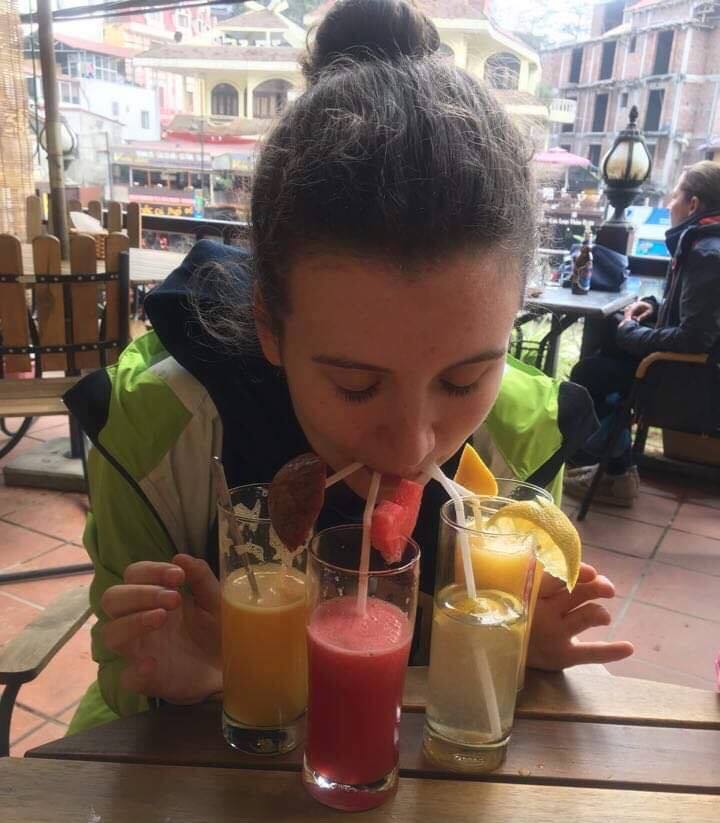
Photo: author

Joker – a review and a reflection

2 seperate pieces on Joker by Todd Phillips, written by Amir and Ji Sung, giving different takes and critiques of the film.

2 seperate pieces on Joker by Todd Phillips, written by Amir and Ji Sung, giving different takes and critiques of the film.


Part I – A Review – Ji Sung Park


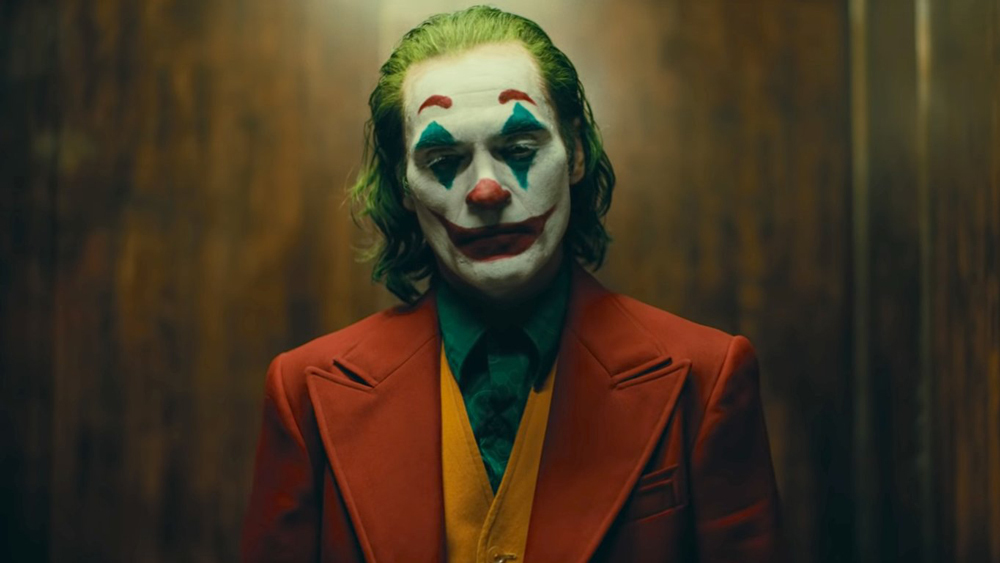
Joker, released on October 4th, was highly anticipated, widely praised and greatly disappointing.


Do not misunderstand; it is a great movie in many aspects. The cinematography is superb; even with bright colors, the atmosphere feels darker than Sin City. The sound editing is pitch-perfect (Aha!); in the scene where Arthur dances his way down the stairs, the background music transitions quickly and appropriately from that reflecting the ostensibly comical image of the clown to that resounding his descent into madness – truly beautiful. The acting is Oscar-deserving. Joaquin Phoenix honors his last name with his flawless impersonation of the flawed character of Arthur Fleck, losing somewhere around 24 kilograms for the act.


But does the movie really deserve all the praise it is receiving? I have my doubts. Many audiences found it boring, not least because of the repeated and protracted laughter of the protagonist. But more importantly, it is a predictable story. Even Marvel zealots know who the Joker is. The downward path for Arthur was predetermined, and after watching the trailer a couple of times it will not be difficult for an indifferent granny to concoct half of the plot successfully. In that sense, the movie is a monotonous routine of disappointments and humiliation for Arthur. What is interesting is his growing versatility in murder. Given time, he might as well have killed someone magically with a pencil. May true DC (or movie) fans get my joke, and not be dazzled by the cheap Batman references in the movie.


However, the director does play a smart trick at the end of the movie. Instead of closing with Arthur dancing (that man just can’t stop dancing) on the hood of the police car, which would have been epic, the movie ends with Arthur having imagined a “joke” in Arkham State. This gives the audience a creative option for interpreting the movie; that the whole event was contrived as a mere “joke” by Arthur, in Inception-esque layers of imagination. Someone noticed that time does not change, or more precisely that all the clocks have the same arrangement in the movie, which seems to support the theory that the whole story was fabricated. Nevertheless, like Inception, there is no definitive explanation and there should not be one.


Now for the more serious talk. Some people suggest that Joker sheds light on the rejection and discrimination of mentally troubled people. Really, such awareness is not addressed in the film in any perceivable way, primarily because Arthur is not as insane as one may first suspect. By nature, he is not a psychopath, although he quickly turns into one. And with the exception of the hallucinations involving Sophie, he has a pretty strong grasp on reality. Enough so to deliver a fully-fledged, critical and apparently quite inspirational speech defending his murder. No, Arthur Fleck is neither as psycho as Norman Bates nor as sophisticated as Hannibal Lecter to entertain the audience by himself, ironically suiting the character.


Then, is Joker a critique on society and its inequality? The answer is: not really. The movie does illustrate how the rich upper class can be despicably apathetic and self-indulgent. But that alone does not justify murdering them. Thus, if the murders were committed by an unhappy social critic, it is an act of downright evil; if they were committed by a madman/psychopath, it is a series of unfortunate events (Aha!); for the victims, of course. In the end, what did Thomas Wayne ever do but punch an unreasonable man, reasonably, in the face? And what wrong did Murray Franklin commit to deserve a bullet to the head? It could be argued that they committed much more contemptful acts off-screen, but such accusation can be made of literally anyone. Therefore, the murder of Thomas and Murry cannot be more right than the murder of Christina Grimmie. Then, was the lower class so abused as to desire complete social upheaving? Sophie, who lives in the same miserable apartment as Arthur, doesn’t seem to think so. She has managed to put up with her harsh realities and establish a life for herself and her child. Moreover, Arthur murders Randall, a man in a similar socio-economic position as Arthur. The result of this action has obscured the conflict between the classes, and that between a troubled man and the world is highlighted. In fact, the story of the movie resembles the Taiping Revolution in many aspects; a gravely disappointed man-turned-mad unexpectedly leading the unsatisfied populace to a darker and more chaotic future. Only that it is set in a world far from realistic, unlike Parasite, or symbolic, unlike District 9, and only depicts a fictional inequality like in Elysium.


Then, perhaps the only valid message in the movie is the repercussions of lying, both to others and oneself. Penny Fleck, who is probably much more insane than Arthur, lies to her son about his origin. This inflames Arthur’s conception of being mistreated by society, exacerbating his mental state and for Penny, leads to her tragic death. Happy themes! Hopefully this movie did not inspire too many ideas apart from Halloween costumes.


******************************************************************

Part II -An Adventure of self reflection on social responsibility – Amir Harith


The reason I chose this title is that the film itself made me pull an all-nighter reflecting about my life and the society I’m currently living in. It provides me with a space, somewhere in my head, to recall the smallest cruel stuff and the selfish acts I’ve ever done that could hurt anybody in this world and also to put some thoughts on why I find familiarity in the despair experienced by Arthur Fleck, the Joker, played by Joaquin Phoenix.


Up to this point, the critiques that I’ve heard from my friends who dislike Joker is that the movie is just another lesson of: what are the consequences of social inequality, bad social integration or the problematic relationship between the governer and the governed. I think we should see beyond this obvious, simplistic causality of why the society in the film descent to societal insanity showed via the great buildup of the movie. We should be able to see the subtle messages and the complexity that Todd Phillips attempted to bring for the audience.


The conceptualization of the world around us through the eyes of the privileged


What I found was thought-provoking is the fact that the film gives us an alternative perspective about Thomas Wayne. It is not only that it changes the common way of seeing him as the hero for Gotham that seeks to cure and redress the injustice (from altruistic businessman to an abusive person), it also tells us, the audience, through what agency we have been absorbing or accepting ideas. It is through the lenses of somebody else: the media that is run and regulated by the captains of industry, the rich or politicians that have personal agenda. This was most evident when Arthur gives his indelible speech that says “ If it was me dying on the sidewalk, you’d walk right over me… but these guys (the three dead Wayne rich workers), because Thomas Wayne cries about them on TV…” which tells us that, even if we don’t notice it, we believe in things that somebody else wants us to believe. The things that come to my mind especially when thinking about the Malaysian context is how we perceive ethnic issues – when politicians play their racial-religious card and we become “enthusiastic” talking about it when we otherwise wouldn’t. Or how many Malaysians see immigrants in the media – the portrayal of the dangerous migrants and how it affects our perspective on them. It might appear that this news coverage is harmless, but this hatred and the normalization of this “us vs them” mentality has become so entrenched, fortified and almost irreversible within the system that we ourselves contributed to by supporting it or worse, says nothing about this evil process. As a consequence, eventually, this vicious view is translated into an inhumane policy.


Furthermore, I also think the movie delicately asks us to be skeptical about the philanthropic behavior by the upper class and to avoid taking things at a surface level. When we see a politician or a CEO of a company tries to fight for the poor or donates money to the underprivileged on newspapers, we think they know what they are doing, and they are doing something right. As much as I would love to celebrate this charitable ‘intention’ and demeanor, we always fail to recognize that this act is an indirect homogenization of the powerless, the poor by a person who has never lived this life. It removes the possibility of seeing the poor as having various identities and simultaneously silencing their different interests and point of views. This is extremely important because it affects the way we see the methods of correcting the system and helping people – not having a white savior complex. I also believe that it influences the way we see ourselves (coming from a different spectrum of the middle-class) who either think that we are working just for the sake of improving our own lives, or even if there is some form of awareness about the need to help the have-nots, we feel complacent with the amount of work we’ve done to help them. We follow a university trip or an NGO to a poor area for a month and teach impoverished kids English or Mathematics, we think we understand them already and have done enough to help them. I believe there is no such thing as peace or ‘sufficient contribution’ if there is one person out there who is struggling to survive in the system that we are complacent and privileged to live under.


We are all morally liable for the injustice that’s happening around us


I believe many people who managed to find the good within Arthur, are able to resonate a lot with the everyday cruelty suffered by him. Throughout the movie, Phoenix tries to be selfless and to do what is presumed right, at least in his small circle. He never misses to check the mailbox just in case there is a letter that his mum asks him about every day. Which means, he never forgets about the needs or interests of people around him. When he got beaten up by some naughty kids, we can see his hand reaching for the broken placard showing that he cares about his job and potentially, that is the only way to help his family survive. When he saw the woman and her child running for the elevator, he stopped the door from closing. It may seem like these are small nice random acts that most people do in daily life, but I believe they are the representation of Arthur trying to keep his sanity through doing what is deemed as correct behavior.

However, all of these moral acts are fundamentally betrayed by something bigger than himself, something he himself cannot control: the discriminative system he is working for, lies told by the same mother he devoted his life for, made fun of by his idolized comedian, rejected and ignored by the woman he has a crush on. It is the same for many of us who sometimes feel that we are doing something that is regarded as honorable or something generally nice but then ignored, forgotten and worse taken wrongly as having bad intentions. That is why it is easy for us to relate to Arthur’s journey from the film because we experience this feeling almost every day.


I think what is more important is to acknowledge is how mean and cruel people can be on a day-to-day basis irrespective of whether or not they are deliberate. We probably do not have the intentions to hurt people, but our objectives can sometimes clash with other people’s interests and that is totally normal. The question then becomes how you can think about it before you sleep – the opportunities that you might have taken away from someone else. It is important to self-reflect so that you remove the tendency for being individualistic in every single step that you take because it potentially affects others. Fundamentally, I think Phillips’ message in this movie is simple: the sufferings that people experience at a micro-level, whether being rejected from a job because of their ethnic identity or rejected from having a decent life because of not having access to good education, are all our fault. We cannot stay motionless and have to do something about it.


Ultimately, this movie is not only about top-down viciousness, but bottom-up complacency and ignorance about the world around us. Joker is an allegory about what happens in a society where cruelty is pandemic, and empathy is absent. It is a wake-up call that beseeches us to be kind to one another.


 

On being French and Vietnamese, and the issue of Vietnamese immigrants.

Inspired by the Humans of New York platform, first year student Jason Trinh interviews Lucas Lam. He intends to write down the stories of our students on campus, and connect them with the bigger relevant issues in society.

You have heard of Vietnamese Americans. Their stories are everywhere, some of them best sellers like Thanh Nguyen or Ocean Vuong. But what about the Vietnamese French? Today I will tell you the story of Lucas Minh Duc Lam.

When I first arrived on the Sciences Po campus, the most commonly asked question, both by other students and by me when greeting new people, is “Where are you from?”. I answered the question easily, and admittedly I even felt a little bit proud of the answer I could offer, knowing that I was the only Vietnamese student going to the Le Havre campus this year. I was born in Vietnam to a Vietnamese family, speak Vietnamese fluently as a mother-tongue, had a Vietnamese upbringing and attended Vietnamese schools. It’s the life of an average Vietnamese. However, my I was surprised once when I answered the question with the same answer. The person went, “I think there is another Vietnamese”.

It turned out that the Vietnamese mentioned was Lucas Minh Duc Lam, but unlike me, he is not the “average Vietnamese”, or at least that was my impression when I saw and talked to him at one of the first social events. His vibe let me know immediately that there was some familiarity; he is humble, a little bit shy (maybe because we spoke in English?); he even looks like one of my cousins, who is really thin with slender hands and a short, carefree haircut. I couldn’t help but feel extremely curious: being in Vietnam for my whole life and surrounded by other typical Vietnamese, I did not really understand the life of Vietnamese abroad – those who are originally Vietnamese, but officially some other nationality. I have heard of the Vietnamese-Americans: they are easy to recognise as most of them call themselves Vietnamese, most of them migrated to the United States after the Vietnam War by highly dangerous ways such as boats, hence the birth of the term “boat people” which is often used to describe first generation Vietnamese-Americans. Some of them are very widely known authors such as Viet Thanh Nguyen and Ocean Vuong. But I have never heard of the Vietnamese French. I decided to interview Lucas directly, and this article is the recap with some reflections with the talk I had with him.

***

We had our talk in the library, one Friday afternoon right before the Fall break. I texted and asked for Lucas’ participation before, with his first response being, “I’m afraid I’m not an interesting person”, reaffirming my impression of him as a very humble one. I started the conversation with some very basic question: his childhood, his upbringing, his parents, etcetera. Lucas’ parents are of Vietnamese origins. Officially, Lucas is French. He was born and raised in France, around Paris, speaks French fluently as his mother-tongue, had a French upbringing and attended French schools. He was even named a French name, with his Vietnamese middle names rarely used. Spiritually, he is… also French. Lucas does not speak Vietnamese well; he does not identify as a Vietnamese, not because he is not proud of his origins, but rather because his parents raised him as an integrated French citizen, and now he just feels more French than Vietnamese. “It seems to me that there are two types of Vietnamese here” – Lucas told me – “The first type is the very patriotic one. My friends from secondary school, some of them have Vietnamese parents,and they were raised in France. Whenever somebody asks for their identity, they say they are Vietnamese. The second type is me.”

However, he also expressed that his parents helped him appreciate his culture and reminded him of his origin: they “only cook Vietnamese food” for him when he is home (which he admitted that he enjoys very much) and sent him to a school that had Vietnamese in his subject choices (there are only two of them in Paris). Lucas still identifies as French not Vietnamese, because other than the food and some of the basic spiritual or celebratory rituals like the Vietnamese New Year festival Tết or the famous Vietnamese food phở and bánh cuốn, he admitted that he doesn’t know much about the Vietnamese life. “My parents don’t want to erase my origin, but they wanted me to integrate into French society, to feel like a French person. After all, Vietnamese is just my origin; French is my nationality.” He also told me that among the Vietnamese community in France, it’s not always the same, but in his case, even his parents feel very French nowadays, as they have lived in France for more than thirty years. “I think it’s very nice to be allowed to be a part of French society and at the same time respect your own origin.”

I asked him more about his parents and their political opinions as the discussion moved to a more political sphere. His parents, from small provinces of Vietnam in both the North and the South, came to France as a result of the Vietnam War; but unlike most first-generation Vietnamese Americans who are highly anti-communist, his parents are said to be neutral in Vietnamese affairs. They just wanted to maximize their opportunity abroad, he said. I asked him if the community of French people whose origin is Vietnamese holds the same political position. “It depends, really. Many of them are very anti-communist, yes. But many are just like my parents who feel more French than Vietnamese, therefore they now only care about French politics.” He also admitted to me that his parents do not talk to him much about Vietnam.

He spoke of his experience as being “the only Asian in the whole school” back in the time when he lived in the countryside near Paris. He was mocked at school, but fortunately he was backed and defended by many friends. When he moved inside Paris which is a melting pot with many different people, he and even his friends never experienced racism again. He told me that there are many stereotypes – or “cliché”, to use his word – about Asian people, but most of them are good ones, such as Asian people are hard-working, intelligent and good at math. “I think the racist, bad cliché targets black and Arab people, so it’s much harder for them.”

***

At the end of the conversation, we talked about Sciences Po, about why we chose Sciences Po, about our future occupations. When asked about his plans for his future kids, if any, he told me that he would try to teach them about Vietnamese culture, about Vietnamese food, but it will be hard to teach the language.

I said goodbye to Lucas and went home to prepare for the Fall break. But the conversation with him has stayed in my head for a while, until now, whilst I’m writing it down. I have always felt like the serious conversation about the Vietnamese abroad is rarely had among the Vietnamese at home; if they do exist, they are mostly offensive jokes on the internet made by the Vietnamese at home about betraying and leaving the motherland, about refusing the identity. On the other side, the Vietnamese abroad (many times the Vietnamese Americans) talk of the Vietnamese staying as the “commies”, as uncivilized and uneducated, authoritarian-loving people. The Vietnamese at home and the Vietnamese abroad, mostly Vietnamese Americans, are even divided by the version of Vietnam they identify with. The Vietnamese at home identified with the Socialist Republic of Vietnam and the red flag with a big yellow star in the middle. The Vietnamese abroad identified with the Republic of Vietnam (the old South Vietnam regime back in the Vietnam War) and the yellow flag with three yellow stripes. The division is deeper than anything non-Vietnamese people can imagine. Many people are surprised when I tell them that I could not walk into a Vietnamese-owned phở restaurant in the United States and speak Vietnamese, because then my Northern Vietnamese accent would be exposed, and Vietnamese Americans might behave badly as a response.. The understanding between the Vietnamese at home and the Vietnamese abroad is almost non-existent. That is why when President Donald Trump decided that he could deport Vietnamese migrants from the Vietnam War back to Vietnam if they have any criminal offences, it hurt the Vietnamese community abroad in an unimaginable way: the Vietnamese government wouldn’t recognize or accept those people into Vietnam, and the Vietnamese people also wouldn’t sympathize with the deported people.

Maybe because of the strict censorship in Vietnam. Maybe because of the deep, penetrated hatred inside the people abroad who fled the country out of fear. But the conversation has never occurred, and I’m just very glad that I had the chance to talk to a Vietnamese who has grown up in a Western country, from the other side of the world, the other side of the conversation. Maybe the Vietnamese community in France isn’t as hateful towards the current Vietnamese regime as the community in the States, but there are undeniable differences in our mindsets, our lifestyles, our upbringings, and our opinions.

The current event in which 39 bodies were found inside a container in the United Kingdom, most of them suspected Vietnamese nationals trying to immigrate, sparked conversation among Vietnamese people. Vietnam nowadays is not having any wars and the economy is growing very fast, but the trend of immigration is still visible because many (mostly poor) people dream about the Western life and then follow the smugglers to migrate to Western countries. Is it illegal? Yes, but one thing that rather privileged people like you and me don’t understand is the desperate feeling of having no choice, of wanting to be better and to provide better for your family.

It is important to remember that not all immigrants’ stories are warm-hearted stories. People like Lucas and his parents can be said to be very lucky, to not only successfully come to France but also to successfully integrate into society. But somewhere out there, there are immigrants who die in freezing containers at -25*C, with their desire to have a better life unfinished, and we shouldn’t forget about them.

Photos: author.

My “favourite” theory

Our radio editor-in-chief reflects on her least favourite question.

When we introduce ourselves, when we do some primary school task or later when we learn a new language, there is always one question that keeps coming up: “What’s your favourite blank?”

I don’t have a favourite. Ironically, the only answer I could give you when you ask for my favourite is that my least favourite question is what is your favourite. I know. It gets confusing. You see, usually I can narrow myself down to a few favourites for certain things but getting the favourite – the ‘one and only’ – is my mission impossible.

When I was younger, I used to memorise which colour was my favourite. I felt this pressure coming down from somewhere – I needed to have one. For some reason I was also bothered by the inconsistency of my answers so I would try to come up with one and stick to it. Once I thought it was blue; I bought a pair of really bright blue glasses, which then of course I started to hate after a few months. Unfortunately, my mom did not understand my awkward teen embarrassment necessitating me to get a new pair, so they stuck with me (do not ask me to send you a picture with them on). It took me quite some time to give up on finding my favourite colour.

Let me explain where all of this is coming from. It is not that I am completely indecisive (even though I am close) or that I don’t like anything. I just haven’t found the answers to two questions: What is a ‘favourite’? And why do we need to have one?

What is a favourite?

Many people close to me have heard me go on a long rant after a question such as this one. Ask me any favourite-type question and I will deconstruct it for you. For example:

When you ask “what is your favourite food?”, are you asking me for the type of food I would eat every day for the rest of my life? Favourite food when I am sad or happy? My guilty pleasure or what I am always excited to snack on? Winter or summer food? For breakfast or dinner? Sweet or sour? Food is such a broad category which means every answer to a favourite has a different meaning to every person.

If a favourite can have such different interpretations, then does it have any meaning at all?

Once, my yearbook quote was “your favourite and least favourite Lithuanian”. It is easy to get a true favourite (with a least favourite) when there is only one of something to choose from. Two birds one stone, am I right?

Why do we need to have a favourite?

I hope at this point of the text you have lost at least one of your favourites. Maybe that song you swore was your favourite is actually your “Summer-2018-the-time-at-the-beach-you-spent-with-your-dog” favourite. That being said, I don’t want to say it’s not okay to have favourites. I just want to say that it is okay not to have one.

I love when people know their answer straight away, when their eyes light up as they get their answer ready: “My favourite number is seven!” Honestly though, why is seven such a popular favourite number? Their certainty is comforting. Their self-awareness is one to admire. However, I feel like it is often expected for us to have favourites. Faced with a-favourite-type question I start talking about why I dislike favourites but more often than not I just end up killing the conversation.

If I give you an answer when you ask for my favourite colour, that one colour will suddenly become very different to all the colours. It will become the colour. I won’t be even sure of what kind of the it will be. It almost feels unfair to all the other beautiful colours. I have no colour to embody that subjective feeling of favourite.

Maybe part of me is afraid that by choosing my favourite, I will be prevented from fully enjoying the alternatives. Once I settle that my favourite season is summer, will blooming springs ever look as beautiful as they did? In the end, what your favourite means does not matter as long as you stay open-minded. Keep the ability to change your favourites. Or if you change them too often like me, just don’t pick one.

Let’s call it – my theory of favourites (or my favourite theory?).

From a Hong Konger: What we want, and why should you side with us.

Following yesterday’s forum on the Hong Kong protests, Marco Law writes a compelling personal piece about his identity and demands.

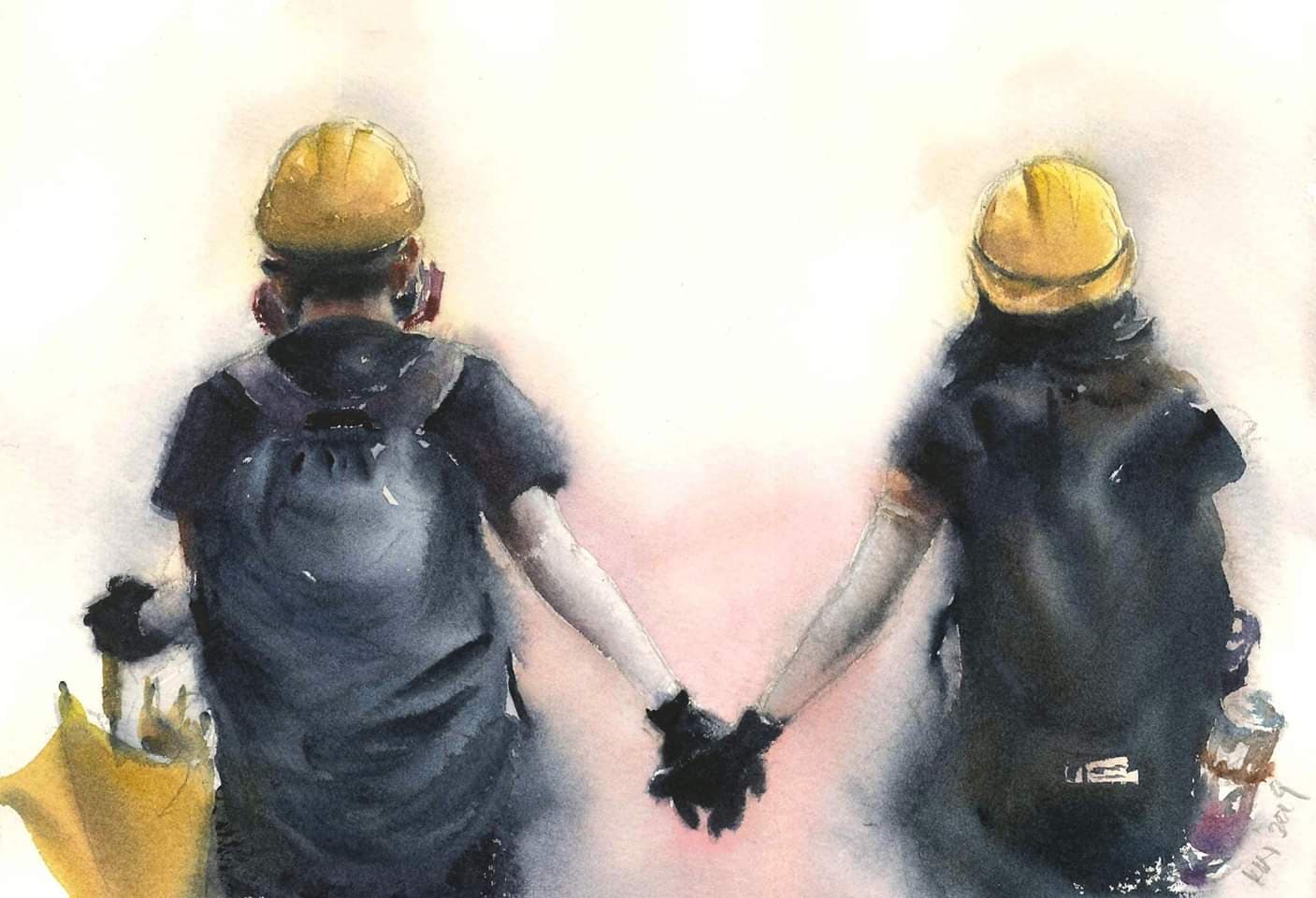
Source: Fung Kin Fan

When filling in immigration forms, I always had some hesitations when asked for my nationality. My passport, and all other Hong Kong passports, have “Chinese” imprinted on it by default. So Chinese is the official answer. Yet when people ask me where I’m from, I always say “Hong Kong”. There is no doubt that I am technically a Chinese citizen, but I simply do not feel like I am of the same nation as my fellow Chinese compatriots from the mainland. It’s complicated. We say we are from Hong Kong instead of China, but we also refer to ourselves as Chinese instead of Hong Kongese, or whatever the word should be. Hong Kong is not the same as mainland China, but most of us also do not consider independence from China to be a justified cause. So what is Hong Kong, and how should we categorize the people in it?

These questions on the identity of Hong Kong weren’t important for the majority of our past history. Since our establishment as a British colony, Hong Kong was just a place where people come to pursue a better life. Western colonists came for economic profit, whilst Chinese migrants came in various waves simply to seek a better life from a chaotic mainland, with their identity still firmly Chinese. The millions who lived in Hong Kong identified themselves with the nation they were from, not the territory they are living in. Then we were handed back to China without any consultation of the Hong Kong people, purely as part of a deal between London and Beijing, bypassing the biggest stakeholder in it all. The deprivation of self-determination didn’t matter, the Chinese promises of “one country, two systems” looked good enough to continue our economic prosperity, and those who didn’t believe emigrated. Until quite recently we were happy to witness the rise of China, cheering for Chinese achievements in space, in sports and in infrastructure.

These affectionate sentiments to China turned to anger and resentment by the time of these Anti-Extradition Law protests. The original trigger of the protests was the mistrust on the mainland judicial system, which was known to be corrupt, and has been openly declared as a system which prioritized the interests of the communist party. The bill to allow extradition to the mainland hit the most common and profound fear of the people of Hong Kong – that Hong Kong would be integrated socially to the mainland. There is little dispute that we prefer the rule of law, protection of fundamental rights and freedoms which still somewhat exist in Hong Kong, to the communist authoritarian regime reigning over the mainland. A new common value of the people of Hong Kong has thus been born, to defend the territory against further ‘mainlandization’. The Chinese identity is no longer fully applicable, because a core part of the Hong Kong identity is being different to mainland China. We are not the same as the Chinese, because we will not succumb to an authoritarian regime. Some people, therefore, have begun referring to the people of Hong Kong as “Hong Kongers”, to liberate us from the tag of “Chinese”, recognizing our uniqueness. Our allegiance no longer lies with any overarching sovereign, but purely to the good of the territory. I am a Hong Konger, and we are fighting for the future of our beloved home.

The Anti-Extradition Law Amendment Bill protests started out as protests against a very specific political issue, being the bill that gave the movement its name. It has since clearly grown into a general protest against the political status quo of Hong Kong, which translates to a desperate struggle to retain our rule of law and autonomy from China. Yes, social and economic problems exist in Hong Kong, but they were never the cause nor the aim of the movement. Since the early days of the movement, there has always been only the five demands (and not one less) that are the common goals of the movement. For those of you not familiar, they are: 1) Compete withdrawal of the extradition bill, which has been the only one promised by the government for now; 2) Form an independent inquiry commission with legal powers to investigate police brutality; 3) Retract the characterisation of the 12th June protests as ‘riots’; 4) Release and grant amnesty to protesters arrested during the movement; 5) Immediately implement real universal suffrage for both the Chief Executive and Legislative Council elections.

Whilst the government tries to blame the protests on other factors, such as frustration by the youth on housing prices and foreign interference, I am certain that none of the protesters took to the streets driven by anything else than the five demands. No matter how the government spins it, or tries to have ‘dialogue’ with Hong Kongers, there is only one way to calm the protesters, which is to concede on all five demands. For the casual bystander, this may seem too much of an ask. “Politics is about compromise”; “why demand universal suffrage when you know well that Beijing will not approve?”; “the extradition bill has been withdrawn, don’t be too greedy”. What these people don’t understand, is that the five demands are in essence the bare minimum that Hong Kongers can ask for to safeguard the future of our city. How can we compromise if we cannot make our police forces accountable for their illegal acts? How can we believe autonomy of the city can be guaranteed if Beijing can still pick and choose whichever candidates it likes? Anything less than the five demands will mean that the movement has failed and we have failed to protect Hong Kong in the way we would like it to be. Yes, this sounds like a tough ask, but what the political reality is does not equate to what the reality should be. Just because Beijing won’t allow free elections, does not mean we should not fight for it. There are values that Hong Kongers will defend regardless of the political reality, in this case being our freedom, rule of law and democracy. We may fail, but the result of the movement does not make these claims any less legitimate.

You may also criticize protesters for overusing violence, for wrongly beating people up , and ask both sides to “calm down”. I do not blame you for thinking this way, as many of you may have done the same in the case of the gilets jaunes. Yet this misses that fact that Hong Kongers are left with no choice. We tried peaceful protests. We only held peaceful marches for the first 17 years after the handover. We chose the peaceful method of occupying roads during the Umbrella Movement. We started this very movement with two big peaceful rallies of 1.03 million and 2 million people out of a population of 7 million. Nothing changed. In fact, we witnessed the gradual decrease in autonomy despite constant public resentment against it. Responding to the 1.03 million who demanded the extradition withdrawn, our Chief Executive purely responded “we will continue the second reading of the bill on Wednesday”. “You taught us peaceful marches don’t work”, is what the protesters sadly pointed out. You can blame the gilets jaunes for destroying public property, because they could’ve simply voted against Macron to get rid of him (yes, it’s a long time away, and it’s not so straightforward, but still it’s absolutely possible). For us Hong Kongers who have had enough of Carrie Lam, there is no way we can take her down. The only thing that decides whether she gets to keep the job is Beijing’s blessing. So, when peaceful marches and public outcries are neglected, what other methods are there to make the government listen than to escalate the violence? Yes, not every act of the protesters have been fully morally acceptable, to which I ask for your understanding. If you are simply looking to condemn violence of any kind, I recommend that you look first to the police and pro-government gangsters, whose violence was directly aimed at physically hurting protesters. Whilst thousands of protesters have already been arrested, not one police officer has been made accountable for their brutality, and the pro-government gangsters have been subject to clearly disproportionate degrees of tolerance from the prosecution. The protesters are violent, but it is a false equivocation to say they are just as violent as the other side. You cannot also expect perfect morality and EQ from a bunch of protesters suffering from fatigue, injustice and immense anger on a daily basis. These people understand very well the possible consequences of imprisonment or even death when they stand on the streets, and know this is not child’s play, yet they are willing to sacrifice for the belief that their actions are necessary to save our city. Regardless of what the protesters do, I will still treat them as fellow protesters of the same cause. Regardless what violence occurs, the movement and its aims remain as legitimate as ever.

As the movement faces unprecedented suppression from the government, I have also oddly gained my hope in the future of the city. This is the best of times, this is the worst of times. Our government and police force is turning the city into a police state like never before, but Hong Kongers are also united in both our cause and identity like never before. The movement has done wonders to consolidate our identity as uniquely a Hong Konger, and has given us a common history and value. When listening to “Glory to Hong Kong”, the anthem of the protest, I finally understood what it was like for athletes to stand on their sport’s greatest stage, and burst into tears when hearing their national anthem, a song that is part of their identity and pride. This connection never happened between the Chinese “March of the Volunteers” and I. That was more like a formality. Yet “Glory to Hong Kong” inscribed the very beliefs than define me as a person. “Freedom and liberty belong to this land, may glory be to Hong Kong”. Some may argue this carries a pro-independence sentiment, to which I do not disagree, but would claim that Hong Kong’s independence as a sovereign state is unlikely and not an aim of the movement. What this signifies instead is the spiritual formation of Hong Kongers into a nation, with a fundamentally different identity than the Chinese. The nation of Hong Kong will neither be defined by race or territory, but will solely root from the aspirations of freedom and democracy, for our beloved city to prosper. Even if all else fails, the movement would still have contributed to the process of nation-building in Hong Kong. Hong Kongers, for the first time in history, attempt to break free from our classification as “Chinese” or “British colonial subjects”.

Living in a state that prides itself with freedom and liberty in its blood, I urge you all to remember that whilst we are currently enjoying the fruits of a free and democratic society, this is not a given in all parts of the world. The people of Hong Kong are fighting to defend the little autonomy we have from the biggest authoritarian regime of our era, and the least you can do is to empathize the cause.

This article does not necessarily represent the views of the editors or Sciences Po.