
Beyond Peaches: The Concept of Dreaming Big in a Small Country

by Nini Iaganashvili

Whenever I say I’m from Georgia, people light up and ask, “Oh, really? How’s Atlanta?” But, a simple correction — not the state, the country — resets the entire conversation. And in a way, that small misunderstanding says a lot about where I come from and who I am. 

This is a story of what it means to grow up Georgian, in the Caucasus region; in a country woven with traditions, hospitality, the famous “Supras” where strangers become lifelong friends, various unpopular concepts, wine and the words, the voices of some of the greatest writers of our age, where beliefs are more than personal — they are collective, binding communities together across generations. 

Ever since I can remember, I have been fantasising about what was outside my existent borders, or how far I could have stretched those borders, or even so, where it started, and where it ended. Not everyone can have the answer to that question. Everyone has their own possibilities and realisations towards this concept.

I have to mention Georgia’s historical and geographical context. The country lies between Europe and Asia, it borders Russia and is a post-Soviet country. Living in the constant shadow of Russia with centuries of invasions, meant living with constant fear and tension. It meant that acquiring independence in 1991 was both liberation and uncertainty, the moment when my parents’ generation had to suddenly adapt to a future they had never been prepared or taught for. Generations before my parents, my grandparents had been fighting for the freedom of our country, for the best of it all, and now my generation has taken the matter of EU integration into their own hands.

All this tension has shaped me into who I am, as much as the traditions have. As you can already tell, traditions have been a cornerstone of our community for generations. Starting from early teenage years, as I grew, I understood that in my family, my community and in the whole of Georgia as one, the rules and beliefs were two-sided. While I perceived these unyielding beliefs and traditions as huge walls of obstacles, I learned how to use them as a beneficiary for myself; I understood that maybe these walls were the ones that needed to be broken down in order for me to grow and actually pursue my goals. 

I have always known, not even thought, that I was born to live life to its fullest. However, that conviction carried its own doubts:  the fear of making wrong choices, choosing the wrong career, or taking a step that might seem irreversible. It was scary, too, because of how much effort I poured into my goals and how much pressure I placed on myself. At times, the weight of those expectations felt overwhelming. And yet, I also knew that Georgians — my family, my community, even teachers — would have been supportive in their own way, proud that I was trying to reach higher. But it appeared that the fear of standing still was greater than the fear of moving forward.

Dreaming big has always been my quiet rebellion, especially in a country deeply rooted in tradition. The concept of leaving home and starting a new life at such an early age, as a minor, was seen as an impossible privilege that only a few had. I can recall many times whenever I mentioned studying abroad, while talking about future plans at various Supras, and the guests would just laugh it off, while I was left merely confused, as if this was something equivalent to traveling to space; the concept of studying abroad has always been achievable to me, as long as I worked hard. This specific concept was never just a dream, or something I looked at from afar, or something I knew there was no point in trying, but instead, it was a destination that I refused to let go of. Therefore, having grown up in a place where aspirations, that may not be popular, can be seen as ambitious and biased, I learned from an early age that it is better to stay patient and reach beyond the set borders, be stubborn when needed  and have faith in the said “impossible”.

For me, studying abroad was not just about education, but about possibility. Growing up in a small country often overlooked on the world map, I wanted to prove that voices like mine which were shaped by tradition, history, and centuries of resilience, deserved to be heard on more of a global stage. And finally, each effort, each late night study session, each moment of doubt that I had and have overcome, became another step to me fulfilling my wishes and setting an example to my younger brother, cousins, and loved ones. 

Starting a new life at 17, packing my whole life into a suitcase and flying over 3,000 kilometers across the world appeared to be harder than I had anticipated. Getting away from the loudness of such a small country, of my family, of the small fights me and my friends would have, of my relatives and most importantly of the Supras which we hosted every Friday night as a family; and then living in small apartment all alone, in the deafening quiet, was probably one of the hardest things I had to deal with. I remember putting on music  first thing in the morning so I would not feel the loneliness of my own company. I call France my second home, but even now, when I was coming back, I remember crying on the way, as I remembered all the good times I had spent with my family, relatives, even remembering the scent of my mom’s perfume on her jacket, that specific scent of my house, my room and so on. However, my determination, my goals, my community: those things have kept me going all this time. Knowing that I get to go back in no time, knowing that I will see the proud smiles and watering eyes with the tears of happiness, makes it all worth it. 

Still, I never wanted to leave Georgia behind, but I did not have to. To dream big from a small country is not to abandon it, but to carry it with you, to take its traditions along with contradictions, its warmth and sometimes scars, and weave them into different stories you tell the new people you meet while living your new life. To me, that is what it means to be Georgian, beyond stereotypes and beyond peaches. 
A Love Letter to the Friends I Don’t Miss

by Carmen Leong

The call had taken a text correspondence of two weeks to arrange. When Verlene turned on her camera, we both broke into a cheer. Her make-up pouch was unzipped on the table, and behind her, the morning sunlight illuminated the white walls of her Boston dorm. “I missed you!” she burst out. “I missed you too,” I replied, three thousand miles away in the late Le Havre afternoon. It was true – it had been more than a month since I bid goodbye to her and the other girls at Changi Airport – but missing her was not something I felt particularly strongly in that moment.

As she got ready for her day, I listened to her talk about her new life in Berklee, and shared in return about mine at Sciences Po. About an hour in, she finished her routine and took me along as she walked downstairs to the cafeteria; I heard the voices of her friends calling for her off-screen and gathered that it was probably time for us to end the FaceTime. After that, it was three weeks before she texted me again, with an update on the cute guitar-playing boy from upstairs she had mentioned briefly during our call.

One night before I left for France, the six of us squeezed into a booth in an American-themed bar, trying to prolong the night as best as we could. On the wall beside us was a huge American flag that hung from the ceiling; as the four girls who would be going to U.S. universities posed for a picture with it, I ducked lazily behind one of them, arms around her waist and drunk on the easy joy of being with my favourite people. It was a good night; we cycled around the same few questions of the recent hangouts and repeated our answers in different words, but meant them all the same. I love you. I am who I am now because of you. I’ll miss you, but I’m so excited for you. Promise we’ll all meet again in New York after two years. The beginning strums of ‘Kiss Me’ by Sixpence lifted us from our seats, and in the empty bar, we danced. I was a little awkward, not completely comfortable in my body that night for some reason, but my best friend noticed and pulled me into a spin that had me smiling. A few days later, we had a big family gathering: the girls and their parents, and some of their siblings, in my living room – some of our dads hitting it off with guy talk about planes and work, my brother fiddling with the speaker, us girls sprawled on the carpeted floor and discussing a potential karaoke event with our parents in some eventual future. It was then that it occurred to me to describe what we had built for ourselves as sisterhood.

I did think we would call often, despite our universities being in different countries and continents. At one point, I think someone had even put forward the idea of our having bimonthly group meetings to catch up on one another’s lives. It’s strange to me now, therefore, that I don’t miss them, but I miss, rather, the friends here that I see nearly every day.

On the FlixBus back from Paris, I tell this to Audrey, who is sitting beside me. A sleepy quietness has settled in the bus, disturbed only by our low-voiced conversation and the indecipherable one that JJ and Zo-Ren are having some rows of seats ahead of us. I feel like I need to see you guys at least once a week or I’ll die, I say. The sentiment is only half a joke. Just before that, the six of us watched the Eiffel Tower light up for the first five minutes of the hour from the top of Montmartre, and realised just how little time we had before our time together at Sciences Po would end. My cheeks are sticky with the aftermath of tears, and my eyes are especially dry. Audrey takes a while to think. Then, she says, maybe it’s because we’re so far away from home that we’ve had to build our own one here. Even our activities as a group – grocery shopping, cooking – what else but a family does that?

I’m reminded again of her words as we lie on my makeshift couch (two folded futons) after dinner, the tatami mat below our legs thinly protecting them from the chilled floor of late autumn. One of them is on my right, Audrey on my left, and another one has been lulled to sleep in his sleeping bag beside her. Two of them had left earlier, and the remaining unwashed dishes are stacked on the dining table for now, sticky and powdery from the boa loy we made earlier that night, pinching sweet pumpkin flour with the tips of our fingers and rolling them into tiny balls on our palms. Our three-way conversation drifts to the topic of friends back home. As I tell them about the five girls from my life before, I think about the new friends beside me that I’ve begun to open my heart to. I don’t miss them, I say, but it’s not because they’ve been replaced by you guys. Maybe you’re just in another period of life, Audrey suggests, and I agree.

When I was young, my dad used to nag at me for buying and reading multiple books simultaneously. I would fold the upper right-hand corner of a page in a book, close it, and open another one. When the time was right, though, I would come back to it, and continue where I’d left off. There was always space for multiple stories in my heart, and the characters in them shared the imagination of  my mind, even if they switched between being at the forefront of it. 

There isn’t really a reason to miss these girls, I suppose, since I know with certainty that they will always be a part of my life. Sometime later, we will sit in another American bar – a real one this time, in New York – and reopen the book we’ve written together, with new ideas, new stories, new people from the time we spent apart. And perhaps a few drinks in, we’ll be joined by my friends, these friends, and I’ll be lucky enough to see the past and the present, the old and the new – but all my favourite people – meet at the beginning of a new story.

A Seagull’s Day in Le Havre

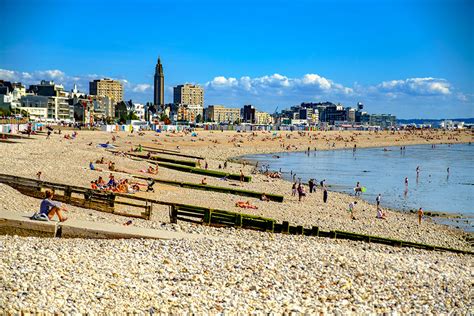
When I wake up, the sun is still hidden behind the buildings of the city, but the sky slowly turns to a pinkish hue as it lights up. It’s cold, but I’m protected from the harsh gusts of wind of the grey sea. It’s a rainy day. It feels like every Monday is a rainy day. But it won’t last, it never does here, as the wind pushes the heavy grey clouds away inland, and brings in a fresh blue sky. That’s Le Havre for you. Everyday there’s sun, every day there’s rain, but it never lasts for long. I heard in the tropics, far South, wet and dry weather alternate every six months. Here in Le Havre, rain and sun alternate every day, so the city is always wet. I like wet. I’m born to live out at sea, to have droplets of water caress my white and grey feathers, to have the marine air fill my beak. My ancestors fed on fish, but myself, I prefer feasting on a half-eaten kebab I find in a rubbish bin, or better, a full Burger King meal stolen from a group of young humans. I like staying around young adult humans, they always leave stuff behind: raw chicken breasts, kinder bueno wrappers, empty coffee cups, lots and lots of them. It’s funny how they scurry around that large blocky grey building. They arrive there every morning, and stay until the sun has set. I always follow them; they seem like funny little characters. 

When I arrive at the building, around 8 o’clock, some of the humans are already there. I say humans, but they’re not all fully grown. I know some are still finding out who they really are, just like I am. I can relate to them. My seagull friends are there too. Right in time for breakfast! A few coffee cups lay at the bottom of the rubbish bin, I pick them out with my shiny yellow beak. I always need a coffee to start the day, otherwise I can’t concentrate. I want to learn more about the humans, about why a flock of so many different ones stick together in this sad coastal city. They’re like a weird family, sometimes friendly, sometimes fighting, but always together. 

After breakfast, I peek around the windows on the right of the building. There, an older human is telling the others about stuff. I cannot comprehend everything; it seems jumbled up. One class is about the Silk Roads, a large route of trade and cultural exchanges, spanning half of the globe. I wish I could visit all these places that the wiser human is talking about. It seems beautiful out there in the world. Other times, it’s a different older human talking about a different thing. They talk about how groups of human’s rule over other groups of humans, and the rules around this governing. They  explain why and how groups of humans interact between themselves. It’s a peculiar sight to see all these young humans learning about things from their own world. But alas, I, humble seagull, am unable to fully comprehend the complexities of human society. Who could, really? 

When lunchtime arrives, I stand in front of the building and wait for a human or two to come back holding food in their hands. They rarely feed us. They don’t really like us, actually. Some say we’re scary, that we may hide secrets or govern the world. Hilarious, really, when you observe what humans do to our homes. Some don’t like us because we feed on rubbish. But we simply finish what they have left off. Some just don’t care about us. Why should they, they’ve already got so much on their minds. In any case, there’s always a sandwich or two left in the rubbish. We fight over it with my fellow seagulls, it’s food enough, but the best parts are highly convoluted. The humans watch us fight sometimes. They point at us, they laugh. But when lunch is over, they all return back in for a next round of classes. Sometimes, some leave early, their day probably finished, but most stay late at night in a strange two-levelled room. Often, the central hall is decorated, and the humans stay there, talking, and sometimes, not a sound is made in the whole building. 

In the afternoon, I fly up to the green rooftop to observe the humans working in small groups. They look different up there, more attainable. Most of the time, when I peek in the rooms, there are only a handful of humans, typing on computers, shouting at each other, or repeating what another older human is telling them, in sounds that I do not comprehend. I watch as my seagull friends fight or have sex on the rooftop, and how the humans look at them, fascinated, disgusted, or laughing. How peculiar is it that I could be observing the humans observing my own species. Maybe they are like me, perplexed at the way of life of other species, wondering to what extent we resemble each other, or not. Some days I fly to the other side of the building. There, they also work in small groups often with an older human looking over them. It seems like they talk about the same topics as in the big hall, only more confused, and noisy. How strange they are, with their computers, and phones, watching a screen display. Doesn’t the life of a seagull seem more attractive? Just chilling and feeding all day, hanging out with friends. It sure seems more appealing to me than being locked up in a room in a sad grey building all day to learn seemingly useless mountains of information I have trouble seeing the usefulness of. But they are humans. Humans are weird. 

Over the seasons, I’ve noticed a pattern. Every 2 cycles of seasons, half of the group of humans leave and a new flock arrives. I don’t know where they go or where they come from. From what I could gather, they all go their own way, to places far away. Some never come back, and some do, but I never see them again. One day, maybe I’ll understand, but for now, I’ll continue to wonder why a small group of humans choose to stay together for two season cycles only to split at the end. It’ll remain a mystery. 

As night starts to fall, I peek through the blinds of the book-room where only a few humans remain. All concentrated on their computers, some with empty coffee cups lying next to them, face between their hands, hand on their foreheads. They seem tired. They seem overwhelmed. I’d love to help them, but how could I? I’m just a simple seagull. What do I know of human society? I do wonder if the humans themselves know, or if they are as perplexed as I am. But for now, I simply wait for the few humans dressed in black to push the young humans out at nine o’clock. I’m just a seagull, sure, but I’ve witnessed those humans work all day, climb up to the fourth floor worried or annoyed, to speak with older humans. I’ve seen them sing, dance, and act together. I’ve seen them cry and laugh, shout and whisper. I’ve gotten to know them, and one day they’ll leave, and I’ll never see them again. Never. I hope one day it’ll be my turn to see the world, to follow the humans to the ends of the Earth. Maybe that day, I’ll finally understand what human society is all about.

Read more: A Seagull’s Day in Le Havre

Romain YBORRA, 3a is nostalgic and shares here his fond memories of LH and the campus by putting himself in the shoes of the seagull.

Quelques poèmes de départ…

Maud NIEMI 3A en devenir nous partage des doux mots en anglais et en français, sous forme de poèmes, pour dire au revoir à ces deux années passées au Havre, aux rencontres, aux souvenirs et pourquoi pas au soleil.

Continue reading “Quelques poèmes de départ…”

Toxic relationship – the roots of my fight against male domination

TW: Psychological violence and toxic relationships in a family. Contacts at the end of the article.

An article for the letter T (Toxic relationships) of the project “Feminism from A to Z” presented by Feminist Chapter

Continue reading “Toxic relationship – the roots of my fight against male domination”