
La bourse de Tokyo tremble : des répliques à prévoir ? 

par Sylvain Sainte-Marie

La Banque du Japon. Photo: SATOKO KAWASAKI via japantimes.co.jp

Jeudi 8 août 2024 au large de Kyushu, un séisme de magnitude 7,1 fait trembler l’archipel nippon. Si les dégâts sont minimes ce jour-là, l’agence météorologique japonaise alerte que la probabilité d’un mégaséisme est plus élevée que la normale suite à cette secousse. Pendant 1 semaine, les habitants restent en état d’alerte avant que l’alerte soit finalement levée le 15 août. 

Or le sol japonais n’est pas le seul à avoir tremblé cet été. En effet, le 5 août à la Bourse de Tokyo, le Nikkei 225 enregistre une baisse de 12,4% en une journée, du jamais vu depuis l’éclatement de la « bulle japonaise » dans les années 80. Le lendemain, l’indice se relève de 10 points mais le monde de la finance, lui, retient son souffle encore quelque temps, inquiet des potentiels effets en chaîne. Si ce mini-krach boursier n’a pas engendré de crise financière plus large, alors même que la bourse de Tokyo est parmi les cinq plus grandes places boursières du monde, il est néanmoins important de comprendre les causes de cet évènement et ce qu’il nous apprend sur l’état de la finance et de l’économie japonaise. 

L’événement 

La chute du 5 août fait suite à une hausse des taux de la Banque centrale japonaise (BoJ) le 31 juillet élevant le taux directeur au niveau de 0,25% . C’est la deuxième depuis le début de l’année que le Japon ait connu depuis les années 1990 avec une politique de taux très faibles voir négatifs. La BoJ cherche par cette action à enrayer la dépréciation du yen par rapport au dollar, car une monnaie plus forte permettrait des importations à prix plus faibles. Les importations d’énergie japonaises sont notamment libellées en dollar et l’économie du pays repose lourdement sur celles-ci. Or, un renforcement de la monnaie japonaise signifie aussi des exportations moins bon marché et donc une baisse de compétitivité pour les entreprises nippones (un bien produit à coût fixe en yen voit son prix augmenter hors du Japon si le yen vaut plus de monnaie étrangère qu’avant). 

Toutefois, une si faible hausse des taux ne suffit pas à expliquer la panique qu’a connue la bourse de Tokyo. En effet, un autre facteur a joué dans le même temps un rôle peut-être encore plus important. Début août ont été publiés aux Etats-Unis des indicateurs économiques plutôt mauvais. Le jeudi 1er août, Wall Street a enregistré de mauvais résultats, le Dow Jones a baissé de 1,21% et le Nasdaq a reculé de 2,3%, laissant douter des perspectives d’investissement dans les firmes américaines. De plus, le taux de chômage continue à augmenter ces derniers mois, passant de 4,1% de la population active en juin à 4,3% en juillet alors qu’on constate simultanément un net recul de la création d’emplois. De ce fait, certains craignent une récession puisque l’économie américaine ne devrait pas atteindre les niveaux de croissance espérés. Si cette mauvaise santé de la première économie mondiale est à grandement relativiser, ces chiffres laissent toutefois poindre la possible baisse des taux d’intérêt de la Federal reserve (Fed). De fait, la Banque centrale européenne l’a déjà fait et le mandat de la Fed prévoit la lutte contre le chômage, appelant à un relâchement du robinet financier. 

Or cette double conjoncture modifie un équilibre fondamental des marchés financiers. Historiquement, les économies japonaise et américaine sont très liées. Comme le montrent les chercheurs Fei Han et Niklas J. Westelius dans un article publié en 2019, les activités de « carry trade » jouent un rôle majeur dans les appréciations du yen. C’est précisément ces échanges qui se sont retournés le 5 août. Le carry trade consiste à profiter de l’effet de levier provoqué par la différence entre deux devises. Dans le cas Japonais, des investisseurs s’endettent à faible taux en yen puis placent cet argent dans des actifs américains à fort rendement. Or quand les taux japonais augmentent et que les taux américains semblent être sur la baisse, l’activité devient moins intéressante et les investisseurs craignent peut-être même un renversement. Les nouvelles informations ont donc incité certains acteurs à rapatrier une partie de leur fonds au Japon: le yen est en effet une monnaie refuge. Cela participe à l’appréciation de la monnaie nationale, d’autant que les taux bas de la BoJ ne permettent pas d’enrayer ce processus comme le démontrent Han et Westelius. Finalement, une monnaie plus forte dégrade les perspectives de profits des firmes exportatrices, nombreuses dans le Nikkei 225. Tokyo electron a par exemple vu sa cotation en bourse baisser de 18% au moment du mini-krach. 

Aujourd’hui l’événement ne semble pas avoir fait tant de vague, alors n’était-ce qu’une tempête dans le verre d’eau de la finance qui n’aura finalement pas mouillé le reste de l’économie ? Dans l’immédiat en effet il y a fort à parier que peu de choses changeront, mais cet évènement est toutefois révélateur de plusieurs tendances. 

Les perspectives du carry trade  

Après le mini-krach, de nombreux acteurs ont imputé l’ampleur de celui-ci à l’utilisation d’algorithmes pour réaliser les transactions de carry trade. Comme nous l’avons expliqué, le fonctionnement de cette activité repose sur peu de facteurs et l’automatisation des transactions ainsi que la réactivité des algorithmes aux moindres variations ont pu amplifier l’effet de réaction en chaîne. 

Par ailleurs, le carry trade au Japon a beaucoup changé ces dernières années, passant des mains d’acteurs institutionnels comme l’Etat ou les banques, à celles d’acteurs privés, envieux de profiter de l’importante épargne japonaise. L’intensité de ces opérations étant très complexe à mesurer, il est difficile de la prévoir à long terme. Si il est évident qu’elle va diminuer dans les prochains mois, on ne sait pas quel impact elle aura dans un futur plus lointain.

Ce qui s’annonce pour l’économie mondiale 

Une chose est sûre, la secousse japonaise n’a pas entraîné de réactions majeures des autres marchés financiers. Le CAC 40 a certes vu une légère baisse mais toute réaction en chaîne a été évitée. Toutefois, il ne faudrait pas sous-estimer l’importance du Japon dans le système financier mondial. Premier créditeur mondial et premier détenteur de dette américaine, le pays comptait fin 2023 10,6 trillions d’actifs étrangers. Or, pour renforcer sa monnaie, le Japon s’est mis à vendre une partie d’entre eux. En retour, l’augmentation de l’offre d’actifs d’entreprises américaines par exemple limite les capacités d’investissement de ces dernières (l’offre d’actifs augmente alors que la demande reste plus ou moins la même donc la valeur baisse). De plus, si d’autres évènements comme celui-ci viennent à se reproduire, les investisseurs japonais seront surement encore forcés de vendre des actifs (effet de monnaie refuge). L’importance du carry trade jouera évidemment un rôle dans les répercussions futures des ventes d’actifs par le Japon. Cette histoire entamera peut-être un nouveau chapitre alors que la Fed a annoncé baisser ses taux ce mercredi 18 septembre. Les taux restés élevés de la banque centrale des Etats-Unis sont ainsi passé d’une fourchette comprise entre 5,25% et 5,5% à une fourchette de 4,75% à 5%. Alors que les événements de cet été ont mis encore une fois en évidence la grande dépendance des économies asiatiques aux politiques économiques américaines, le Japon pourra-t-il se sortir du marasme dans lequel il se trouve plongé depuis les années 90 ? 

Le piège de la politique monétaire japonaise

Cet événement a fondamentalement rappelé la spécificité de la politique ultra-laxiste de la BoJ. Il y a fort à parier que si le taux directeur s’était trouvé à un niveau plus élevé avant la hausse, les chiffres enregistrés le 5 août auraient été moins impressionnants. Il faut rappeler que depuis l’éclatement de la bulle japonaise et dans l’espoir de relancer l’activité, la BoJ a beaucoup innové en termes de politiques monétaires non conventionnelles. Elle fut la première à pratiquer des taux aussi faibles, voire négatifs et mener des politiques de « quantitative easing ». La banque centrale a ainsi racheté pendant 20 ans des obligations de l’Etat nippon auprès des institutions de dépôt. Si celles-ci possédaient 40% de la dette japonaise en 2013, ce chiffre est inférieur à 10% aujourd’hui.

Mais cette modernité pour l’époque a toutefois bloqué la banque centrale du pays. En effet, des rachats aussi agressifs ont conduit à un assoupissement du domaine privé comme le pointe The Economist dans son numéro du 31 août. Or, aujourd’hui la BoJ a besoin que ce secteur reprenne vie pour pouvoir enfin sortir de cette politique ultra-laxiste. Toutefois, l’ancienneté de certaines obligations empêchent leur rachat par le privé (duration risk) si bien que seul un cinquième de ce que possède la BoJ est susceptible d’être racheté. Une autre possibilité est de freiner les rachats, ce qui conduirait à une hausse des rendements perçus et attirerait ainsi les investisseurs. 

Néanmoins, l’article de The Economist souligne la complexité de mener une quelconque politique. En effet, une action rapide de la BoJ dans le sens d’une revitalisation du secteur privé causerait une hausse des rendements, ce qui signifie en retour un alourdissement des dettes de l’Etat. Toutefois, si elles sont immenses, elles ont été contractées à une époque de taux bas. Or une hausse même minime, dans ce cas, entraînerait un alourdissement significatif du coût du remboursement de la dette. Ce poids sur le budget se fera ressentir dans les politiques de l’Etat et l’économie réelle, avec des conséquences violentes sur le contribuable japonais. Un véritable cauchemar politique serait à prévoir. A l’opposé, une action lente est un problème dans la mesure où la banque centrale se retrouve pieds et poings liés encore longtemps pour lutter contre les chocs. Chocs qui, comme on l’a vu, peuvent arriver à tout moment. Dans ce contexte, Tamura Naoki, membre du conseil d’administration de la BoJ, a indiqué le 13 septembre que la banque centrale devrait à court terme relever par étape son taux d’intérêt à au moins 1 % environ, afin d’assurer la stabilité des prix.

Discover Le Havre’s nightlife: The St. Michel Fair is Here!

Claude Leroy-Pinto

All images credited to the author unless otherwise stated.

It has been almost a month since the school year began, and by now, you have likely gotten past your first impressions of Le Havre and uncovered some of its hidden charm. You’ve probably already hit the tourist hotspots: the MuMa, the Église Saint-Joseph, Perret’s Show Apartment, the famous “Volcano” (spoiler alert: no lava), and who knows, maybe you found some fun nightclubs and bars. If not, if you think that finding exciting nightlife in Le Havre happens when pigs fly, just when you thought you had seen it all, here is a little surprise: the St. Michel Festival Fair is in full swing starting September 21!

Since last Saturday, the area behind the University, near Le Havre station, has been buzzing with life. Rides are spinning, music is playing, and the traditional “fête foraine” (funfair) is open daily until October 13, from 2 PM to 11 PM, with extended hours on Fridays and Saturdays.

Now a quick dive into the festival’s history. This funfair actually aligns with Le Havre’s Heritage Weekend—what better time to learn about the city’s rich past? The origins of this event can be traced back to a charter from King François I in 1535, which established two free trade fairs in Le Havre. Although these early fairs were more like bustling outdoor markets, they laid the groundwork for the exciting festival we know today.

In 1792, plans for a proper Saint-Michel fairground were developed in Ingouville, near Le Havre. By the following year, the fair was set up in the courtyard of the former Penitents’ convent. Throughout the 19th century, improvements in transportation brought visitors from all over Normandy to this annual event, featuring stalls selling everything from jewelry to toys. Alongside the merchants, entertainers such as acrobats, circus performers, and theater troupes dazzled the crowds. 

If some of you don’t have a similar carnival tradition in your home country, you need to know that it is a very special world. It is a very closed circle and traditionally a know-how that has been passed down from generation to generation. The fairground profession is particularly difficult, as they are highly dependent on tourism and weather conditions and don’t work on a  regular schedule. The fairground workers I spoke to talked about the financial difficulties they were facing. Indeed, they have to take on accountants without whom they cannot manage, as well as looking after their own attractions.

At the fair, you will find a bit of everything, from cotton candy vendors to haunted houses (make sure to have some brave friends to lead the way!) and even rides that launch you 70 meters into the air, spinning your head in all directions (be careful, we have seen shoes flying). But don’t worry, even if all this sounds really frightening, nothing here comes close to Stephen King’s Joyland.

With midterms approaching, you are likely swamped with studying, but don’t forget to unwind! What better way to take a break than a visit to the fair, hopping on some thrilling rides, and taking your mind off exams?

Pro tip: apparently you can benefit from some reduced prices on rides and attractions on October 2 and 12. Don’t miss out!

‘Laisse pas Béton ton mégot!’ : L’histoire d’un festival Havrais

par Noa Belarbi Nobumoto

All images credited to the author unless otherwise stated.

Il était une fois dans la petite ville du Havre, un festival emblématique: Le Béton. Installé sous la Catène, et mettant à l’honneur l’unique histoire de l’architecture havraise tout en musique, le festival annuel marque un des temps forts de la rentrée pour beaucoup d’Havrais.

Cependant, considérant que cette gemme reste encore bien trop inconnue auprès de nos camarades de Sciences Po, mes chers compatriotes, Lena, Manon et moi, sommes allées y passer le weekend afin de vous faire découvrir le festival à travers notre expérience. Ainsi, je vous conterais les formidables aventures de l’Apéroloc au Festival Béton !  

Tout a commencé cet été, un nombre incalculable de publicités sur nos “feeds” Instagram concernant le fameux festival, quelques messages échangés puis une réalisation: le prix des places était quelque peu onéreux et nous dissuade de nous y rendre.

Plusieurs mois passent et voilà que Léna et Manon m’informent qu’elles sont inscrites en tant que bénévoles au festival, et m’expliquent qu’elles pourraient bénéficier d’une entrée gratuite les deux soirs, en échange de quelques heures de travail. Je me suis donc hâtée de remplir le formulaire moi aussi, indiquant ma motivation, mes préférences et mes disponibilités et quelques jours plus tard, nous étions officiellement des bénévoles au festival Béton!

Vendredi 20 septembre:

N’ayant aucun shift le premier jour, nous décidons de profiter de notre privilège afin de nous rendre au festival gratuitement et de profiter de l’expérience visiteur. Une fois sur place, quelle ne fut pas notre surprise de voir cet endroit, que nous pensions si bien connaître, complètement métamorphosé, équipé de deux scènes, d’un coin food-trucks, de deux bars et d’une série de stands: nous ne nous croyons même plus être au Havre, en tout cas pas celui que nous avions connu jusque là.

Pourtant, le reste de la soirée nous réserva encore plus de surprises. Nous, qui ne connaissions pas le “line-up”, avons eu l’occasion de découvrir des artistes tels que TIF ou bien Rouhnaa et de profiter de l’entracte pour assister aux “DJ set”. De plus, nous nous sommes retrouvées en plein milieu de nombreux pogos, entourées de personnes aussi bien de notre âge que le double.

Après une soirée pleine de surprises et d’agitations, nous ne pouvions en tirer qu’une conclusion: Le Havre nous cachait bien trop de facettes qu’il nous restait encore à découvrir. La ville que nous imaginions pendant si longtemps comme inanimée et monotone se livrait à nous sous un nouveau jour.

Samedi 21 septembre:

Vient alors le Jour-J, celui que nous attendions avec impatience, sans pour autant avoir une idée de ce qui nous attendait. Nous avions rendez-vous à 14h au même endroit que la veille.  Cet accès, caché de tous et réservé aux bénévoles,  révélait tous les secrets que peuvent renfermer les backstages d’un festival. Une fois équipées de nos t-shirts ‘Béton Team’ nous faisons la rencontre des responsables se chargeant de nos missions durant le week-end. Se présentent à nous deux femmes, membres de l’association Aremacs. Elles nous expliquèrent que l’organisation du festival Béton sous-traitait l’association afin de sensibiliser les festivaliers, tout au long du week-end, à propos de la transition écologique.

S’ensuit alors un peu plus d’une heure de ramassage des déchets tout au travers du site.  Or, nous nous sommes rendues compte d’une chose: cet espace que nous avions connu la veille-même se présentait sous un tout autre jour: on pouvait désormais retracer la soirée et les mouvements de chacun à travers les déchets qui jonchaient le sol. Près des tables et des scènes beaucoup avaient fumés, laissant derrière eux une traînée de mégots; d’autres abandonnèrent des restes de burgers ou de shawarmas; ce qu’il semblait avoir été des éco cups formait désormais un ensemble de petits bouts de plastique dispersés tout autour de la scène principale.

Une fois le ramassage fini, nous ramenons nos collectes dans les backstages, lieu où toute la magie opère et où les mains de fées des bénévoles trient, pèsent et entreposent tous les déchets collectés. Le rôle des intervenants d’Aremacs est de “valoriser” les déchets ramassés durant l’événement afin de pouvoir offrir une meilleure visibilité sur les pratiques de tri et de recyclage et globalement la pollution générée par les déchets. En effet, quand on sait qu’un seul mégot peut polluer jusqu’à 500 litres d’eau, ça nous fait réfléchir à deux fois avant de le jeter par terre.

En discutant aux membres de l’association, nous avons pu mieux saisir la diversité de leurs actions et le réel but derrière toutes les initiatives prises lors du week-end; les cendriers portables afin d’éviter les mégots par terre, les supports de tri à travers tout le site, des affiches de sensibilisation accrochées aux endroits de passages, etc…

Ce soir-là, nous nous amusons tout autant que la veille, profitons d’un repas offert (ça fait jamais de mal) et découvrons encore des artistes tous aussi talentueux les uns que les autres, de Dalì, à Yoa, en passant par Isaac Delusion et Etienne de Crecy ;  le “line-up” pouvait en faire rêver plus d’un.  Pour autant, quelque chose avait changé: cet espace que l’on avait si assidûment nettoyé quelques heures auparavant était à nouveau exposé à toutes sortes de déchets. Aussi, nous étions alors beaucoup plus attentives à notre comportement comme à celui des autres, nous n’avions plus la même vision de cet endroit qui était pourtant le même que le soir dernier. Au final, nous portions un regard différent sur ce festival de manière générale.

Dimanche 22 septembre:

Le dernier jour venu, la motivation n’y était plus vraiment au rendez-vous, la fatigue accumulée prenait le dessus. Malgré tout, nous nous sommes motivées et nous voilà arrivées à la Halles aux Poissons pour l’installation des stands de restauration qui allaient animer les activités du jour. Une fois les tables installées, nous avons été envoyées sur le site du festival et nous retrouvons nos collègues, désormais copines, d’Aremacs. Une fois nos repères retrouvés, nous enchaînons 2 heures intenses de tâches à accomplir, allant de ramassage des supports de tri, au nettoyage de l’espace backstage en passant par le tri et le pesage des sacs poubelles, nous participons à l’ensemble des actions menées par l’association et pour la troisième fois ce week-end, nous avons la chance de voir le site du festival sous un nouvel angle: encore une fois, les visiteurs avaient abandonné une traînée de déchets, les artistes laissaient derrière eux une trace de leur passage, alors que les scènes et bars disparaissaient sous nos yeux.

Une fois notre mission terminée, il était temps pour nous de quitter le site et de dire au revoir aux bénévoles qui avaient si chaleureusement partagé avec nous leur quotidien ces derniers jours.

Des affiches à la main et la tête pleine de souvenirs, nous quittons cette aventure pour le moins improbable et des plus enrichissantes, avec un sourire sincère et quelques courbatures. 

Encore aujourd’hui, ce week-end reste une de nos meilleures expériences au Havre et nous en tirons une leçon: s’amuser et être utile c’est possible!

RENTRÉE SOLENNELLE: A solemn Return to the Realities of Political Discussion

Franzcesca Chiara DE LA CRUZ, Maalavika HAREESH, Thomas LANDERRETCHE, Sylvain SAINTE-MARIE 

Image Credits: Thomas FUNKLEDER

Above: students gathered in the main hall outside of the Grand Amphitheatre on Sciences Po’s Le Havre Campus

Not your typical year-opening ceremony, now is it? All across the different campuses of Sciences Po, the Rentrée Solennelle is a symbolic occasion for the academic year to officially begin – and an opportunity for the institution to flaunt its specialities. For the Le Havre campus, this took place on Thursday the 12th of September. Traditional outfits and suits filled the hallway that day, ready for “Meet the Paris Admin” – a two-hour Q&A format session with Paris’s Dean and Head of Student Life along with Mr. Hauchecorne. Students raised their concerns, as the presence of the central administrative body is rare on regional campuses. It was presented as a time for open dialogue. 

In the beginning, all looked to be in order. The day started off with the welcoming of different personnel; among those present were marine officers, departmental and regional officials and civil security representatives. This was followed by an afternoon of speeches from the admin and different officials, as well as an inaugural lesson from Dr. Champaka Rajagopal. The session came to an end with artistic performances by the BDA. 

Our campus director, Michaël Hauchecorne, delivered his speech in the Grand Amphi in front of guests, before leaving the floor to Dean Jeanne Lazarus. Suddenly, after a few minutes of her speaking, she was interrupted by a 2A student standing up from the assembly and reading a statement from the Students for Justice in Palestine (SJP) LH group. A strained silence descended on the assembly as everyone listened to the impassioned reproaches of the students from SJP. The dean made the attempt to resume her speech after this initial outburst, but soon it was made clear that the student protesters would interrupt her every time. It is recorded that, in total, the dean’s speech was cut off four times after each attempt to resume her address. Each speech made by students in the audience received warm rounds of applause from students in attendance, though not unanimously. Cheers and silence, applause and indifference, eagerness and frustration played against one another throughout the room. Some stood and applauded the intervention, others left. In the spirit of this medley of varied and contrasting reactions from the assembly, the officials’ “apolitical” departure from the amphitheatre was drowned by most students’ cheers, much to the discontent of the admin and the guests. As the fourth claim was read out, Mr. Hauchecorne called on everyone to leave the amphitheatre, before engaging in heated discussion with the students involved in the disruption. 

Above: Campus Director Michaël Hauchecorne addressing the assembly at the Rentrée Solennelle welcome ceremony

This clash of interests ultimately cut the Rentrée Solennelle short. After a few dozen minutes of students filling the campus halls in a trance of confusion, intrigue and excitement, the event was set back into motion with the inaugural lecture made by Dr. Champaka Rajagopal on urban development in a liberalised India. The 2A and 1A sessions were separated, however.  To end that day, only the Thaï dance from Nicky (2A) was performed in the hallway. Notable enough was the absence of the majority of guests and the whole of Paris’ administration after the initial interruption in the Grand Amphitheatre took place. 

What to do, what to say after such an unconventional start to the year? A week after the event and the protest actions that characterised it, Students for Justice in Palestine (SJP) LH convened an independent meeting, attended by both second and first-year students to explain the organisation’s objectives and to answer potential questions. Here, second year students such as Lino Battin, Samy Sefouni, and Angèle Doray explained to the first year students the history, intentions and protest mechanisms of SJP.

A representative from SJP clarified that their recent actions were aimed at capturing the attention of the administration and other key stakeholders, rather than disrupting the event itself. This latest protest follows previous efforts by SJP, including fundraisers, petitions with over 2,000 signatures, and multiple blockades on campus to raise awareness for their cause.

During the meeting, SJP addressed concerns about their recent protest, including a lack of communication with first-year students and accusations of anti-Semitism, which they firmly denied. They clarified that their protest targeted individuals they view as supporting a “genocidal state,” not any specific ethnic or religious group. The group also distanced itself from pro-Palestinian graffiti that led to a campus event cancellation.

Looking ahead, SJP plans to expand its media outreach through social media and connections with media houses such as Libération, all while continuing its advocacy for Palestinian justice. They maintained that the tone of future actions will depend on developments in Gaza and any potential disciplinary actions from the university administration.

Meanwhile, the campus administration has expressed its chagrin at the disruption caused by protesters affiliated with SJP, believing the Rentrée Solennelle to be neither “the time nor the place for a constructive discussion.” This and more was stated in an email addressed to the first year cohort soon after the event. Director Hauchecorne’s email, sent alongside a letter from Jeanne Lazarus herself, describes the interruption as “not acceptable,” emphasising the negative impact such disruption could have on partnerships. Lazarus emphasised the need for open dialogue and declared a desire to work with students. 

“I assure you of my availability for all forms of dialogue, my openness to all questions, and my willingness to listen and pay attention” – Jeanne Lazarus, in a letter addressed to all first year students of the Le Havre campus. 

Despite the campus administration having stated its willingness to listen to students, SJP still has lingering doubts regarding the admin’s ability to cooperate. It is worth noting that no mention of the SJP protest, across any social media platform, was included in posts by Sciences Po about Le Havre’s Rentrée Solennelle. However, Hauchecorne gave his remarks on the matter in an interview with the newspaper Paris Normandie, condemning the protests last year as polarising while assuring that platforms for discourse would be implemented this year, such as conferences and mediation workshops. 

Preventing an entire class from taking an exam, preventing students from accessing a conference… These are not normal behaviours in an institution like ours, and we condemn extreme polarisations.

– Hauchecorne, in an interview with Paris Normandie

Regarding students’ opinion on the matter, it seems that sentiments are divided. We attempted to quantify students’ opinions with scales (a 1 to 10 measurement system) and the results were often found in the extremes. For instance, when we asked if they agreed with the intervention by SJP, 60.3% of students voted in extreme cases (either voting 1, 2, or 9 and 10) with 26.4% disagreeing in the extremes and 33.9% agreeing in the extremes. Nevertheless, many students found common ground when it came to certain aspects of the event. For instance, 83.1% of people agreed that the cultural aspect of the event made it better and 52.9% of people also, overall, enjoyed the Rentrée Solennelle. However, it is important to note that only 54 people sent in their opinions on our anonymous Google forms, meaning that there may be a silent majority who genuinely feels indifferent towards the intervention and the Rentrée Solennelle.

Above: a group photo of students taken outside of the main building of the Le Havre campus

While there have been mixed reactions towards the event, some students revealed in interviews that the SJP meeting helped them understand the motivations behind the protest, and were glad it was held despite not agreeing with all the points discussed. Others felt that the meeting only strengthened their support for the cause and that the new school director won’t improve administrative response to these situations – this leaves students unsure about the future of political expression on campus. However, those interviewed feel that students studying politics should not be blamed for trying to change the world, and believe that more Sciences Po students are taking action on an important issue. 

But Sciences Pistes of Le Havre, resilient to the tensions that had boiled over earlier in the day, chose not to let the occasion pass them by. Indeed, the cancellation of the highly anticipated prom picture, taken traditionally during the Rentrée Solennelle, did little to lessen their energy and enthusiasm. For as the long (and fortunately sunny) day drew to a close, many gathered gladly outside campus, to have a chat with classmates old and new and to take photographs in fancy dress. Nothing could diminish the buzz of excitement of a fresh school year that hung in the air on that fateful September afternoon. 

Above: a group photo of students taken outside of the main building of the Le Havre campus

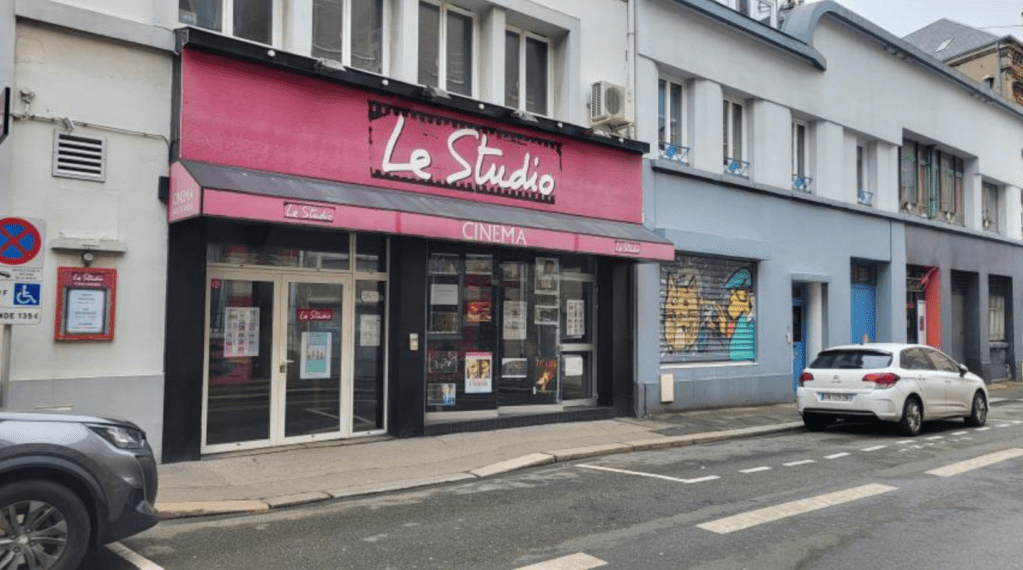
Le Studio: Onwards and Upwards

An interview with David Lheureux

By Rita Zeefal

All photos credited to the author.

Above: a street view of Le Studio

While the beloved cinema d’art et d’essai’s future seemed precarious at the beginning of this year, it has managed an impressive rebound.

“Could you wait ten minutes until the screening is over?” says David Lheureux as we enter the foyer of Le Studio, Le Havre’s best and most beloved cinema d’art et d’essai. We sit down as David prepares to usher in an elderly couple to see Alfred Hitchcock’s The Lady Vanishes (1938). The foyer at Le Studio is immediately beguiling for an institution of its kind: the walls are papered with the printed cards that the enterprise gives to anyone who comes to a screening – with a still from the showcased film on one side and a description and history of the film on the other. One corner boasts a repository of such cards from screenings long past – which anyone can take free of charge. A large table occupies the centre of the room, on which are strewn pamphlets, brochures, and booklets on all things art and cinema at Le Studio and in the city of Le Havre. 

Above: a view of the interior of Le Studio’s lobby.

Fellow Le Dragon Déchaîné reporter Manon Patouillet and I begin our interview with David. His sharp, quizzical expression and steady blue eyes remain fixed on us. 

RZ: Could you tell us a bit about the establishment of Le Studio? Who initiated the project and what was its initial objective?

DL: Well, Le Studio was established in 1999 by Christian Zarifian, a filmmaker, who wanted to establish cinema heritage – the aim was to be able to showcase cinema – the grandes classiques and the history of cinema, but also world cinema and what was not shown on television.

MP: And what is your role at the cinema? How many people work here?

DL: There are about six people who work here – for my part, I play a role in the curation of films, and I oversee the screenings, making sure that we have the rights to show certain films…

RZ: And for how long have you worked here?

DL: I’ve worked here since 2002.

RZ: Wow, so it’s been quite a while [all laugh].

MP: Could you tell us a bit about the legal issues Le Studio was facing earlier this year? We know that a petition was started by an old Sciences Po student from our campus to mobilise support for the cinema.

DL: Indeed, erm, a petition was started by a student from your campus, however we were still able to operate during that time.

RZ: But what was the trouble exactly? 

At this point David’s answers become vague, and he shifts the focus to the role that a Sciences Po student, Elias Cantone, played in bringing attention to the conflict and mobilising local support for the institution to remain open.

From our point of view, the story is this: on the 6th of April, a petition created to ‘save’ Le Studio was shared with the students of Sciences Po’s Le Havre campus. “Sauvegarder Le Studio que nous aimons!” was its cry. The institution’s future looked precarious as two administrative factions fought over control of the cinema monosalle. A resolution of the conflict seemed elusive and the cinema appeared to be at risk of closing for good.

According to reporting done by Paris Normandie on the matter, two parties were at loggerheads over the question of control of Le Studio. One was led by the widow and daughter of the institution’s founder Christian Zarifian, and another led by individuals who have been administering the cinema since its conception, including president Patrick Gravé and treasurer André Fouché. By the time the story was reported on, the conflict had been raging for well over a year. By April 2024, a judicial tribunal was in the process of naming a provisory administrator while the two conflicting parties worked on finding a resolution internally. Once  Le Studio reopened its doors on the 28th of August, Cécile Dür, an administrative official of the Association Les Films Seine Océan, had been named the provisory overseer of its affairs. The cinema reopened its doors to the public after a summer sabbatical on the 28th of August with a screening of Kozaburo Yoshimua’s Night River (1956). 

For now all seems to be well. The optimism expressed by David for the cinema’s coming year is palpable. David proceeds to tell us of the curation of films at Le Studio, its choice to show what is dubbed ‘world cinema’. He casually includes  his matured reflections on the value of such cinema in an artistic sense.

DL: We run a programme that we curate based on a theme, and our programmes run for the entire year, that is to say, from September to June. As you can see we are showcasing a lot of  contemporary Asian cinema. We have Youri Deschamps who comes to present a film every month. We curate a programme for each month of the year. We try to show films by directors with a rather strong sense of aestheticism. Directors that are less known. Youri Deschamps has been doing presentations since 2002, so that’s 22 years. People come here to make discoveries, to see things that they aren’t able to see elsewhere.

MP: And why have you chosen to showcase Asian cinema in particular?

DL: Contemporary Asian cinema? Well… because of the amount of reflection that French films tend to have, we are really caught up with the spoken word, with language… I personally find that it’s sometimes a bit too literary, whereas with Asian cinema there is a sense of the aesthetic that doesn’t come second. It makes for a cinema that is –  bolder,  and harkens back to the true sense of cinema.

To many of us who are regulars at Le Studio, the cinema is more than just a patrimoine institution. The cinema is a portal to worlds far removed by space and time from anything many of us will ever get to know in our lifetimes. And for this fact alone, if not for any other, when we walk out of the inky black darkness of the screening room, we emerge as different people. The cinema is just as much a part of our education in this city as are our weekly seminars and 3-hour lectures. Our only hope is that this experience will be shared by many future generations of students in the city of Le Havre.

Above: an example of the printouts that are handed to every individual who pays to see a film at Le Studio. This film still shows Greta Garbo with John Gilbert.