
by Margherita Greco
Off the western coast of Palawan, beneath the contested waters of the West Philippine Sea, lies one of the Philippines’ most vital energy assets: the Malampaya gas field. Since production began in 2001, it has powered up to 20% of the electricity demand in Luzon, the country’s largest and most populous island. Yet Malampaya is more than an energy source: it has become a flashpoint for debates over economic sovereignty, governance integrity, and the nation’s energy future.
Discovered in the early 1990s, Malampaya was developed to reduce dependence on imported oil. Volatile global fuel prices had long destabilized electricity costs and exposed the economy to external shocks. So, the Filipino government idealized a project that converted the majority of Batangas power plants from oil to natural gas. It would deliver cheaper, cleaner, and more reliable energy—a major industrial milestone that strengthened energy security.
The economic returns were substantial. Over two decades, the field generated more than $12 billion (approximately ₱693 billion) in government revenue through royalties, taxes, and service contracts. Under Presidential Decree 910 in 1976, these funds, “the Malampaya Fund,” were earmarked for energy development and national programs. For a developing country with chronic fiscal constraints, this represented a rare and unique opportunity to convert natural resource wealth into infrastructure and long-term growth.
But governance failures undermined that promise. In 2013, the Supreme Court ruled that presidential use of Malampaya funds for non-energy projects was unconstitutional. A 2017 Commission on Audit report uncovered widespread procedural violations in disbursements totaling tens of billions of pesos. The most notorious scandal involved ₱900 million in typhoon relief funds diverted to fraudulent NGOs linked to pork-barrel operator Janet Lim Napoles. These controversies expose the “resource curse”, occurring when countries rich in natural resources struggle to translate wealth into equitable development due to weak institutions and corruption.
If on a national level this gas field helped the country’s economic development, at the local level, Malampaya’s impact has been uneven. Palawan communities benefited from jobs and infrastructure, yet many residents remain dependent on fishing and tourism, conducting a vulnerable lifestyle to environmental disruption. Offshore gas extraction carries ecological risks: leaks, seabed disturbance and biodiversity loss. While the project maintains a strong safety record, industrial activity in ecologically sensitive waters underscores the tension between economic growth and environmental protection.
Energy inequality further complicates the legacy. Despite powering much of Luzon, millions of Filipinos, especially the rural regions’ inhabitants, still face high electricity costs and unreliable access. The benefits have flowed overwhelmingly to urban and industrial centers, deepening regional disparities. So we should really reflect on this system and question ourselves with a daunting inquiry: who truly benefits from national energy megaprojects?
Today, Malampaya faces decline. Output from its primary reservoir has been dropping, with depletion long projected within this decade. To compensate, the Philippines has increasingly turned to liquefied natural gas (LNG) imports. While LNG stabilizes supply short-term, it reintroduces the vulnerabilities Malampaya was meant to solve: exposure to volatile global prices, dependence on foreign suppliers, and costly infrastructure investments.
In January 2026, the government announced the discovery of 98 billion cubic feet of gas in the nearby Malampaya East-1 field—the first major find in over a decade. The reserve could power millions of households and extend operational life. Yet it highlights deeper vulnerability: new reserves provide temporary relief, not structural energy security.
The web gets even more tangled when considering regional tensions. Malampaya lies near contested South China Sea waters, where territorial tensions intersect with energy exploration. Resource management here ties energy security directly to national sovereignty, embodying a “weapon” for the Filipino government as the control over natural resources always hides deeper implications, going beyond mere technical oversight. Corporate control of Malampaya has been no less troubled. Indeed, when Udenna Corporation purchased Chevron’s 45 percent stake in 2019, the transaction immediately raised questions about technical capability and financial resilience. Subsequent graft allegations confirmed what critics feared: the deal reeked of political favoritism over competence. It was a stark reminder that in the Philippines, even strategic energy infrastructure is vulnerable to the logic of patronage and corruption.
As Malampaya declines, the Philippines faces a broader reckoning. Continued reliance on fossil fuels risks delaying investment in renewables like solar, wind and geothermal power. Given the country’s acute vulnerability to climate change, critics argue that Malampaya revenues should have been deployed more aggressively to finance the transition to sustainable energy systems.
Ultimately, just like every other pivotal element for a country’s growth, Malampaya embodies a series of paradoxes: it strengthens energy independence while exposing governance fragility; it generates vast public revenues while revealing corruption risks; it powers economic growth while reinforcing inequality and environmental tension.
The field’s legacy will be measured not by the gas extracted beneath the seabed, but by how effectively the Philippines used the opportunity it created. Natural resources alone don’t assure development, but they can drive it. Only with transparency, institutional integrity, and long-term planning, natural resources can transform this given opportunity into a measurable beneficiary advantage, otherwise they can deepen dependence and increase socio-economic tensions within the country.
As Malampaya approaches the twilight of its productive life, the nation stands at a crossroads: repeat the cycle of resource-driven vulnerability, or transform its lessons into a foundation for energy resilience, sustainability and equitable growth.
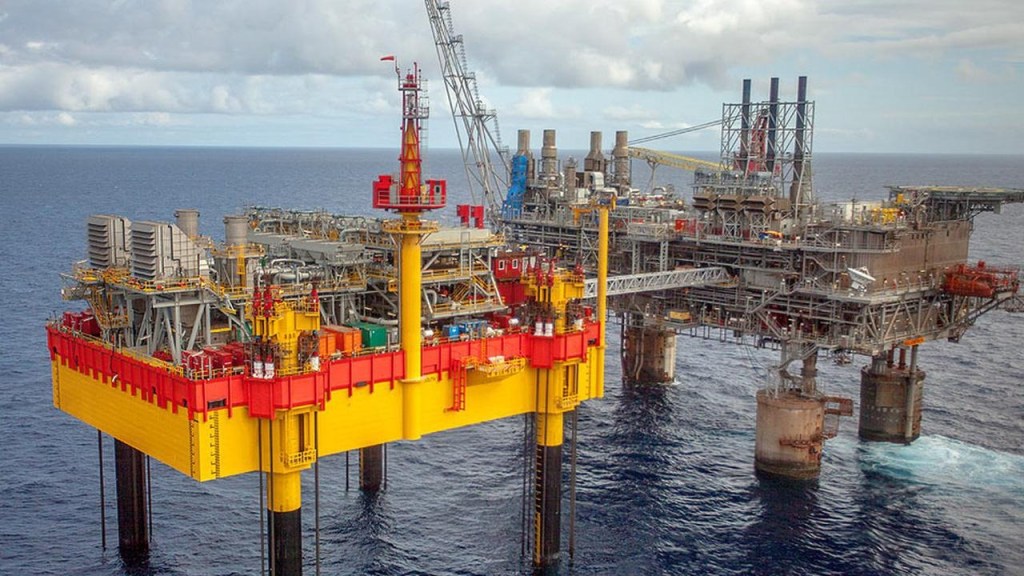
The Malampaya offshore gas platform, West Philippine Sea. Source: NS Energy Business.
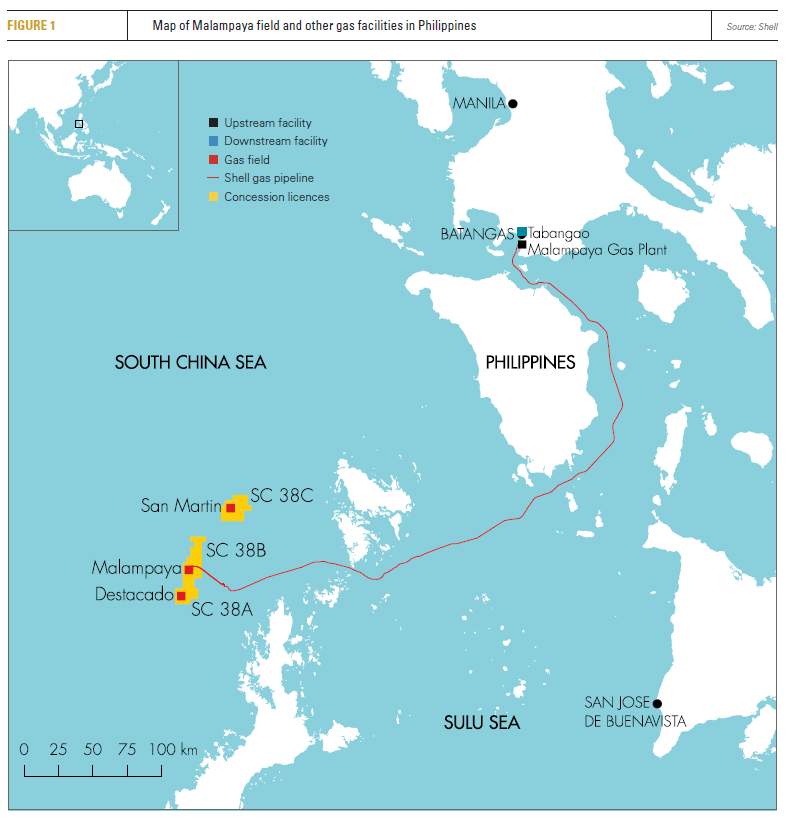
Map of Malampaya field and other gas facilities in the Philippines. Source: Shell
Sources:
Reuters. (2019, October 25). Philippines’ Udenna buys Chevron stake in Malampaya gas project. Reuters.
Philippine Daily Inquirer. (2014, October 12). COA flags misuse of Malampaya funds. Philippine Daily
Department of Energy. (n.d.). Malampaya deep water gas-to-power project. Government of the Philippines. https://www.doe.gov.ph
Supreme Court of the Philippines. (2013). Araullo v. Aquino III: Decision on the use of Malampaya funds. https://sc.judiciary.gov.ph
National Gas Society of India. (2019, September 18). Philippines: Udenna says it is buying Chevron’s stake in Malampaya gas project. https://ngsindia.org/news/philippines-udenna-says-it-is-buying-chevrons-stake-in-malampaya-gas-project/
Commission on Audit. (2017). Audit report on the Malampaya fund disbursements. Government of the Philippines. https://www.coa.gov.ph

 Le Dragon Déchaîné