From Slaughtered to Slaughtering: Asian Golden Triangle

by Giulia Porcu

Southeast Asia is known to be one of the main stages for transnational criminal activities, one so central for the development of this phenomenon over the course of the last decades that readings about its evolution do not surprise anymore. What must, or at least should, spark our interest is the relocation in the Golden Triangle of regional criminal gangs after being cracked down by the governments. Historically known to be a piece of the Mekong’s river bend converging Thailand, Laos and Myanmar, many researchers have recently started to consider an expansion of its borders, relocating its summits in Singapore, Hainan and Bangladesh. Such a subversion and the relocation of its western border in Singapore can be linked back to the development of money laundering hubs in the region, an occurrence which, despite being more prominent everyday, is still questionably marginal in international investigations. If the reader, following the same thought current of the international policies, fails to see the importance of such an event, I suggest thinking of the implementation of the “Corruption, Drug Trafficking and Other Serious Crimes Acts” in Singapore as a visible effect of such hubs where capital from illegal trafficking is directed.     

While Thailand remains the main transit and destination point, drugs are mostly produced in Myanmar as the progression of the civil war creates the perfect conditions for the development of illegal traffics and so-called ‘scam cities’. Scam cities, which started rising on South-East Asia borders before COVID 19, could originally be defined as ‘vices cities’, where casinos and gambling took place everyday despite being illegal in various South-East Asian states. The gradual shift of these cities into centers for online gaming after the pandemic lockdown is grafted on one of the great Asian passions: gambling. Certainly not a recent phenomenon, journalist Julia Wallace in 2011 reported Cambodian gambling even on rain for ‘the Atlantic’: “The rain-betting day is divided into three segments: 6 am to noon, noon to 2 pm, and 2 pm to 6 pm. A bet, starting at $2, yields a pay-out if it rains during the chosen time period. Betting on rain during the typically dry mornings is riskier, but offers a massive payoff. But it’s relatively safe to assume that it will rain before 6 pm at the height of the wet season, so winning bets on the third segment of the day bring in paltry returns”.  Online gaming subtly but surely set the stage for its replacement: extremely sophisticated scams attracting people, who are finally brought to give up all their having, through irrealistic promises which feed this phenomenon. The mini “Burmese Las Vegas” Shwe Kokko, a city of casinos located at the border between Thailand and Myanmar under control by local militias, has become sadly known as one of the essential centres for online gambling, scamming and human trafficking. Due to the tropical weather of the region, it is only logical to understand the attraction that sparkling cities, such as Bangkok, exerts on countless people who are first promised a stable workplace in these vibrant metropolis only to be forcefully but easily, thanks to the efficiency of the infrastructural network, transferred to scamming centers as to scam others. Interestingly, experts have recognized a variation in the behaviours of those subjected to this process: initially victims of human trafficking, after being paid conspicuous salaries and realizing that by being the scammer one has control over another’s life, victims undergo a psychological change which brings them to intentionally perpetuate scams and finally this system.   

Journalists Emanuele Giordana and Pietro Morello, authors of ‘Asia criminale. I nuovi triangoli d’oro tra scam city, armi, droga, pietre preziose ed esseri umani’ have identified three main reasons for the perpetuation of such phenomenon in respect to the general context of scam cities and illegal traffics: firstly the amount of capital employed in South-East Asia, also due to Chinese investments, and its consequent attraction for criminal activities, secondly the little to none space for civil society and open critic in the autocratic states involved and thirdly war, more specifically the Burmese one. The latter has brought several alliances between ethnic groups opposing the central government, leading to the constitution of narcostates fed by opium and methamphetamine production which shower not only South-East Asia but Bangladesh, India and the United States as well. The United Nations in 2025 reported a record amount of methamphetamine seizures in East and Southeast Asia, totaling 236 tons, marking a 24 per cent increase compared to 2023. “The 236 tons represent only the amount seized; much more methamphetamine is actually reaching the market,” said Benedikt Hofmann, UNODC Acting Regional Representative for Southeast Asia and the Pacific. “While these seizures reflect, in part, successful law enforcement efforts, we are clearly seeing unprecedented levels of methamphetamine production and trafficking from the Golden Triangle, in particular Shan State.”

It leads that an incredibly conspicuous capital is produced, eventually feeding scam cities, financial speculations and real-estate investments consequently freezing South-East Asia in a bubble of money’s recirclement and criminal activities’s superimposition. Overall, these three factors have come together during an extremely flourishing period for the region, creating the perfect ecosystem for the diffusion of criminality on a large scale.

Finally, the current importance of Southeast Asia, hence of the Golden Triangle, is strictly connected to its strategic location, which makes it a critical actor in international trades. Bridging major economies such as China, India, and Australia, the region is an indispensable hub for maritime activity. Several criminal activities are carried out and overlap in these waters just as they do on the mainland: piracy against ships carrying goods to Russia and Northern Korea to avoid sanctions, human trafficking and environmental crimes which generate a turnover of billions of dollars. Lastly the South China Sea, inside the Golden Triangle, is the focal point where a hypothetical third world war could occur. 

Recent failures in the dismantling of these networks highlight the long-lasting role that the Golden Triangle will most probably continue to play as a crucial hotspot in global drug production, trade and as a haven for transnational criminal organizations. Involving many different actors, legal, illegal and in-between ones, and given that often local players are seen as perfectly respectable businesspeople or government officials in their home countries, this transnational criminality needs to be treated as shared responsibility, with collaboration and cooperation between states. “The organized crime trafficking organizations look for chaos, the lack of governance, porous borders, and this they can find in parts of the Golden Triangle. So really, it’s an organized crime haven.” stated Jeremy Douglas, the Regional Representative of the UN Office on Drugs and Crime (UNODC) for Southeast Asia and the Pacific, on a mission to the border area. China and the US, among other states, ought to set aside their differences to support a regional initiative, and address what could be seen as a ‘non-traditional security issue’ ; were they refuse to do so, the flourishing of the Golden Asia Triangle would implicate global irreversible consequences.

The War in Ukraine: Ending the European Illusion of Peace

by Yeva Murova

In many European cities, the sound of a helicopter means little more than routine patrols or training flights. In Ukraine, helicopters only appear over cities after rocket strikes, often in operations to clear the city or search for people. These are two different realities. One is Europe, where people still keep talking about peace. The other is Ukraine, where they have learned the real price of losing it.

Following both the Second World War and the Cold War, many European leaders believed that a long-term international order would finally prevail. However, Russia’s full-scale invasion in 2022 shattered this assumption, forcing Europe to rethink its ability to defend itself. Today, it is almost impossible to believe that peace is the natural order of things. It now has to be maintained, defended  and, if necessary, fought for.

The new European defense agenda

The most evident changes within the European Union (EU) have been in security policy. After decades of underfunding, many EU countries have begun to strengthen their armed forces. The EU’s total military spending rose by close to 37 percent from 2021 through 2024. At the Versailles Summit in March 2022, EU leaders agreed to “spend more and better on defense”(Council on Foreign Relations). They later supported that idea with a new EU security roadmap, the Strategic Compass. Eventually, defense had become such a priority that by 2024, the EU appointed its first-ever commissioner for defense and enacted laws to boost ammunition production and joint procurement of weapons.

Speaking of collective security, the war also contributed to NATO’s consolidation. One of the most unexpected outcomes was the decision of Finland and Sweden to abandon neutrality, realizing that it no longer offered real protection. In Sweden, a solid majority in parliament supported a “NATO option” even before the invasion, and once the war began, both the public and the government united behind joining the alliance (Sagamore Institute). Europeans witnessed the Russian invasion and realized that they would be safer under NATO protection than outside it. NATO, which many once considered outdated, suddenly became politically relevant again. Poland, for example, increased its defense budget to 4 percent of its GDP, making it one of the highest in the alliance (Reuters). Even governments in Western Europe, which once viewed military power skeptically, began sending troops to NATO’s eastern flank and investing in advanced technologies. The old belief of diplomacy by itself holding back aggressors like Putin feels totally outdated these days. All of this shows that Europe is finally treating defense as a real part of its collective purpose.

From dependency to resilience

But military hardware is only part of the story. The understanding of security itself has expanded. Energy used to be seen primarily through the lens of climate targets and economic planning. Gas was just a resource, nothing more. Post-2022, any illusion that Russia was a “reliable partner” collapsed overnight. The real shock came when the Kremlin cut off the gas to make its point. That was the moment Europe realized that they cannot talk about peace if their energy lifeline is controlled by someone willing to weaponize it. The EU has made some pretty impressive energy changes in the past two years. Countries moved quickly to find new suppliers, reduce gas consumption and form strategic partnerships to ensure they are no longer as vulnerable as before.
Already in 2023, gas imports from Russia decreased significantly. By the third quarter of 2023, Russia’s share in EU oil imports had dropped to 3.9 percent and coal imports from it reached zero (EU Council). Overall, Europe supported the accelerated transition to green energy sources, and countries also turned to alternative suppliers including Norway, the United States and Azerbaijan. Critical infrastructure such as pipelines and networks is now considered a strategic asset.

Failing systems, new responsibilities

The war in Ukraine also exposed the deep dysfunction of international institutions that were once seen as guarantors of peace. The United Nations was established primarily to prevent wars from occurring. Yet it showed itself incapable of responding to Russia’s military moves. As a permanent member of the Security Council, Russia used its veto to block even the most modest resolutions (AP News). This failure shook Europe’s trust in the post-1945 collective security system and intensified calls for reform.

European Council President Charles Michel told the UN General Assembly in 2022 that the “use of the veto should be the exception, but it is becoming the rule. Reform is needed, as a matter of urgency.” He even proposed that if a permanent member of the Security Council unleashes an unprovoked war and is condemned by the UN General Assembly, they should be automatically suspended from the council itself. At first glance, this idea might seem quite radical. Nevertheless, given the current situation, it becomes difficult to overlook the reasoning that supports it. This points to the increasing frustration with institutions formed after the war. It also highlights that even peacekeeping systems can be stalled by the states they were built to keep in check.

These institutional failures reinforced another idea: Europe must be able to act independently when others cannot. NATO remains central, but so too does the development of a more cohesive and capable European security policy. The EU’s Strategic Compass, adopted in 2022, marked a shift from theory to planning, committing to the establishment of a rapid deployment capacity and greater defense coordination. A union like this one has long hesitated on anything too military-focused. The Compass signaled a deep adjustment in their overall stance.

Europe has, in a way, woken up. The war in Ukraine drove home the point that peace does not come on its own. It demands real effort from everyone involved. It means being alert, staying engaged and sometimes standing up directly to threats. Peacefulness is no longer seen as a distant ideal but as something that demands real responsibility and constant effort. What counts most is the resolve to defend what truly matters.

You can hear that change in the skies above Kyiv and maybe, faintly, across the rest of Europe too. Helicopters continue passing overhead in Kyiv, but their noise now carries a different weight. For people who endured the war, that sound will forever hold new layers of meaning. And for the rest of Europe, it is a quiet signal that peace and war are no longer separate stories — they are chapters of the same one.

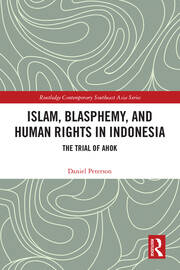
Navigating Solidarity and Strategy: Daniel Peterson’s Lecture on Indonesia’s Support for Palestine

By Carmen Leong

Just over a year ago, nearly two million people gathered in the central Freedom Square of Jakarta, waving enormous flags in a spectacle of red and white, but also green and black. They were rallying to express solidarity with Palestine, in light of the war on Gaza that had devastated the state and slaughtered thousands. It was one of the most significant protests for Palestinian resistance in Southeast Asia, said regional law and politics scholar Daniel Peterson. Our campus had had the privilege of inviting him to give a lecture on Indonesia and the Palestinian cause at lunchtime on 28 January, in which he outlined the principles and narratives driving Indonesia’s support of this vastly distant state.

Indonesian support for Palestine stems from its own history of anti-colonial resistance and humanitarian principles – the latter of which is stated explicitly in its Pancasila state philosophy. But the massive scale of mobilisation for Palestine in the country can perhaps best be attributed to the sentiment of Islamic solidarity resonating among its people for their brothers and sisters across an ocean. The significance of this relationship can be traced back to the 1955 Bandung Conference; it not only secured Indonesia’s political presence on the international stage, but also marked the country’s diplomatic and moral pledge to Palestine. Although some dissent exists – for instance, a 2017 BBC World Service poll recorded that 9% of Indonesian survey respondents view Israel positively – most Indonesians take a pro-Palestinian stance, motivating the Indonesian government to do the same. For instance, Indonesia has refused to entertain Israel during international sporting events, most recently with Indonesia being stripped of its hosting duty for the FIFA Under-20 World Cup due to concerns over whether the Israeli team could compete there without disruption. Even so, some critics have argued that Indonesia can do more to ally itself with the Palestinian struggle; even if geographical distance and limited military power restricts its ability to intervene directly in the conflict, Indonesia can welcome Palestinian refugees. At this point, Peterson paused and directed the question at our audience: do we think Indonesia will welcome Palestinian refugees?

Image Credits: Melbourne Law School, Routledge Contemporary Southeast Asia Series

As LDD’s newspaper correspondent, I was lucky enough to catch him for an interview later that day, during which I asked his opinion on the very same question. His answer: it’s highly unlikely. There is firstly the argument that accepting Palestinian refugees is counterintuitive to the greater struggle; when refuting reports of Trump’s plan to relocate Palestinians in Gaza to Indonesia, the Indonesian Ministry of Foreign Affairs asserted that “any attempts to displace or remove Gaza’s residents is entirely unacceptable”, since “such efforts to depopulate Gaza would only serve to perpetuate the illegal Israeli occupation of Palestinian territory and align with broader strategies aimed at expelling Palestinians from Gaza.” Secondly, Indonesia has not had the best track record for taking in refugees, with Rohingya from Myanmar facing hostile pushback from local communities when arriving on Indonesian shores in recent years, due to fears of competition over scarce resources and an increase in crime and inter-ethnic conflicts. 

Evidently, the Indonesian government must carefully take into account its domestic situation prior to undertaking any intervention in the Israel-Palestinian conflict. This could explain its continued reluctance to use the word “genocide” to describe Israel’s actions against Palestine – a point that Peterson brought up in response to a student’s question during the Q&A segment of his lecture. Given Indonesia’s own violent history, such as the 1965-66 massacres of members of the Indonesian Communist Party (although the anti-Chinese sentiment behind this event has been refuted by some scholars as a myth), it may not be politically expedient to directly accuse Israel of “genocide”, since the definition of the word also varies and genocidal intentions are difficult to establish. That said, the Minister of Foreign Affairs has arguably asserted the same sentiment, by stating that “Israel’s ultimate goal [is] to wipe Palestine from the world map.”

In light of Indonesia’s steadfast, justice-oriented stance against Israel in the ongoing dispute, some may question why it has not adopted a similar position against China, especially considering the allegations against the latter of being complicit in the persecution of ethnic Uyghur minorities in Xinjiang. To this, Peterson points to Indonesia’s significant economic dependence on China. Just recently in November 2024, Indonesia signed $10 billion in deals with China; it is also the highest recipient of Official Development Assistance (ODA) and loans from China among Southeast Asian countries. In contrast to Israel, with whom Indonesia has minimal economic ties, China holds far greater influence over Indonesia’s economy, requiring the country to carefully balance its stance on human rights with the need to cultivate favorable relations for economic and development purposes.

Daniel Peterson’s lecture provided me – and, I’m sure, many other students – with a deeper understanding of how cross-border movements shape international relations. I now have a greater appreciation for how governments must carefully consider their own internal tensions and domestic situation before formulating foreign diplomatic strategies, particularly in the case of Indonesia’s approach to the Israel-Palestinian conflict. Our team at LDD would like to express our gratitude to Dr. Peterson for taking the time to participate in the interview, and we hope that this article offers valuable insights to those students who were unable to attend the lecture.

Climbing the Value Chain: Africa’s Quest for Prosperity

By Fyodor Dmitrenko

We would like to thank the Warwick Economics Summit and WESJournal for granting Fyodor special access as a WES 2025 student journalist which enabled him to write this article.

At the recent Warwick Economics Summit, Kevin Chika Urama (Chief Economist at the African Development Bank Group) and David Omojomolo (Capital Economics’ Emerging Markets Economist) introduced me to the idea that African nations should seek to move up the global value chain. Unsurprisingly, this sparked a series of interesting questions that took me down a rabbit hole – what is a global value chain, why are African countries on the lower stages of the value chain in the first place, what measures can be used to increase the value-added, and how effective would moving up the value chain be in terms of delivering promised prosperity to Africans? 

Tackling the first question, according to the 2001 International Development Research Center (IDRC) report, “the value chain describes the full range of activities which are required to bring a product or service from conception, through the different phases of production…, delivery to final consumers, and final disposal after use,” with the global value chain simply distributing these activities across various countries.

Delving deeper into the concept, I discovered that 45 of Africa’s 54 countries remain dependent on exports of primary products in the agricultural, mining and extractive industries. This makes these African economies extremely primary sector-dependent, or in other words, in the early stages of the value chain. Mr. Omojomolo highlighted this high figure during the WES conference as most of the value added occurs outside of African economies, thereby significantly limiting the continent’s development potential as the incomes generated at this stage of the global value chain, and therefore the concurrent benefits, are comparatively low.

An infamous example of this has been the mining of lithium in the Democratic Republic of Congo, where some miners earn as little as $3.50 a day. The material they mine is exported to developed economies like China to be processed into lithium-ion batteries, a critical component for the manufacture of high-end products like electric vehicles e.g., Teslas whose cheapest car model with minimal furnishings costs approximately $35,000, a far cry from the pocket change paid to the miners back in Africa. 

A key reason for this present trend is the colonial legacy of the African continent. Historians like Waltner Rodney have argued through books like “How Europe Underdeveloped Africa” that African colonial economies were built around an extractivist economic model. This involved the export of natural resources to a colonial overlord, including infrastructure such as railways to carry resources to ports to be exported, administrative structures to manage this process, and law enforcement to crack down on anyone who would oppose this economic model.

Other factors also play a role in this trend of commodity export dependency such as poor investment climates. These limit the capacity of economies to move into other sectors of production due to their inability to make relevant capital investments and their comparatively limited human capital. As Mr Urama put it, African administrations feel like they are effectively “subsidising” the economies of other countries due to brain drain when they make significant investments in education, as skilled workers emigrate in search of better jobs. This causes African countries to “continue to export raw materials instead of improving the technology value added in those materials.”

Despite these difficulties, there is nonetheless an increasing trend of African countries and private stakeholders in these economies attempting to move up the value chain to reap the resulting benefits. 

For example, despite the risk of brain drain, African institutions have realised that the labour force still needs to develop skills that would allow them to work in more specialised and better-paying fields. They are pushing policies of human capital development forward both unilaterally e.g., the creation of universities like Morocco’s Mohammed VI Polytechnic University inaugurated in 2017, as well as multilaterally e.g., the African Union’s Skills Initiative for Africa (SIFA) which finances skills development initiatives in pilot member states. 

Another policy has been the development of modern infrastructure to support the development of more sophisticated industries which can consequently add value. For example, due to advancements in African telecom networks, 4G is expected to surpass 3G as the primary technology in the region – a significant shift given the importance of quality telecom coverage to competitiveness in the modern tertiary sector.

More broadly, regional organisations such as the East African Community (EAC), the Economic Community of West African States (ECOWAS), and multilateral agreements such as the Common Market for Eastern and Southern Africa (COMESA) among others have promoted the lowering of trade barriers between African states. This helps to reduce dependence on foreign markets and develop economies of scale for local producers, aiding them to grow similarly to the manufacturing sector in the EU.

The largest of these Free Trade Areas (FTAs) – the African Continental Free Trade Area (AfCFTA) – was developed by the African Union in 2018, but will take several years to fully take effect after being signed by 54 countries and ratified by 47. It plans to reduce tariffs by up to 90% on all goods, expecting to “increase Africa’s exports by $560 billion, mostly in manufacturing” according to a 2020 report by the World Bank.

However, moving up the value chain is not guaranteed to ensure prosperity for all Africans. Building on Mr. Urama’s emphasis on the uneven growth in incomes globally during his speech at the Warwick Economics Summit, income growth and wealth accumulation in Africa, as a result of climbing the value chain, have developed in a lopsided manner. The current richest 10% of Sub-Saharan Africa’s population holds approximately 56% of the total income generated according to a 2023 study done by the World Inequality Database. This suggests that the benefits from domestic value production are reaped by a select few. 

Nor would inequality be purely based on class. Despite programs by national and multilateral institutions to promote gender equality in the economy, such as the African Women Rising Initiative (AWRI) funded by the European Investment Bank to increase access to finance for female small business owners in the region, the benefits gained still appear to be concentrated in the hands of men. The economic parity indicator in fact declined from “61% in 2019 to 58.2% in 2023.

In other words, while climbing the value chain is clearly vital for economies in the African continent to achieve the “economic convergence” that Mr. Urama emphasised in his speech during WES 2025, much more still needs to be done to make this process an inclusive one. This will be achieved not just by including African economies in higher tiers of the global value chain, thereby driving convergence between them and leading economies like “China, India, and South Korea”, but also by expanding access to the resulting benefits within African economies themselves to drive an economic convergence between economically disenfranchised groups e.g., women and ethnic minorities, and the present economic elites.

Masculism

by Lu Ann Pade

On the 23rd of May 2014, 22-year-old Elliot Roger killed six people in a shooting and stabbing rampage in Isla Vista, California, before ending his own life by directing his gun at himself and dying from a gunshot wound to the head. Roger, having lived his life as the son of an affluent filmmaker, foreshadowed his crime by distributing a 141-page document detailing his frustrations at his involuntary celibacy to the dozen people closest to him via email just hours before he embarked on his murder spree. He then uploaded a “retribution” video to YouTube in which he complained about never having been the object of female attention, never having even kissed a girl. Then the violence began. While working on this piece on masculinism, I was led to ask myself: how has masculinism metastasised into the dangerous, misogynistic and degrading ideology of people like Elliot Roger? How has  this term come to  embody these characteristics? This article does not aim to cover all of the implications of topics relating to incel culture and sexism. It seeks rather to take a look at some possible explanations for the emergence of masculinism as it exists in its current form.

Masculinism can be characterised as a reactionary and conservative counter-movement to feminism. It can be interpreted as a response to the “masculinity crisis” the followers of this doctrine consider society to be facing, particularly in the second half of the 20th century. At a time during which the two movements coincide, the claims of masculinists  are multiple : feminism  denies the masculinity of men (even worse, it tries to invert the pre-installed hierarchy and  place women above men in the social hierarchy) and it is one of their missions to prevent this from happening. The masculinists want to promote “masculine” attributes, and they are in favour of a co-decision of abortion, as well as more favourable conditions in cases of divorce. 

Identity, hierarchy, and recruits

Considering the roots of masculinism, we come to understand that even if the movement experienced an incredible growth during the past decade, it is not new and is thus the result of an ongoing identity crisis. Masculinists have  decided, in the wake of their proclaimed crisis,  to adopt a language based on the hierarchy between men and women so as to better cement the identity of each in today’s social media-dominated context. Red Pill , Blue Pill , Alpha , Sigma,  are all terms that those familiar with the manosphere will know all too well. This language allows masculinists to differentiate between those who are part of the  awoken  and those who are not. The main adherents to  this ideology thus end up being young men who seek to create a masculine identity among others with the same aims, in echo chambers dominated by self-reinforcing masculinist norms. In this way, masculinist circles have become less and less accessible to the general public, and as such less capable of being understood, questioned, and challenged.

Masculinity at risk

The rise of masculinism – as we have already discussed — is mainly due to the empowerment of women since the advent of the second wave of feminism. Masculinists’ reasoning is that, because feminism and feminists exist, there exists a need for a counter-movement, a response. Here lies the fragility inherent to this stream of thought: it exists only through the prism of feminism (the definition of masculinism in itself often refers to its anti-feminist oriented actions). However, paradoxically, because masculinism is neither independent nor the fruit of something fundamentally new or different (men were not deprived of their rights in favour of women, while feminists asked for rights to rule over their own bodies), it becomes increasingly difficult for  masculinists to feel like they are  a part of something new, revolutionary, important – elements which were crucial to the staying power of movements with a major importance in history.

Is femininity to feminism what masculinity is to masculinism?

The androcentric character of masculinism places the protection of masculinity, attributes, and behaviours biologically or socially constructed to characterise men, at the centre of their concerns. The strand of masculism that grew prominent in the 1970s and 80s posited that feminism (and, in general, all movements in favour of the emancipation of women) aimed to put masculinity at risk . It thus followed that, in order to protect men and their identity, the essential  characteristics of masculinity  needed to be protected and reinforced. This is why the primacy of masculinity in masculinism is not comparable to the placement of  femininity in feminism. While feminism adopts a more individually-based construction of identity following the aims of the movement, masculinism’s aim is the construction of a new identity: the “better self” which is what a man supposedly becomes when he incorporates more masculine traits and behaviours, and adheres to the masculinist movement.

Masculinism, although widely contested since its initial waves, continues to spread and mutate with the help of multiple social media platforms where its spokespeople share “motivational for men” content aimed at empowering men to succeed in what they claim is a  ”gynocentric world”. The elements developed in this article are not intended to depict feminism as the “right choice” (feminism has failed on many occasions to represent all its members, particularly in cases of intersectionality), but rather to explore and explain the most topical discourse around  masculinism. These relatively varied reasons are increasingly being put forward and pointed to in order to raise awareness of the danger of certain movements and the behaviours associated with them.