From a Hong Konger: What we want, and why should you side with us.

Following yesterday’s forum on the Hong Kong protests, Marco Law writes a compelling personal piece about his identity and demands.

Source: Fung Kin Fan

When filling in immigration forms, I always had some hesitations when asked for my nationality. My passport, and all other Hong Kong passports, have “Chinese” imprinted on it by default. So Chinese is the official answer. Yet when people ask me where I’m from, I always say “Hong Kong”. There is no doubt that I am technically a Chinese citizen, but I simply do not feel like I am of the same nation as my fellow Chinese compatriots from the mainland. It’s complicated. We say we are from Hong Kong instead of China, but we also refer to ourselves as Chinese instead of Hong Kongese, or whatever the word should be. Hong Kong is not the same as mainland China, but most of us also do not consider independence from China to be a justified cause. So what is Hong Kong, and how should we categorize the people in it?

These questions on the identity of Hong Kong weren’t important for the majority of our past history. Since our establishment as a British colony, Hong Kong was just a place where people come to pursue a better life. Western colonists came for economic profit, whilst Chinese migrants came in various waves simply to seek a better life from a chaotic mainland, with their identity still firmly Chinese. The millions who lived in Hong Kong identified themselves with the nation they were from, not the territory they are living in. Then we were handed back to China without any consultation of the Hong Kong people, purely as part of a deal between London and Beijing, bypassing the biggest stakeholder in it all. The deprivation of self-determination didn’t matter, the Chinese promises of “one country, two systems” looked good enough to continue our economic prosperity, and those who didn’t believe emigrated. Until quite recently we were happy to witness the rise of China, cheering for Chinese achievements in space, in sports and in infrastructure.

These affectionate sentiments to China turned to anger and resentment by the time of these Anti-Extradition Law protests. The original trigger of the protests was the mistrust on the mainland judicial system, which was known to be corrupt, and has been openly declared as a system which prioritized the interests of the communist party. The bill to allow extradition to the mainland hit the most common and profound fear of the people of Hong Kong – that Hong Kong would be integrated socially to the mainland. There is little dispute that we prefer the rule of law, protection of fundamental rights and freedoms which still somewhat exist in Hong Kong, to the communist authoritarian regime reigning over the mainland. A new common value of the people of Hong Kong has thus been born, to defend the territory against further ‘mainlandization’. The Chinese identity is no longer fully applicable, because a core part of the Hong Kong identity is being different to mainland China. We are not the same as the Chinese, because we will not succumb to an authoritarian regime. Some people, therefore, have begun referring to the people of Hong Kong as “Hong Kongers”, to liberate us from the tag of “Chinese”, recognizing our uniqueness. Our allegiance no longer lies with any overarching sovereign, but purely to the good of the territory. I am a Hong Konger, and we are fighting for the future of our beloved home.

The Anti-Extradition Law Amendment Bill protests started out as protests against a very specific political issue, being the bill that gave the movement its name. It has since clearly grown into a general protest against the political status quo of Hong Kong, which translates to a desperate struggle to retain our rule of law and autonomy from China. Yes, social and economic problems exist in Hong Kong, but they were never the cause nor the aim of the movement. Since the early days of the movement, there has always been only the five demands (and not one less) that are the common goals of the movement. For those of you not familiar, they are: 1) Compete withdrawal of the extradition bill, which has been the only one promised by the government for now; 2) Form an independent inquiry commission with legal powers to investigate police brutality; 3) Retract the characterisation of the 12th June protests as ‘riots’; 4) Release and grant amnesty to protesters arrested during the movement; 5) Immediately implement real universal suffrage for both the Chief Executive and Legislative Council elections.

Whilst the government tries to blame the protests on other factors, such as frustration by the youth on housing prices and foreign interference, I am certain that none of the protesters took to the streets driven by anything else than the five demands. No matter how the government spins it, or tries to have ‘dialogue’ with Hong Kongers, there is only one way to calm the protesters, which is to concede on all five demands. For the casual bystander, this may seem too much of an ask. “Politics is about compromise”; “why demand universal suffrage when you know well that Beijing will not approve?”; “the extradition bill has been withdrawn, don’t be too greedy”. What these people don’t understand, is that the five demands are in essence the bare minimum that Hong Kongers can ask for to safeguard the future of our city. How can we compromise if we cannot make our police forces accountable for their illegal acts? How can we believe autonomy of the city can be guaranteed if Beijing can still pick and choose whichever candidates it likes? Anything less than the five demands will mean that the movement has failed and we have failed to protect Hong Kong in the way we would like it to be. Yes, this sounds like a tough ask, but what the political reality is does not equate to what the reality should be. Just because Beijing won’t allow free elections, does not mean we should not fight for it. There are values that Hong Kongers will defend regardless of the political reality, in this case being our freedom, rule of law and democracy. We may fail, but the result of the movement does not make these claims any less legitimate.

You may also criticize protesters for overusing violence, for wrongly beating people up , and ask both sides to “calm down”. I do not blame you for thinking this way, as many of you may have done the same in the case of the gilets jaunes. Yet this misses that fact that Hong Kongers are left with no choice. We tried peaceful protests. We only held peaceful marches for the first 17 years after the handover. We chose the peaceful method of occupying roads during the Umbrella Movement. We started this very movement with two big peaceful rallies of 1.03 million and 2 million people out of a population of 7 million. Nothing changed. In fact, we witnessed the gradual decrease in autonomy despite constant public resentment against it. Responding to the 1.03 million who demanded the extradition withdrawn, our Chief Executive purely responded “we will continue the second reading of the bill on Wednesday”. “You taught us peaceful marches don’t work”, is what the protesters sadly pointed out. You can blame the gilets jaunes for destroying public property, because they could’ve simply voted against Macron to get rid of him (yes, it’s a long time away, and it’s not so straightforward, but still it’s absolutely possible). For us Hong Kongers who have had enough of Carrie Lam, there is no way we can take her down. The only thing that decides whether she gets to keep the job is Beijing’s blessing. So, when peaceful marches and public outcries are neglected, what other methods are there to make the government listen than to escalate the violence? Yes, not every act of the protesters have been fully morally acceptable, to which I ask for your understanding. If you are simply looking to condemn violence of any kind, I recommend that you look first to the police and pro-government gangsters, whose violence was directly aimed at physically hurting protesters. Whilst thousands of protesters have already been arrested, not one police officer has been made accountable for their brutality, and the pro-government gangsters have been subject to clearly disproportionate degrees of tolerance from the prosecution. The protesters are violent, but it is a false equivocation to say they are just as violent as the other side. You cannot also expect perfect morality and EQ from a bunch of protesters suffering from fatigue, injustice and immense anger on a daily basis. These people understand very well the possible consequences of imprisonment or even death when they stand on the streets, and know this is not child’s play, yet they are willing to sacrifice for the belief that their actions are necessary to save our city. Regardless of what the protesters do, I will still treat them as fellow protesters of the same cause. Regardless what violence occurs, the movement and its aims remain as legitimate as ever.

As the movement faces unprecedented suppression from the government, I have also oddly gained my hope in the future of the city. This is the best of times, this is the worst of times. Our government and police force is turning the city into a police state like never before, but Hong Kongers are also united in both our cause and identity like never before. The movement has done wonders to consolidate our identity as uniquely a Hong Konger, and has given us a common history and value. When listening to “Glory to Hong Kong”, the anthem of the protest, I finally understood what it was like for athletes to stand on their sport’s greatest stage, and burst into tears when hearing their national anthem, a song that is part of their identity and pride. This connection never happened between the Chinese “March of the Volunteers” and I. That was more like a formality. Yet “Glory to Hong Kong” inscribed the very beliefs than define me as a person. “Freedom and liberty belong to this land, may glory be to Hong Kong”. Some may argue this carries a pro-independence sentiment, to which I do not disagree, but would claim that Hong Kong’s independence as a sovereign state is unlikely and not an aim of the movement. What this signifies instead is the spiritual formation of Hong Kongers into a nation, with a fundamentally different identity than the Chinese. The nation of Hong Kong will neither be defined by race or territory, but will solely root from the aspirations of freedom and democracy, for our beloved city to prosper. Even if all else fails, the movement would still have contributed to the process of nation-building in Hong Kong. Hong Kongers, for the first time in history, attempt to break free from our classification as “Chinese” or “British colonial subjects”.

Living in a state that prides itself with freedom and liberty in its blood, I urge you all to remember that whilst we are currently enjoying the fruits of a free and democratic society, this is not a given in all parts of the world. The people of Hong Kong are fighting to defend the little autonomy we have from the biggest authoritarian regime of our era, and the least you can do is to empathize the cause.

This article does not necessarily represent the views of the editors or Sciences Po.

The City With Red Doors

[From the print] Our correspondent relates the experience of an anonymous prostitute on the streets of Kolkata.

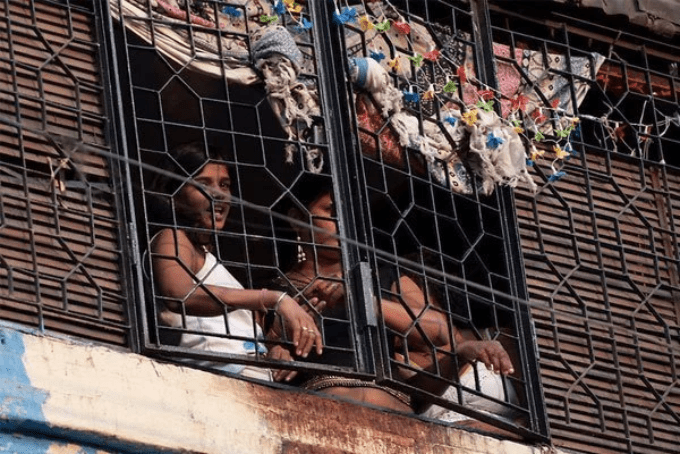
Source: Sandra Hoyn

Society has always viewed prostitution as a universal evil and the people associated with it are vessels that harbour an unimaginable form of sin. Society has certain names for us, names that are meant to demean, for the purpose to abuse and shame. People in the sex industry can never escape the tag of their profession, I often feel as if there was a tilak (mark) on my forehead. Everyone I know, knows who I am and what I do. Most of them do not know my name but that does not matter because to them, I am a whore.

I was named after the Hindu Goddess of Wealth, Lakshmi. In the dichotomous framework that India finds itself in, Lakshmi was both a goddess said to bring prosperity and fortune and a prostitute with broken dreams and nowhere to go. Amma, the woman whom I was sold to by my trafficker refused to have one of her ‘girls’ be called after a goddess, whose legs were open like one of Lakshmi’s lotuses. Amma was a pious woman and her tolerance towards blasphemy, freedom, and justice was an incontestable nil.

For years, the only escape, I had was my tiny window with an ineffective mosquito net and broken dreams. I would take refuge in the dream of going back to my village but quickly shook away the thought. I was one of them, a whore, a sex worker. My village would never accept someone with that label.

So, eventually Lakshmi was forgotten and Munni was born. There were three other Munni’s where I worked. They all probably had stories similar to mine but we never asked one another. Our name had no character, no significance, a perfect fit for the profession. A prostitute was a person with no stories, to be used as an object to please and fulfil fantasies. If my client replaced my name with another, it did not affect me. I was an artificial host of the dirty and unmentionable, who was less than the rest and society had chosen her to be the sacrifice of its community.

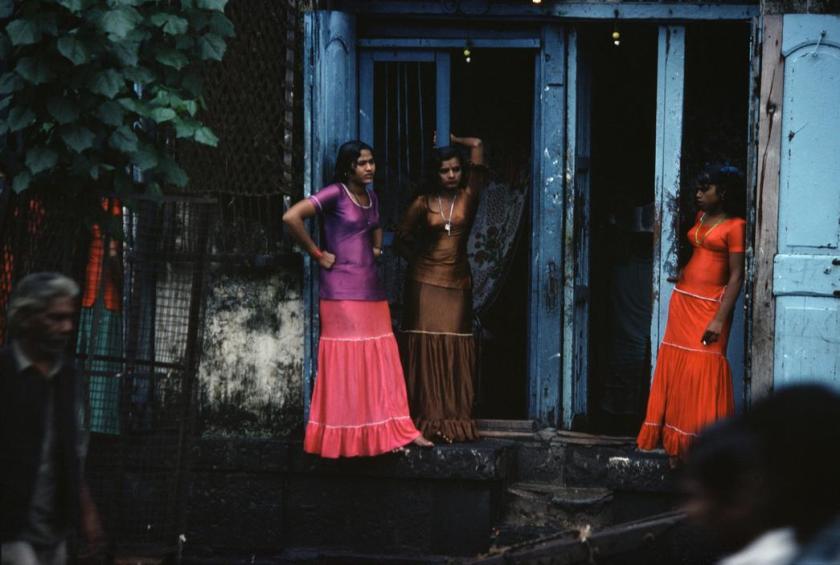
Source: Bernard Henin

The words used to describe my kind are considered vulgar and offensive in almost every spoken language in the world. From Bengali to English, prostitution has negative connotations. My profession itself was an offence. A whore, slut, prostitute, hooker are words that are meant to bring shame to the person who is called one. Language, often provides, a good insight on society. For instance, the tone and language used for prostitution tells you just what the community feels about it: filthy and immoral. When one joins my former profession, it is near impossible to escape from its clutches. Where do we go? Everywhere we try to run or hide and all they can see is a woman who has lost her morality and ergo her identity. If you were to go to any sex worker their thoughts or educate them on societal labels. They would laugh at how little the world knows. How little the world knows and how much the world hides. The slurs that were thrown at me stopped bothering me after a while because they had helped erase all that made me human.

Source: Prateek Jain

The Sonagachi red-light district in Kolkata, my former home was and still is a favourite amongst men, the kind that always had narcotics with them and greeted us with slurs. It was also the home to men who had large bungalows in the affluent localities of Alipore and Park Street . They were awful, they saw me as nothing more than the products of their sick twisted fantasies. These men were responsible for Sonagachi’s prosperity but refused to acknowledge their acquaintance with the place. Sonagachi is known for a lot of things in the city of Calcutta but it is most certainly not known for its justice. The Government of India has failed miserably to rehabilitate sex workers. The promised voter cards have been given but we can’t do anything. The powerless do not give the powerful power, it is taken away from us. Sonagachi is a label that never goes away. Your identity revolves around it and society only fixates on that.

Yama, the Hindu God of Justice, was always a busy person and rumours spread that he had a bigger disdain for prostitutes than the society we lived in. We never saw him, he had become a myth, a legend, that would help us fall asleep but he never showed up. The police, the ‘protectors of justice’, turned out to be regular customers. So, as quickly as we had thought of Yama, he had given up on us and we were once again alone and still whores.

After all these years, it is very easy to vouch that a life of a prostitute in India can never truly escape the experiences of physical and mental displacement, feeling unrooted, and unlearning and relearning their identities. A prostitute can never forget staring at another sex worker’s eyes because the lifelessness of her eyes mirrors hers. One learns the truly understands society when one works in an industry that feeds on exploitation. Even when you have escaped the label, the profession, you can never forget the language and its meaning. Society and taboo, both do not believe in a fair trial. A name is enough.

This letter is in no means for sympathy but serves as a reflection on Indian society. The pride that we hold so close to us about the balance of the ancient and the modern is nothing more than a nicely wrapped fallacy. Oppression has not been moderated but has merely transformed into other forms, just as bad as its predecessor. We live in our own cocoons that keeps us ignorant to the grave injustice, millions face right outside our doors. We turn our heads away from taboos because of the blasphemous and licentious stamp stuck to it. Taboo is blasphemy and all the greatest truths start as blasphemy.

If you want to learn more about the lives of sex workers in Kolkata, you can give this short video by the Youtube channel Ross Kemp Extreme World.

http://undefined

Edited by Pailey Wang, Philippe Bédos and Maya Shenoy

To Speak or not to Speak

From asking a question to giving a presentation to Prix Richard Descoings, the fear of speaking never leaves. The finalist of Richard Descoings shares his fear of speaking and his speech about fearing.

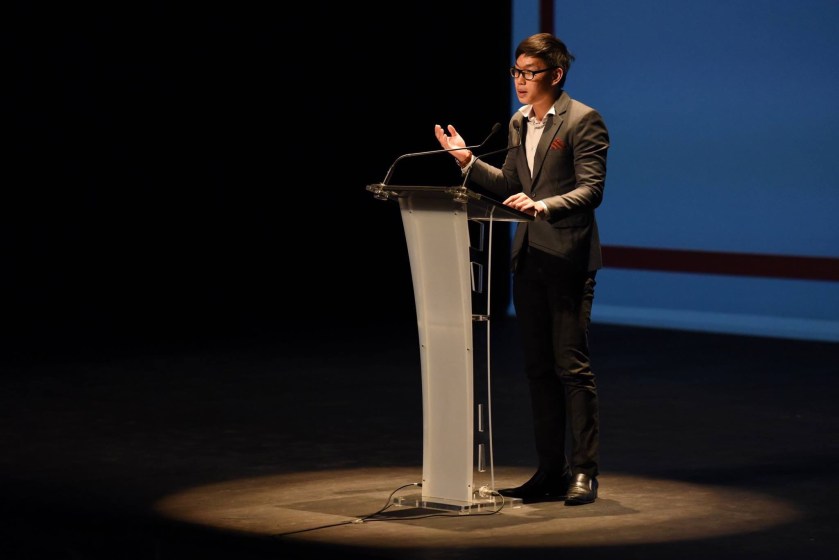
I stood against the blinding darkness. My words precipitated at the tip of my tongue. All things froze for an instant before my speech as I took in the deafening silence.

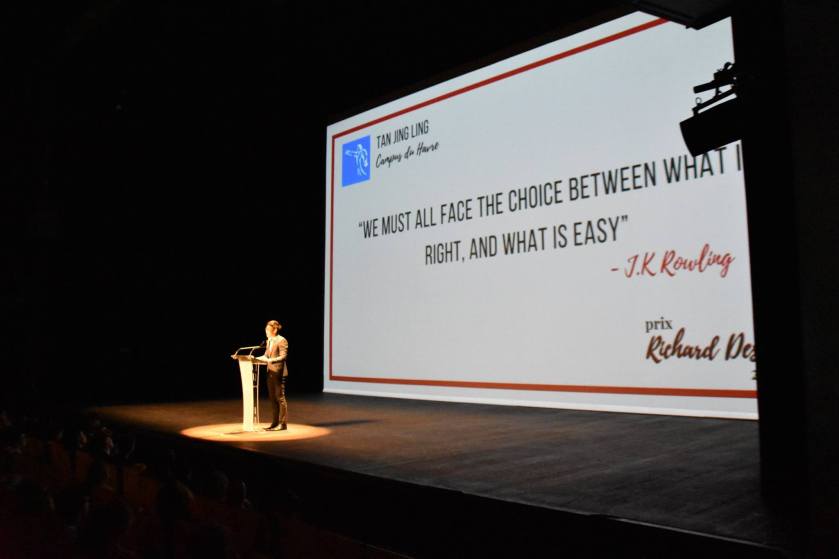
I was in the Theatre Auditorium de Poitiers, which sits 1000 people. It was the final round of the Prix Richard Descoings. I carried with my every word the reputation of Le Havre.

Every February, Sciences Po undergraduates gather together for the Prix Richard Descoings, an oratory competition to select the most eloquent English and French speaker from Sciences Po. I took part in the English category while Salomé Cassarino represented the French category.

Predictably, someone who made it past two rounds of a public speaking tournament would be perfectly comfortable on a stage and under the spotlight. I am not. The fear of speaking is perhaps the most understated fear in modern society.

This fear is silent: it is the unsaid words that built up in my lungs. It is the scrutinising eye contact of those looking, the prolonged silence before speaking, the deoxygenated air breathing. It was this fear that I carried from Le Havre to Poitiers – a fear that grew with the stakes.

In the waiting room on D-day, it was this fear that united the speakers from each campus – each clutching their script and pacing in quiet momentum. When asked, each would tell you that they are not nervous, and you would believe them. After all, they are representatives of eloquence. Yet, as the clock ticks and each speaker’s turn to speak approaches, you will see the little droplets of sweat forming at the fringe of their foreheads.

The fear of speaking is perfectly normal. Receiving the prompt: “we must all face the choice between what is right and what is easy,” a quote by J. K. Rowling in Harry Potter and the Goblet of Fire, I decided to speak about speaking itself. I decided that the steps that led me to Richard Descoings were all choices I made between what is right and what is easy. Here, I share that choice, that fear, and that speech:

[Start-of-speech]

“To speak, or not to speak, that is the question. When I open my mouth, and these words flow into your ears, in this particular order, every syllable, every movement of my lips, my tongue, every eye contact, every molecule in my body is making a choice.

You see, we are not just atoms. Words are not chemical reactions. Standing up here is not part of natural selection.

To speak is to put my life story up on the podium, where I can no longer control the reaction, the interpretation, the direction of where and how I want to hear – me. My story is my choice, but when I speak, I give this choice to you: to be silent, to clap, to laugh, to mock, to ridicule, to open your ears but not listen.

To speak is a choice. But, to speak is the 11-year-old me sitting in my class, with my teacher asking: “do you have any questions?”, and my thoughts formulating, my palms sweating, my arm not raising, my heart beat racing. I wanted to ask a simple question…but I could see the audience, the microphone that amplifies my imperfections, the spot-light of failures, the stage of my fear. All on me as I stood up and asked one…simple…question. And it was always this one…simple…question, that I rehearsed in my head, over and over again, and perfected in the exact same intonation that echoes but will never be heard. And the class is over. And I keep this question for tomorrow and tomorrow and tomorrow. Because speaking is a choice…but is it really for the ones who can’t be heard?

At 16 years old, I had to give my first class presentation. I knew I must face the choice between what is right and what is easy. At least now, questions could be whispered in tiny pockets of mid-air suspended confidence, before it deflates like a balloon, as my face reddens, when my teacher says: “wow, that is a stupid question.” How then am I supposed to hear nothing but the silence of my voice for 300 seconds? How am I supposed to hear myself when I can only hear you and your loud mental judgement as I stammer…as I stammer…as I stammer…as I stammer…as I stammer? How can you say speaking is a choice when I don’t have the choice to be heard?

At 21 years old, I made a choice between what is right and what is easy. I joined a competition and it is my first time speaking to more people than in a classroom. I listened to hours and hours of “I have a dream” and watched myself in the mirror, until fear was so used to being in my veins that when my mouth finally opened, fear flew out like a butterfly ready to escape from a cocoon. I am still the 11-year-old with my thoughts formulating, my palms sweating, my heart beat racing. I am still the 16-year-old with mid-air suspended confidence in a tiny pocket of 5 minutes, before it deflates like a balloon, again.

You see, when I open my mouth, and these words flow into your ears, in this particular order, from beginning to end, from end to beginning again, every syllable, every movement of my lips my tongue, every eye contact, every molecule in my body is making a choice that is anything but easy.

We must all face the choice between what is right and what is easy. And today, I choose, to speak.”

[End-of-speech]

To speak or not to speak? The answer is yours.

Edited by Philippe Bédos & Maya Shenoy

Impostor Syndrome

It was a bright, cold, August afternoon in Le Havre and the clocks were striking one. New Sciences Po students were rushing to their future campus. But as they started talking to their peers, many realized – that there must have been a grave error. Their admission must have been a complete misunderstanding. How could these talented students have been mixed up with them; ordinary people? In the midst of this collective existential crisis, a word emerged at the forefront of their minds: impostor.

This feeling of being an impostor is known as impostor syndrome, or impostorism. It is a psychological pattern in which individuals doubt their own capacity in the workplace, at university, and in relationships. Affected people attribute their success or accomplishments to luck and often believe that they have tricked people into thinking they are more intelligent than they really are, despite proof of their competences. The syndrome comes about within a cycle: an achievement related task is often apprehended by the individuals in one of two ways: either procrastination, or over-preparation so to link their potential success to a matter of luck or a result of hard work respectively. Individuals generally discount any positive assessment on their work, the feedback has virtually no effect on the person’s own perception of their capacity. The belief that achievements are due to hard work or luck shows that someone does not link their success to their personal abilities. This syndrome is not recognized as a mental illness but can seriously affect one’s life: feelings of fraudulence, stress, anxiety and depression increase with every cycle. This condition is more universal than we tend to think; some researchers estimate the percentage of people experiencing the syndrome once in their lives at around 70% and a third of millennials (especially females) suffer from it in the workplace.

Studies have also shown that feelings of impostor syndrome are particularly prevalent for people in a new environment. For instance, students settling into a new university can harbor such feelings. Our campus is a perfect example of how the syndrome affects students. Since my arrival, I have heard people comparing themselves to other students and not feeling as prepared, socially integrated, and deserving as their peers. People, and especially first-years, kept questioning the grounds on which they were admitted to SciencesPo.

This epidemic has often seemed widespread in conversations or discussions on Facebook. Like in many other universities, at Sciences Po a lot of students doubt their capability. Therefore, I felt the need to make a survey which I based on the Clance Impostor Phenomenon Test: to gauge how much people doubt themselves. This test establishes a scale on the prevalence of the symptoms like the fear of evaluation, of failure, of not being as good as others. 112 students , roughly a third of the campus, responded anonymously.

The results showed that 80% of the interrogated students are affected by the syndrome. Amongst these, 30% are intensely affected by it. This means that at least 30% of the panel suffer from anxiety, stress or even depression frequently and intensely. In addition, 50% have the same symptoms but less strongly and 16% moderately experience those symptoms. According to the results of the survey, only 4% of those who answered are not affected by the syndrome.

What should we deduce from those numbers? Are we a bunch of millennials too spoiled to handle stress? Studies tend to show that anxiety is an increasingly global phenomenon, making it the mal du siècle. But not for everyone. Students are the most affected: in America, students have the highest rate of impostor syndrome in the population. Moreover, the inauspicious beginning of the millennium – christened with the financial crisis, terrorist attacks, and the high level of unemployment – has created an anxiety-generating environment. This is not only very pervasive in Western countries, but also in Asia where the race for performance has done irreparable damage (suicide rates are the highest in Southeast Asia according to the WHO).

This global trend is clearly represented by the results of this survey. The origin of the syndrome is unclear although it is probably tied to the level of achievement. We should not allow ourselves to paint a bleak image of our potential and understand the cyclical nature of the syndrome itself. As it manifests itself in times of stress, it will most likely get better with time. We should reframe the start of the year in a new environment as the perfect setting to see this process. Increased interest in the classes and getting used to the requirements will temper the symptoms.

Rather than ignoring our anxieties and soldiering on, the first step to fighting the imposter syndrome is accepting its existence and understanding it properly. The psychologists who proposed the syndrome in 1978 also suggested a therapeutic exercise to their patients: attending group meetings. These meetings helped patients realize that they were not isolated in their experience; other people were suffering the same syndrome. We each have to realise how much we compare ourselves with others, catch ourselves doing it, and talk about it.

I have had the opportunity to talk to the Dean of the Collège Universitaire Mrs. Stéphanie Balme, to our campus director M. Fertey and Mrs. Catherine Droszewski, our new academic advisor. They were all concerned by those observations on different levels and have been looking into ways of reducing stress during our time here. In discussing solutions, we were confronted with some problems. Should students refuse to do a class presentation? This discussion of increased leniency also opens the door to a much broader subject: how could teachers incentivize students to do their work without the fear of deadlines?

Either way, knowing that we are in similar situations can help us to talk about it more easily and lower troubling thoughts that can become paralyzing. Spotting the symptoms and naming them is a first step to healing.

As the final exams approach, and this stressful time of the year deepens our anxiety, we must take advantage of our small tight-knit campus to acknowledge the ubiquity of the impostor syndrome and, finally to be honest with those feelings. I hope that our peers are aware: they are not alone in feeling fraudulent.

Edited by Le Dragon Déchaîné

To my parents

Since moving away from my family for university, and beginning an exciting new chapter of my life, I find myself feeling much more nostalgic than I had expected.

As a teenager, I was always rebellious against my parents’ stereotypical, overwhelming Asian control. Looking back, I was an overly confident and self-assured kid, I always thought what I wanted was right, and got easily frustrated when I thought my parents didn’t understand Australian culture and tried to impress traditional Chinese values on me. I found every rule or expression of their anxiety irritating and excessive, which spurred my impatience to move away for university so I wouldn’t have to constantly answer to them.

The freedom that came with independence was an eternally enticing prospect. The reality of what I feel being so far from my parents is not nearly what I expected. I have often surprised myself, stumbling across a thought of them, and feeling homesick.

Being in a new country has made me reflect more on the sacrifices and achievements of my parents. I am filled with incredible pride for my parents; the first of their families to go to university, coming from rural China, with relatively poor upbringings, who have managed to create a life for my brother and I where we have always felt comfortable, and for them to support me whilst I live abroad. They moved away from their family and friends to live in country where they didn’t understand the language and culture, where they are part of a social minority. This change to create a better life for me uprooted everything they knew and were comfortable with.

Now, knowing what it is like to live in a country where I barely speak the language, I can begin to grasp the extent of such a change and recognise their sacrifice; although the word falls short. It doesn’t speak of my dad’s over-qualification for a mundane job, and his inability to be promoted because of his English. It doesn’t acknowledge my mum’s obsession with her garden patch, so that she can grow and taste the unique vegetables of her home country. It doesn’t account for the decision they have to make between buying plane tickets back home to see my grandparents, or to send them the money so they can have a better quality of life. It doesn’t address the distance and hurt that was created between us when I was in high school and clung onto Australian cultural ideals that ultimately repressed my Chinese heritage.

Joyce’s mom’s garden patch

All of my privilege and the the resulting happiness is owed to my parents’ sheer hard work, and the sacrifices they have made. Everything they have done has been for me to have a better life than they did. And yet this is not an exceptional tale. Every first generation immigrant has a comparable account of forgoing what they knew for a chance at a better life. I am acutely aware of this now, and regret not acknowledging it earlier and showing my appreciation to my parents. Being a difficult, impatient teen and naïvely taking their efforts for granted has elicited a guilt that now manifests itself here, as an attempt to substantialise my gratitude.

So, to my parents, thank you for always guiding me towards what was best for me, even if I did not always believe it. Thank you for working so hard for the life you have given me. Thank you for your selflessness. Thank you for teaching me how to love, simply; what a glorious lesson to learn. Grateful is not a sufficient word. It does not cover the rush of affection I have when I think about my opportunities, knowing I owe them to my parents. It does not account for me pleading with my brother to be kind to them, and my patience in explaining to him why he should tell them he loves them. It cannot acknowledge my determination and drive for success, so they don’t have to doubt whether their sacrifices and hard work paid off. It does not speak of the promise I have made to myself, to do anything for them at absolutely any inconvenience to myself, for they know more of sacrifice than I ever could.

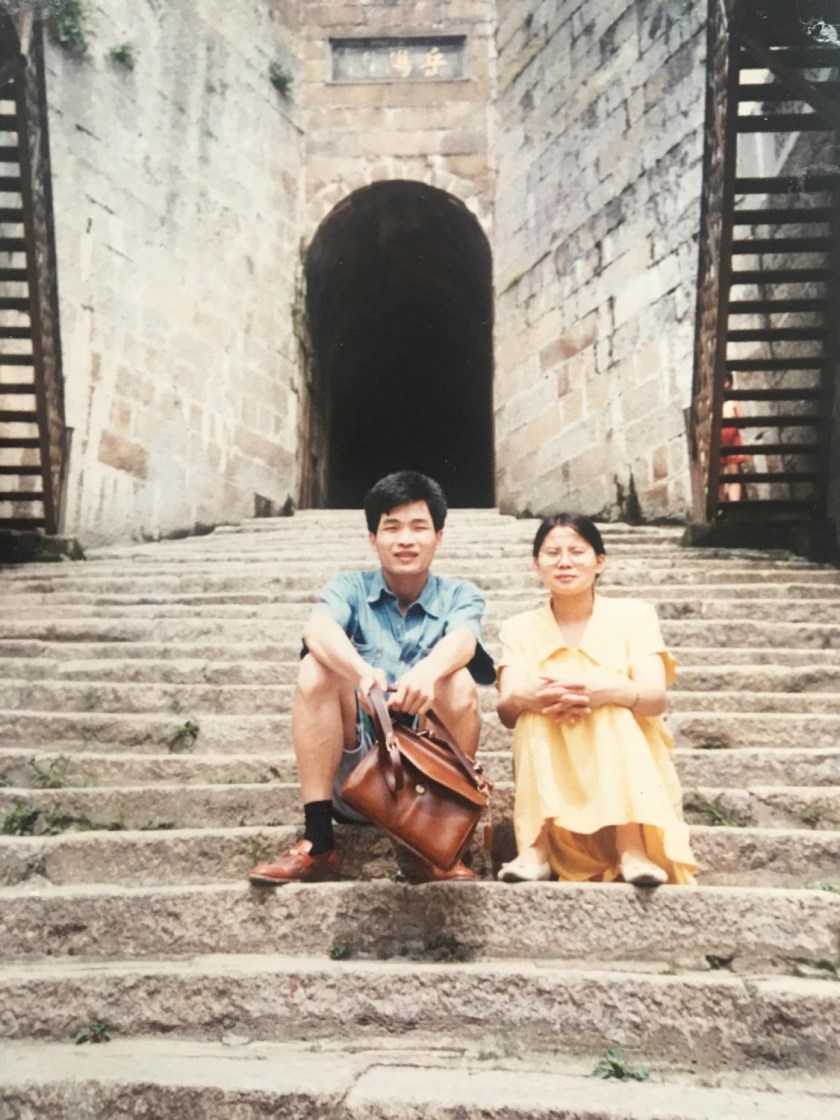
Joyce’s parents when they were young

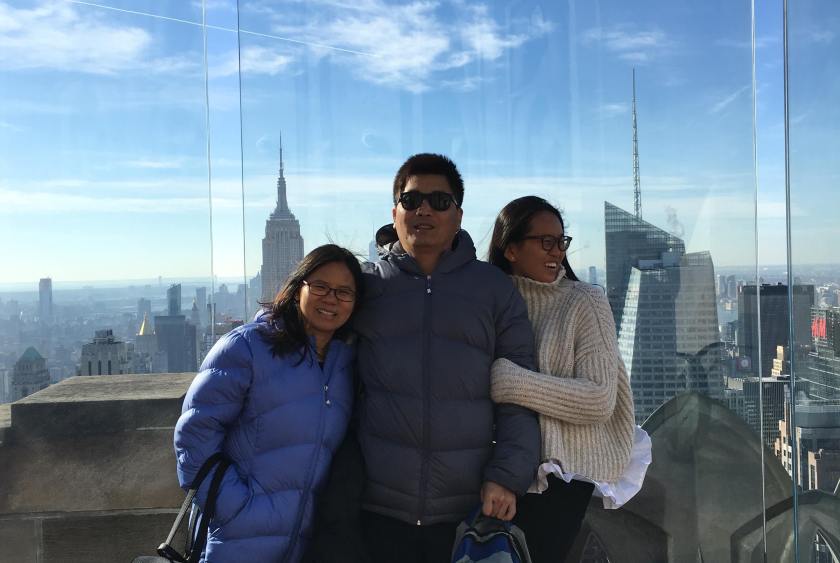
Joyce Fang is a first-year student at the campus du Havre. She’s from Adelaide, Australia, of Chinese origin. You can find her knocking back beers at Wallaby’s, or furiously studying in the library. She also features in the first episode of the podcast “Wine Society“. She wrote this letter to her parents while taking a break from midterm revisions.

Edited by Pailey Wang and Philippe Bédos