For my first poem in LDD, I would like to share my recent thoughts on our current world events. I am best with my words through forms of literature, and this post shall be the same. Months ago, I had the honour of winning the Queen’s Commonwealth Writing Competition with my poem, Judgement Day. Today, as I observe challenging global events, I am reminded of how the themes within this poem resonate more profoundly than ever. This poem speaks to a quote by Loretta Scott King, “The greatness of a community is most accurately measured by the compassionate acts of its members.”
Although I wrote it at a different time, a time less harsh than today, its message is timeless and particularly pertinent in our current context. I hope for my words to inspire reflection and action towards a kinder world. It is my belief that we can always be kinder than yesterday.
Judgement Day
Queue a rock: perfectly crafted by divine
And the blossom of birds and cherries and trees
Admiring His work, He goes and lays down where
The wood drake rests in a mint-like glee.
The mighty margay feeds fated ferrets by the shore
While He comes into peace of His wild wonders
Content with His creation, He beams at His little world
And adds bounties of sculptures and numbers and colours.
With a swift scrutiny of suddenness, He gazes at this all
And muses over the missingness of this gigantic globe
His eyes shimmer with solution and He sets to work
To make His own miniatures, and finish His humble abode.
Robing His veil, He bids farewell to His children
And apprises them to hold each other in dear
For they were a family who was to look after His realm
And quick for his word, he winged away with career.
Quick into rising action: The children attempted to impart his virtue
Then they ruptured their bond and pierced each others’ souls
The cascade of agonies was so loud that it reached all the way up
That the Very Embodiment of Tolerance almost lost His control.
Descending to Earth, He boomed in rage in the manuals: “To succour your own afflictions, you must concur to be kind Each human heart inspires the other, so don’t trigger a domino To live together is to enlarge the close contracted mind.”
But as some things go, children refuse to listen sometimes The Very Virtue’s own creation refrains from acts of honesty They go against the very Creator they so highly praise And are walking conflictions of greed— the highest act of hypocrisy.
Their mutual fear had brought peace for somewhile
Until individual desires were sowed and released
The downfall was spread, and its baits were in waiting But their selfish love had only kept increasing.
Now He sat down with holy troubles
For it was the darkest hour in their history
He watered the ground with His novel tears
And now insert: the very awaited climax of this story.
The children never missed a chance to sabotage
Impose selfish rules to strangulate and muffle,
And invade others who were feeble
And make celebrations at bloodshed and scuffle.
He frowned as He recited His repeated recitals in mind: “This is the still sad music of my humanity
I have chastened and subdued my own creation
Nor my fault, nor my merit, though I feel ample guilty.”
“Their strength was never estimated by bills or bread Or industries or idealistic investments
Where are their robots and reinforcements now
When all there is left is human hearts and fragments?”
“And I have never felt this for my other children:
My round ocean and singing air and crystal skies;
But in the human intellect: there was a certain distinct spirit That was the reason why my children died.”
“I failed to make their conceited souls realise
Of the wars that were going on where their spirit meets I failed to tell them of what no ears have ever heard, I failed to show them what no eyes have ever seen.”
“Even their name is a shameless melody of irony For these Humans are the least human creatures I’ve ever seen Tell me: what wonders rise, what charms unfold When there was never any compassion in those eyes?”
Welcome to the East Asia Club’s first-ever article! As captains of the East Asian Club, we are dedicated to raising interest in contemporary East Asian cultures and practices. This prompts our emphasis on a movement reshaping modern China – the revival of the hanfu (漢服).
A piece of traditional attire worn by the Han Chinese, hanfu has revived its adoptability as a vibrant national trend. But this movement is more than just fashion—it’s a celebration of China’s deep cultural roots, blending historical pride with modern identity.
The ancient style is now gaining huge popularity, particularly amongst younger generations. Between 2015 and 2021, sales of hanfu clothing surged from just 190 million yuan to a staggering 10 billion yuan (approximately USD $1.45 billion), with estimates projecting the market to reach 24.18 billion yuan by 2027. As of 2022, over 10.16 million people have embraced the art of wearing hanfu, a substantial increase from the 6 million of the previous year.
The appeal of hanfu is multifaceted. For many, wearing hanfu symbolises a form of reconnection with Chinese history and heritage. This is particularly relevant as China continues to modernise at a breakneck pace. The revival has sparked cultural pride among young people, who are increasingly drawn to hanfu for its historical significance and aesthetic beauty. According to a recent survey, nearly 70% of hanfu enthusiasts wear the garments as a means to promote traditional Chinese culture.
Social media has played a significant role in the revival, with platforms like Weibo and Douyin (China’s version of TikTok) allowing hanfu enthusiasts to share their passion globally. Young influencers have showcased hanfu in everything from historical reenactments to modern street fashion, propelling it from a cultural niche into a mainstream phenomenon.
Furthermore, the appeal of hanfu lies in its deep connection to Chinese history. In an era of rapid modernization, a relatively easy way to understand one’s heritage can be demonstrated through the simple act of wearing the piece of clothing. For instance, hanfu from the Tang Dynasty (618-907) is known for its elegant, flowing robes, a quality that directly reflects the period’s cosmopolitan nature. This draws a stark contrast to the hanfu from Ming (1368-1644), which represents a more conservative and structured style. For many, wearing hanfu during festivals, cultural events, and even casual outings is a way to promote traditional Chinese values while asserting their national identity. The hanfu community is especially active during major cultural holidays such as the Mid-Autumn Festival, Chinese New Year, and traditional events like the Hanfu Festival, where enthusiasts gather to celebrate in full attire. Cities like Beijing, Shanghai, and Chengdu have become vibrant hubs where young people participate in hanfu flash mobs, photo sessions, and public performances
It is interesting to note that the Chinese government has also been a key player in this cultural revival, as part of a broader push for “cultural confidence.” Promoting traditional elements such as hanfu aligns with China’s emphasis on preserving its rich cultural heritage while fostering national pride. This has provided hanfu with more visibility as a dynamic symbol of China’s cultural renaissance, gaining official support and encouragement.
However, the movement isn’t without its challenges. Critics argue that many modern iterations of hanfu blend elements from different historical periods, straying from historical accuracy. While some purists seek to preserve the authenticity of hanfu design, others celebrate its creative evolution as a modern interpretation of traditional fashion. Zhao Bo, a curator who was once interviewed by the South China Morning Post, has reproduced ancient hanfu garments, highlights the importance of both approaches, noting that public interest is crucial in keeping this tradition alive.
In sum, the hanfu revival represents a unique blend of historical reverence and modern innovation. For young people, wearing hanfu isn’t just about fashion; it’s a personal statement that connects them with China’s rich cultural history while navigating the complexities of a globalised world. As this movement continues to grow, hanfu has emerged as a powerful symbol of China’s cultural resilience, proving that traditions can be both preserved and reimagined for a new era.
Stay tuned for more exciting explorations of East Asia’s dynamic cultures from the East Asia Club!
Today, the Garo, also known as the A’chiksMande (hill people) (Marsing, 2019), are one of the better-known matrilineal communities of the world. Currently living in India and Bangladesh around the Garo Hills region, these peoples have matrilineal traditions that stretch back centuries, such as inheritance through the mother’s line (ma’chong). Because of the specific environmental conditions of the Garo Hills region, the Garos are also known for their jhum cultivation (District Administration, East Garo Hills). Their unique society can be symbolised by the Wangala festival after the October harvest, in which food, music, and dance is prepared to honour the gods of their Songsarek religion, organised by the headman of a village’s dominant family (Roy, 1992). Yet, this ethnic community faces modern challenges brought by cultural assimilation, political marginalisation, and climate change that threaten to end the Garos’ centuries-old way of life.
The Garos originated from the Tibetan Plateau and migrated in the Prehistoric Period to North East India (Marsing, 2019), where today they mainly live in the Meghalaya and Assam regions, as well as in areas of Bangladesh like Mymensingh (District Administration, East Garo Hills), where they are known as lowland Garos (Bal, 2007). The Garo language is part of the Tibetan-Bruman linguistic family, although a large variety of dialects exist (Roy, 1992). Being a matrilineal society, property passes from mother to a chosen daughter known as the Nokna, who also inherits the property of her husband or Nokrom, both coming to live with the Nokna’s parents (Ahmed, 2021). Yet, the Garos are not considered a matriarchal society, as it is the man’s responsibility to manage the property and agricultural affairs (District Administration, South Garo Hills). In fact, the Garo society revolves around agriculture, traditionally practising jhum or shifting cultivation, in which an area is cleared by burning vegetation and cultivated for a few years, then abandoned to allow fertility restoration (Oxford Languages). Both men and women are involved in agricultural and labour processes, with men in charge of jungle-clearing, house-building, and basketry, while women are in-charge of crop plantation, weaving, and cooking (District Administration, South Garo Hills).
However, the modern world has brought harsh challenges to the Garo peoples, linked to cultural assimilation caused by Christian missionary movements (Marak, 2023) and patriarchal communities (Ahmed, 2021), political marginationalisation particularly for the Bangladesh Garos (Bal, 2007), and environmental degradation triggered by deforestation and climate change (Sarma, 2013).
The Garos traditionally follow a faith called Songsarek (Marsing, 2019), with a variety of deities like Saljong, the sun and fertility god (honoured during Wangala) or Chorabudi, the god of crops (District Administration, East Garo Hills). Moreover, they believe in a variety of spirits called mites, as well as reincarnation, in which one can be reborn in lower or higher forms of life (ibid). Yet, today, this religion is less and less practised as more Garos convert to Christiniaty, which is seen as helping to develop “identities that are… profoundly modern” (Maaker, 2007). This act of cultural assimilation began in the early 19th century, when the British Empire took over the Garo Hills, paving the way for religious conversion primarily led by American missionaries (Marak, 2023). Today, more than 80% of Garo peoples are Christian (Maaker, 2007). The Garos not only face religious cultural assimilation, but also loss of their traditional matrilineal society due to the rising presence of patrilineal values in neighbouring Hindu and Muslim communities (Ahmed, 2021). A study by Sirajuddin Ahmed and Upala Barua in 2021 found that the Nokrom system, in which the husband goes to live with his wife, is becoming rarer, due to the changing attitudes of younger generations, who are exposed through schools to patrilineal values. The traditional Garo way of life is under serious threat of permanent loss due to these acts of cultural assimilation.
Moreover, the Garos, particularly those of the lowland or Bangladesh regions, face political marginalisation through exclusion policies and historic discrimination (Bal, 2007). The lowland Garos have particularly been affected by external politics between India and Pakistan, beginning with Partition in 1947 (when Britain created a Muslim majority in Pakistan and a Hindu majority in India). This event saw these Garos become citizens of Pakistan, despite demands to join the other Garos in the Meghalaya region of India (ibid). In 1964, the lowland Garos were forced to flee to refugee camps in India, after an influx of more than a million Muslim refugees brought thievery, intimidation, and illegal settlements, as well as active suppression by state agencies (ibid). When the Garos returned, they faced aggressive state attitudes, particularly through the Enemy Property Ordinance, which led to Garos losing lands to the Pakistan government (ibid). Further, despite the lowland Garos fighting for the creation of Bangladesh in 1971, the new government did not provide any rehabilitation aid and stressed the dominance of the Bengali ethnicity (ibid). This historic political exclusion and even suppression of Garos has had profound effects not only on their identity, which now includes major distinctions between the Garos in Bangladesh and India, but also modern socio-economic challenges. The Garos, in both areas, face land ownership issues, which leads to a lack of access to basic necessities such as modern medical facilities, educational institutions, and employment opportunities (Kabir, 2022).
Further, the Garos face political, social, and economic insecurity as a result of environmental degradation. According to the Global Forest Watch, since 2000, India has lost 6% of its total tree cover, primarily due to deforestation, and in 5 key regions including Assam and Nagaland. For the Garos, the consequential rise of temperatures and changing precipitation patterns threaten their access to sustenance and their livelihoods (Sarma, 2013). Particularly, subsurface coal mining and deforestation has caused biodiversity loss, flash floods, and decrease in supply of drinking water (Sarma, 2013). Moreover, due to rising Garo populations (Hazarika, 2013), the Garos have begun transitioning from traditional jhum cultivation to permanent cash crop cultivation (crops sold on markets for profit), which increases levels of deforestation (Sarma, 2013). In Bangladesh, the Garos are also threatened by the government’s lack of effort to preserve their environment and culture (Rozario, 2024). The Bangladesh Forest Department launched in 2000 a World Bank funded Sustainable Forest and Livelihood Project, involving the construction of gardens, guesthouses, and an artificial lake that negatively affects the hundreds of Garos in the Madhupur forest of the Mymensingh region. Deforestation and uncompensated land loss (Rozario, 2024) will have huge repercussions on the socioeconomic status of this community. Yet, despite Garo activism and demands for better forest policies, they have not only been the victims of police violence and shootings, but also of eviction threats by the government (Rozario, 2024). Thus, the Garos risk not only loss of land, but also heightened climate vulnerability.
In conclusion, it is evident the Garos face a multitude of challenges arising from efforts of cultural assimilation, political discrimination and marginalisation, and environmental degradation, all of which is not being properly addressed by governments in India nor Bangladesh. Although in India the Garo lands and culture are more protected than in Bangladesh (e.g., 92% of the Garo Hills forested area is owned by local communities under the Garo Hills Autonomous District Council), they still remain a highly vulnerable community. As seen, Garo culture is still at risk due to the climate crisis, as well as external religious and patrilineal influences, which requires greater adaptation planning and policy from high levels of governance. Governments should listen and work alongside indigenous-led projects, such as the Meghalaya region Hill State People’s Democratic Party’s recent initiative to urge official recognition of the Garo language, in order to ensure better employment opportunities (India Today NE, 2024). Particularly in Bangladesh, the Garo minority has faced severe political and socio-economic insecurity, requiring urgent governmental initiative to better protect and respect these peoples. Governmental policies, particularly those involving forest cover and cultural preservation, need to be created alongside the Garo communities, such as the Joyenshahi Adivasi Development Council, a leading group protesting the Madhupur land loss. The Garos possess a unique culture intrinsically linked to nature that must be safeguarded not only for its wealth of knowledge, but also to ensure the continued existence of a vulnerable population.
Disclaimer: As a student, I don’t have the full capacity nor time to delve into the complexities of each ethnic community. My intention is to create a space dedicated to introducing readers to different minorities and their plights, to raise awareness and to encourage further readings into such topics. My art piece of each ethnic community is not an accurate representation of the culture as a whole, but an artistic interpretation based on primary photographs and references of historical traditions.
The artwork by Gemma Tabet is inspired by Garo culture, and was created using mixed media: alcohol markers with digital art. The work takes direct inspiration from photographs and texts of Garo traditions and peoples, and thus the art serves as a glimpse into this rich and unique history. Inspiration came from photographers like David Talukdar, Cintu Thakuria, and F. Widjaja on Shutterstock, as well as Himdipta for the Wildlife Trust of India. In the artwork I have depicted a boranq, which are tree-top bamboo houses that also serve as watchouses to protect crops from wild animals like elephants. The Garo woman is wearing a dakmanda, a ceremonial, colourful two-piece dress woven with floral patterns, wide stripes, and diamond symbols known as mikron or “eye”. She also has bangles or sangong on her wrists, a white waist band known as sengki, and earrings called natapsi. The Garo man is wearing a pandra, which is a ceremonial cloth going across the chest. Both are wearing thin glass necklaces known as rigitok, a headband decorated with beads known as kotip, and a headdress made of feathers from bhimraj birds or roosters, known as do·me. These terms are derived from a variety of sources: Sankar Kumar Roy for eHRAF World Cultures, the District Administration in the South and East Garo Hills, and the Indian Ministry of Culture.
The call had taken a text correspondence of two weeks to arrange. When Verlene turned on her camera, we both broke into a cheer. Her make-up pouch was unzipped on the table, and behind her, the morning sunlight illuminated the white walls of her Boston dorm. “I missed you!” she burst out. “I missed you too,” I replied, three thousand miles away in the late Le Havre afternoon. It was true – it had been more than a month since I bid goodbye to her and the other girls at Changi Airport – but missing her was not something I felt particularly strongly in that moment.
As she got ready for her day, I listened to her talk about her new life in Berklee, and shared in return about mine at Sciences Po. About an hour in, she finished her routine and took me along as she walked downstairs to the cafeteria; I heard the voices of her friends calling for her off-screen and gathered that it was probably time for us to end the FaceTime. After that, it was three weeks before she texted me again, with an update on the cute guitar-playing boy from upstairs she had mentioned briefly during our call.
One night before I left for France, the six of us squeezed into a booth in an American-themed bar, trying to prolong the night as best as we could. On the wall beside us was a huge American flag that hung from the ceiling; as the four girls who would be going to U.S. universities posed for a picture with it, I ducked lazily behind one of them, arms around her waist and drunk on the easy joy of being with my favourite people. It was a good night; we cycled around the same few questions of the recent hangouts and repeated our answers in different words, but meant them all the same. I love you. I am who I am now because of you. I’ll miss you, but I’m so excited for you. Promise we’ll all meet again in New York after two years. The beginning strums of ‘Kiss Me’ by Sixpence lifted us from our seats, and in the empty bar, we danced. I was a little awkward, not completely comfortable in my body that night for some reason, but my best friend noticed and pulled me into a spin that had me smiling. A few days later, we had a big family gathering: the girls and their parents, and some of their siblings, in my living room – some of our dads hitting it off with guy talk about planes and work, my brother fiddling with the speaker, us girls sprawled on the carpeted floor and discussing a potential karaoke event with our parents in some eventual future. It was then that it occurred to me to describe what we had built for ourselves as sisterhood.
I did think we would call often, despite our universities being in different countries and continents. At one point, I think someone had even put forward the idea of our having bimonthly group meetings to catch up on one another’s lives. It’s strange to me now, therefore, that I don’t miss them, but I miss, rather, the friends here that I see nearly every day.
On the FlixBus back from Paris, I tell this to Audrey, who is sitting beside me. A sleepy quietness has settled in the bus, disturbed only by our low-voiced conversation and the indecipherable one that JJ and Zo-Ren are having some rows of seats ahead of us. I feel like I need to see you guys at least once a week or I’ll die, I say. The sentiment is only half a joke. Just before that, the six of us watched the Eiffel Tower light up for the first five minutes of the hour from the top of Montmartre, and realised just how little time we had before our time together at Sciences Po would end. My cheeks are sticky with the aftermath of tears, and my eyes are especially dry. Audrey takes a while to think. Then, she says, maybe it’s because we’re so far away from home that we’ve had to build our own one here. Even our activities as a group – grocery shopping, cooking – what else but a family does that?
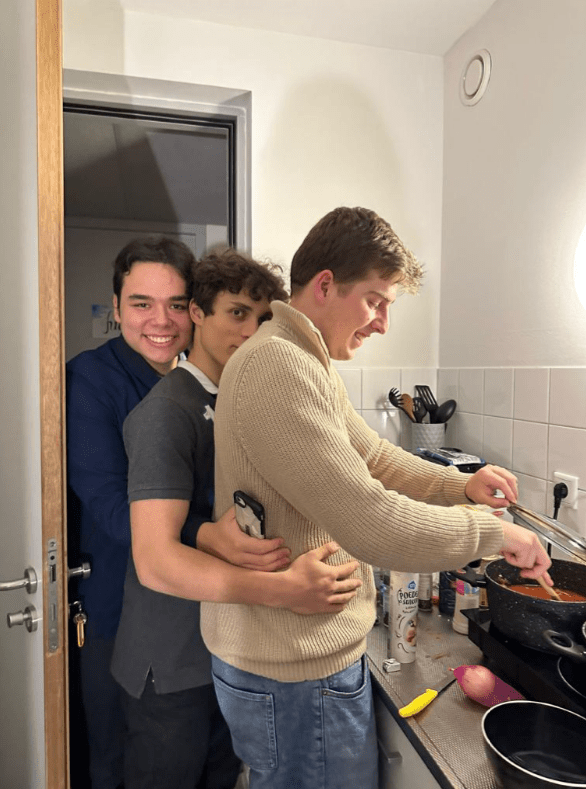
I’m reminded again of her words as we lie on my makeshift couch (two folded futons) after dinner, the tatami mat below our legs thinly protecting them from the chilled floor of late autumn. One of them is on my right, Audrey on my left, and another one has been lulled to sleep in his sleeping bag beside her. Two of them had left earlier, and the remaining unwashed dishes are stacked on the dining table for now, sticky and powdery from the boa loy we made earlier that night, pinching sweet pumpkin flour with the tips of our fingers and rolling them into tiny balls on our palms. Our three-way conversation drifts to the topic of friends back home. As I tell them about the five girls from my life before, I think about the new friends beside me that I’ve begun to open my heart to. I don’t miss them, I say, but it’s not because they’ve been replaced by you guys. Maybe you’re just in another period of life, Audrey suggests, and I agree.
When I was young, my dad used to nag at me for buying and reading multiple books simultaneously. I would fold the upper right-hand corner of a page in a book, close it, and open another one. When the time was right, though, I would come back to it, and continue where I’d left off. There was always space for multiple stories in my heart, and the characters in them shared the imagination of my mind, even if they switched between being at the forefront of it.
There isn’t really a reason to miss these girls, I suppose, since I know with certainty that they will always be a part of my life. Sometime later, we will sit in another American bar – a real one this time, in New York – and reopen the book we’ve written together, with new ideas, new stories, new people from the time we spent apart. And perhaps a few drinks in, we’ll be joined by my friends, these friends, and I’ll be lucky enough to see the past and the present, the old and the new – but all my favourite people – meet at the beginning of a new story.
All images credited to the author unless otherwise stated.
Just over two years ago, when I first arrived in the Netherlands for college, I couldn’t stop thinking about the lush green forests, waterfalls, and temples near my home in Northern Thailand. I had spent the previous six years growing up in Chiang Mai, and my time there made me feel attached to the city, its people, its culture, and its incredible food. I developed a particular love for Khao Soi, a coconut noodle soup – its thick-crispy noodles, coconut broth, and soft, tender beef are what I craved then, and still often do today.
I remember during my first few weeks in the Netherlands my mind was filled with memories from my time in Chiang Mai—frequenting malls such as One Niman, hiking in the stunning Chiang Dao and Mon Jam mountains, and the silly antics I used to get up to with my friends at school. In short, I was homesick. Suddenly, the small things I took for granted from simple visits to the Seven-Elevens at night to dinners with my parents were experiences that I started missing—something that I longed to experience again. Nonetheless, I believe this sense of homesickness is linked to a deeper truth: it was linked to the fact that I had lost my sense of security.
Looking back, this should seem almost unsurprising. I had just moved to a new city—The Hague—a place I had never visited before, more than 8,000 kilometres away from home. I arrived alone, with no familiar faces, no friends to lean on, and no clear sense of how my college experience would unfold. To make matters worse, the airline lost my suitcase which held most of my belongings—clothes, snacks, and cherished souvenirs from Thailand. While pop culture often paints the picture of moving to college as an exhilarating leap, it is equally vital to acknowledge the immense weight of uncertainty and loneliness that can accompany such a monumental change.
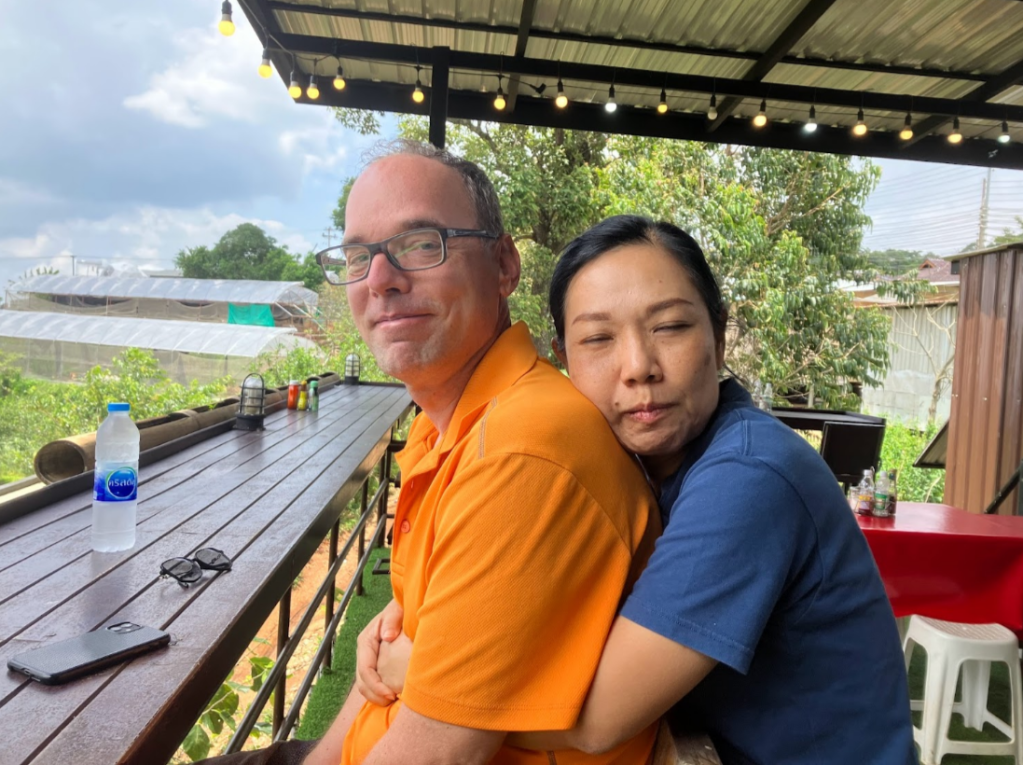
Left to right: A view of the Chiang Dao mountains from my home in Mae Rim, Chiang Mai. My parents Achim and Au after a hike in Mon Jam, taken by me.
However, as time progressed, I made friends, adjusted to life in a foreign country, and adapted to the demands of university academics. Yet this was no short process. I found myself in between friend groups, navigating how to manage my newfound independence. It wasn’t until the second semester that I connected with people who became my closest friends, and who remain so to this day. During this period of discovery, my homesickness gradually faded, and I began to discover who I was beyond the familiar comforts of my parents and my life in Chiang Mai. I deepened my academic interests, particularly developing a love for international law, while also discovering a passion for travel—and testing the limits of my alcohol tolerance. I learned how to live on my own, how to cook—although my friends still joke that I’m a terrible chef— how to navigate taxes and the Dutch healthcare system. I discovered a healthier work-life balance that worked for me.
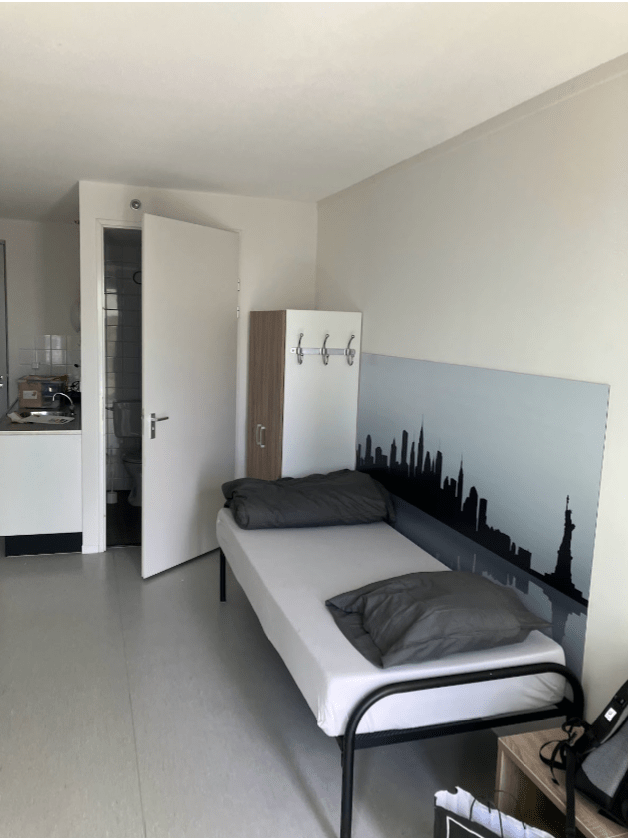
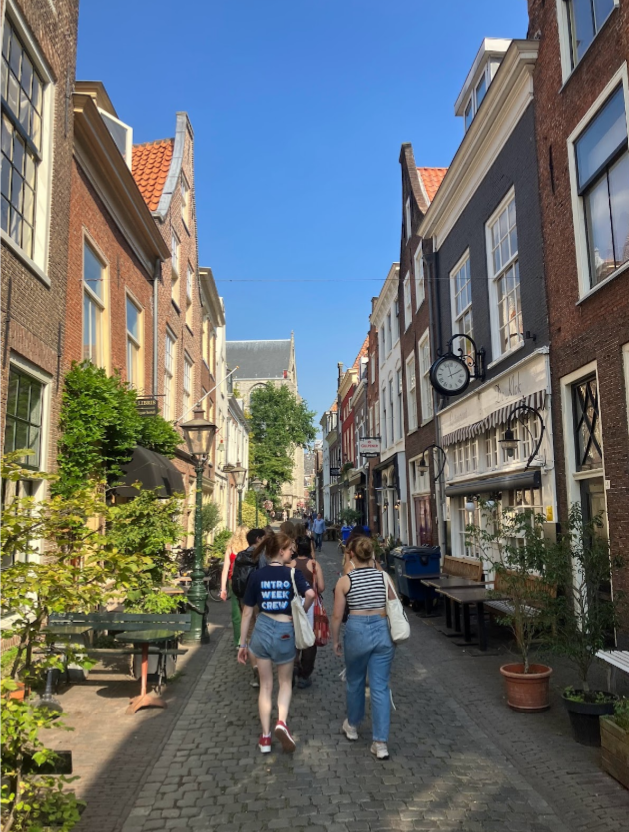
Above, left to right: My mostly empty college dorm in The Hague just after moving in, walking tour of Leiden (10 minutes away from The Hague) as part of my “Intro Week”at Leiden University.
Over the next two years, The Hague, its people, and my closest friends made the city feel more like home. I felt safe within my close friend group, full of third-culture kids such as myself. There was Demir, a Dutch-Turkish amateur windsurfer; Emilia, a German-American baking enthusiast; and Ferdi, a mischievous Frenchman. There was Gege, a Dutch-Chinese TikToker par excellence; Marianna, a Polish bookworm; and Eva, a Belgian-English record collector. Finally, there was Sebas, a Colombian-Dutch film buff; and Anastasia, a French-born, American-raised workaholic—just to name a few. These are only some of the people who made my college experience unforgettable. With these friends, I travelled to places like Ireland and Belgium, had wild nights in Rotterdam and Amsterdam, shared deep conversations about life, and cooked fantastic meals together.
Moving to university can be daunting, lonely, and full of uncertainty, but it’s also a time to discover more about yourself, build new friendships, and create memories that can last a lifetime. Looking back, I believe it’s important to recognize that building a supportive community and a new sense of security takes time—and there’s no need to pressure ourselves to instantly find our people or fear missing out on events, as meaningful connections naturally take long periods to develop.
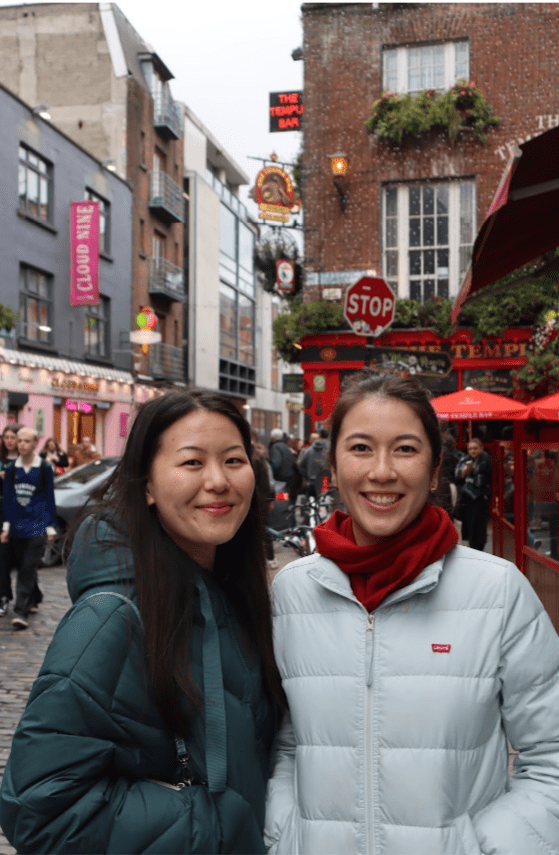
Above, left to right: Gege and Emilia on our short trip to Ireland; Ferdi, Demir, and I having a wonderful cooking session.
Despite finding a new community, I decided to embark on an exchange semester—which is how I ended up here at the Sciences Po campus in Le Havre. Honestly, I chose to go on exchange partly out of fear of missing out. I felt pressured to study abroad because it was implicitly—though not intentionally—framed by my friends and the university administration as an essential part of the college experience. I worried that not going would mean missing out on an opportunity to meet new people and explore other parts of the world.
Above, left to right: “Floor crawl” (A drinking party on a floor at Leiden University); Me and my fellow resident assistants at the annual Dies Fatalis in 2024 (our university play).
Sciences Po’s campus in Le Havre partly stood out to me not only because of the university’s standing in Europe—but also its small scale and focus on Asia, which I felt was underrepresented in the curriculum of my home university. I remember thinking during the application process “Ohh, the small size of the university is nice, it’ll make it easier to form friendships and build connections.” Moreover, small seminar classes and an intimate atmosphere were what I preferred, similar to my home university, where the campus had only 600 students. The other options I listed on my exchange application were Tulane University in New Orleans, Louisiana, and the National University of Singapore, located—you guessed it right—in Singapore. These wildly different options reflected my uncertainty about what I wanted from my exchange experience. Did I want to continue studying in Europe? Move far away to the United States? Or stay closer to home and family in Thailand? In the end, Leiden University nominated me to come here to Le Havre for my exchange.
A few months later, on the 25th of August this year, I arrived here, in Le Havre. Again, similar to two years prior I was nervous about the uncertainty of how the experience would go—would I make friends? How challenging would a new university be academically? I was even overcome by a wave of homesickness, an ache, to rewind the clock just a few months and relive the summer. I yearned to experience once more the familiar comforts of home in Thailand. My mind wandered back to the sun-soaked days of adventure, retracing the path through southern Thailand, Malaysia, and Singapore—a journey I had taken just weeks before with my cousins, though it now felt like a lifetime ago. Frustration swelled within me. Why did I feel this way—homesick, again—after two years of living on my own in the Netherlands? The feelings seemed unjustified, even childish, and yet there they were, stubborn, pulling me back to a time and place I could no longer touch.
Having grappled with homesickness before, I felt more equipped to face it again. My time in The Hague meant that I knew myself better. While I understood that I needed to step out of my comfort zone to forge meaningful connections with others. I also knew that when I felt down, a short run was an effective way to cope. An occasional tub of ice cream paired with a Netflix show offered a much-needed escape from the strains of daily life, while calls to my parents or friends and the comfort of Thai food eased my longing for home. Yet, I was acutely aware that I would only be here for four months—would that be enough time to cultivate a sense of community? After calling a friend in Bangkok, he suggested approaching this experience with the mindset of trying to make the most out of every day. We should try to take steps to actively cultivate memorable experiences with those whom we care about, but most importantly, we should treat others the way I would have liked to be treated when I first moved to university two years ago. For me, it meant someone inviting me to activities, showing they cared, and checking in on me—even if I didn’t always share how I was truly feeling.
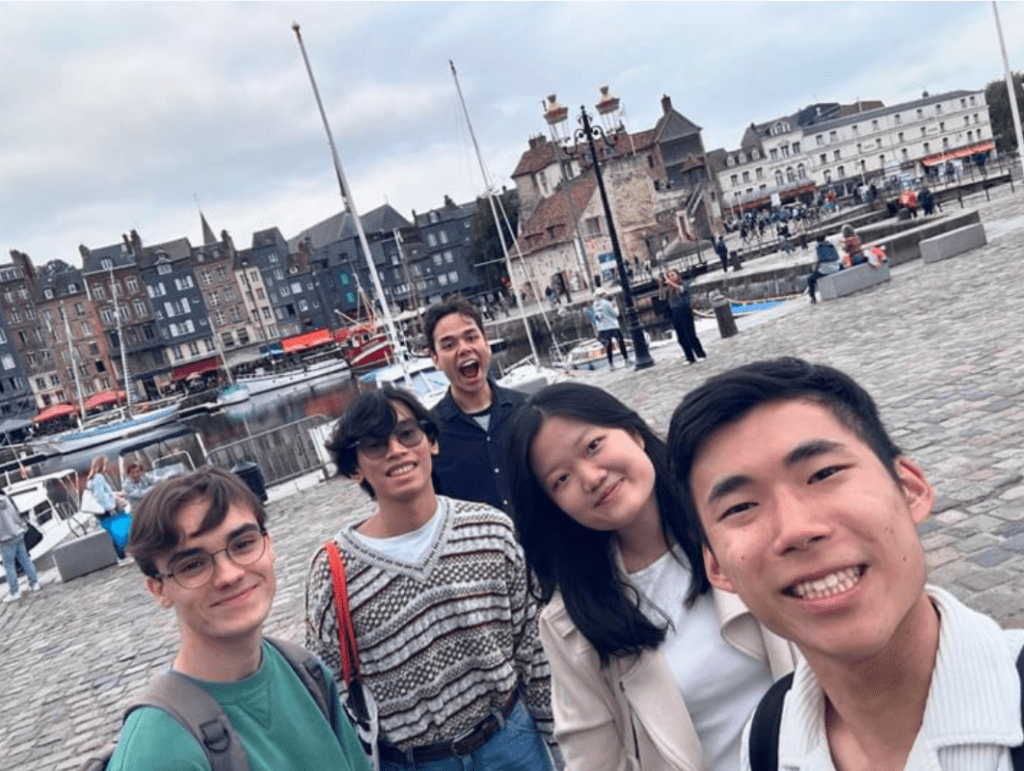
So, how has my integration at Sciences Po been so far? I’d say it has gone faster than I expected. In just over a month, I’ve built close friendships and made memories that I know will stay with me. I’ve found common ground with many people—whether it’s bonding with fellow exchange students over the challenges of Sciences Po’s administration and navigating CROUS housing, or sharing conversations about Thai cuisine and culture with my Thai and Southeast Asian peers. As a half-German, I’ve bonded with other Germans over our shared love of German bread and the occasional indulgence in complaining—though I’ve learned to keep that in check, as too much can dampen my mood. However lately, our conversations have shifted to our deep affection for French pastries, revelling in the delightful flavours and treats that have quickly captured our hearts now that the initial shock of moving to France has worn off. I’ve made it a priority to invite as many people as possible to join me on runs, and I’ve embarked on spontaneous trips to Honfleur and Cap de la Hève. These experiences have allowed me to forge meaningful connections more swiftly than I anticipated.
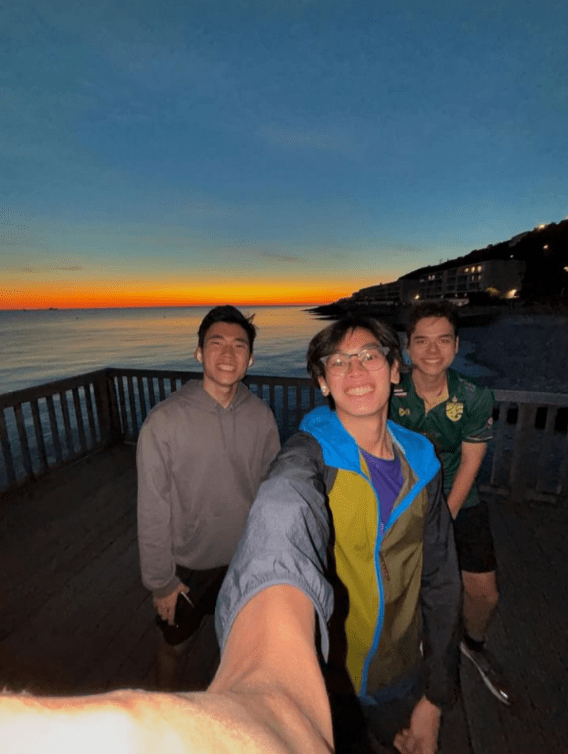
Above: Zo-ren, Audrey, JJ, Sylvian and I on our spontaneous trip on Honfleur
Nonetheless, it has not always been smooth sailing. I’ve faced moments of academic stress and occasional loneliness when feeling overwhelmed, and I haven’t been perfect in going out to connect with others. I’ve aimed to treat others as I would have liked to be treated when I first moved to college, yet there were days when I found myself retreating into my comfort zone instead of “making the most of it” and fully embracing the opportunity to spend time with my newfound friends. But I think it’s important to emphasise that this is okay—it’s perfectly fine not to always be on top of things. “Making the most of it” also means allowing ourselves space to relax and not forcing ourselves into social situations we’re not ready for or don’t want to be in.
Above, left to right: Southeast Asian Gang at WEI; late-night run.with JJ and Zo-ren
With these thoughts in mind and drawing from my personal experiences, I’d like to share three takeaways on how we could approach integration more healthily with greater compassion and understanding.
Homesickness, uncertainty, and loneliness that can accompany moving to college is natural—and we should approach others with compassion and care and acknowledge that this can be a difficult time of transition.
Building friendships takes time—meaningful connections typically don’t happen overnight. We shouldn’t pressure ourselves, as friendships tend to develop naturally over time. Nonetheless, this does not diminish our power to engage with others, invite people for activities, and seek meaningful relationships.
Take the time to explore what self-care looks like for you—university is a journey of self-discovery and personal growth. We should try to identify not only what activities can help us de-stress but also the types of social situations and friend groups we genuinely enjoy spending time in.
Yet I do want to emphasise that these insights are drawn solely from my own experience; you and others may have wildly different experiences based on your individual journeys. Nevertheless, I hope you can find something relatable in this reflection—perhaps a truth that will help guide you, just a little, toward a more fulfilling college experience. I hope these experiences can offer you some encouragement as you navigate your own paths.




 Le Dragon Déchaîné