Impostor Syndrome

It was a bright, cold, August afternoon in Le Havre and the clocks were striking one. New Sciences Po students were rushing to their future campus. But as they started talking to their peers, many realized – that there must have been a grave error. Their admission must have been a complete misunderstanding. How could these talented students have been mixed up with them; ordinary people? In the midst of this collective existential crisis, a word emerged at the forefront of their minds: impostor.

This feeling of being an impostor is known as impostor syndrome, or impostorism. It is a psychological pattern in which individuals doubt their own capacity in the workplace, at university, and in relationships. Affected people attribute their success or accomplishments to luck and often believe that they have tricked people into thinking they are more intelligent than they really are, despite proof of their competences. The syndrome comes about within a cycle: an achievement related task is often apprehended by the individuals in one of two ways: either procrastination, or over-preparation so to link their potential success to a matter of luck or a result of hard work respectively. Individuals generally discount any positive assessment on their work, the feedback has virtually no effect on the person’s own perception of their capacity. The belief that achievements are due to hard work or luck shows that someone does not link their success to their personal abilities. This syndrome is not recognized as a mental illness but can seriously affect one’s life: feelings of fraudulence, stress, anxiety and depression increase with every cycle. This condition is more universal than we tend to think; some researchers estimate the percentage of people experiencing the syndrome once in their lives at around 70% and a third of millennials (especially females) suffer from it in the workplace.

Studies have also shown that feelings of impostor syndrome are particularly prevalent for people in a new environment. For instance, students settling into a new university can harbor such feelings. Our campus is a perfect example of how the syndrome affects students. Since my arrival, I have heard people comparing themselves to other students and not feeling as prepared, socially integrated, and deserving as their peers. People, and especially first-years, kept questioning the grounds on which they were admitted to SciencesPo.

This epidemic has often seemed widespread in conversations or discussions on Facebook. Like in many other universities, at Sciences Po a lot of students doubt their capability. Therefore, I felt the need to make a survey which I based on the Clance Impostor Phenomenon Test: to gauge how much people doubt themselves. This test establishes a scale on the prevalence of the symptoms like the fear of evaluation, of failure, of not being as good as others. 112 students , roughly a third of the campus, responded anonymously.

The results showed that 80% of the interrogated students are affected by the syndrome. Amongst these, 30% are intensely affected by it. This means that at least 30% of the panel suffer from anxiety, stress or even depression frequently and intensely. In addition, 50% have the same symptoms but less strongly and 16% moderately experience those symptoms. According to the results of the survey, only 4% of those who answered are not affected by the syndrome.

What should we deduce from those numbers? Are we a bunch of millennials too spoiled to handle stress? Studies tend to show that anxiety is an increasingly global phenomenon, making it the mal du siècle. But not for everyone. Students are the most affected: in America, students have the highest rate of impostor syndrome in the population. Moreover, the inauspicious beginning of the millennium – christened with the financial crisis, terrorist attacks, and the high level of unemployment – has created an anxiety-generating environment. This is not only very pervasive in Western countries, but also in Asia where the race for performance has done irreparable damage (suicide rates are the highest in Southeast Asia according to the WHO).

This global trend is clearly represented by the results of this survey. The origin of the syndrome is unclear although it is probably tied to the level of achievement. We should not allow ourselves to paint a bleak image of our potential and understand the cyclical nature of the syndrome itself. As it manifests itself in times of stress, it will most likely get better with time. We should reframe the start of the year in a new environment as the perfect setting to see this process. Increased interest in the classes and getting used to the requirements will temper the symptoms.

Rather than ignoring our anxieties and soldiering on, the first step to fighting the imposter syndrome is accepting its existence and understanding it properly. The psychologists who proposed the syndrome in 1978 also suggested a therapeutic exercise to their patients: attending group meetings. These meetings helped patients realize that they were not isolated in their experience; other people were suffering the same syndrome. We each have to realise how much we compare ourselves with others, catch ourselves doing it, and talk about it.

I have had the opportunity to talk to the Dean of the Collège Universitaire Mrs. Stéphanie Balme, to our campus director M. Fertey and Mrs. Catherine Droszewski, our new academic advisor. They were all concerned by those observations on different levels and have been looking into ways of reducing stress during our time here. In discussing solutions, we were confronted with some problems. Should students refuse to do a class presentation? This discussion of increased leniency also opens the door to a much broader subject: how could teachers incentivize students to do their work without the fear of deadlines?

Either way, knowing that we are in similar situations can help us to talk about it more easily and lower troubling thoughts that can become paralyzing. Spotting the symptoms and naming them is a first step to healing.

As the final exams approach, and this stressful time of the year deepens our anxiety, we must take advantage of our small tight-knit campus to acknowledge the ubiquity of the impostor syndrome and, finally to be honest with those feelings. I hope that our peers are aware: they are not alone in feeling fraudulent.

Edited by Le Dragon Déchaîné

Romantismes

Romantisme rime avec rupture. Charles Maurras va jusqu’à inclure ce mouvement dans sa trilogie honnie : Réforme, Révolution, Romantisme pour stigmatiser la décadence française qui, à ses yeux, suivit l’apogée du classicisme, avec le déclin du catholicisme et la fin de l’absolutisme capétien. Ce courant marche de fait au pas du Siècle des Révolutions, démocratiques et nationales, il les accompagne, exalte la liberté de l’individu, le lyrisme de la communauté historique, le choix du spirituel face au la spirituel face au matérialisme des Lumières. Le cœur contre la raison ? Ce serait trop simple. Les artistes romantiques affirment certains primats : celui des sentiments, de la nature, du mystère, du désir d’infini, du spleen sur l’ordonnancement d’un monde balisé et domestiqué. Peintres, poètes ou bien musiciens, ils sont de grands voyageurs, visiteurs d’un Orient fantasmé, de contrées septentrionales, de régions méridiennes, navigateurs sur fond de rêves ou de cauchemars infinis. La nuit, la folie, la violence et la mort les aimantent. Ils vivent l’amour comme on subit une malédiction, la foi comme on affronte un châtiment. Connaissant le monde, ils s’en détournent avec un certain dédain pour chercher une réalité sublimée, un ailleurs, une contrée solitaire dont leur âme sait les chemins. Ils meurent souvent jeunes, comme si cette Icarie réclamait pour y accéder le sésame d’une vie aussi incandescente que brève.

Les peintres de la génération romantique rompent avec les sujets académiques ou, s’ils y consentent, les métamorphosent et les plient à leur inspiration. L’Histoire revisitée devient épique voire vénéneuse chez Delacroix, dantesque et cruelle chez Goya. Elle est dramatisée et prend des allures universelles lorsque le peintre espagnol transcrit les horreurs de la guerre et les souffrances des hommes. Un colosse, géant cerné de brouillard peint par Goya entre 1808 et 1810, suscite une terreur intense chez des hommes à taille de fourmis. L’imaginaire goyesque dépasse ici de loin la simple dénonciation d’une brutale campagne militaire. Cette panique renvoie aux racines antiques, renoue avec la peur primale. Chez Delacroix, Sardanapale, indifférent, repose sur des cousins en contemplant le chaos et ce carnage qu’il a ordonné. La violence sourd de cette œuvre peinte par Delacroix en 1827. Le peintre de la Liberté guidant le peuple interroge l’Histoire, celle de la Grèce luttant pour son indépendance, celle de Rome croulant sous sa propre grandeur. Il s’en dégage un pessimisme profond quant au progrès dont serait capable le genre humain. Delacroix consigne tour à tour les avancées et les reculs de l’humanité, sollicite Scott et Shakespeare, tend vers le mythe et va jusqu’à en créer certains, telle cette Marianne sur une barricade. Comme Chassériau, il rentre d’Orient ébloui par l’indolence des femmes et le contraste entre ombre et lumière. Comme Géricault, il saisit la tension et l’énergie brutes, les résume dans ces chevaux frémissants, cavales des fantasias marocaines ou encore étalon de Mazeppa. Derrière l’œuvre picturale romantique se lit en filigrane un message qui dépasse le pittoresque ou l’anecdote. « C’est la grande armée, c’est le soldat, ou plutôt c’est l’homme ; c’est la misère humaine toute seule, sous un ciel brumeux, sur un sol de glace, sans guide, sans chef, sans distinction. C’est le désespoir dans le désert. » Ainsi s’exprime Alfred de Musset, au sujet d’Épisode de la campagne de Russie de Charlet, une œuvre présentée au Salon de 1836.

Le paysage se transforme également, devient un miroir qui révèle moins la nature que l’état d’esprit de l’artiste. Turner entremêle les volutes humides et les vagues pour donner à voir les éléments déchainés. L’angoisse étreint le cœur devant ses rafales de vent aux tons fondus. A force d’empâtements, les tourbillons soulevés par Turner au couteau trahissent à l’extrême la fragilité humaine. Pour sa part, Friedrich capture la mélancolie des soleils du nord, des brumes qui enveloppent les ruines d’abbayes et s’enrubannent autour d’arbres décharnés. Chacun de ses tableaux propose une énigme, un chiasme autour des âges de la vie ou une troublante allégorie de la condition humaine. Le poète allemand Novalis résumait en 1798 cet élan qui tend à voir au de-là de l’apparence : « Quand je donne aux choses communes un sens auguste, aux réalités habituelles un sens mystérieux, à ce qui est connu la dignité de l’inconnu, au fini un air, un reflet, un éclat d’infini : je les romantise » Cette démarche lui permet de retrouver le sens originel du monde qui demeure à jamais obscurci aux yeux des profanes. Le réalisme semble alors trivial et ne saurait rivaliser avec la fantasmagorie d’un Fuseli, d’un Blake ou l’idéal farouche, parfois morbide, qu’instille un Géricault à ses sujets. Lorsqu’il aborde les portraits d’aliénés, de 1818 à 1822, Géricault pousse à l’extrême une quête inaugurée avec l’observation de cadavres à la morgue pour son Radeau de la Méduse.

Alphonse de Lamartine composa une ode intitulée L’Homme, dédiée à Lord Byron, celui qui fut tout ensemble l’archange et le démon du romantisme anglais. Ce poème peut être lu comme un manifeste esthétique du romantisme, « Du nectar idéal sitôt qu’elle a goûté/ La nature répugne à la réalité / Dans le sein du possible en songe elle s’élance / Le réel est étroit, le possible est immense. » Spiritualiser le monde, voler le feu sacré aux Dieux, s’élever au-dessus du commun pour atteindre les cimes, ces ambitions reposent sur ce qu’énonçait déjà Swedenborg en affirmant que « le monde physique est purement le symbole du monde spirituel. » Le poète des Méditations utilise l’oxymore harmonie sauvage pour décrire le génie de Byron. Cette figure de style convient aussi aux convulsions puis à la sérénité d’un Liszt, aux flamboiements hallucinés de Delacroix, aux envolées lyriques de Pouchkine face à la mer. Mouvement européen, le Romantisme rassemble sous ses couleurs une génération fascinée par le sens et par les sens, par l’attractivité du néant, par la folie et la grâce, par le bien et le mal, les poisons et la mystique. La création est magnifiée, sublimée tandis que l’artiste hésite sur le fil, entre les tourments de Prométhée et les affres de Satan.

Un tableau réalisé par Friedrich en 1818 représente un voyageur, de dos, au sommet d’une montagne, surplombant une mer de nuages. Cette œuvre est devenue une icône du romantisme. De ce personnage, nous ne saurons rien, ni ses traits ni ses desseins. Il est suspendu pour l’éternité entre l’absolu et la finitude. Le ciel et l’abîme l’englobent, il devient le point focal du tableau qui concentre la grandeur tout autant que la solitude. Le voyage de la vie s’arrête au bord du gouffre. La ligne d’horizon et les crêtes ne sont qu’un lointain écho des montagnes bien réelles de l’Elbe, de même que la Mer de glace qui broie un navire dans Le naufrage est moins un rappel géographique qu’une poignante métaphore. Emu par cette toile, en 1834, David d’Angers évoquera à son propos la tragédie du paysage. Laissons donc Lamartine conclure : « Borné dans sa nature, infini dans ses vœux / L’homme est un dieu tombé qui se souvient des cieux. »

Sophie Rochefort-Guillouet is a professor at Sciences Po Paris Campus du Havre.

To my parents

Since moving away from my family for university, and beginning an exciting new chapter of my life, I find myself feeling much more nostalgic than I had expected.

As a teenager, I was always rebellious against my parents’ stereotypical, overwhelming Asian control. Looking back, I was an overly confident and self-assured kid, I always thought what I wanted was right, and got easily frustrated when I thought my parents didn’t understand Australian culture and tried to impress traditional Chinese values on me. I found every rule or expression of their anxiety irritating and excessive, which spurred my impatience to move away for university so I wouldn’t have to constantly answer to them.

The freedom that came with independence was an eternally enticing prospect. The reality of what I feel being so far from my parents is not nearly what I expected. I have often surprised myself, stumbling across a thought of them, and feeling homesick.

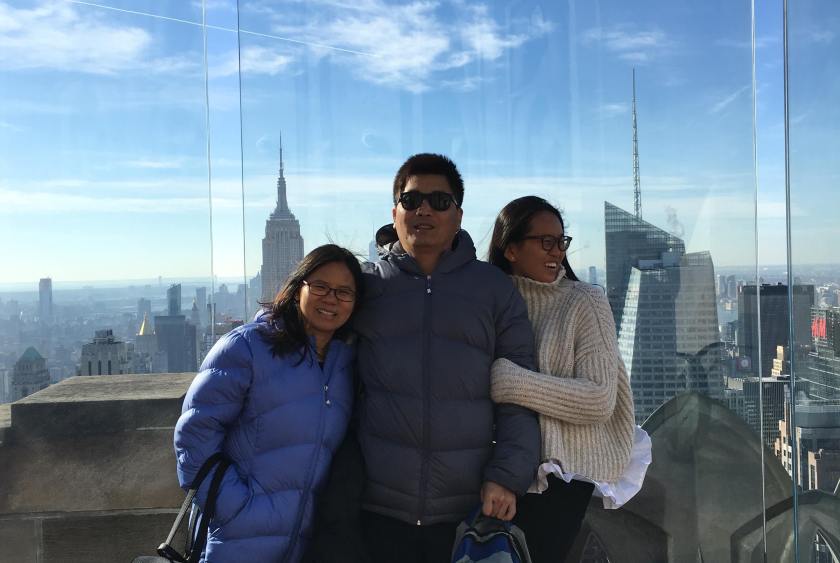
Being in a new country has made me reflect more on the sacrifices and achievements of my parents. I am filled with incredible pride for my parents; the first of their families to go to university, coming from rural China, with relatively poor upbringings, who have managed to create a life for my brother and I where we have always felt comfortable, and for them to support me whilst I live abroad. They moved away from their family and friends to live in country where they didn’t understand the language and culture, where they are part of a social minority. This change to create a better life for me uprooted everything they knew and were comfortable with.

Now, knowing what it is like to live in a country where I barely speak the language, I can begin to grasp the extent of such a change and recognise their sacrifice; although the word falls short. It doesn’t speak of my dad’s over-qualification for a mundane job, and his inability to be promoted because of his English. It doesn’t acknowledge my mum’s obsession with her garden patch, so that she can grow and taste the unique vegetables of her home country. It doesn’t account for the decision they have to make between buying plane tickets back home to see my grandparents, or to send them the money so they can have a better quality of life. It doesn’t address the distance and hurt that was created between us when I was in high school and clung onto Australian cultural ideals that ultimately repressed my Chinese heritage.

Joyce’s mom’s garden patch

All of my privilege and the the resulting happiness is owed to my parents’ sheer hard work, and the sacrifices they have made. Everything they have done has been for me to have a better life than they did. And yet this is not an exceptional tale. Every first generation immigrant has a comparable account of forgoing what they knew for a chance at a better life. I am acutely aware of this now, and regret not acknowledging it earlier and showing my appreciation to my parents. Being a difficult, impatient teen and naïvely taking their efforts for granted has elicited a guilt that now manifests itself here, as an attempt to substantialise my gratitude.

So, to my parents, thank you for always guiding me towards what was best for me, even if I did not always believe it. Thank you for working so hard for the life you have given me. Thank you for your selflessness. Thank you for teaching me how to love, simply; what a glorious lesson to learn. Grateful is not a sufficient word. It does not cover the rush of affection I have when I think about my opportunities, knowing I owe them to my parents. It does not account for me pleading with my brother to be kind to them, and my patience in explaining to him why he should tell them he loves them. It cannot acknowledge my determination and drive for success, so they don’t have to doubt whether their sacrifices and hard work paid off. It does not speak of the promise I have made to myself, to do anything for them at absolutely any inconvenience to myself, for they know more of sacrifice than I ever could.

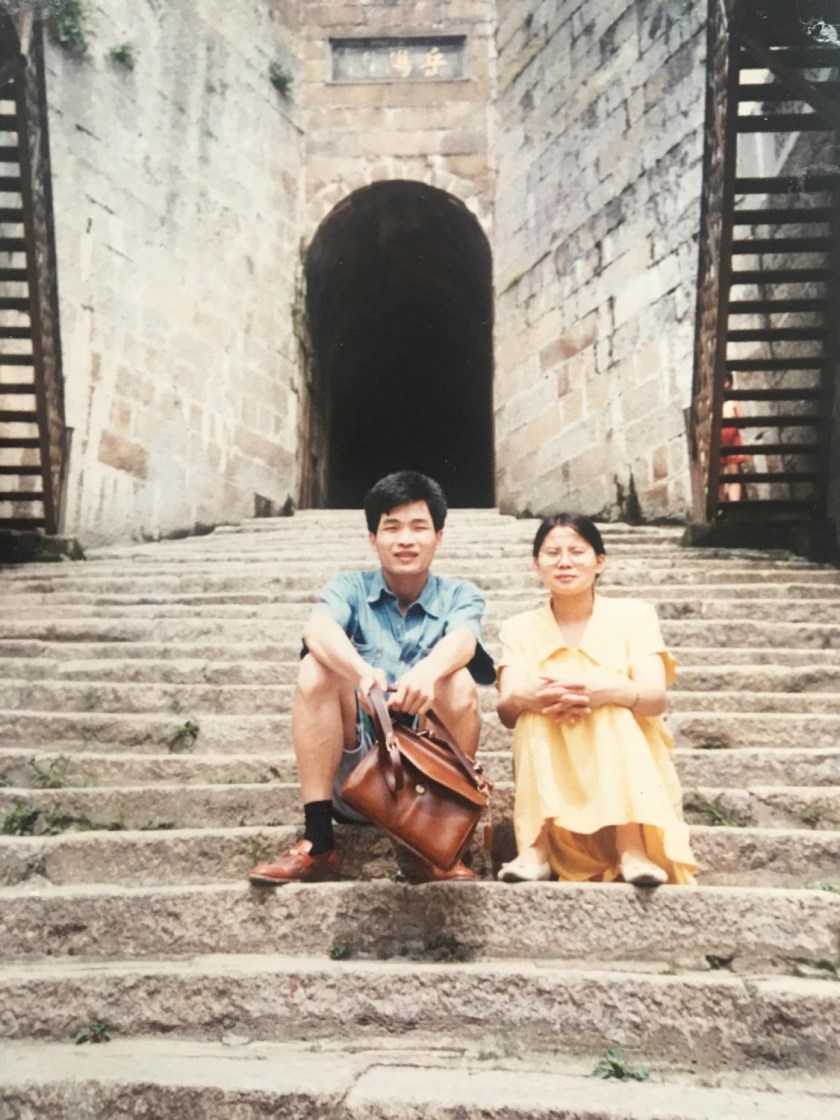
Joyce’s parents when they were young

Joyce Fang is a first-year student at the campus du Havre. She’s from Adelaide, Australia, of Chinese origin. You can find her knocking back beers at Wallaby’s, or furiously studying in the library. She also features in the first episode of the podcast “Wine Society“. She wrote this letter to her parents while taking a break from midterm revisions.

Edited by Pailey Wang and Philippe Bédos

“You Don’t Understand”: Reflections on the Marjory Stoneman Douglas High School Shooti

On February 14th, 2018 in Parkland, Florida Nikolas Cruz brought an AR-15 assault rifle to Marjory Stoneman Douglas High School and killed seventeen people. Florida Senator Marco Rubio, who has accepted $3.3 million dollars in donations from the National Rifle Association (NRA), offered his constituents “thoughts and prayers” in wake of the shooting.

As an American student, this copy-paste response to tragedy struck me as insensitive, because our representatives truly do not understand.

None of our representatives know what it’s like to be in first grade in Orlando: You’re turning in your homework packets you did while watching Arthur on TV and you hear the announcement: “Lockdown in effect”. Your teacher stays composed as she tells you to shuffle into the corners and away from the windows – under the desks where they can’t see you. She closes the curtains, locks the doors, and turns off the lights. You’re still a little afraid of the dark. Sometimes, at home, when the hallways are dark and the light switch is far away, you call out to your mom until you reach it; a periodic reassurance that you’re safe, you’re safe, you’re safe. With your younger sibling, who can only count to seventeen: you do it in your head while they speak aloud. You shush them – it’ll be fine. But mom is forty five minutes away working. So when the custodian comes to check whether the door is locked or not and shakes the handle so hard you can hear the door hit the metal frame, you struggle to keep quiet. You’re an obedient child; you love to follow rules. You like pleasing the teacher and your peers and your parents. Now, when you have to pretend not to exist as the looming figure’s shadow covers the curtain on the door window, you can’t count to seventeen until it’s over, you can’t call your mom. You can’t make a sound. They will find you.

In first grade you’re scared. In fifth grade you’re a little scared too, because last summer your school had a little break-in. Nothing to worry about, they tell you. But suddenly you become more aware of the metal detectors at the entrance and the teachers standing by the front door making rapid eye contact and greeting you good morning as you come in, checking if you belong here; if you’re armed, if we’re safe. You remember, in third grade, when you of all people – who would rather do reading corner than play during recess, who spent free time drafting a first novel (it was awful) – went to the principal’s office for having your fingers shaped like guns and pointing them at the lunch table. “Were you serious?,” they ask, “Did you want to hurt people?” No, of course not. The teacher who found you – she never knew, let alone taught you – would struggle to make eye contact for a long time. You always felt uncomfortable around the principal. Did she still think about it? How hard did I have to work to prove that I was not a school shooter?

You remember wanting to bring your cool Swiss Army knife to school. You and your neighbors used it when you made arrows and bows and wands that summer when trying to film a Lord of the Rings knock off. You were the only girl, so you played all of the girl roles in your ruffled skirt and magenta blouse set – the coolest outfit in your closet after your fuzzy purple hoodie. Your dad says you shouldn’t take it. He hesitates when he says, “Maybe this won’t be the most appropriate thing for show-and-tell.” It is an entire toolkit smaller than your palm. Without him making the link you realize – it is also a weapon. You’re brown already, you can’t be dangerous on top of that. You can’t remember what you brought to show-and-tell.

It’s scary in ninth grade, when after three years of being away from the States you forget what the sound of a door hitting the metal frame sounds like. It’s just Kevin. It’s just Kevin. He and Mr. Cross were joking together yesterday at lunch. It might be Kevin. You can’t see through the frosted glass. It’s over soon enough.

You remember Sandy Hook, almost two years ago. You weren’t home – in America – for it but you remember Obama crying, and kids your baby cousin’s age, being murdered. You’ve grown up in a post-Columbine world, where it feels like there is a shooting every month – if not more. We’ve had eight this year. It’s not scary in tenth grade or eleventh grade nor in senior year.

By the time you’re nineteen and in college a continent away, you’ve heard about more shootings than you can count or remember off the top of your head. You’re eating breakfast and drinking coffee in your monkey-patterned pajamas while listening to National Public Radio on your phone. You’re giving unfair commentary to Steve Inskeep when he relays that the insensitive “thoughts and prayers” is being spewed at survivors by politicians instead of the promise of change and solutions. And then they talk about how old the shooter was and how old the victims were and you think for the first time since Sandy Hook: a man has killed children; babies. This is the first time since Sandy Hook that you remember so distinctly being older than these victims.

You snap back into frustration soon enough – they play a sound clip where the President talks about mental health and fortifying mental health services to prevent these tragedies. Suddenly you’re mad. NPR, being the best, ends their segment with the fact that those with mental health issues are far more likely to be the victims rather than perpetrators of violence. This is why you and so many like you were afraid to reach out when you really needed it. Would they see you as unhinged? Or, even worse, threatening? A depressed brown girl is always more concerning than a precocious student. You cannot go back to being that little kid in the principal’s office. You have it together.

Though, now you’re an ocean away and safe and not judged, all you can think of is what that kid told Rubio. You want to shake your phone and scream it at Congress. You don’t understand.

You don’t understand that I grew up in a world where gun violence is an ever-present reality. Where we always thought, ”this could be us- this could have been us.” I don’t, and hope I never will, understand what it is like to survive a shooting. However, unlike Senator Rubio, I have grown up terrified of them.

This was my status quo: fear. Not the unfounded fear of monsters under my bed. No, the fear of being shot and killed in some fatalistic gamble.

These kids and adults were killed before they could before they could do any of the things they wanted to – lead the lives they were entitled to. And they were killed by guns. Guns are killing people. Mental illness is not the weapon – guns are. You are helping neither those suffering with mental illness nor gun violence by blaming it on this false and unfounded cause.

You are killing children by absolving guns.

This is how I grew up. This was an indelible part of my childhood – and I refuse to let my children live in fear.

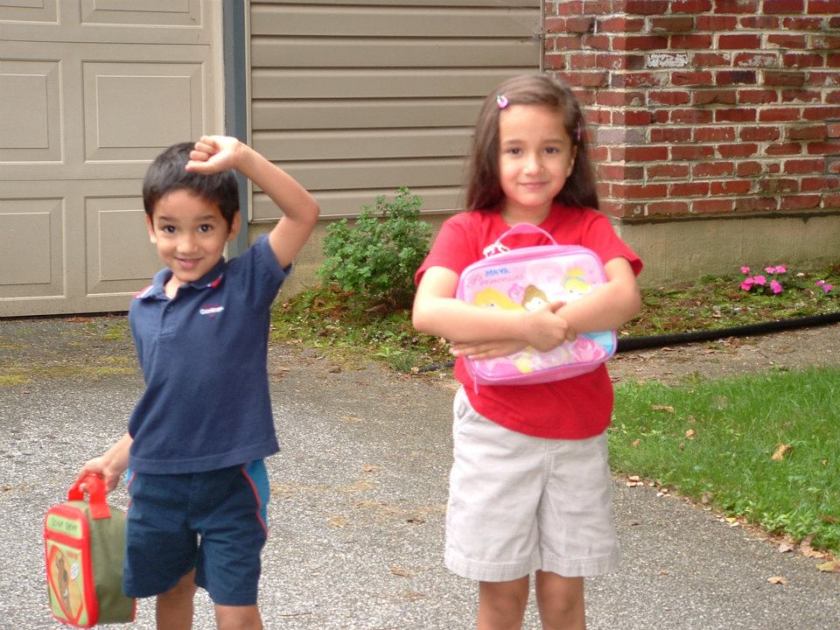
Maya and her brother on the way to school

Maya Shenoy as a child

Maya Shenoy is a first year student in the Sciences Po and Columbia University dual degree based in Le Havre. She was born in Florida and raised in Delaware.

Edited by Paxia Ksatryo and Alex Kloß

(Not) in the Mood for Love?

Valentine’s Day: a taste of “la vie en rose” for some, a day full of cringe for others.

This Feb 14th – whether you’re ridin’ solo or cuffed – Le Dragon Déchaîné has you covered! Here are two playlists – one sweet and the other not-so-sweet – for both the lovestruck and those who bemoan your unnecessary PDA. Treat yourself (and perhaps your partner) to some holiday-appropriate jams. Hope you get up to some rom-antics!

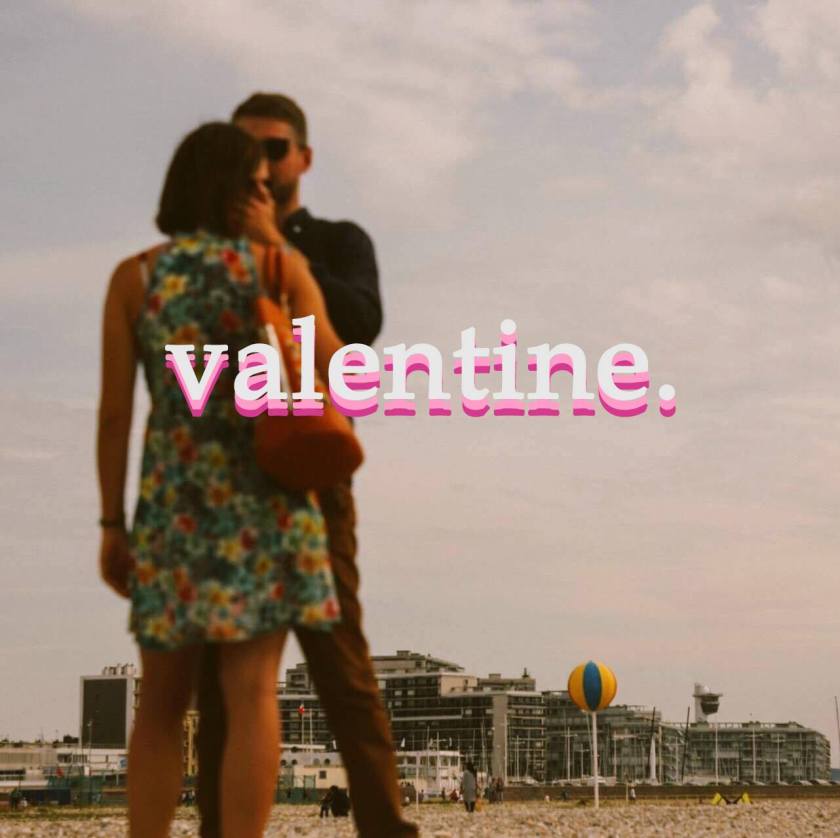
01. valentine

For the unapologetic romantic, we present a collection of love-themed tracks. Ranging from the dreamy ballad to the heavy love confession, this playlist has got you covered – or not!

Open on spotify here

Cover by Marcus Cheah

02. enitnelav

Whether from its cliché or from an emotional sting, Feb 14 isn’t everyone’s box of chocolates. These songs will get you in the (anti-)mood: of heartbreak, apathy, or cautious optimism.

Open on Spotify here

Cover by Yilan Ling

Srivatsan Anand, Leesa Ko, and Maya Shenoy make up the music section of Le Dragon Déchaîné. Listen to their latest playlist on our music tab here