Meet your candidates for SPE!

Interview conducted by Maalavika Hareesh.

*Responses have been edited slightly for clarity

Nathan Gehin

Q: Could you quickly introduce yourself?

Nathan: My name is Nathan. I’m a Sciences Po student in 1A, and I’m running for the post of National Coordinator of SPE.

Q: Why are you running for the position you’re running for, and what makes you the best candidate for it? 

Nathan: I’m running for SPE as the national coordinator because I love talking to people, and I love to spread the message in every Sciences Po. I think I can be good at that because I’m always enjoying it, and I’m always happy to talk to new people and to try to organize new things, in partnerships with Sciences Po universities. I think I have a lot of ideas for this job. For example, trying to find new partnerships with other universities, maybe in a more global, European way.

Q: What are your top three priorities for this year?

Nathan: To make SPE a major association on this campus because we need to be everywhere and to promote sustainability. Secondly, I think organizing more fun stuff around sustainability can be a great thing to promote sustainability. And finally, as I already said, trying to organize new partnerships with other European or world universities can be a great thing. Like they organize the MUN, we can organize a COP. It can be fun.

Q: If viewers could take away just one thing from this interview, what should it be?

Nathan: Just one thing. Vote for me, vote for ecology!


Sylvain Sainte-Marie

Q: Could you quickly introduce yourself? 

Sylvain: I’m Sylvain. I’m running for SPE as the Local Coordinator. I’m pretty much interested in everything, but especially in the environment, and the political question related to the environment; how can we make people involved in this, find solutions, debate and the relation between democracy and environment. I’m also interested in concrete actions, and that’s why I want to run as a local coordinator.

Q: Why are you running for the position you’re running for, what makes you the best candidate for it? 

Sylvain: For SPE, we don’t really run for any position specifically, but I think the position that suits me the best will be local coordinator; the one who is in charge of the relation between the campus, the student community, and the global LH events, activities, and different initiatives taking place there. So, I think what makes me the best or good enough for this position is because I already had the opportunity to create contacts with a lot of associations around LH. For instance, Hangar Zero, where I’m volunteering right now and where I plan on organising some events. And, also, Havre de Vers and some other associations. I think that’s what helps me mostly for this position. And, well, I speak French, and I like to connect with people.

In this position, I’d like to establish long standing links between those different associations around LH and the campus so that people throughout the years have easy access to those associations. 

Q: What are your top three priorities for the next year? 

My top three priorities, I think first would be to have a sort of a program for SPE for the next year; a program based on the next board that will be elected and also what people want so that SPE maybe feels more open, more people can join, propose their ideas, and we can go ahead like this. 

Second will be, I think really the link between Hangar Zero and the campus is something interesting and maybe improving this.

Third, contributing to more sustainable products available on campus. We already have the Veggie Baskets, but maybe further those types of initiatives for the next year.

Q: If viewers could take away just one thing from this interview, what should it be? 

Sylvain: It’s not “vote for me”. I think that SPE is important, and you can do whatever you want with it. It’s also your association.


Thomas Landerretche

Q: Could you quickly introduce yourself?

Thomas: My name is Thomas Landerretche. I’m a 1A, and I’m running for SPE’s head of communications position.

Q: Why are you running for the position you’re running for? What makes you the best candidate? 

Thomas: I feel that SPE’s voice deserves to be heard more on campus. I want this association to have as much attention and love as other associations such as the BDE or the BDA and I feel that my attention seeking personality and my creative mindset regarding problems and promotion would serve SPE greatly.

Q: What are your top three priorities for the next year? 

First of all, having a greater social media engagement with SPE which includes more stories, more posts, more promotion of our events because the events of SPE are really interesting and cool. I feel that with more social media promotion, it could be accessible to more people. 

Secondly, I would love to propose this campus and other Sciences Po campuses to use green energy. I feel that would be a great policy to implement. 

And thirdly, I’d love to organize more events with local LH grassroots organizations. For example, Hangar Zero where we could organize a day where we all go to and help them with their renewable wall projects and other projects that they have.

Q: If viewers could take away just one thing from this interview, what should it be? 

Thomas: I hope that viewers can take away the message that SPE deserves more love, respect, and attention, and I feel that I could bring that to this association.
Slopes, Mishaps, and Hospital Beds: Our Unforgettable Ski Trip with Sciences Po

By Bartholomew LOH and Le-ann PADE

All images credited to the authors.

If you ever want to question your life choices, just go skiing for the first time. Preferably on a mountain where the only thing you know about skiing is that “pizza” means “slow down.” Unfortunately, nobody tells you that “pizza” only works when you actually know how to control your skis.

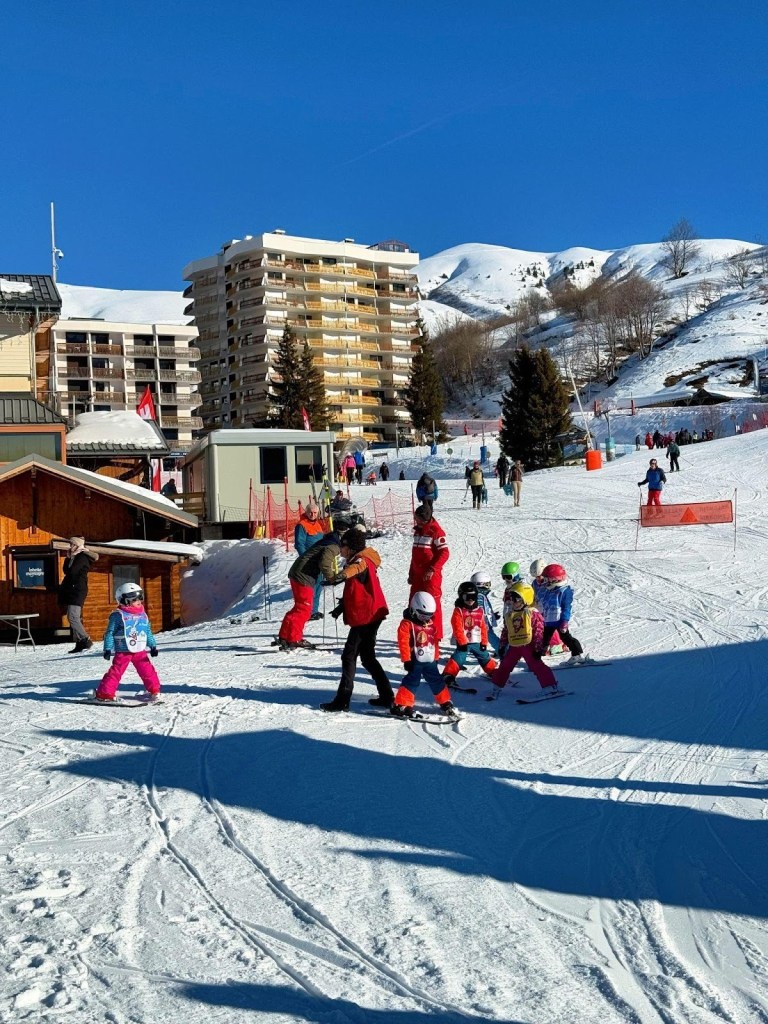
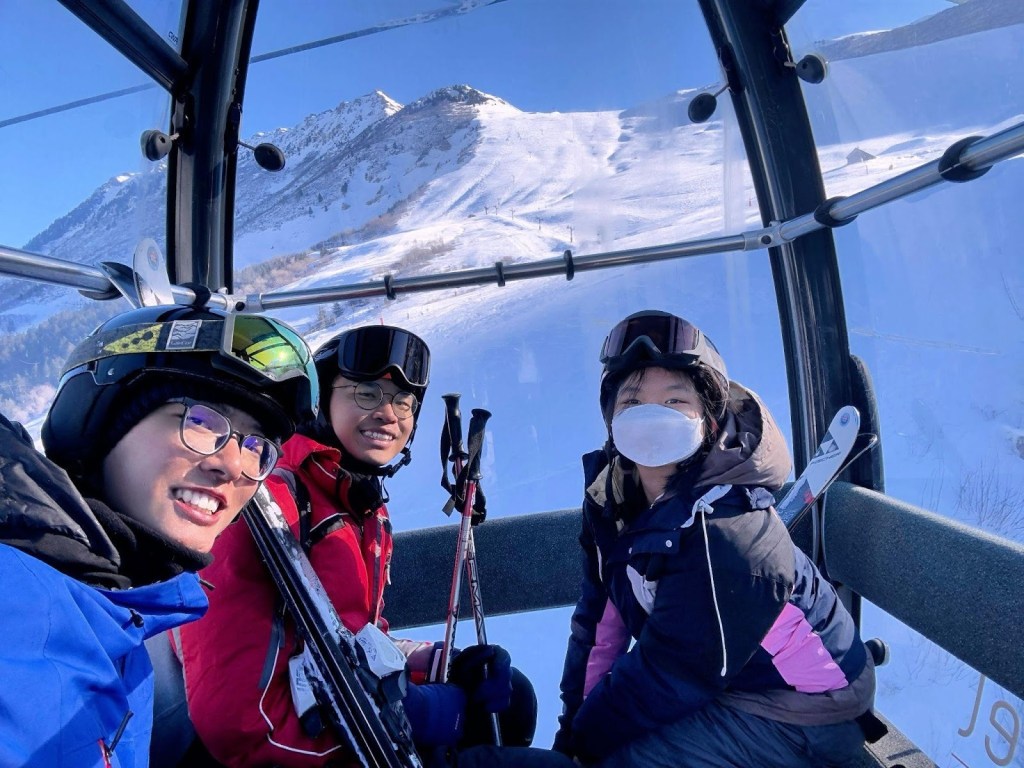
Saint François Longchamp felt like a winter wonderland-at least from the safety of the lodge. For someone terrified of heights, though, the ski lift was the first big challenge. It rattled and groaned as it climbed higher, and I gripped the cold metal bar like my life depended on it.

The moment the ski lift brought me and my roommate up to the ski slopes and we tried to move out of the lift, the inertia pushed me forward, and I couldn’t control it-I fell. Hard. As if on cue, the second my skis touched the ground, I fell again. Hard. Then, just like that. One moment, I was with my roommate, the next moment, I found myself alone on a blue route, which, despite being labelled “intermediate,” felt like a vertical drop of death. 

I spent five hours-yes, FIVE-tumbling, rolling, and sliding my way down that mountain, with only my bruises to keep me company. At one point, a kind elderly lady stopped to lend me a hand and, with a warm and motherly voice, suggested that I should go to ski school. Ouch. If my pride wasn’t already buried in the snow, that comment finished the job.

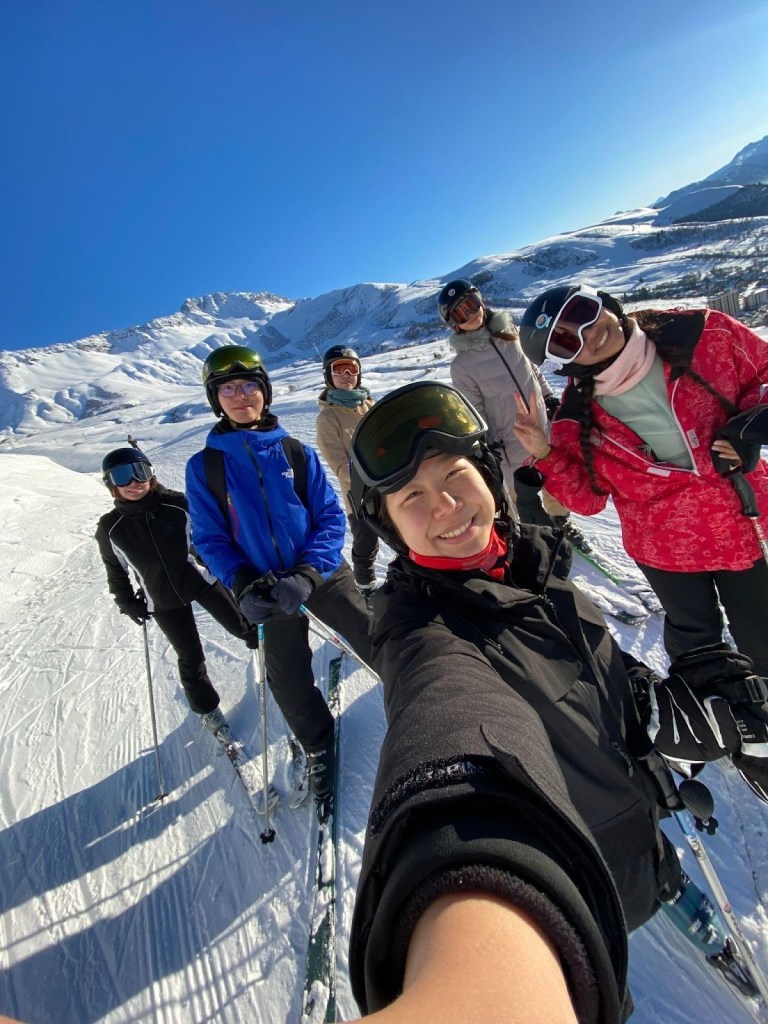
Somehow, I made it to the bottom, convinced I was done for the day. That was until I met Charlotte, Sarah, and Téa, who offered to take me down the same blue slope again-promising they wouldn’t leave me behind. Hoping  for redemption, I agreed. But as we started our second descent, the sun slid behind the peaks, casting long shadows across the snow and draining my energy with every turn and tumble. Every fall felt heavier, every attempt to stand back up slower. Even my friends, who had been lifting me up over and over again, could see how much I was struggling. By the end, even the mountain workers advised me to start walking if I wanted to get down before nightfall. Completely drained, I had no choice but to accept defeat and trudged my way down the slope, each step feeling heavier than the last.

By the time I finally made it back to the lodge, my entire body felt like it had been battered by an avalanche. With a groan, I promised myself that I would rest the next day.

Spoiler alert: I did not. 

The next morning, Boo texted me bright and early, determined to help me master the green route. After the bruising from the day before, I was relieved to find this path relatively flat. Still, I moved at a snail’s pace, terrified of losing control. Boo urged me to pick up speed, but my survival instincts had other plans. Despite my timid progress, I felt proud-I made it down without any major wipeouts!

Later in the day, I practiced with other beginners, which eased my nerves. Their shared trepidation made me feel less alone. By the next day, feeling slightly more confident, I ventured onto a mix of green and blue routes. Each successful run sparked a tiny rush of adrenaline, and I found myself craving more challenge.

With newfound confidence, I decided to challenge the red route: Le Samouraï. Accompanied by Timothy and Yu Xuan, we set off towards Valmorel.  

It all started well-until another skier from nowhere crashed into me. His ski ended up between mine, and before I knew it, we were accelerating down the slope together in an awkward, tangled mess. In a desperate attempt to free himself, he kicked his leg out, sending me airborne. For two surreal seconds, I was flying through the air, before gravity reintroduced itself, and I crash-landed into the snow.  

Something felt wrong. I tried pushing myself up with my left arm, but it refused to cooperate. Realizing the issue, I switched to my right arm and managed to get up. Then I gathered back with Timothy and Yu Xuan at the bottom of the mountain, and we took another cable car back for another round of practice.

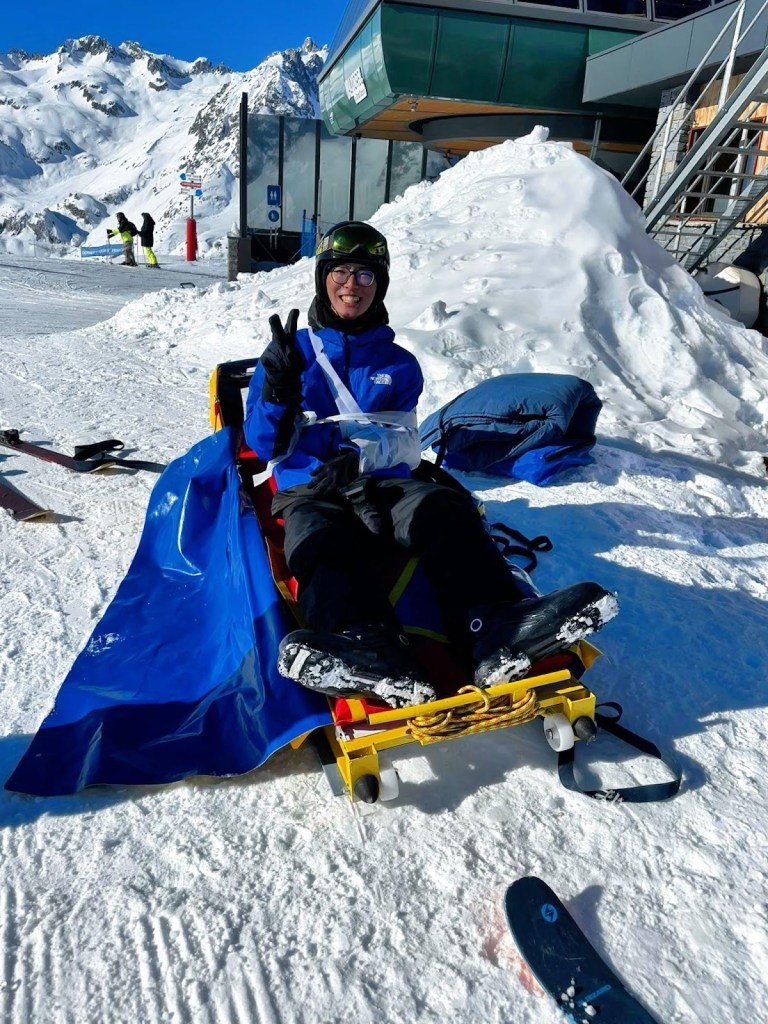
As we ascended, pain exploded in my left arm, now locked in a rigid 90-degree angle, and I knew something was seriously wrong. I immediately went straight to the rescue centre, where the ski patrol guy, with an almost comical level of caution, asked me three times if I was absolutely sure I needed medical evacuation, because he was only obligated to bring me to Valmorel, and not back to Saint François Longchamp. By the third time, the pain was unbearable, and I could only say, “YES!”

He strapped me to a rescue sled, and I slid down the mountain, collecting fresh snow in my face along the way. An ambulance took me to the hospital, where the doctor (bless his soul) tried his best to realign my arm. After X-rays and a handful of painkillers, I finally dozed off.  

When I woke up, I panicked. WHERE was my phone? WHAT time was it? HOW would I get back to  Saint François Longchamp? 

Then came the worst news: getting back to Saint François Longchamp from Valmorel would cost 600€.

Cue panic mode.  

I requested my roommate to check Uber and Bolt-150€ to 250€, much better, but no one picked me up. After 40 minutes of futile attempts, a kind medical assistant called a taxi for me. 

The driver arrived, and I hurriedly got in-on the wrong side. “Other side,” she said, clearly amused. It was only then that I remembered that in Malaysia, the passenger seat is on the left, and I hadn’t sat in a car since coming to France. As I settled into the right seat, I  glanced at the steering wheel, and  suddenly realized something: this woman was driving a Porsche. 

As she drove, my heart pounded-not from pain, but because the fare kept climbing. 100€… 200€… 400€-I watched my bank account shrink in real-time.

At last, I arrived back at Saint-Francois-Longchamp, arm in a sling, wallet much lighter. Selena helped me haul my belongings upstairs, where I collapsed onto the bed. The good news? I had insurance. The bad news? This is France, and the wheels of bureaucracy turn slowly. So, while I wait for the paperwork to process, at least I can say I survived the trip-just not quite in one piece.

I had convinced myself that I was the unluckiest person on this ski trip. Who else ended up soaring off a slope like a misguided rocket, paying a small fortune for a Porsche taxi ride, and staring down a hospital bill?

Turns out, I wasn’t the only casualty. My friend, Lu-Ann-who had seemed perfectly at ease on the slopes-was nursing her own dramatic tale. While I was busy wrangling with bandage and insurance forms, she was quietly recovering from a fractured pelvis, courtesy of an ill-fated blue run (and a tempting Nutella waffle!). Suddenly, my arm injury didn’t seem so unique.

Her experience taught me two things: one, mountains can be merciless to even the most confident skiers; and two, it’s strangely comforting to realize I wasn’t alone in my post-holiday misery. Here’s her side of the story: 

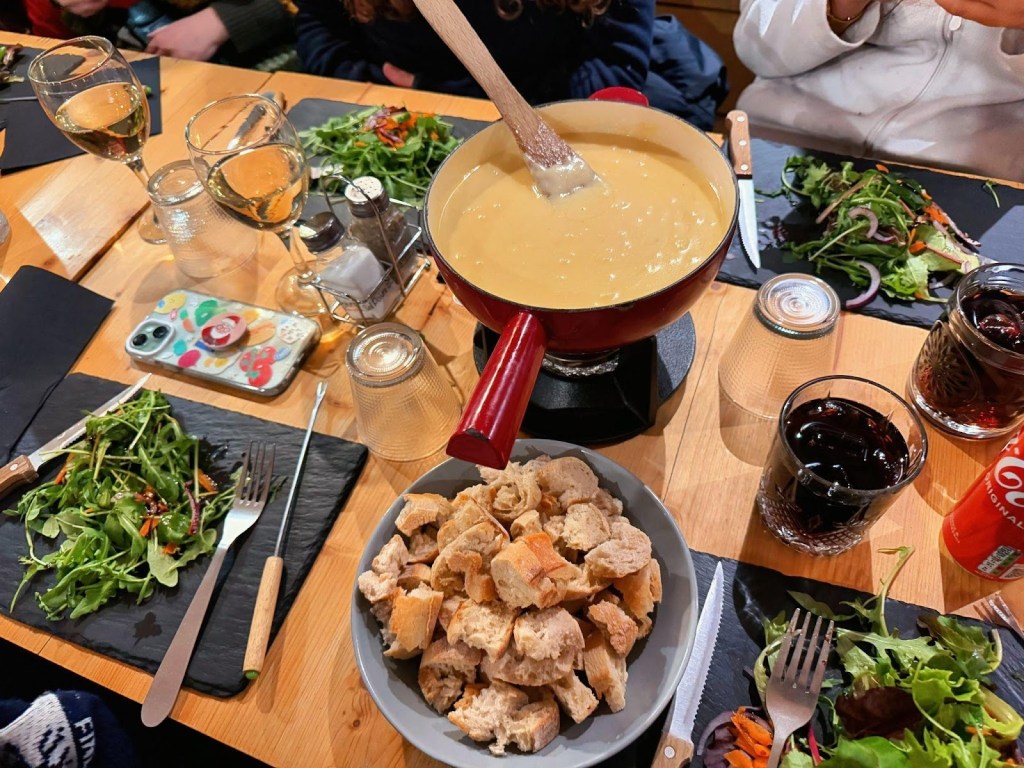
I was incredibly excited to return to skiing after taking a few years off. Since my parents-who always preferred sandy beaches over snowy peaks-never learned to ski themselves, I mostly taught myself. Perhaps it was the mouthwatering aromas of raclette, tartiflette or even croziflette that pulled me back to a ski trip, more than my confidence in hitting the slopes again. 

The first few days on the slopes were nothing short of exhilarating. I admit, there’s always that nagging anxiety on the bus ride-did I completely forget everything from last time? But once I hopped onto the first chairlift, felt the crisp mountain air, and made my initial descent, it all came rushing back: the thrill of gliding downhill, the pride of nailing a turn, and yes, the certainty of a tumble or two. Thankfully, Saint-François-Longchamp and Valmorel catered to every level of skiers, from green slope enthusiasts to black slope (or off-piste-if you dared) addicts. 

Every morning, our apartment descended into chaos as we layered up, searched for misplaced gloves, and ski passes. Lugging skis and poles to the lifts felt like a mini workout in itself, but before long, we fell into a routine-one that, messy or not, felt like a real part of the ski experience.

During the day, it was all about carving fresh tracks from the moment the lifts opened until the very last chair (and watch out for anyone who didn’t hurry up to catch the last ski lift!). Evenings brought a shift in energy: lively bars, bowling alleys, or cozy restaurants dishing up cheesy local specialties, accompanied by some juicy stories (of course, what happens on the ski trip stays on the ski trip!). In any case, my favourite moment was après-ski: the sweet relief of swapping ski boots for something more comfortable and savouring a warm drink or snack beside the slopes.

On the last day, determined to squeeze out every drop of fun before the dreaded chore of packing-I decided to tackle the notorious “Mollaret” piste. It’s sold as a gentle blue run, but fueled by the thought of a Nutella waffle waiting at the finish line, I let myself pick up speed. Then, one badly judged turn sent me flying a few meters forward; worse yet, my ski ended up tumbling 50 meters in the opposite direction, while I continued to roll downhill.

The pain hit me right away, but in my invincible state of mind, I took a few sips of water, gritted my teeth and motivated myself once again to finish this hell of a run. Reality only set in after I reached flat ground, when a sharp jolt reminded me that something was seriously wrong. A quick visit to the doctor later, the diagnosis became official: a fractured pelvis and a mandatory hospital stay. Suddenly, I felt like a real-life Alice in Wonderland, trapped in a room filled with tears-not so much from pain, but because I’d miss the bus home, school, and everything else my friends would be enjoying without me.

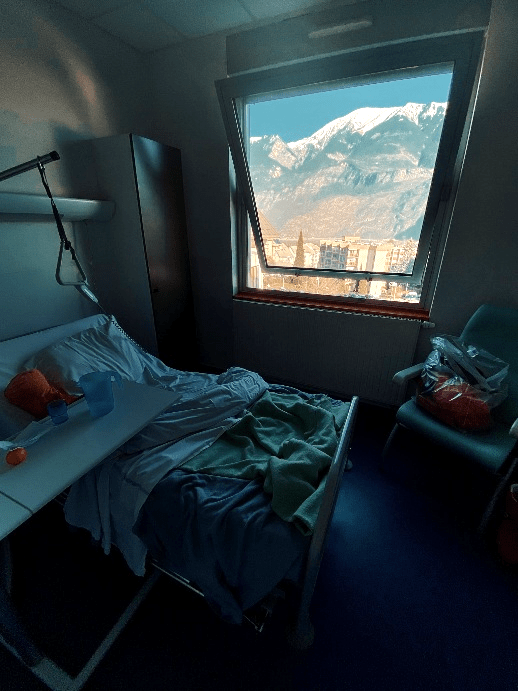
Sure enough, the bus departed without me, my belongings packed away while I stared gloomily out the hospital window. When the ambulance finally arrived on the 19th, it was a bizarre kind of freedom. Since then, life has been a steady cycle of bed rest, injections, physical therapy, and lots of painkillers. On the bright side, I now have a memorable tale to tell. These days, I hobble around with comically awkward crutches, and whenever people ask what happened, I simply shrug and say: “Blame the waffle.”

But rest assured-I’ll be back on the slopes next year. After all, if a fractured pelvis can’t keep me off the mountain for good, nothing can (except the hospital, ambulance and insurance bills)!

L’Hémicycle’s Paris Trip (and more): What To Expect This Year

English text by Carmen Leong

French translation (below) by Claude Leroy-Pinto

If you were lucky enough to have been online when our Google form dropped, you’d know that the annual Paris trip organised by L’Hémicycle will be taking place from 15 to 17 January next year! Thank you to everyone for your enthusiastic participation, and congratulations to the 60 students who managed to snag a spot. Our logistics team is currently working hard to plan a fun and fruitful experience for our participants, and if you’re curious about what to expect for this year’s edition of the trip, this article is for you.

And if you have not been able to register, do not worry! The end of the article should interest you…

Last year, we visited important French institutions like the National Assembly and Constitutional Council, where students learned about the inner workings of the French parliamentary system and watched them in practice. Last year’s participants described the trip as “enlightening”, “enriching” and “insightful”. “In terms of learning,” said one student, “I think nothing compares to actually being inside a living, breathing political institution. At SciencesPo, so much of our studies remain limited to the realm of theory, [so] to watch French politics in practice is something else altogether – even more so for international students like myself.” During our interviews with them, which we posted as an Instagram reel, another student even shared a memorable anecdote from the excursion: when the group took a picture in the National Assembly, Director Hauchecorne commented that at least 1-2 of the students in the picture would be working at the same institution within a few years! Truly a SciencesPo moment. 

In anticipation for this coming edition of the Paris trip, we interviewed Noa Belarbi, the leader of our Logistics team.

Interviewer: What can you tell us about the Paris Trip itinerary so far?

Noa: For now, our goal with this year’s edition of the Paris Trip is to innovate. We still want to provide students with the opportunity to visit national institutions like the National Assembly and the Senate, but we also want to switch things up a little bit so that this trip is stimulating for [returning] students who participated last year. Therefore, we’re hoping to add new activities on the itinerary, including visits to foreign embassies or diplomatic institutions; for our interactive conference, we will also be joined by a new speaker whom we believe will offer great insight and fruitful engagement with students on topics that they might not yet be familiar with. 

To sum it up, this year’s itinerary is all about getting to learn what French politics has to offer in different fields.

I: What will this year’s participants be learning about?

N: The purpose of l’Hémicycle is to render French politics more accessible to students both French and international, from both SciencesPo and other universities. That said, in order to keep the Paris trip financially accessible, we have reserved participation for SciencesPo students only. 

The goal of the trip is to familiarise students with French political institutions for educational and personal benefits. Through visiting these institutions, students will not only learn about their histories and evolution, but also meet and observe the different people working at their heart. Encounters and discussions with political figures will provide students with the rare opportunity to discover and consider new political perspectives, which the board of l’Hémicycle views as the essence of this trip.

I: Other than the Paris trip – and especially for those who did not manage to sign up in time – what else can students look forward to?

N: Other than the Paris trip, l’Hémicycle is going to be organising many events throughout the year. Students can look forward to conferences, discussions and our main event: the Parliamentary Simulation weekend! During this weekend, students from SciencesPo and other schools in Le Havre will gather and roleplay as Members of Parliament. Representing the interests of their “political party” in parliamentary committees, they will discuss, debate and suggest amendments. The weekend will conclude with a plenary session attended by all the MPs, who will debate the different commissions’ work and vote on the proposals of amendment. 

This immersive experience will be not only educational, but also very entertaining, allowing students to meet, discuss and express themselves. We know from previous years that the Parliamentary Simulation weekend never leaves anyone disappointed – we could say it is the highlight of all l’Hémicycle events, so keep an eye out for it!

Clearly, there is much to look forward to for this year’s edition of l’Hémicycle! We hope that after reading this article, students are better informed about what to expect from the Paris trip as well as other upcoming l’Hémicycle events. Until then, follow us on our Instagram account to keep updated on our activities!

Note: Thank you to Noa Belarbi, Connor Donaldson and all interviewees for their insights and cooperation! All quoted responses have been edited for length and clarity.

Le Paris Trip de L’Hémicycle : Ce à quoi s’attendre cette année

Texte en anglais de Carmen Leong

Traduction en français par Claude Leroy-Pinto

Nous espérons que vous avez pu vous inscrire lorsque notre formulaire est sorti. Si c’est le cas, vous savez sûrement que le voyage annuel à Paris organisé par L’Hémicycle aura lieu du 15 au 17 janvier prochain ! Nous tenions à vous remercier pour votre participation enthousiaste, et à féliciter les 60 d’entre vous qui ont réussi à obtenir une place. Notre équipe logistique travaille en ce moment d’arrache-pied pour vous préparer une expérience divertissante et enrichissante. Or, pour l’instant, tout cela vous semble probablement vague. Alors cet article est là pour vous ! Si vous êtes curieux de savoir ce que cette édition du voyage vous réserve, vous êtes au bon endroit. 

Et si vous n’avez pas pu vous inscrire, ne vous en faites pas ! La fin de l’article devrait vous intéresser… 

L’année dernière, nous avons visité des institutions françaises importantes telles que l’Assemblée nationale et le Conseil constitutionnel. Cela nous a permis d’apprendre et d’observer le fonctionnement interne du système parlementaire français (la théorie des cours de PI ne nous suffisait pas !). Les participants de l’année dernière ont décrit le voyage comme “éclairant”, “enrichissant” et “instructif”. “En termes d’apprentissage,” a déclaré un étudiant, “je pense que rien ne vaut le fait de se retrouver dans une institution politique vivante. À SciencesPo, une grande partie de nos études reste théorique, donc voir la politique française en pratique, c’est tout autre chose – surtout pour les étudiants internationaux comme moi.” Lors de nos entretiens, que nous avons publiées sous forme de reel sur Instagram, un autre étudiant a partagé une anecdote marquante de l’aventure : lorsque le groupe a pris une photo à l’Assemblée nationale, Monsieur Hauchecorne aurait glissé aux élèves qu’au moins 1 ou 2 étudiants présents sur la photo travailleraient dans cette même institution d’ici quelques années ! Vraiment un moment SciencesPo.

Comme nous vous savons tous très impatients, pour vous préparer à l’arrivée du Paris Trip nous avons interviewé Noa Belarbi, la responsable de l’équipe logistique.

Interviewer : Que peux-tu nous dire à propos de l’itinéraire du Paris Trip jusqu’à présent ?

Noa : Pour l’instant, notre objectif pour cette édition du Paris Trip est d’innover. Nous souhaitons toujours offrir aux étudiants l’opportunité de visiter des institutions telles que l’Assemblée nationale et le Sénat, mais nous voulons également apporter un peu de nouveauté pour que ce voyage soit stimulant pour ceux qui y ont déjà participé l’année passée. Ainsi, nous prévoyons d’ajouter de nouvelles activités, par exemple des visites d’ambassades étrangères ou d’institutions diplomatiques. Pour notre conférence intéractive, nous accueillerons notamment un nouveau conférencier, que nous estimons capable d’offrir un grand éclairage et un échange fructueux aux étudiants sur des sujets qu’ils ne maîtrisent probablement pas encore.

Ainsi, l’itinéraire de cette année vise à découvrir ce que la politique française peut offrir dans une multitude de différents domaines.

I : Que découvriront les participants cette année ?

N : Le but de L’Hémicycle est de vulgariser la politique française aux participants, qu’ils soient français ou internationaux, de SciencesPo ou d’autres universités. Cela dit, afin de rendre le Paris Trip accessible financièrement, nous l’avons réservé uniquement aux élèves de SciencesPo.

L’objectif du voyage est de se familiariser aux institutions politiques françaises, tant pour des bénéfices éducatifs que personnels. En visitant ces lieux, nous apprendrons non seulement leur histoire et leur évolution, mais rencontrerons aussi les différentes personnes qui y travaillent. Les rencontres et discussions avec des figures politiques offriront une occasion de découvrir et d’envisager de nouvelles perspectives, ce que le bureau de L’Hémicycle considère comme l’essence de ce voyage.

I : Mis à part le Paris Trip, et notamment pour ceux qui n’ont pas pu s’inscrire à temps, à quoi d’autre les étudiants peuvent-ils s’attendre ?

N : En dehors du Paris Trip, L’Hémicycle va organiser de nombreux événements tout au long de l’année. Tels que des conférences, des discussions et notre événement principal : le week-end de Simulation Parlementaire ! Durant ce week-end, des étudiants de SciencesPo et d’autres écoles du Havre se réuniront et joueront le rôle de députés. En représentant les intérêts de leur “parti politique” dans des commissions parlementaires, ils débattront, discuteront et proposeront des amendements. Le week-end se terminera par une séance plénière à laquelle participeront tous les députés, qui débattront des travaux des différentes commissions et voteront sur les propositions d’amendements.

Cette expérience sera aussi ludique qu’enrichissante, permettant aux étudiants de se rencontrer, de discuter et de s’exprimer. Nous savons d’après les promotions précédentes que le week-end de Simulation Parlementaire ne déçoit jamais personne—on pourrait dire que c’est l’événement phare de tous ceux de L’Hémicycle, alors ouvrez l’œil !

Il semble qu’il y a beaucoup à attendre de cette édition de L’Hémicycle ! Nous espérons qu’après avoir lu cet article, vous en savez plus et que vous avez hâte des autres événements à venir de L’Hémicycle. D’ici là, suivez-nous sur notre compte Instagram pour rester informés de nos activités !

Roadmap to WEIS

by Annabelle Leung

Viola, AS President!! 

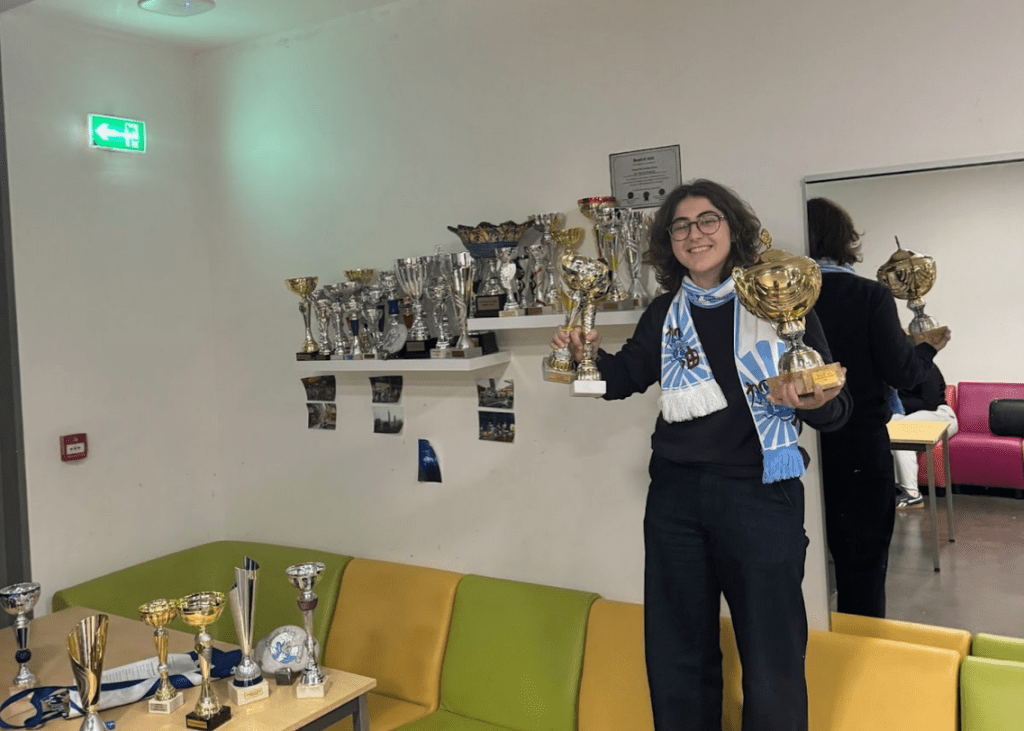
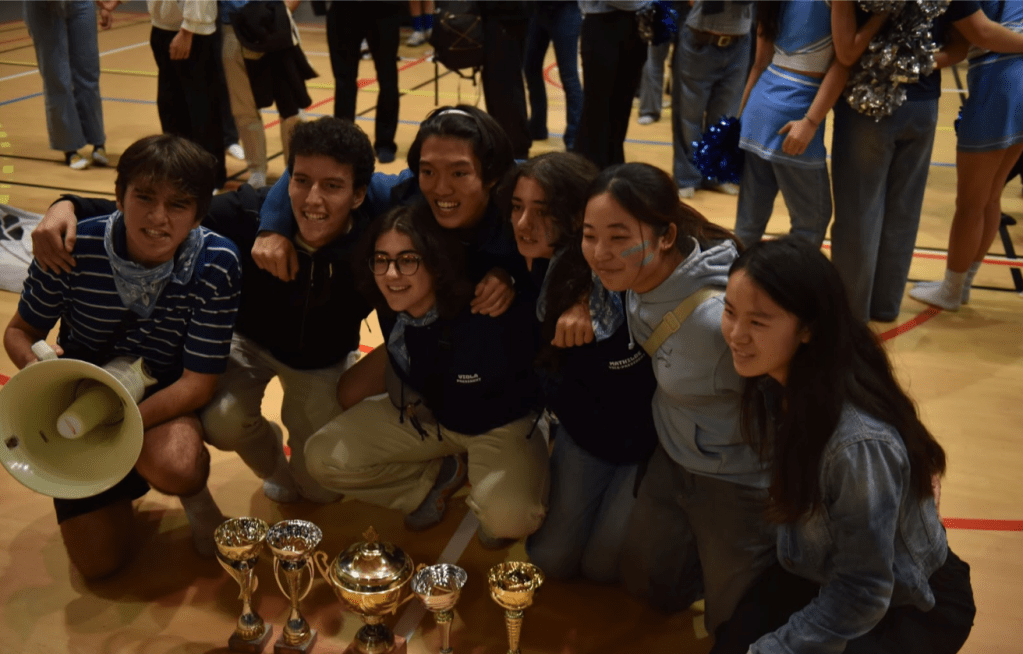
Born This WEIS – the 2024 edition of Sciences Po’s annual inter-campus sports competition saw historical achievements, most notably credited to Le Havre campus athletes. An introspective interview with AS President, Viola del Corona, runs us through the entirety of events and matches held in Nancy. She describes in detail LH’s pathway towards our podium victory. The fact that a list is required to entail all accomplishments in this article also demonstrates the significant progress in sportsmanship that our campus has undergone, which has ultimately paid off. 

WEIS prizes by LH! 

5 trophies:

•⁠  ⁠Prix d’Ambience (first place)

•⁠  ⁠⁠2nd place Table tennis

•⁠  ⁠⁠2nd place Cheer

•⁠  ⁠⁠2nd place Foot f

•⁠  ⁠⁠2nd place Foot m

Semifinals

•⁠  ⁠semis for Volley (4th place)

•⁠  ⁠⁠semis for Rugby f (4th place)

•⁠  ⁠⁠playoffs for Basket m (4th place)

Upon arrival at the sports facility – straight after an 8 hour bus journey – the restless weekend of competitions commenced. Viola recalls her own participation in Female Basketball, Football and Rugby. 

The second day was pretty intense for female sports because there was the entire football tournament all crammed into one day,’ she recalls, reflecting the intensity of physical activity due to the time constraint of 3 days.  Nevertheless, Viola acknowledges that events including the official opening ceremony, the barathon, and club night organised by Nancy’s Bureau des Sports (BDS) were populated with students of all campuses. With a rap song featuring LH PROPA members Gabriel & Sara performed live, the atmosphere at the club night was undeniably pleasant. It underscored conviviality and enjoyment after strenuous competition. 

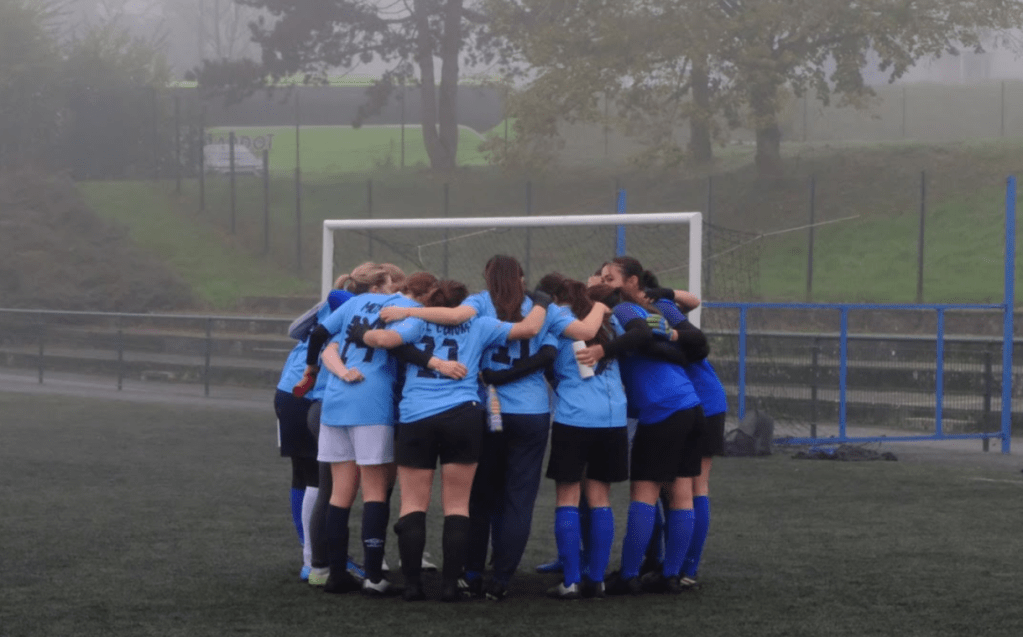
When asked about her favourite event, Viola chuckles as she expresses her satisfaction with the female Football team’s accomplishments. “We got to the semi-finals, which was amazing because then we won against Poitiers … at the final —  like I just started crying … a bit of it was because of how tired I was […] the emotions were just incredible’. 

Female football reached 2nd place overall. (image: Football F team – shot by Thomas Funkleder) 

Viola noted, though, that members “didn’t even expect to go past the group phase. This is actually something that was common to most sports.” This is evident in male Football, where Ryoma’s goal in their 3rd round propelled LH into the semifinals for the 1st time in history. More astounding was that this happened while player Anis was carrying an injured hamstring. His persistence on the field, along with the others, carried them all the way into Football M Finals, again for the first time in history.

 ‘I never expected us to go this far… I’m so happy’, expresses Taiga Shitara, captain of the Football team. 

LH WEIS Football M team – shot by Thomas Funkleder

The Football M team got their first ever win last year against Dijon, during Minicrit 2024. Previously the LH team had never made it past the group stage. 

Another achievement of the season was bagged by the cheerleading squad; LH placed 2nd overall.

This notably occurred despite the lack of coaches provided to the LH Cheer team, an advantage that some campuses possessed.  The increase in frequency of cheer practices seemed to pay off in the precision of movement and accuracy of jumps, as seen in playback videos.“Our team has worked so hard for WEIS and I’m really proud of all of us! We’re going to keep our minicrit plans a little secret for those outside the cheer team, but expect the biggest, boldest, and brightest performance our campus has seen yet,” hints Noelani Aung, co-captain of LH Cheer. WEIS’ stunts included Noelani’s clock stunt and Nicky’s suspended front flip, both completed without a trace of sweat and drove supporters into a standing ovation towards the end of the performance.  (image: Noelani’s clock stunt – shot by Thomas Funkleder) 

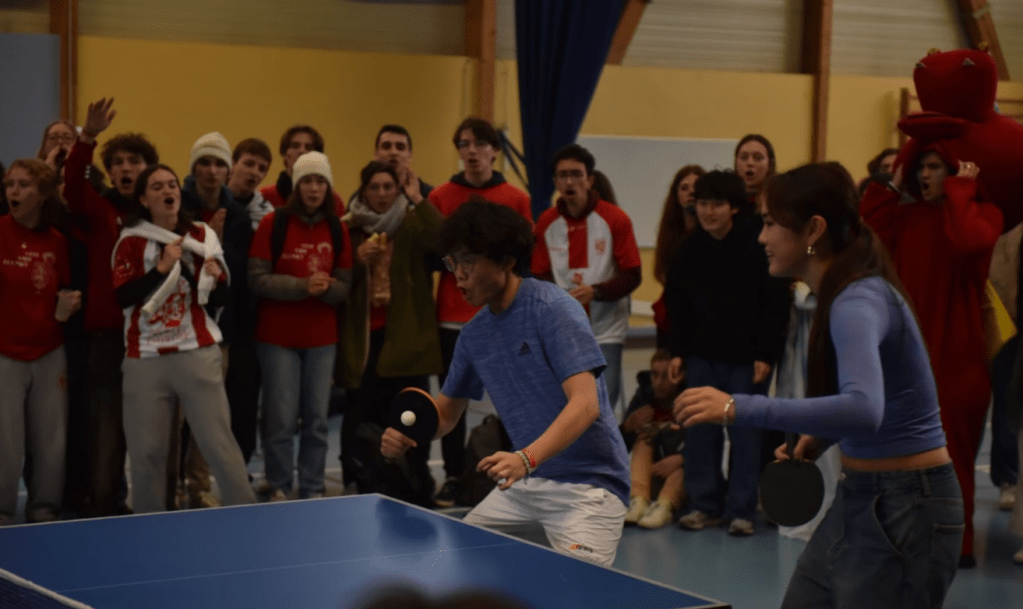
In addition to the conventional lineup, this year’s surprise sport was table tennis. LH representatives Hugo and Sara took the trophy home with 1st-Runner Up. Likewise, there was a lack of resources due to campus budget constraints. A conversation with Hugo informs that ‘there’s not much preparation…to the extent that we actually did not have our own rackets and table tennis balls for Sara’. Nevertheless, his highlight of the day was the LH v. Menton match. 

“We were losing by 10 to 7… the opponent only needed 1 single point to secure the victory. However, with a bit of luck…. we secured five consecutive points, and we beat Menton by 12 to 10… it was a very memorable moment for me.” Hugo plans on taking periodic advantage of the table on campus to foster the development of technique. (image: Hugo & Sara v Nancy – shot by Thomas Funkleder)

Lastly, it is important to note that LH received commendation for athletic sportsmanship, albeit some mishaps construed by other campuses. Viola compliments her AS team, expressing gratitude for Orso and Madhava for communicating with French logistics. She also notes that campuses “loved AS… the whole delegation received a lot of compliments from Nancy saying that we were really respectful … something to be really proud of I think.” 

Le Havre placed 3rd Overall in WEIS 2024. 

(image: AS Le Havre from left to right – Orso, Madhava, Viola, Yasumasa, Mathilde, Nodoka, Anya) – shot by Thomas Funkleder 

Le Havre students will finally be able to make their voices heard before the central administration of Sciences Po Paris !

Union Etudiante Sciences Po Le Havre 

During the October elections, the Union Étudiante won 49% of votes, a landslide by any metric.  We thank you for your mobilisation and your trust! This victory gives us the chance to have two Le Havre students elected to the Conseil de la Vie Étudiante et de la Formation (CVEF) : Lino Battin this year and Lisa Debaud next year. But what exactly is the CVEF? The Union Étudiante will explain the stakes and how we plan to ensure that these seats benefit the entire campus.

The CVEF is the council where students are the best represented proportionally : 8 students out of 18 seats (the rest of the seats are allocated to professors, teachers, researchers, and staff representatives). This council “determines the conditions under which users exercise their political and union freedoms and cultural activities“, a key role given the authoritarian practices of the administration in recent months. The direct interest for our campus is that the CVEF is also the body which “oversees and coordinates student life in regional campuses.”

Practically speaking, the CVEF votes on the academic framework, student life regulations, and maintains the link with student associations. It is truly the council most connected to what happens on our campus; for example, the amount of subsidies for Le Havre associations are voted on there. It is also the place where we will express our demands to have more teachers and a wider range of courses on regional campuses.

It’s true that this council isn’t very powerful within the organisational structure of Sciences Po:  it has no decision-making authority and is only consulted for major decisions that affect students. Most of the power is held by the Conseil de l’Institut and especially by the Conseil d’Administration of the FNSP (the private part of the institution). The latter consists of only two students, while “ten founding members” who are very disconnected from the interests of Sciences Po and its students—such as the directors of Carrefour and CMA-CGM—co-opt each other year after year. Through this system, power is convoluted, turning the school into a business by increasing tuition fees while neglecting social justice and a quality, free, and emancipating education. 

Despite this blatant lack of democracy, we will do our best through the seats we won at the elections to make the voices of Le Havre students heard. This is why  we will organise meetings before the CVEF councils, where we will present the agenda of the CVEF council to help everyone understand what is being decided far away in Paris. This meeting will provide for students on our campus an opportunity to discuss our key points for the council in defence of our campus and to hear any suggestions or requests you may want to address to Paris, including positions to adopt, arguments, or any other concerns.

We hope to see many of you at these meetings, where everyone is welcome !