Mushus, Meet Your Candidates for HD!

by Nayantara Maitra Chakravarty

Yatika Singh

Q: Okay, can you give us a quick introduction to yourself? 

A: Okay, my name is Yatika and I’m running for HD. I’m from India and I want to transform the pre-professional side of HD because I believe in the other aspects HD is doing excellently, but I think there can be a major revolution, if I may say so, for the pre-professional side. 

Q: What would make you the best candidate for it? 

A: I am extremely committed to making sure that everybody is successful. I want you to succeed and I will do anything possible for that. And I’m very good at utilising the resources of the pre-existing institution and mobilising them for your needs. And as a student council member at my last school as well, I was also very actively involved in connecting alumni to mentor students. So I’m very familiar with working in pre-professional areas. And I want to implement things like that, even at Sciences Po.

Q: What are your top three priorities for the next year? 

A: My top three priorities for the next year would first be to make sure that students at Sciences Po, whether it’s first years or second years, do not feel unequipped to take on the professional world after Sciences Po ends. Whether you’re doing a master’s or not, I believe that everybody should have some core professional competencies in terms of soft and hard skills, such as networking and conflict management, to make sure that you feel comfortable in the future workspace. Secondly, I think one of my priorities would be to make sure that SciencesPistes at the Le Havre campus are exposed to as many different perspectives and voices through HD speakers as possible, whether it’s for your career related talks or for academic or cultural or political talks. But I believe that the speakers could be expanded and we can also add panel discussions and roundtable discussions and more of a Q&A interview style presentation to the speaker events. My third priority for HD would be to make HD a cozy environment which is not very intimidating because sometimes HD becomes larger than itself and I feel like it’s very important to make it rooted and grounded in what students actually want, whether it’s in the cultural aspect or the political aspect or pre-professional, anything it may be. So I want it to be inclusive, accessible and mobilized for you. 

Q: If viewers should take away one thing from this interview, what would it be? 

A: The only thing I want you to take away, if I have to make it the only thing, would be that I am ready to work for you and I am extremely committed to making sure that your speeches get what they deserve when they’re in an institution which ranks number two in the world for politics. 

Swapnarka Arna (CJ)

Q: Can you give a quick introduction? 

A: Hello everyone, I’m CJ and I’m running for Havrais Dire, HD. 

Q: Why are you running for this position and what makes you the best candidate for it? 

A: Well, since the very beginning, I’ve been extremely involved and active in politics, not only on campus but off campus as well. I’m a journalist on this topic. I’m an indigenous rights activist. And also, I fight for the rights of even the most marginalized communities. I think we need more political activism and more involvement in politics on campus, and we need to provide a platform where we can freely express our views. 

Q: What are your top three priorities for the next year? 

A: It’s very simple. First of all, unite the French and international students. Secondly, is to protect free speech. Your speech matters, your views matter, and we need to protect it. And finally, we need more political activism on campus. Bring back politics to campus. This is the heart of student life. We need more events, more fundraisers, more guest speakers. Bring it all. 

Q: If viewers could take away just one thing from this interview, what would it be? 

A: It’s very simple. CJ cares and CJ delivers. I have ideas on what to do. I want to bring in ambassadors who can enlighten you on world politics. I want art for activism, where we use art for activism. It’s pretty self-explanatory. I want more fundraising events to help people in need, whether it’s from climate disasters in Asia, or human rights defenders, or helping women in Afghanistan. This is what we want to do. We want to create an impact, not only on campus, but on the world around us. And that’s the difference that we as students of Sciences Po need to make. 

Viren Gemini

Q: Can you first give a quick introduction to yourself? 

A: My name is Viren Gemini and  I’m a 1A on this campus. 

Q: Why are you running for HD and what makes you the best candidate? 

A: I’m running for HD because I’m interested in making sure that we have a more streamlined approach to debate, speaking, and cultural events and activities. And after a lot of deliberation, I came to four main ideas that I want to implement if I get elected. I want to make sure that I have a clear aim if I do get the chance to be a part of HD. And I want to focus on expanding some clubs that are dormant at the moment and making sure that HD is a bigger deal. Working with other campuses, I’ve had the opportunity to go to some. Recently I went to Reims and I was able to talk to people. They’re very interested in collaboration. That’s something that I’m very open to. And the other week collaboration beyond campuses, but use leveraging Sciences Po’s network to make sure that the existing clubs have wider access and more projects that they can work on. For example, the Economic Society, the Finance Investment Society, and the Geopolitics Society. And that links me to my third point, which is my idea of creating a think tank that will focus on the Asia Pacific. So really emphasizing our unique identity as a campus, something that brought us all here together, the idea of analyzing and common providing commentary on the Asia-Pacific actively. And I really want to work on that with collaboration from multiple clubs in HD and make that a streamlined initiative for next semester that will be consistent. And last but not least is the student voice. I want to work on a citizen’s assembly, something that I’ve heard the Year Reps talk about. I’ve heard chatter around campus and that should be something that’s very active and consistent and make sure that student voice is heard on all matters. 

Q: And what makes you the best candidate to do this? 

A: I believe I’m willing to allocate a lot of time. That’s something that I believe is very important for someone that’s running for assos. I put a lot of time into thinking whether I’ll be able to dedicate the effort and what it takes to achieve what I’m saying, which is nothing easy and which is nothing minor. It involves taking the initiative to organize events, inter-campus events, collaborations, these are not things that are going to be easy and I want to work, I want to put in the effort to talk to admin, to talk to other campuses, to talk to other institutions, corporations, reach out to them, use the Sciences Po network to make sure that we are having, we are creating an environment that’s vibrant and full of conversation, learning, cultural exchange, and pluralism, where French international students, all of us can come together and talk. 

Q: Lastly, if viewers could take away just one thing from this interview, what would it be? 


A: Vote for Viren!

Felicia Aldiyani

Q: Could you first give a quick introduction to yourself? 

A: Hi everyone! I’m Felicia, I’m from Indonesia, and I’m running for HD. 

Q: Why are you running for HD and what makes you the best candidate for it? 

A: I’m running for HD because this semester I’ve been involved in quite many HD clubs so I kind of observed how 2As organize the events and I’m just more familiar with the environment of HD and I also have quite aspirations of what kind of events and what kind of campus life that I want to implement through HD. And what makes me a perfect candidate is because I myself already saw how two ways they coordinate, they’re working together to make HD a more friendly environment for everyone and to provide everyone with the best programs that they all dream of. 

Q: What are your top three priorities for the next year? 

A: So I actually have three main programs. First is the Speak Up series. So as usual, we will invite guest speakers but this time it’s quite different because we also want to open the stage for you guys, for students. So if you have any knowledge about anything, any topic that you’re interested about, and you want to share it with fellow friends, we’re opening up the stage for you. And then second is career advancement tracks. I feel like campus is a perfect place for us to grow and to seek opportunities in terms of career preparation. So we also want to have workshops, seminars, and invite speakers such as interviewers to help us with knowledge about cover letters, interview preparation for internships and career networking also. And the last program is mentor mentee project because I feel like us coming from different school backgrounds, we don’t have the exact same skills and knowledge in terms of academic research and writing for classes. So with mentor 2As who are willing to mentor the 1As, there will be a collaborative project between pairing the 2As and 1As. 

Q: And lastly, if viewers could take away just one thing from this interview, what should that be? 

A: One key takeaway from this interview is that we hope that as the next HD board, we will be able to provide and facilitate you guys with whatever you dreamt of when you’re thinking about HD and whatever you need for your pre-professional career preparations and stuff. And don’t forget to vote for me.

Phuong Anh Nguyen

Q: Could you give a quick introduction to yourself? 

A: I’m Anh. I come from Vietnam. I grew up in the south of Vietnam and I traveled a lot. I lived for a while in Malaysia and Singapore. I am obsessed with academic and pre-professional opportunities. Growing up, I received a lot of help when it comes to career guidance and academia. And for that reason, I want to give back and I want to foster an energy of LinkedIn obsession, be professional and academia obsession on campus. And for that reason, I’m running for HD. 

Q: What makes you the best candidate for HD? 

A: First off, I think I have the skill set that is required for HD, which I define by being able to reach out to cool people, being able to scout for opportunities, and having the mindset of giving it back and spreading this energy on campus. I have had exposure to a lot of pre-professional and academic opportunities. So personally, I received a lot of help when it comes to exploring different industries. I heard from alumni in my dual degree about it, and I was feeling that it’s a pity that it’s only shared to a very small group of specific people. And with that exposure and that very concrete idea of how pre-professional opportunities should look like, I think that is a significant leverage for me to become in the HD board to further spread and make this opportunity more accessible to everyone. Furthermore, I have an appreciation for diverse cultures. I travel a lot. I just grew up with parents who are obsessed with traveling. And I noticed that we have a lot of cultural initiatives on campus. However it could have been much more diverse and inclusive. And that is what I want to push for as a potential HD more member. 

Q: What are your top three priorities for the next year? 

A: So first off, I want to push for more learning opportunities from alumni and professors. and institutions as in Sciences Po or institutions that Sciences Po is connected with. I think Sciences Po has an amazing network of alumni and professors however we only know of them through like a very formal capacity like in class or small talk and if we ever have any cool opportunities it’s because of individuals reaching out to professors and I want to make that less of an exclusive-sounding thing and more of something that is available to everyone. For example, hosting talks from professors. I think we have amazing professors within the school itself. it’s not always the case that we need to reach out to far off people. So facilitate more learning opportunities with our alumni professors. Second thing is to make cultural clubs or associations more inclusive, more diverse. We have voices that are not yet entirely heard on campus. I noticed that personally in my role as year rep. And third is to make the process of implementing new initiatives more efficient and faster within the administration. And I have had experience doing that as Year Rep as well. 

Q: Lastly, if viewers could take away just one thing from this interview, what would it be? 

A: I am committed to promoting more accessible opportunities and more diverse and inclusive cultural initiatives. And I think I could do the job. 

Carmen Leong

Q: Can you give us a quick introduction to yourself?

A: Hi, I’m Carmen. I’m running for HD. 

Q: Why are you running for HD and what makes you the best candidate for it? 

A: So I’m running my campaign based on three principles, accessibility, communication and transparency. I chose to run along these lines because I think I would like to make HD more accessible to the student body. And you’ll see later in my campaign, or you’ll have seen in my campaign election video, that I interviewed a few students to ask what they would like to see for HD in the coming year. And this is the kind of dialogue between HD and the student body that I’d like to bring more of through feedback platforms. For communication, I’d like to make HD a more regular presence on campus. Lastly for transparency, I think a lot of us don’t know what goes on behind the scenes within HD’s board. And so when running or deciding to run for HD that was something that I kind of struggled with, and I had to reach out individually to the members of the board So if I am elected for HD I would like to increase the transparency of what we do behind the scenes. For example, how we are managing the budget, how we are delegating it to the different clubs. I think you should vote for me for HD because I am collaborative and if you come to my events on Tuesday night and Thursday morning, you will be able to see that I work well with my potential board members. I’m also organized and responsible and creative. 

Q: Lastly, if viewers could take away just one thing from this interview, what should it be?

A: I think viewers should vote for who they think is most capable and who they believe will carry out their promises. 
Roadmap to WEIS

by Annabelle Leung

Viola, AS President!! 

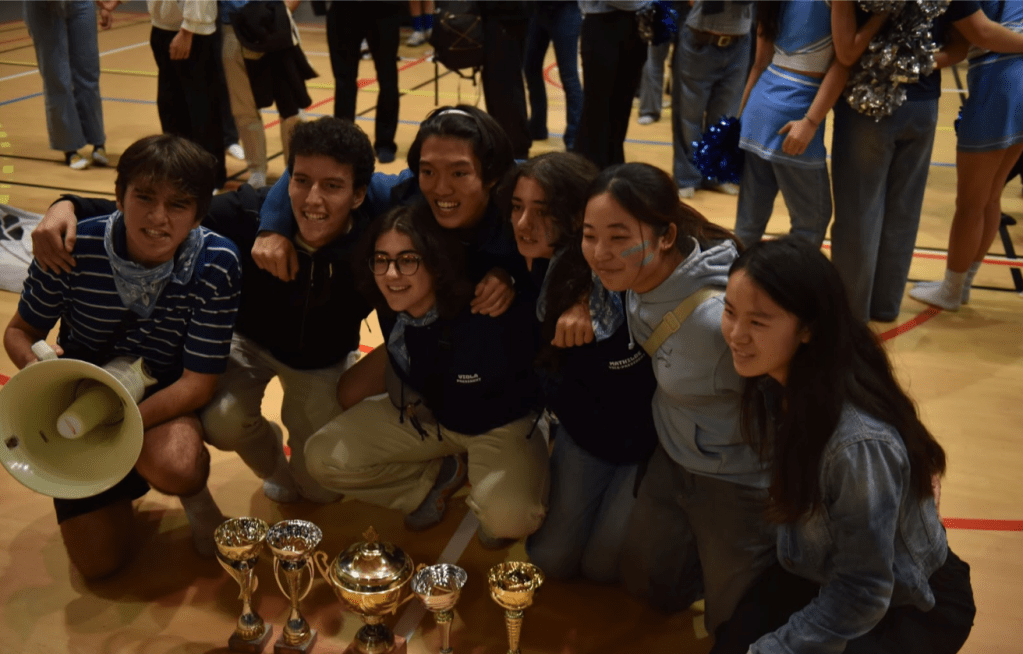
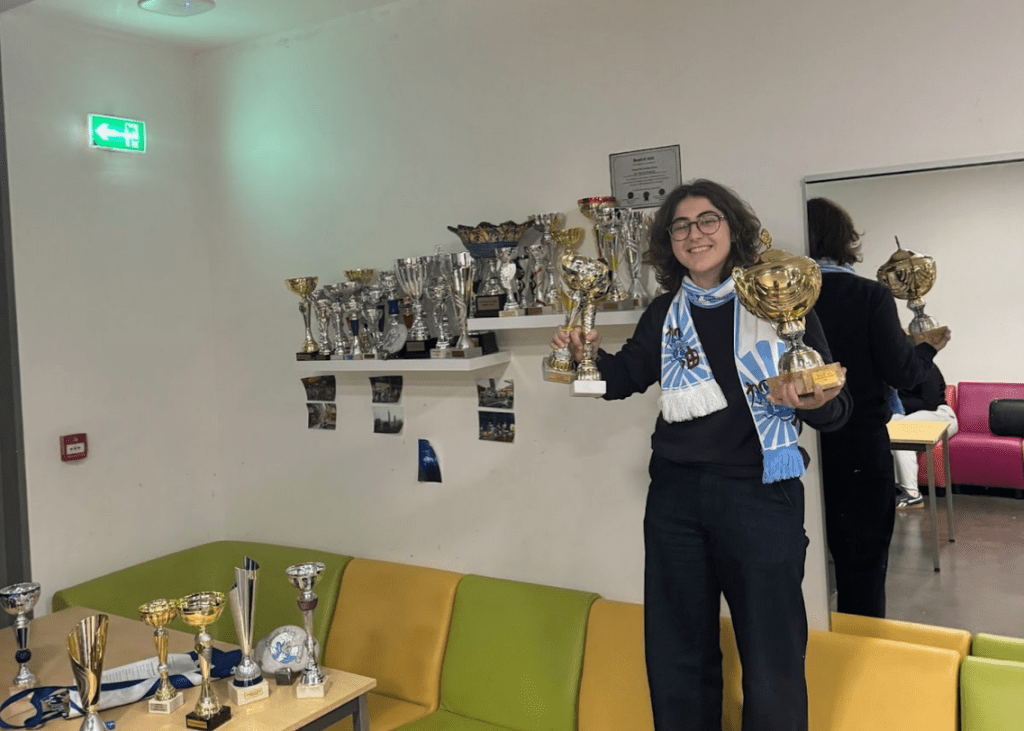
Born This WEIS – the 2024 edition of Sciences Po’s annual inter-campus sports competition saw historical achievements, most notably credited to Le Havre campus athletes. An introspective interview with AS President, Viola del Corona, runs us through the entirety of events and matches held in Nancy. She describes in detail LH’s pathway towards our podium victory. The fact that a list is required to entail all accomplishments in this article also demonstrates the significant progress in sportsmanship that our campus has undergone, which has ultimately paid off. 

WEIS prizes by LH! 

5 trophies:

•⁠  ⁠Prix d’Ambience (first place)

•⁠  ⁠⁠2nd place Table tennis

•⁠  ⁠⁠2nd place Cheer

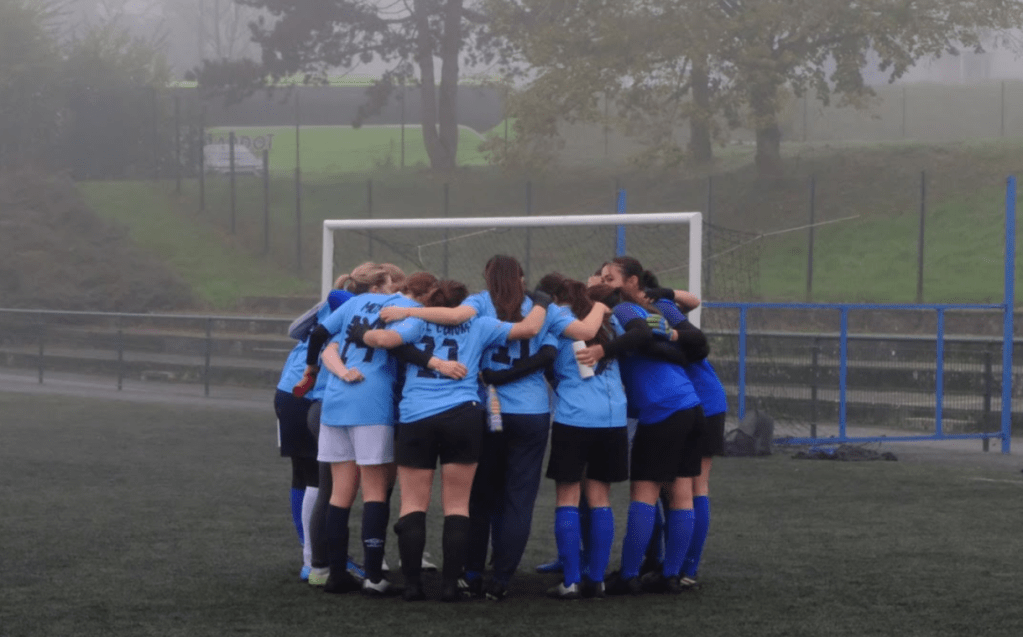
•⁠  ⁠⁠2nd place Foot f

•⁠  ⁠⁠2nd place Foot m

Semifinals

•⁠  ⁠semis for Volley (4th place)

•⁠  ⁠⁠semis for Rugby f (4th place)

•⁠  ⁠⁠playoffs for Basket m (4th place)

Upon arrival at the sports facility – straight after an 8 hour bus journey – the restless weekend of competitions commenced. Viola recalls her own participation in Female Basketball, Football and Rugby. 

The second day was pretty intense for female sports because there was the entire football tournament all crammed into one day,’ she recalls, reflecting the intensity of physical activity due to the time constraint of 3 days.  Nevertheless, Viola acknowledges that events including the official opening ceremony, the barathon, and club night organised by Nancy’s Bureau des Sports (BDS) were populated with students of all campuses. With a rap song featuring LH PROPA members Gabriel & Sara performed live, the atmosphere at the club night was undeniably pleasant. It underscored conviviality and enjoyment after strenuous competition. 

When asked about her favourite event, Viola chuckles as she expresses her satisfaction with the female Football team’s accomplishments. “We got to the semi-finals, which was amazing because then we won against Poitiers … at the final —  like I just started crying … a bit of it was because of how tired I was […] the emotions were just incredible’. 

Female football reached 2nd place overall. (image: Football F team – shot by Thomas Funkleder) 

Viola noted, though, that members “didn’t even expect to go past the group phase. This is actually something that was common to most sports.” This is evident in male Football, where Ryoma’s goal in their 3rd round propelled LH into the semifinals for the 1st time in history. More astounding was that this happened while player Anis was carrying an injured hamstring. His persistence on the field, along with the others, carried them all the way into Football M Finals, again for the first time in history.

 ‘I never expected us to go this far… I’m so happy’, expresses Taiga Shitara, captain of the Football team. 

LH WEIS Football M team – shot by Thomas Funkleder

The Football M team got their first ever win last year against Dijon, during Minicrit 2024. Previously the LH team had never made it past the group stage. 

Another achievement of the season was bagged by the cheerleading squad; LH placed 2nd overall.

This notably occurred despite the lack of coaches provided to the LH Cheer team, an advantage that some campuses possessed.  The increase in frequency of cheer practices seemed to pay off in the precision of movement and accuracy of jumps, as seen in playback videos.“Our team has worked so hard for WEIS and I’m really proud of all of us! We’re going to keep our minicrit plans a little secret for those outside the cheer team, but expect the biggest, boldest, and brightest performance our campus has seen yet,” hints Noelani Aung, co-captain of LH Cheer. WEIS’ stunts included Noelani’s clock stunt and Nicky’s suspended front flip, both completed without a trace of sweat and drove supporters into a standing ovation towards the end of the performance.  (image: Noelani’s clock stunt – shot by Thomas Funkleder) 

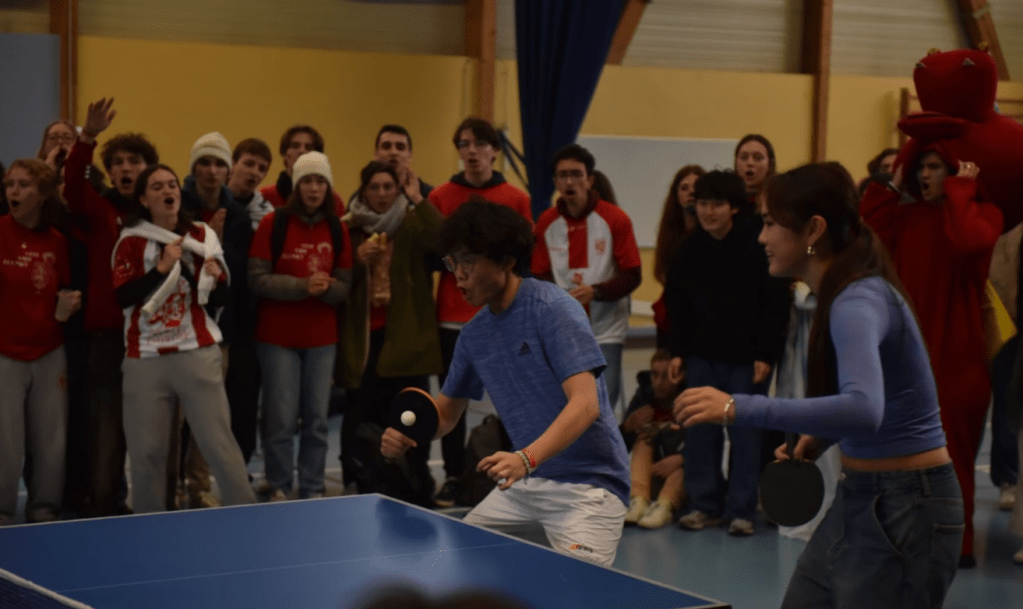
In addition to the conventional lineup, this year’s surprise sport was table tennis. LH representatives Hugo and Sara took the trophy home with 1st-Runner Up. Likewise, there was a lack of resources due to campus budget constraints. A conversation with Hugo informs that ‘there’s not much preparation…to the extent that we actually did not have our own rackets and table tennis balls for Sara’. Nevertheless, his highlight of the day was the LH v. Menton match. 

“We were losing by 10 to 7… the opponent only needed 1 single point to secure the victory. However, with a bit of luck…. we secured five consecutive points, and we beat Menton by 12 to 10… it was a very memorable moment for me.” Hugo plans on taking periodic advantage of the table on campus to foster the development of technique. (image: Hugo & Sara v Nancy – shot by Thomas Funkleder)

Lastly, it is important to note that LH received commendation for athletic sportsmanship, albeit some mishaps construed by other campuses. Viola compliments her AS team, expressing gratitude for Orso and Madhava for communicating with French logistics. She also notes that campuses “loved AS… the whole delegation received a lot of compliments from Nancy saying that we were really respectful … something to be really proud of I think.” 

Le Havre placed 3rd Overall in WEIS 2024. 

(image: AS Le Havre from left to right – Orso, Madhava, Viola, Yasumasa, Mathilde, Nodoka, Anya) – shot by Thomas Funkleder 

Le Havre students will finally be able to make their voices heard before the central administration of Sciences Po Paris !

Union Etudiante Sciences Po Le Havre 

During the October elections, the Union Étudiante won 49% of votes, a landslide by any metric.  We thank you for your mobilisation and your trust! This victory gives us the chance to have two Le Havre students elected to the Conseil de la Vie Étudiante et de la Formation (CVEF) : Lino Battin this year and Lisa Debaud next year. But what exactly is the CVEF? The Union Étudiante will explain the stakes and how we plan to ensure that these seats benefit the entire campus.

The CVEF is the council where students are the best represented proportionally : 8 students out of 18 seats (the rest of the seats are allocated to professors, teachers, researchers, and staff representatives). This council “determines the conditions under which users exercise their political and union freedoms and cultural activities“, a key role given the authoritarian practices of the administration in recent months. The direct interest for our campus is that the CVEF is also the body which “oversees and coordinates student life in regional campuses.”

Practically speaking, the CVEF votes on the academic framework, student life regulations, and maintains the link with student associations. It is truly the council most connected to what happens on our campus; for example, the amount of subsidies for Le Havre associations are voted on there. It is also the place where we will express our demands to have more teachers and a wider range of courses on regional campuses.

It’s true that this council isn’t very powerful within the organisational structure of Sciences Po:  it has no decision-making authority and is only consulted for major decisions that affect students. Most of the power is held by the Conseil de l’Institut and especially by the Conseil d’Administration of the FNSP (the private part of the institution). The latter consists of only two students, while “ten founding members” who are very disconnected from the interests of Sciences Po and its students—such as the directors of Carrefour and CMA-CGM—co-opt each other year after year. Through this system, power is convoluted, turning the school into a business by increasing tuition fees while neglecting social justice and a quality, free, and emancipating education. 

Despite this blatant lack of democracy, we will do our best through the seats we won at the elections to make the voices of Le Havre students heard. This is why  we will organise meetings before the CVEF councils, where we will present the agenda of the CVEF council to help everyone understand what is being decided far away in Paris. This meeting will provide for students on our campus an opportunity to discuss our key points for the council in defence of our campus and to hear any suggestions or requests you may want to address to Paris, including positions to adopt, arguments, or any other concerns.

We hope to see many of you at these meetings, where everyone is welcome !

Interview with His Excellency Datuk Eldeen Husaini bin Mohd Hashim

by Syontoni Hattori-Chatterjee and Yoann Guillot

Image credit: X

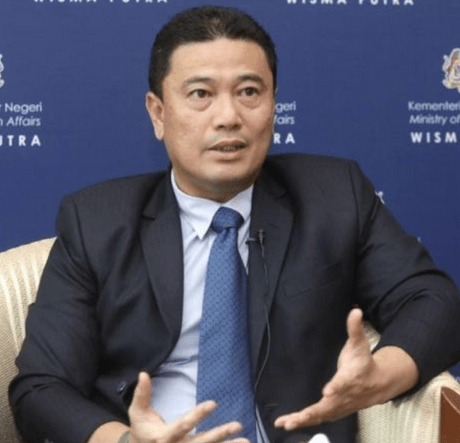
On the 24th of October 2024, Malaysian ambassador to France Datuk Eldeen Husaini bin Mohd Hashim paid a visit to Sciences Po’s Le Havre campus. In addition to addressing the entire campus community during a lunchtime guest lecture, he also took the time to answer questions on his career as a diplomat, the Malaysian national project, and the diplomatic tightrope that Malaysia is currently walking, as a Southeast Asian state that finds itself betwixt and between the spheres of influence of geopolitical hegemons like China and the United States. His conversation with Syontoni Hattori-Chatterjee and Yoann Guillot of Le Dragon Déchaîné was as follows:

LDD: Well, thank you so much, Your Excellency, for being here with us today for this interview.

LDD: Good morning, thank you for agreeing to speak to us. To start, many students on our campus are interested in diplomacy and careers in this field, especially focused on the Asia-Pacific region, which is the main area of interest at our university. Could you share what a typical day in the life of an ambassador is like?

H.E. Bin Mohd Hashim: Oh, okay. It’s a very general and broad question. But I think, like anyone else, I wake up and go to work. For me, each day starts with a bit of inspiration—I listen to motivational speeches or songs to get hyped. I spend about 15 minutes on that, then I dive into my day by checking in with my colleagues about the schedule and duties for the day.

From there, it’s mostly meetings and appointments. I love meeting people, connecting, and engaging, so as an ambassador, I’m often out of the office. Ambassadors are always on the move, expanding engagement and building connections. There are really two goals: first, to establish and strengthen relationships and second, to represent Malaysia, to introduce our country and its culture to different groups. So, for instance, today’s goal is to introduce Malaysian diplomacy to university students, like you.

Beyond that, we attend official meetings, receptions, and events. These gatherings are important because they allow us to engage with others, exchange views, and strengthen diplomatic ties. In the evening, if there are no further engagements, I might relax, catch up on the news, or call colleagues to discuss the next activities. So, as an ambassador, each day is full of connecting, discussing, and sharing.

LDD: That sounds fascinating! Could you tell us a bit about your background and how you became an ambassador? What kind of studies or experiences prepared you for this career?

H.E. Bin Mohd Hashim: Sure. I studied law in the United Kingdom for three years, initially intending to become a lawyer. I practiced law briefly, for less than two years, then worked as a consultant with an American company for a year. But I always had a fascination with military life—I wanted to pursue that path. However, my parents strongly objected, so I decided to go into government instead.

Given my legal background and overseas studies, I was placed in the Ministry of Foreign Affairs. At that time, there was a talent-scouting system where certain individuals were selected for specific roles. Although they said it was optional, it was actually more of an instruction. I was chosen for negotiation, so I attended many courses and forums to hone my negotiation skills. My first department assignment was in East Asia, covering China, Japan, and Korea. Later, I handled the Southeast Asia region, North Africa, and African departments.

My postings took me to Japan for six years, back to Malaysia as a Southeast Asia specialist, then to Australia, India, Cambodia, and now, finally, to France. This is my first posting in Europe. Over my 28-year career, negotiation has been a constant theme. I’ve been fortunate—or perhaps unfortunate, depending on how you view it—to handle negotiations on high-stakes issues, including bilateral relations, hostage rescues, evacuations, and conflict situations. These experiences taught me the art of negotiation, which I now pass on to junior officers.

LDD: That’s really impressive. It sounds like you’ve had a rewarding career with a lot of impactful moments.

H.E. Bin Mohd Hashim: Yes, absolutely. It’s both challenging and rewarding in many ways. Some of the situations are quite dramatic, and negotiation can either help or complicate things. There’s a lot more to share, but I could talk for days about negotiation strategies! But yes, these experiences are valuable, and I’m grateful to have had them.

LDD: Thank you for sharing that. Moving on, Malaysia is known for its multicultural society, with various communities like Malay, Chinese, Indian, and many others living together in one country. While this creates a rich culture, it can also bring tensions. How would you define what it means to be Malaysian, given this diversity?

H.E. Bin Mohd Hashim: People often call Malaysia a “melting pot.” It’s true; we’re a country of many communities, and others are sometimes amazed at how we manage the diversity. Some scholars refer to us not just as a melting pot, but as a “time bomb,” due to the potential tensions that can arise from different beliefs, ethnicities, and priorities. If these differences aren’t managed diplomatically, professionally, or politically, they can become a “time bomb” rather than a melting pot, leading to conflict.

Currently, we’re still a melting pot, largely because of tolerance, understanding, and respect among our communities. It’s not easy, and we’ve had conflicts in the past while learning to understand one another. To succeed, I believe a nation like ours needs to embrace moderation, tolerance, mutual respect, and equal opportunities.

The stability of our multicultural society depends largely on the people, but it can also be influenced by political figures. For a long time—about 60 years—our politics were stable, and we thrived. However, in recent years, we’ve faced political changes, with shifts in government, which have created instability. When the foundation is stable, people tend to unite; when it shakes, tensions rise. But I believe in the importance of dialogue, finding common ground, and resolving issues peacefully.

LDD: That’s a powerful insight. So, Malaysia is indeed a melting pot, and keeping it that way requires a lot of effort, tolerance, and respect.

H.E. Bin Mohd Hashim: Yes, exactly. Malaysia and other Southeast Asian countries share this trait. We are “melting pots,” and it’s about maintaining harmony through tolerance, respect, and mutual understanding. If anyone wants to understand Malaysia or ASEAN as a region, they should start with this idea: a melting pot sustained by respect and moderation.

LDD: Yeah. Do you feel like your training as a negotiator has helped you understand not just how to talk to other people about your country, but also the political situation in your country better?

H.E. Bin Mohd Hashim: You know, I would love to encourage you to take up negotiation skills because if you are in this job, in the scope of international relations, or if your interest is to become a diplomat, ambassador, or a politician, this is the skill you need. The first skill you need is actually negotiation. Because in negotiation, you understand how to control people, how to plan, how to ensure you achieve your goals, and how to give, you know?

It’s all about give and take. In negotiation, there’s no such formula—although many books mention it—that there’s a segment where they say negotiation is a win-win situation. But there’s no real formula in negotiation called “win-win.” In negotiation, it’s always about win or lose. It’s either you win, or you lose. But in politics, if you go beyond that, to cover whatever loss someone has, and not to openly show that someone else has won, you go to the public and call it a win-win situation. That’s how politicians and diplomats operate—to calm the public.

LDD: Yes, to keep public perception under control.

H.E. Bin Mohd Hashim: Exactly. Because what happens behind the wall stays behind the wall. What the public knows isn’t always the whole story. So, the first rule in negotiation is that there’s no win-win situation. Win-win is a gimmick for the public.

LDD: Mhmm.

H.E. Bin Mohd Hashim: In any scenario—take a hostage situation, for example—there’s no “win-win.” It’s never just, “I give you cash; we get back the hostage.” There’s no such thing. It’s always a matter of winning or losing. But this skill is essential if you want to be a diplomat, politician, lawyer, consultant—anything in this field. Because once you have this skill, I think you could be placed anywhere in the world and thrive.

For me, I’ve been here for nearly 30 years in this field, and every day is exciting. Every day, there’s something new to learn. I really hope that younger generations have the same opportunity to develop these specific skills. There are many skills to learn, but negotiation is one I think everyone should have.

LDD: Mhmm. Thank you. Now, on a different topic—it seems clear that today, diplomatic relations between China and the U.S. are becoming more complex due to rising tensions and challenging issues. Many Southeast Asian countries seem to aim for a more balanced stance between the two. How do you think Malaysia is managing this situation? How is Malaysia positioning itself on the international stage given these rising tensions?

H.E. Bin Mohd Hashim: Good question. In the past, the situation was clear-cut because the United States had a long-standing influence, while China’s rise came later. But as China started to awaken as a giant, the U.S. grew concerned, and tensions escalated as both nations sought global support. Southeast Asia, especially, has been a focal point for China. They’ve built relationships through trade, investment, and historical connections that go back centuries to when traders would travel here. This historical and cultural connection is something unique to China’s relationships in Southeast Asia.

In contrast, the U.S. doesn’t have the same depth of historical ties with Southeast Asia. Instead, they’ve looked to regions like Europe and Africa to strengthen alliances. So, now, both China and the U.S. are competing globally, even within each other’s traditional spheres of influence. This rivalry creates a situation where smaller countries, including those in Southeast Asia, often feel pressured to choose sides.

For Malaysia, though, we’ve been clear. When the Americans approach us, we explain that China is not a threat to us. China has been an economic partner for a long time, just as the U.S. has. We believe that balance is possible and that trade and investment can bridge these divides.

Globally, everything is about trade and investment. That’s the main connection. Beyond that, there’s also culture and people-to-people connections. But if you go beyond trade, then you’re talking about war. So there are three possibilities: trade, culture, and then war. We’re focused on keeping it about trade and investment. But, even then, trade can sometimes lead to a trade war.

LDD: Right.

H.E. Bin Mohd Hashim: Exactly. Smaller countries like Malaysia and the rest of Southeast Asia are very clear about not wanting to get caught in the middle of this. So when asked to choose sides, we simply say, “No, we don’t want to choose,” because we want strong friendships with both. But it’s challenging. The trade war is escalating, and as you can see globally, conflicts are increasing. Some of these conflicts started between two countries but have grown due to outside support, which amplifies the issues.

For example, you look at Russia and Ukraine or Israel and Palestine—these conflicts began between specific groups, but they escalate as people take sides and support one over the other, often with trade and weapons. Globally, if you understand diplomacy, you’d see there’s no need for war; it’s just about survival and supply chains. Trading weapons has become part of this trade, and it stokes these conflicts further.

LDD: Mhmm.

H.E. Bin Mohd Hashim: So, to answer your question—Malaysia’s stance on the U.S. and China is simple. Both are business partners, and we approach both with mutual respect. We’re committed to maintaining neutrality because we believe both should have equal opportunities to engage in business with Malaysia and Southeast Asia.

LDD: Thank you. That’s very comprehensive and insightful. It’s certainly interesting to see the role the economy plays here. But looking to the future, if these powers continue on a path toward escalating conflict. Do you think it would be possible for a country to maintain a neutral stance, especially if there’s a shift toward open conflict?

H.E. Bin Mohd Hashim: If conflict escalates to war, neutrality becomes almost impossible. Diplomacy is always the first line of defense. Once that fails and war begins, there’s no turning back. War brings destruction, followed by the long process of rebuilding and the eventual return to diplomacy. This is why it’s crucial for entities like the United Nations to promote de-escalation. War between nuclear powers, for instance, would have devastating, irreversible outcomes.

Diplomats work tirelessly to prevent such escalations. Although our work involves receptions and events, the essence of diplomacy is about preventing conflict. Some people think traditional face-to-face engagement is outdated, but it’s crucial. Without it, we’re left with violence, which comes with a heavy price. If a situation escalates into war, survival becomes the focus, not diplomacy.

The choices of leaders are essential because they influence whether conflict escalates or cools. Education institutions also play a key role in shaping future leaders and their approach—whether they’re more aggressive or diplomatic.

If war does come, there’s no “win-win.” One side will prevail, but the path forward after war is complex and costly.

LDD: Considering ASEAN’s growing role, do you think it can help resolve regional conflicts like the one in Myanmar? Or should ASEAN remain focused on economic cooperation rather than political issues?

H.E. Bin Mohd Hashim: ASEAN has a principle of non-interference, respecting each country’s sovereignty, yet we can’t ignore the ripple effects of conflict in one nation on the entire region’s economy and stability. Myanmar’s internal issues are a longstanding concern. We’ve often reminded them of the need to avoid disrupting the broader economic network that binds ASEAN.

We have the “Five-Point Consensus,” which urges Myanmar to address its issues without destabilizing the region. Right now, we’re focusing on diplomacy and sending special envoys to Myanmar, which is a slow process, but essential. Economically, stability is our priority, not political control. We respect each country’s leadership structure, but we also seek harmony for trade and regional growth.

International sanctions are isolating Myanmar, with some countries even urging ASEAN to exclude them. However, ASEAN believes in inclusivity, so we allow Myanmar a representative role rather than full leadership presence in ASEAN meetings. This way, ASEAN remains united while supporting Myanmar’s gradual reintegration.

We hope that by 2025, when we chair ASEAN, Myanmar will be back on track, and the region will be more stable.

LDD: Thank you for sharing your insights! That’s all the time we have. 

“It’s very important for us to take the climate narrative and make it local.” Dr. Fengshi Wu on environmental movements in Asia

By Syontoni Hattori-Chatterjee 

After the results of the U.S. presidential election became decisively known around the world, I admittedly spent the rest of Wednesday, November 6th, in a depressive slump. I was scared not only for the future of American democracy, economic management, and domestic climate policy, but also worried about the potential regressive impacts of this closely watched election on global environmental governance. Dr. Fengshi Wu’s talk with students the following day on the dynamics of environmental protests worldwide gave me a much needed boost of hope. 

The Associate Professor of Political Science and International Relations at UNSW Sydney first passionately presented her work on the history of environmentalist movements around the world. But as she critically emphasized, most of the activists of these movements, including Filipino protesters against World Bank-funded hydropower dams that would displace Indigenous communities in the 1980s, did not define themselves as environmentalists. The resistance of activists like Chico Mendes to protect the Amazon rainforest consisted of directly impacted individuals and communities fighting for the land that they lived on, the air they breathed, and the water and food sources they needed to survive. These kinds of deeply local struggles for survival were and still are shared across societies, from democratic to authoritarian and everything in between. I was convinced by Dr. Wu’s assertion that the lifeblood of environmental movements lies in their ability to take climate change and biodiversity issues from the global level to the local, and thereby speak to the immediate needs of communities facing these issues now. I also found it striking how she connected ground-level mobilization of communities addressed to direct threats such as air pollution in Pakistan or the disappearance of a river representing a sole potable water source in Kazakhstan to the triple influence of local laws, national policy, and international funding from organizations like the World Bank. 

I was reminded of the work of Julian Aguon, Chamorro human rights lawyer and founder of Blue Ocean Law, a Guam-based international law firm specializing in Indigenous rights and self-determination and environmental justice cases in the Pacific. I heard him speak two years ago at California State University Northridge’s Fifth Civil Discourse and Social Change initiative Social Justice Student Research Conference. Also an author, Aguon discussed using environmental activism as responsible grief work to process the loss of lifeways, family, and tradition as a result of climate change and a means of driving people past cynicism to environmental justice action through personal stories. Both Aguon and Wu’s presentations were factual but passionate, analyzing a web of international organization-state-community interactions at the level of people and their immediate survival. The presentations moreover advocated vigorously for the centrality of the most marginalized and most impacted communities in our notion of environmental activism. 

I also appreciated how Dr. Wu clearly and deftly illustrated some key distinctions between environmental movements in different contexts. Her research showed her that the major difference between protests occurring within a democratic context of rule of law versus a context without these guarantees was the level of repression, violence, and loss of life that protestors faced from the state. Nevertheless, she demonstrated that environmental movements worldwide are facing increasing repression, a symptom of democratic backsliding given that such movements have often pushed for political liberalization. She responded to audience questions clarifying that environmental politics’ being depicted as a left-wing, abstract political issue is a problem within Western democracies that does not translate to many other political contexts where the issue is more universalized. She also discussed national and global environmental governance in China, a uniquely high-functioning authoritarian regime whose renewable energy tradition is more driven by fossil-fuel-poor geographic conditions than existential concerns about the ecosystem. I found it especially illuminating to compare this strongly state-led environmental policy model to the contrasting behavior of the rising Chinese middle class, finally able to enjoy comfortable lifestyles of overconsumption that the middle classes of Western democracies have for decades, and thus, understandably, reluctant to forego its new lifestyle. As an American concerned about further U.S. removal from global climate governance, it was interesting to observe a different model that could become the future of environmental leadership in international relations. 

I am sure that I speak for my peers in expressing my gratitude to Havrais Dire for organizing this conference amidst what is always a busy (and perhaps draining) time studying political science in the tumultuous world we live in today. I hope that sharing some of my reflections on Dr. Fengshi Wu’s presentation through this article gives other students a similar renewed hope in our power to affect local change for global environmental progress.