
By Beau Sansoni
All images credited to the author.
Back in June, I had the opportunity to visit Myanmar, and particularly of interest to me were the numerous ancient cities which dotted the landscape. Notably, the dry zone of the Irrawaddy river valley held many significant cities which had been the capitals of kingdoms in their own right. Examples of these capitals include Bagan, Sagaing, Inwa, Amarapura, and Pinya. I had the particular privilege to be able to visit what little remains of the latter, this elusive city which had thrived in the early 14th century after the fall of Bagan.
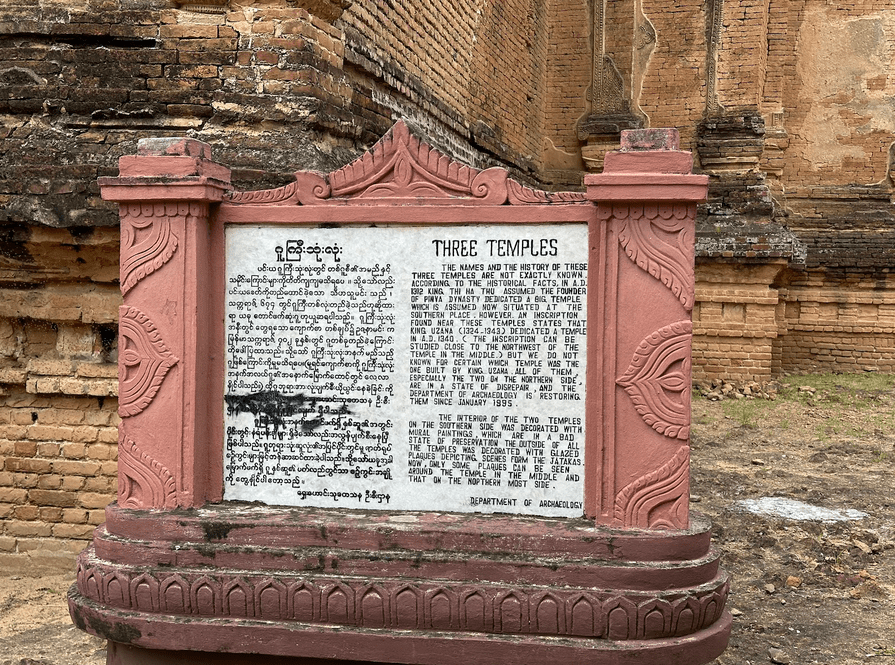
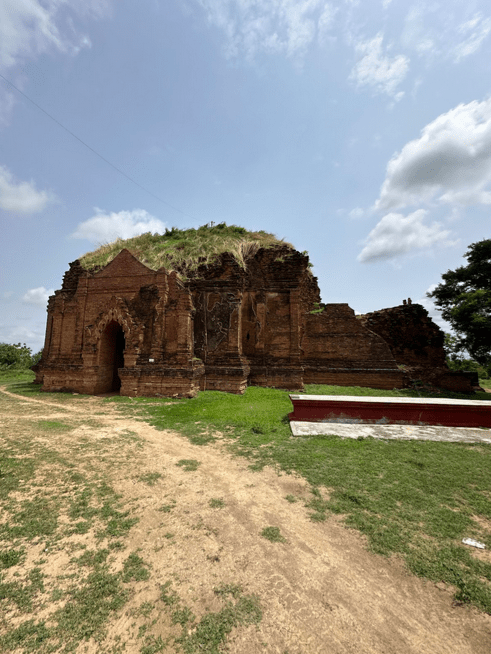
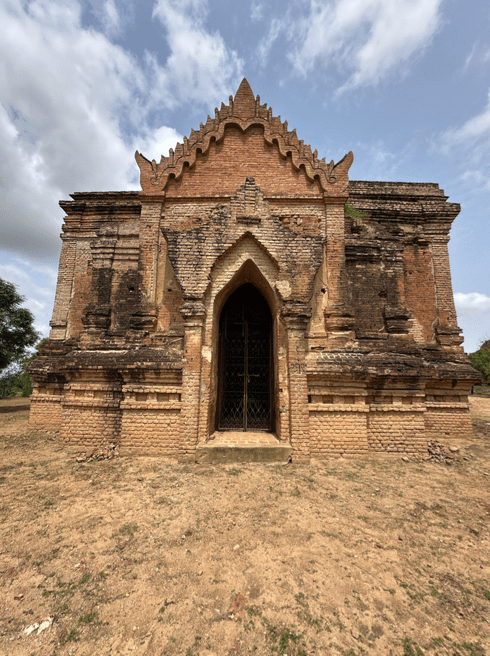
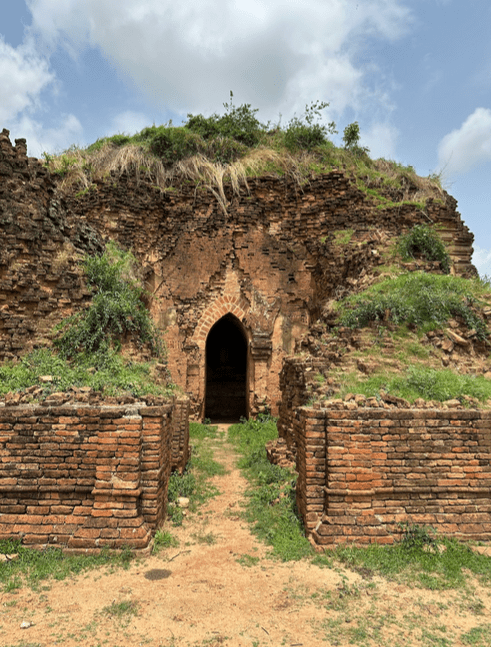
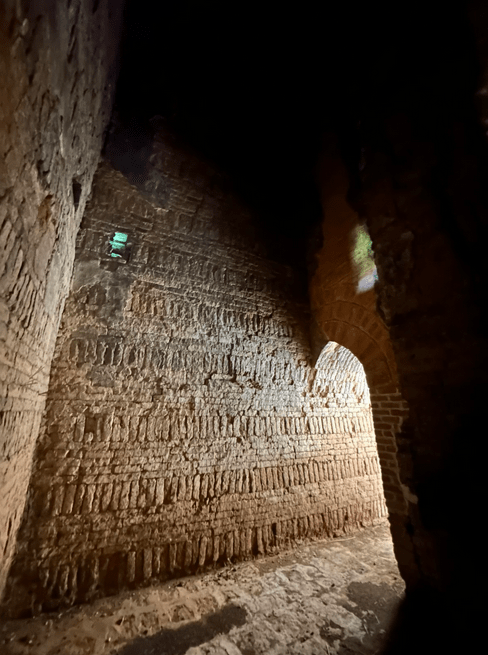
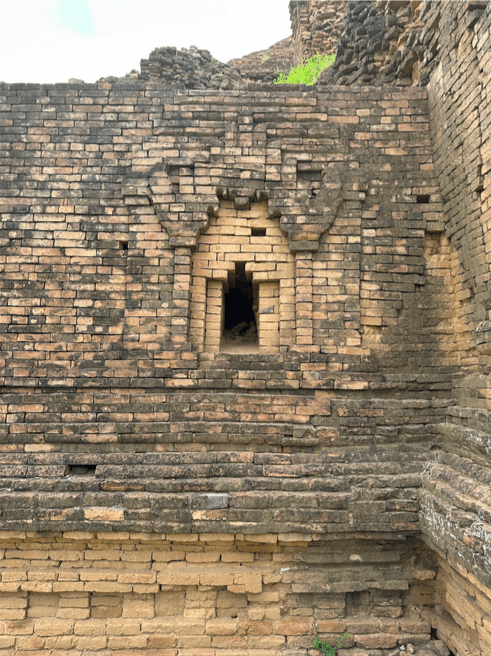
The original city of Pinya itself is naught but a few brick stupas (or pagodas) and temples which are in various states of dilapidation. These over 600-year-old monuments of brick were constructed in the style of the Kingdom of Bagan, which the Kingdom of Pinya (of which Pinya was its capital) had replaced. To my count from Google Maps and my visit, there remains roughly only 4 monuments of any note from the period. The rest of the city, now almost certainly categorized as a village, is farmlands, homes made of wood and corrugated metal roofs, and overgrown vegetation. It lays snugly just off the main highway exiting from Mandalay, where it rejoins the very same highway a kilometer south.
In terms of history, sources online are scarce, and Wikipedia (the obvious and very professional go-to source) consistently cites the Hmannan Yazawin, or known in English as the Glass Palace Chronicle. This source is semi-reliable at best, proclaiming myth to be fact, and holding its own religious interests pursued in its writings. It is to be best remembered that this is an official source, an official narrative by the Burmese monarchy, and it was written in a manner that best represents itself. The story I know, personally and by heart, though, is that of the three brothers who took up positions as generals and regents of the crumbling Kingdom of Bagan. The King, Kyawswa, had his power limited to the city of Bagan itself. The three brothers: Athinkhaya, Yazathingyan, and Thihathu controlled major granaries around the territory of the kingdom and also fought against the invading Mongols, securing Burmese independence.
They would eventually depose the nominal king Kyawswa when he attempted to strengthen his position by swearing fealty to the Mongols, which led to the aforementioned battles. Slowly, the brothers would die, leaving only the youngest of them, Thihathu, with any power. In 1313 he attempted to start a kingdom of his own, with a new city; Pinya, as its capital. The new state would be fairly weak, and further weakened by dynastic politics ending in the northern half seceding as the Sagaing Kingdom. The two would be locked in conflict, with Pinya losing its grasp on its southern vassals at Taungoo and Prome and other remote regions. To compound these problems, Pinya also had issues of constant warfare with the Shan states, which would commonly raid the kingdom. The short life of the Kingdom would come to an end in 1364 when the Kingdom was annexed by the prince of Sagaing, Thado Minbya, who would go on to found the city of Inwa and its namesake kingdom.
The 50 year existence of Pinya as a Kingdom was one of instability and weakness, and even now it remains an oft forgotten segment of Burmese history. These temples are some of the few structures that remain of this chaotic period of warring states.
Gallery





 Le Dragon Déchaîné