by Syontoni Hattori-Chatterjee and Yoann Guillot
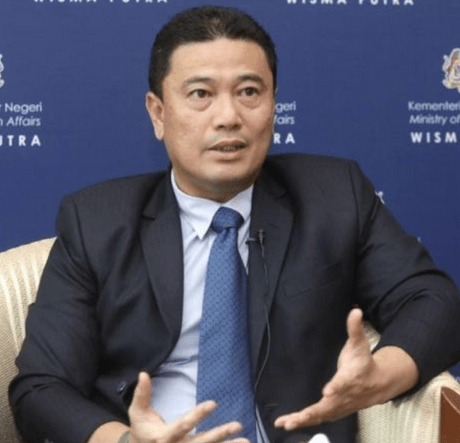
Image credit: X
On the 24th of October 2024, Malaysian ambassador to France Datuk Eldeen Husaini bin Mohd Hashim paid a visit to Sciences Po’s Le Havre campus. In addition to addressing the entire campus community during a lunchtime guest lecture, he also took the time to answer questions on his career as a diplomat, the Malaysian national project, and the diplomatic tightrope that Malaysia is currently walking, as a Southeast Asian state that finds itself betwixt and between the spheres of influence of geopolitical hegemons like China and the United States. His conversation with Syontoni Hattori-Chatterjee and Yoann Guillot of Le Dragon Déchaîné was as follows:
LDD: Well, thank you so much, Your Excellency, for being here with us today for this interview.
LDD: Good morning, thank you for agreeing to speak to us. To start, many students on our campus are interested in diplomacy and careers in this field, especially focused on the Asia-Pacific region, which is the main area of interest at our university. Could you share what a typical day in the life of an ambassador is like?
H.E. Bin Mohd Hashim: Oh, okay. It’s a very general and broad question. But I think, like anyone else, I wake up and go to work. For me, each day starts with a bit of inspiration—I listen to motivational speeches or songs to get hyped. I spend about 15 minutes on that, then I dive into my day by checking in with my colleagues about the schedule and duties for the day.
From there, it’s mostly meetings and appointments. I love meeting people, connecting, and engaging, so as an ambassador, I’m often out of the office. Ambassadors are always on the move, expanding engagement and building connections. There are really two goals: first, to establish and strengthen relationships and second, to represent Malaysia, to introduce our country and its culture to different groups. So, for instance, today’s goal is to introduce Malaysian diplomacy to university students, like you.
Beyond that, we attend official meetings, receptions, and events. These gatherings are important because they allow us to engage with others, exchange views, and strengthen diplomatic ties. In the evening, if there are no further engagements, I might relax, catch up on the news, or call colleagues to discuss the next activities. So, as an ambassador, each day is full of connecting, discussing, and sharing.
LDD: That sounds fascinating! Could you tell us a bit about your background and how you became an ambassador? What kind of studies or experiences prepared you for this career?
H.E. Bin Mohd Hashim: Sure. I studied law in the United Kingdom for three years, initially intending to become a lawyer. I practiced law briefly, for less than two years, then worked as a consultant with an American company for a year. But I always had a fascination with military life—I wanted to pursue that path. However, my parents strongly objected, so I decided to go into government instead.
Given my legal background and overseas studies, I was placed in the Ministry of Foreign Affairs. At that time, there was a talent-scouting system where certain individuals were selected for specific roles. Although they said it was optional, it was actually more of an instruction. I was chosen for negotiation, so I attended many courses and forums to hone my negotiation skills. My first department assignment was in East Asia, covering China, Japan, and Korea. Later, I handled the Southeast Asia region, North Africa, and African departments.
My postings took me to Japan for six years, back to Malaysia as a Southeast Asia specialist, then to Australia, India, Cambodia, and now, finally, to France. This is my first posting in Europe. Over my 28-year career, negotiation has been a constant theme. I’ve been fortunate—or perhaps unfortunate, depending on how you view it—to handle negotiations on high-stakes issues, including bilateral relations, hostage rescues, evacuations, and conflict situations. These experiences taught me the art of negotiation, which I now pass on to junior officers.
LDD: That’s really impressive. It sounds like you’ve had a rewarding career with a lot of impactful moments.
H.E. Bin Mohd Hashim: Yes, absolutely. It’s both challenging and rewarding in many ways. Some of the situations are quite dramatic, and negotiation can either help or complicate things. There’s a lot more to share, but I could talk for days about negotiation strategies! But yes, these experiences are valuable, and I’m grateful to have had them.
LDD: Thank you for sharing that. Moving on, Malaysia is known for its multicultural society, with various communities like Malay, Chinese, Indian, and many others living together in one country. While this creates a rich culture, it can also bring tensions. How would you define what it means to be Malaysian, given this diversity?
H.E. Bin Mohd Hashim: People often call Malaysia a “melting pot.” It’s true; we’re a country of many communities, and others are sometimes amazed at how we manage the diversity. Some scholars refer to us not just as a melting pot, but as a “time bomb,” due to the potential tensions that can arise from different beliefs, ethnicities, and priorities. If these differences aren’t managed diplomatically, professionally, or politically, they can become a “time bomb” rather than a melting pot, leading to conflict.
Currently, we’re still a melting pot, largely because of tolerance, understanding, and respect among our communities. It’s not easy, and we’ve had conflicts in the past while learning to understand one another. To succeed, I believe a nation like ours needs to embrace moderation, tolerance, mutual respect, and equal opportunities.
The stability of our multicultural society depends largely on the people, but it can also be influenced by political figures. For a long time—about 60 years—our politics were stable, and we thrived. However, in recent years, we’ve faced political changes, with shifts in government, which have created instability. When the foundation is stable, people tend to unite; when it shakes, tensions rise. But I believe in the importance of dialogue, finding common ground, and resolving issues peacefully.
LDD: That’s a powerful insight. So, Malaysia is indeed a melting pot, and keeping it that way requires a lot of effort, tolerance, and respect.
H.E. Bin Mohd Hashim: Yes, exactly. Malaysia and other Southeast Asian countries share this trait. We are “melting pots,” and it’s about maintaining harmony through tolerance, respect, and mutual understanding. If anyone wants to understand Malaysia or ASEAN as a region, they should start with this idea: a melting pot sustained by respect and moderation.
LDD: Yeah. Do you feel like your training as a negotiator has helped you understand not just how to talk to other people about your country, but also the political situation in your country better?
H.E. Bin Mohd Hashim: You know, I would love to encourage you to take up negotiation skills because if you are in this job, in the scope of international relations, or if your interest is to become a diplomat, ambassador, or a politician, this is the skill you need. The first skill you need is actually negotiation. Because in negotiation, you understand how to control people, how to plan, how to ensure you achieve your goals, and how to give, you know?
It’s all about give and take. In negotiation, there’s no such formula—although many books mention it—that there’s a segment where they say negotiation is a win-win situation. But there’s no real formula in negotiation called “win-win.” In negotiation, it’s always about win or lose. It’s either you win, or you lose. But in politics, if you go beyond that, to cover whatever loss someone has, and not to openly show that someone else has won, you go to the public and call it a win-win situation. That’s how politicians and diplomats operate—to calm the public.
LDD: Yes, to keep public perception under control.
H.E. Bin Mohd Hashim: Exactly. Because what happens behind the wall stays behind the wall. What the public knows isn’t always the whole story. So, the first rule in negotiation is that there’s no win-win situation. Win-win is a gimmick for the public.
LDD: Mhmm.
H.E. Bin Mohd Hashim: In any scenario—take a hostage situation, for example—there’s no “win-win.” It’s never just, “I give you cash; we get back the hostage.” There’s no such thing. It’s always a matter of winning or losing. But this skill is essential if you want to be a diplomat, politician, lawyer, consultant—anything in this field. Because once you have this skill, I think you could be placed anywhere in the world and thrive.
For me, I’ve been here for nearly 30 years in this field, and every day is exciting. Every day, there’s something new to learn. I really hope that younger generations have the same opportunity to develop these specific skills. There are many skills to learn, but negotiation is one I think everyone should have.
LDD: Mhmm. Thank you. Now, on a different topic—it seems clear that today, diplomatic relations between China and the U.S. are becoming more complex due to rising tensions and challenging issues. Many Southeast Asian countries seem to aim for a more balanced stance between the two. How do you think Malaysia is managing this situation? How is Malaysia positioning itself on the international stage given these rising tensions?
H.E. Bin Mohd Hashim: Good question. In the past, the situation was clear-cut because the United States had a long-standing influence, while China’s rise came later. But as China started to awaken as a giant, the U.S. grew concerned, and tensions escalated as both nations sought global support. Southeast Asia, especially, has been a focal point for China. They’ve built relationships through trade, investment, and historical connections that go back centuries to when traders would travel here. This historical and cultural connection is something unique to China’s relationships in Southeast Asia.
In contrast, the U.S. doesn’t have the same depth of historical ties with Southeast Asia. Instead, they’ve looked to regions like Europe and Africa to strengthen alliances. So, now, both China and the U.S. are competing globally, even within each other’s traditional spheres of influence. This rivalry creates a situation where smaller countries, including those in Southeast Asia, often feel pressured to choose sides.
For Malaysia, though, we’ve been clear. When the Americans approach us, we explain that China is not a threat to us. China has been an economic partner for a long time, just as the U.S. has. We believe that balance is possible and that trade and investment can bridge these divides.
Globally, everything is about trade and investment. That’s the main connection. Beyond that, there’s also culture and people-to-people connections. But if you go beyond trade, then you’re talking about war. So there are three possibilities: trade, culture, and then war. We’re focused on keeping it about trade and investment. But, even then, trade can sometimes lead to a trade war.
LDD: Right.
H.E. Bin Mohd Hashim: Exactly. Smaller countries like Malaysia and the rest of Southeast Asia are very clear about not wanting to get caught in the middle of this. So when asked to choose sides, we simply say, “No, we don’t want to choose,” because we want strong friendships with both. But it’s challenging. The trade war is escalating, and as you can see globally, conflicts are increasing. Some of these conflicts started between two countries but have grown due to outside support, which amplifies the issues.
For example, you look at Russia and Ukraine or Israel and Palestine—these conflicts began between specific groups, but they escalate as people take sides and support one over the other, often with trade and weapons. Globally, if you understand diplomacy, you’d see there’s no need for war; it’s just about survival and supply chains. Trading weapons has become part of this trade, and it stokes these conflicts further.
LDD: Mhmm.
H.E. Bin Mohd Hashim: So, to answer your question—Malaysia’s stance on the U.S. and China is simple. Both are business partners, and we approach both with mutual respect. We’re committed to maintaining neutrality because we believe both should have equal opportunities to engage in business with Malaysia and Southeast Asia.
LDD: Thank you. That’s very comprehensive and insightful. It’s certainly interesting to see the role the economy plays here. But looking to the future, if these powers continue on a path toward escalating conflict. Do you think it would be possible for a country to maintain a neutral stance, especially if there’s a shift toward open conflict?
H.E. Bin Mohd Hashim: If conflict escalates to war, neutrality becomes almost impossible. Diplomacy is always the first line of defense. Once that fails and war begins, there’s no turning back. War brings destruction, followed by the long process of rebuilding and the eventual return to diplomacy. This is why it’s crucial for entities like the United Nations to promote de-escalation. War between nuclear powers, for instance, would have devastating, irreversible outcomes.
Diplomats work tirelessly to prevent such escalations. Although our work involves receptions and events, the essence of diplomacy is about preventing conflict. Some people think traditional face-to-face engagement is outdated, but it’s crucial. Without it, we’re left with violence, which comes with a heavy price. If a situation escalates into war, survival becomes the focus, not diplomacy.
The choices of leaders are essential because they influence whether conflict escalates or cools. Education institutions also play a key role in shaping future leaders and their approach—whether they’re more aggressive or diplomatic.
If war does come, there’s no “win-win.” One side will prevail, but the path forward after war is complex and costly.
LDD: Considering ASEAN’s growing role, do you think it can help resolve regional conflicts like the one in Myanmar? Or should ASEAN remain focused on economic cooperation rather than political issues?
H.E. Bin Mohd Hashim: ASEAN has a principle of non-interference, respecting each country’s sovereignty, yet we can’t ignore the ripple effects of conflict in one nation on the entire region’s economy and stability. Myanmar’s internal issues are a longstanding concern. We’ve often reminded them of the need to avoid disrupting the broader economic network that binds ASEAN.
We have the “Five-Point Consensus,” which urges Myanmar to address its issues without destabilizing the region. Right now, we’re focusing on diplomacy and sending special envoys to Myanmar, which is a slow process, but essential. Economically, stability is our priority, not political control. We respect each country’s leadership structure, but we also seek harmony for trade and regional growth.
International sanctions are isolating Myanmar, with some countries even urging ASEAN to exclude them. However, ASEAN believes in inclusivity, so we allow Myanmar a representative role rather than full leadership presence in ASEAN meetings. This way, ASEAN remains united while supporting Myanmar’s gradual reintegration.
We hope that by 2025, when we chair ASEAN, Myanmar will be back on track, and the region will be more stable.
LDD: Thank you for sharing your insights! That’s all the time we have.

 Le Dragon Déchaîné